Artwork
The Second Tournament with the Tapestry of Sampson and the Lion
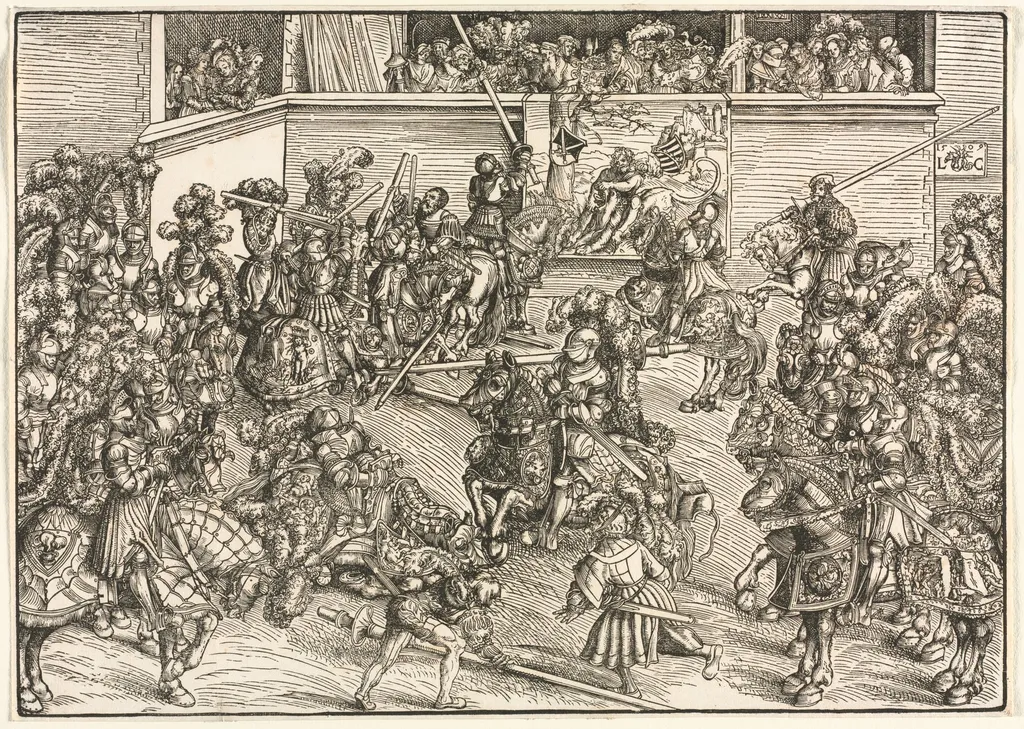
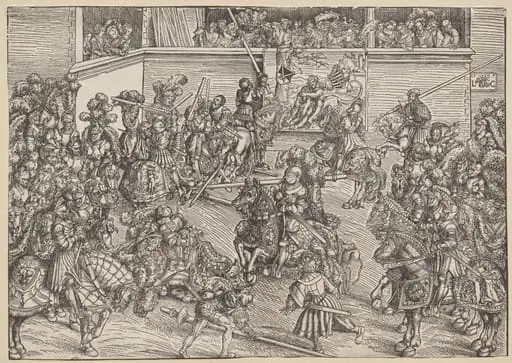
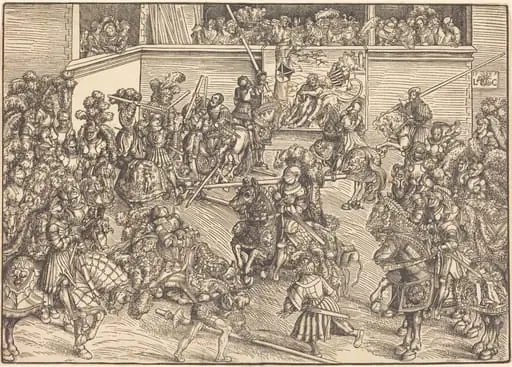
The Second Tournament with the Tapestry of Sampson and the Lion is a print by the Renaissance artist Lucas Cranach the Elder. It dates from 1509 and is held in the collection of the Cleveland Museum of Art.
About this work
Overview
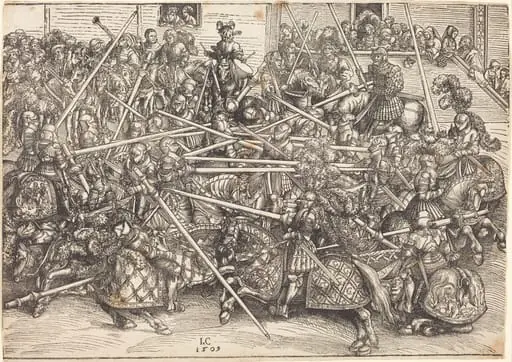
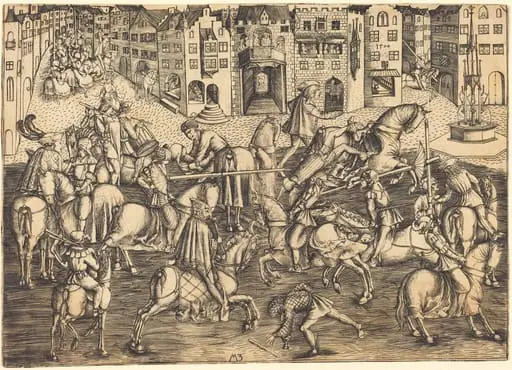
Created in 1509, this black‑and‑white print by Lucas Cranach the Elder captures a bustling tournament scene. Knights on horseback joust beneath a decorative frieze that portrays the biblical episode of Samson confronting a lion. The composition is densely populated, with numerous figures and animals rendered in fine line work against a light background.
Subject & Meaning
The central action shows armored riders engaged in a joust, while the upper band functions as a narrative tapestry, illustrating Samson’s legendary battle with a lion. By juxtaposing a contemporary courtly sport with an Old Testament hero, the work links martial virtue to biblical strength, reflecting the period’s interest in moral exempla.
Technique & Style
Executed entirely in ink, the print relies on intricate hatching and contour lines to convey texture, movement, and depth. Cranach’s characteristic crisp outlines and compact arrangement of figures create a sense of visual density, reminiscent of the crowded compositions found in other early‑16th‑century German prints.
History & Provenance
Cranach, who served as court painter to the Electors of Saxony, produced this piece during the early phase of his prolific career. The print was likely intended for a courtly audience, serving both as a decorative object and as a visual record of aristocratic pastimes.
Artist & collection
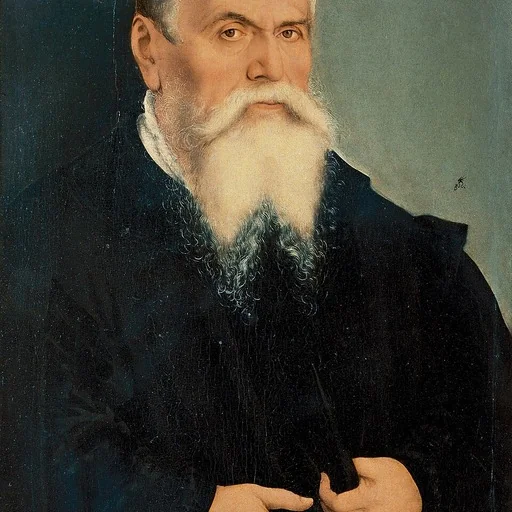
Artist
Lucas Cranach the Elder was a German Renaissance painter and printmaker in woodcut and engraving.