Artwork
The Tournament with Sampson and the Lion
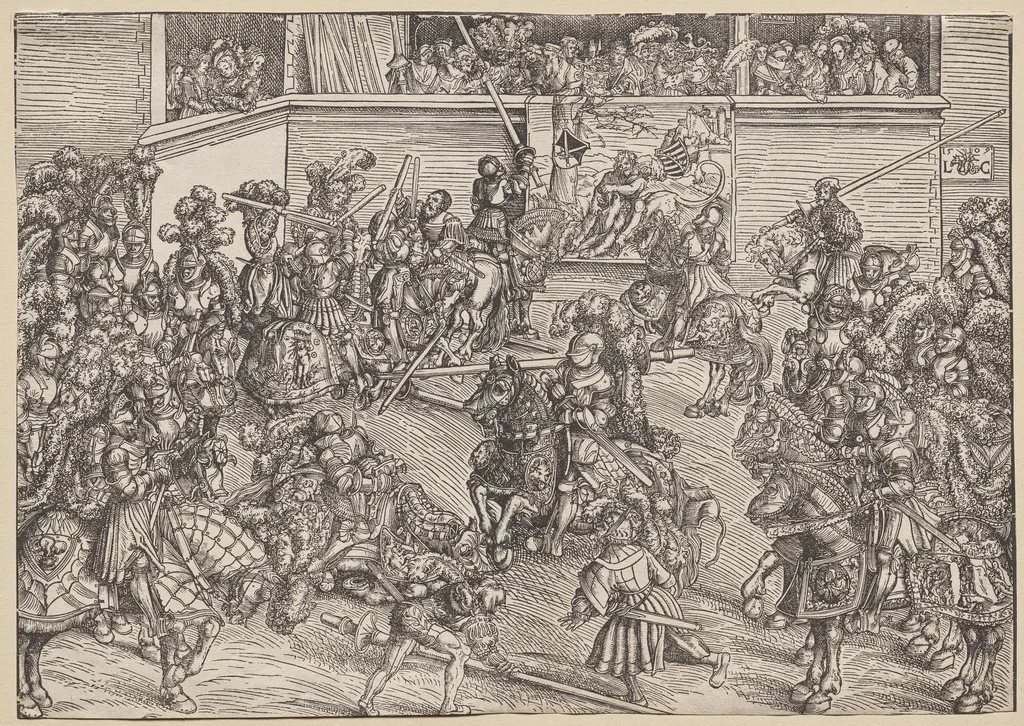
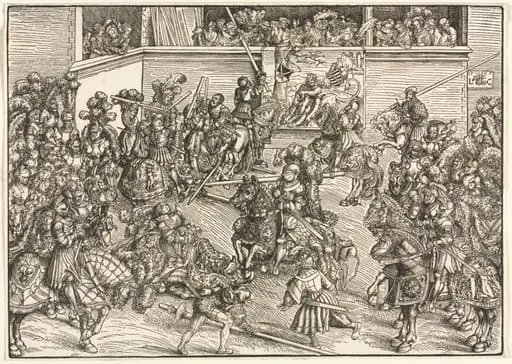
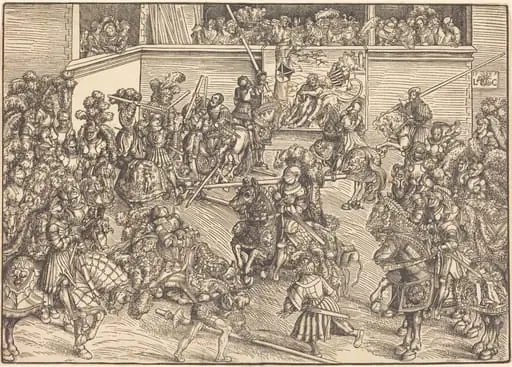
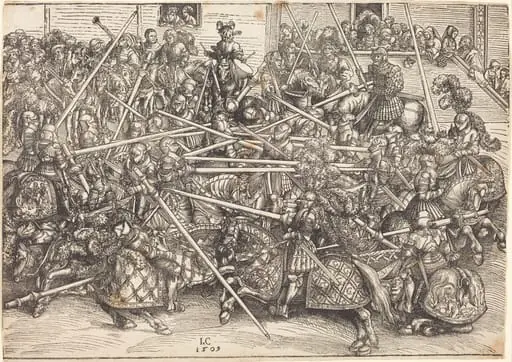
The Tournament with Sampson and the Lion is a print by the Renaissance artist Lucas Cranach the Elder. It dates from 1509 and is held in the collection of the Cleveland Museum of Art.
About this work
Overview
It presents a dense, lively scene centered on Samson’s confrontation with a lion, framed by aristocratic onlookers and armored participants.
Created in 1509 by Lucas Cranach the Elder, this print merges a biblical narrative with the spectacle of a medieval tournament. Though often described as a painting, the work is a woodcut, reflecting Cranach’s mastery of printmaking. It presents a dense, lively scene centered on Samson’s confrontation with a lion, framed by aristocratic onlookers and armored participants. The composition blends sacred subject matter with contemporary courtly culture, characteristic of Cranach’s approach to religious imagery in early 16th-century Germany.
Subject & Meaning
The scene illustrates Samson’s legendary feat of killing a lion with his bare hands, as recounted in the Book of Judges. Rather than isolating the moment of triumph, Cranach embeds it within a tournament setting, suggesting a symbolic parallel between divine strength and chivalric valor. The presence of spectators and elaborate attire implies a moral or allegorical reading, possibly linking Samson’s power to the authority of secular rulers or the spiritual fortitude valued in Reformation-era Saxony.
Technique & Style
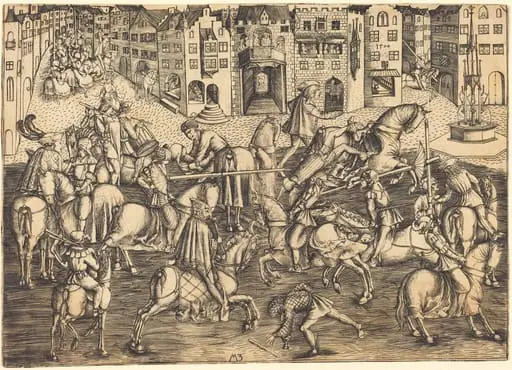
Executed as a woodcut, the work displays Cranach’s precise line work and rhythmic composition, typical of Northern Renaissance printmaking. Figures are rendered with angular, stylized forms, and the crowded scene is organized through overlapping planes rather than linear perspective. Details in armor, hats, and architecture reflect contemporary dress and customs, while the lion and Samson are depicted with exaggerated musculature to emphasize physical dominance, blending realism with symbolic intensity.
History & Provenance
Commissioned during Cranach’s tenure as court artist to the Electors of Saxony, the print likely circulated among noble patrons and reform-minded circles. Its survival in the Cleveland Museum of Art’s collection traces back to early 20th-century acquisitions of German Renaissance prints. Though few records detail its early ownership, its survival in good condition suggests it was valued as both artistic and devotional material, possibly used to reinforce moral or political ideals among elite audiences.
Context
In early 16th-century Germany, biblical stories were frequently reimagined through contemporary social frameworks. Cranach, closely aligned with Martin Luther, often used religious themes to reflect emerging Protestant values. The tournament setting may mirror the pageantry of Saxon court life, while Samson’s strength could symbolize divine favor over human vanity. This fusion of sacred narrative and secular spectacle was common in prints meant for educated, literate viewers navigating religious change.
Legacy
Cranach’s reinterpretation of Samson within a tournament scene influenced later Northern artists who blended biblical themes with everyday life. While not widely replicated, the print exemplifies how religious imagery adapted to the cultural priorities of its time. Its preservation in a major American museum underscores its role as a key example of German Renaissance printmaking, offering insight into the intersection of faith, power, and visual storytelling in the early Reformation period.
Artist & collection
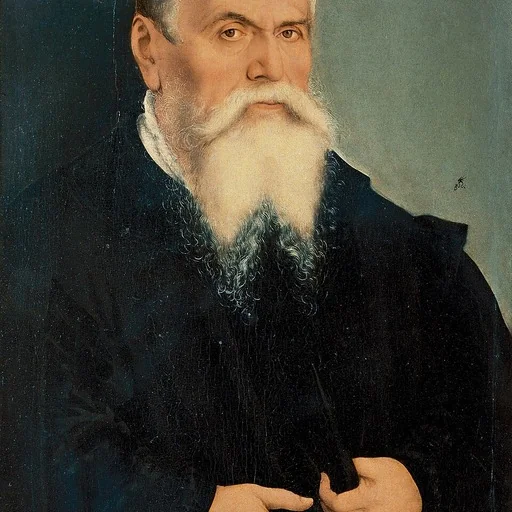
Artist
Lucas Cranach the Elder was a German Renaissance painter and printmaker in woodcut and engraving.