Artwork
Cupid
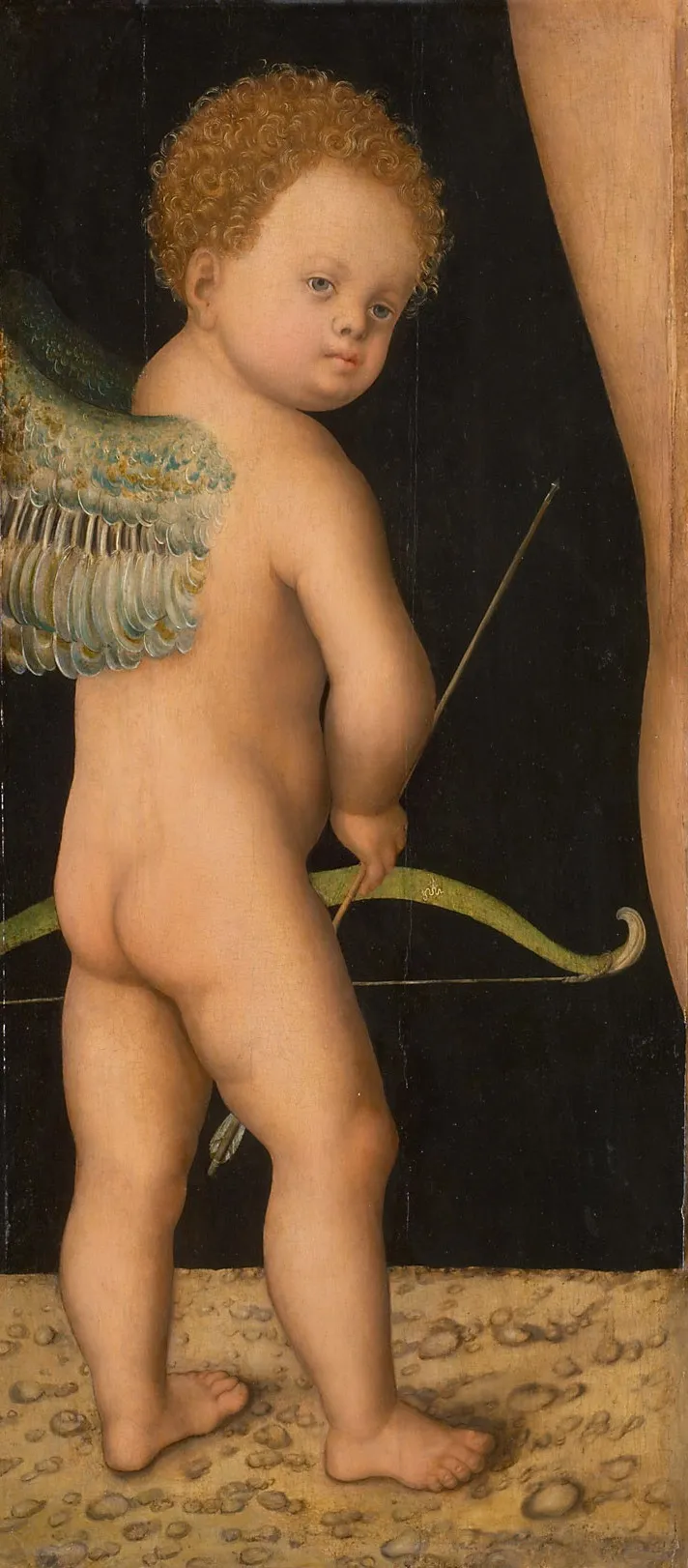
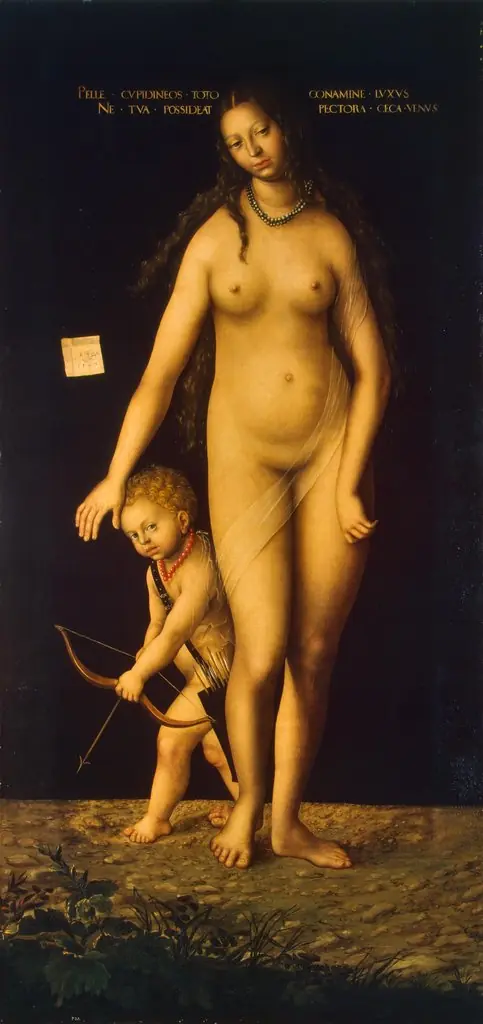
Cupid is an unspecified painting by the Northern Renaissance artist Lucas Cranach the Elder. It dates from 1530 and is held in the collection of the Kunsthistorisches Museum.
About this work
Overview
The composition isolates the subject, emphasizing his slender form and the contrast between his pale skin and the dark void.
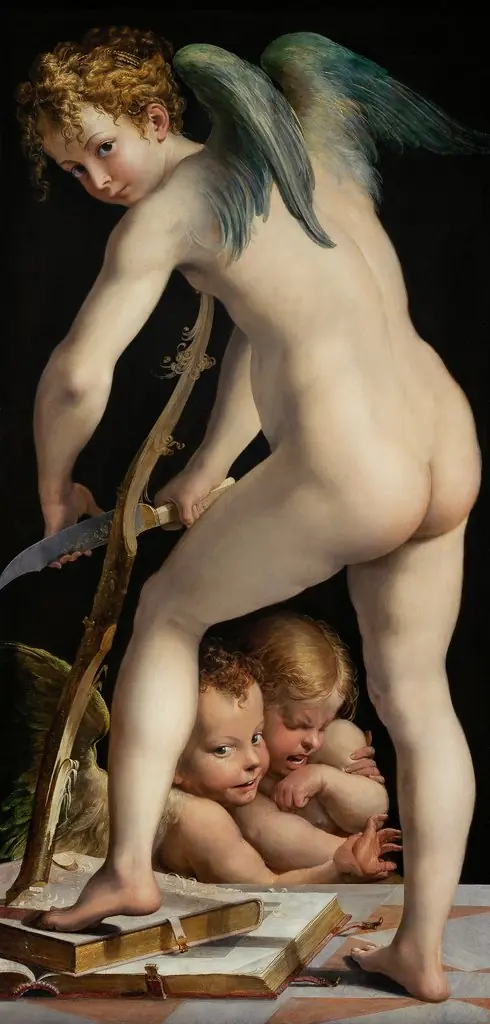
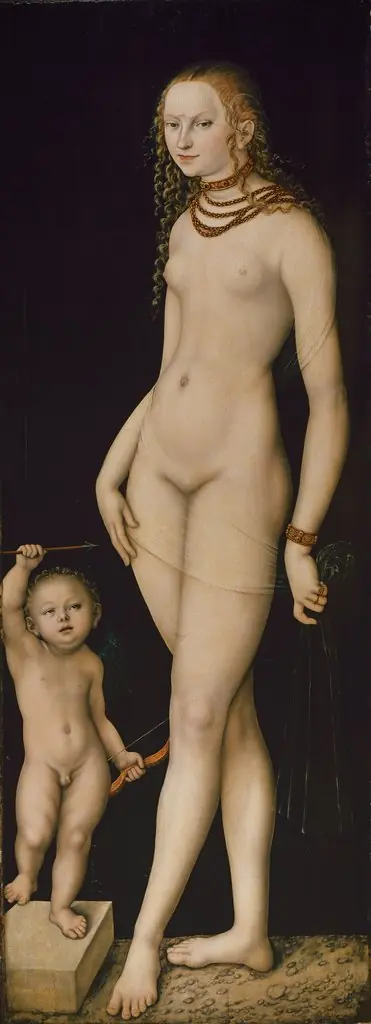
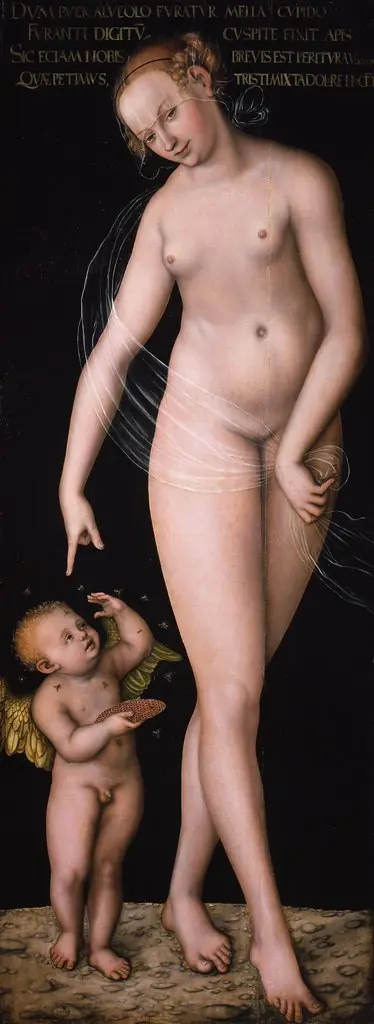
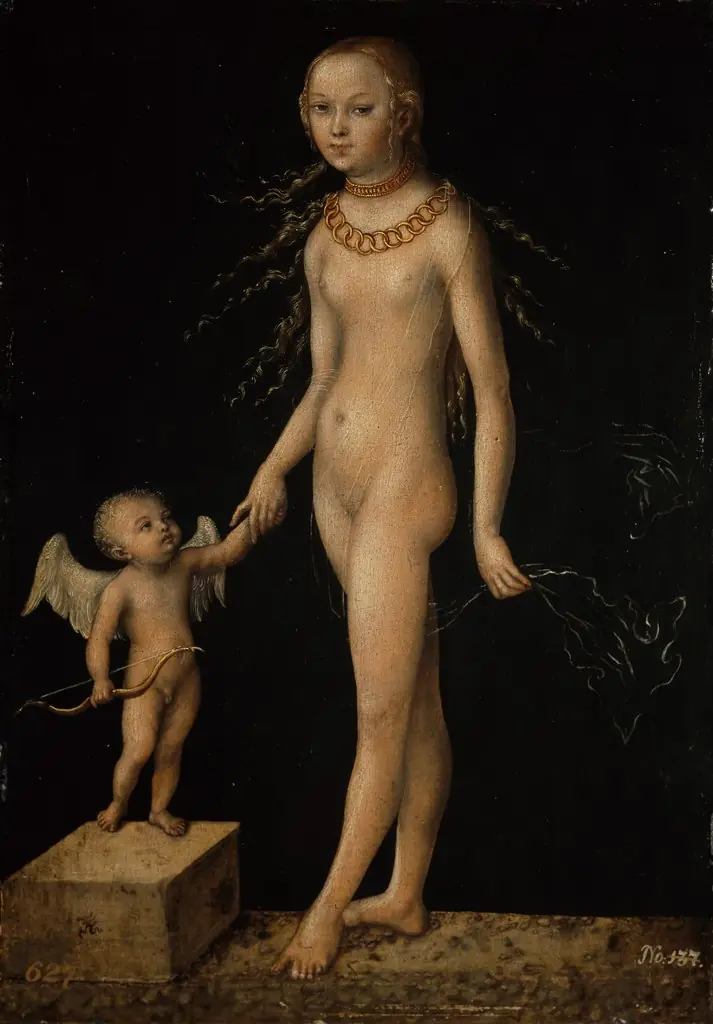
Painted in 1530, Lucas Cranach the Elder's Cupid presents the mythological god of desire as a youthful, nude figure standing in a three-quarter view against a stark black background. The composition isolates the subject, emphasizing his slender form and the contrast between his pale skin and the dark void. The figure possesses curly hair and a pair of feathered wings rendered in distinct shades of blue and gold. He holds a bow in one hand while a quiver filled with arrows rests on his back, signifying his role as an archer of love. This work exemplifies Cranach's mature style during the early 16th century, characterized by elongated proportions and a decorative elegance that blends Northern Renaissance detail with Italianate influences. The solid black ground was a frequent device in Cranach's mythological and allegorical paintings of this period, allowing the viewer to focus entirely on the figure's pose and the symbolic attributes of the deity. Created during a time when Cranach was a leading figure in the German Reformation and a favored court painter for the Electors of Saxony, this depiction reflects the artist's ability to adapt classical themes to contemporary aesthetic tastes.
Subject & Meaning
The composition features a youthful, winged Cupid rendered in a three‑quarter pose. He is unclothed, clutching a green bow with an arrow aimed downward, and a quiver rests on his back. The neutral expression and poised stance suggest a contemplative moment rather than overt action, inviting reflection on the themes of love and desire inherent to the myth.
Technique & Style
Cranach employs a realistic approach, detailing the curls of the hair, the texture of the feathered wings, and the metallic sheen of the bow. The wings display a subtle blend of blue and gold tones, while the background is a flat black, creating a dramatic contrast that highlights the figure’s anatomy and the painter’s precise handling of light.
History & Provenance
The painting has remained in the Austrian imperial collection since the 16th century, eventually becoming part of the Kunsthistorisches Museum’s holdings. Its attribution to Cranach the Elder is supported by stylistic analysis and documentation linking the work to his workshop during the early Reformation period.
Artist & collection
Artist
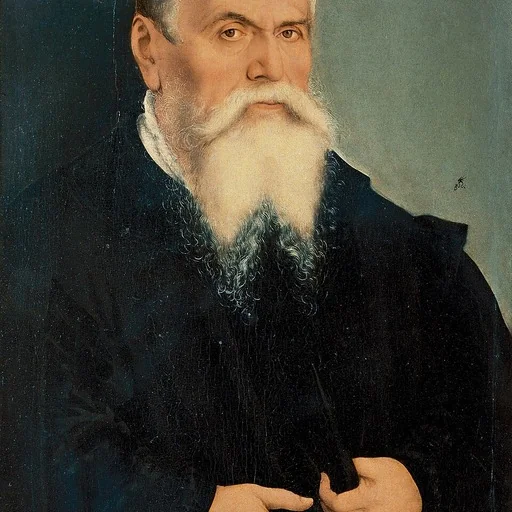
Lucas Cranach the Elder was a German Renaissance painter and printmaker in woodcut and engraving.