Artwork
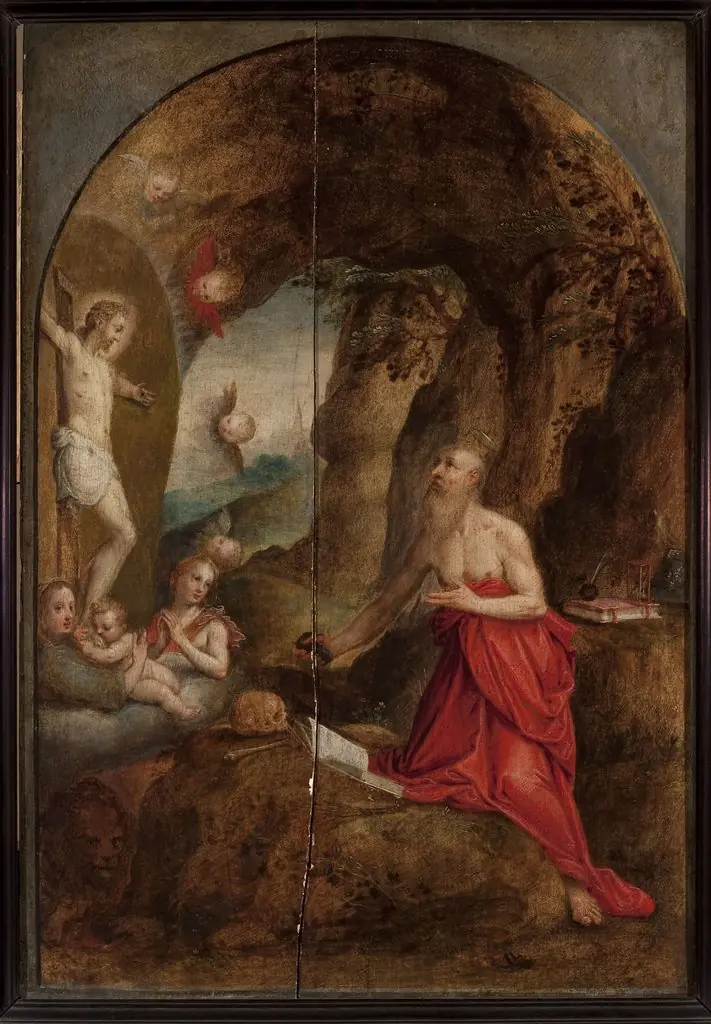
Penitent Saint Jerome
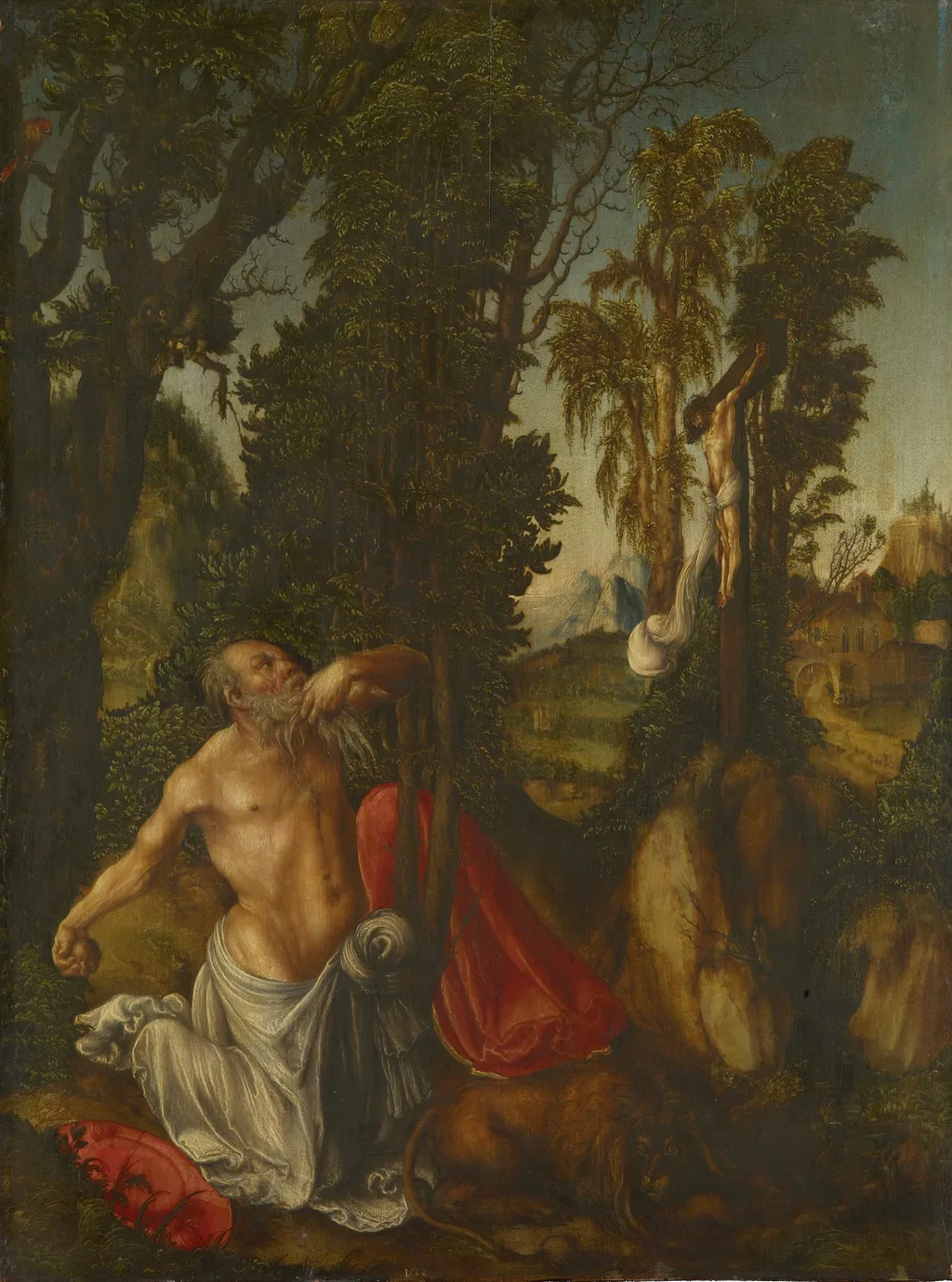
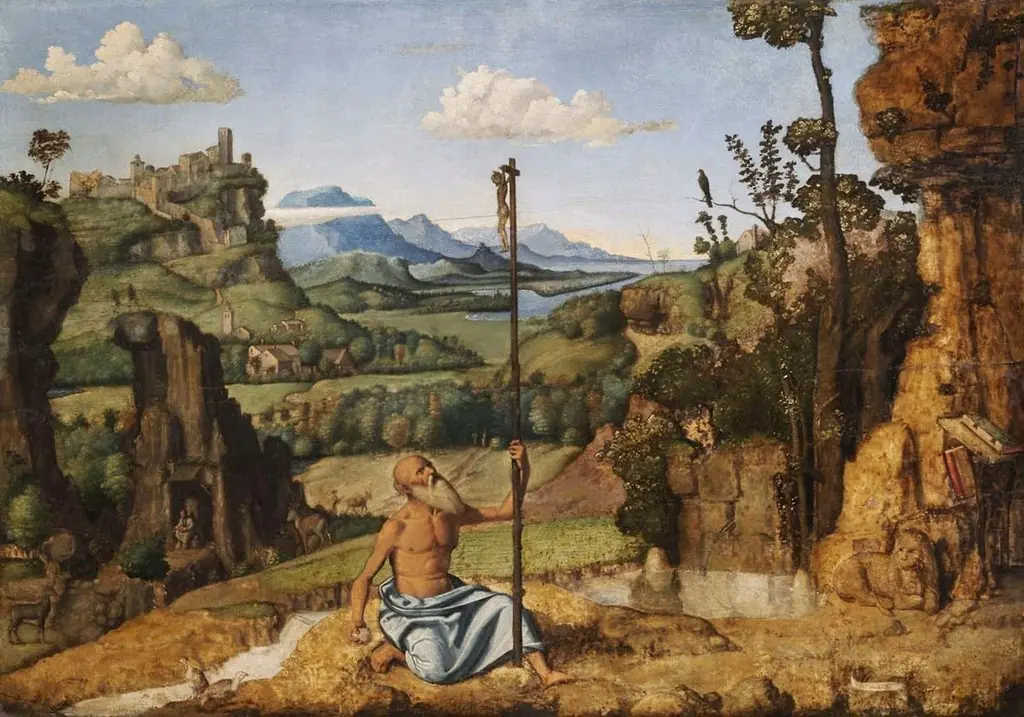
Penitent Saint Jerome is a wood painting by the Northern Renaissance artist Lucas Cranach the Elder. It dates from 1502 and is held in the collection of the Kunsthistorisches Museum.
About this work
Overview
Created in 1502 by Lucas Cranach the Elder, this work on a lime‑wood panel portrays a solitary figure in a moment of penitence. The composition is held in the Kunsthistorisches Museum, where it is displayed as an example of early 16th‑century Northern religious art.
Subject & Meaning
The central figure is Saint Jerome, rendered kneeling with a long white beard and clothed in a red mantle over one shoulder and a white wrap at the waist. His gaze is directed upward toward a small crucifix suspended from a tree branch, emphasizing themes of repentance and devotion.
Technique & Style
Cranach employs a muted palette of earth tones, punctuated by the vivid red of the mantle. The figure is modeled with fine brushwork that captures the texture of beard and fabric, while the background features a lightly rendered landscape of trees, distant hills, and a blue sky, creating a calm yet reverent atmosphere.
History & Provenance
The painting entered the collection of the Kunsthistorisches Museum in Vienna, though earlier ownership records are sparse. Its attribution to Cranach the Elder has been confirmed through stylistic analysis and comparison with other dated works from his workshop.
Context
Executed during the early Reformation period, the image reflects the continued demand for devotional images of saints. Jerome, known for his translation of the Bible into Latin, was a popular subject for artists seeking to underscore scholarly and penitential virtues.
Own this work as a print
Artist & collection
Artist
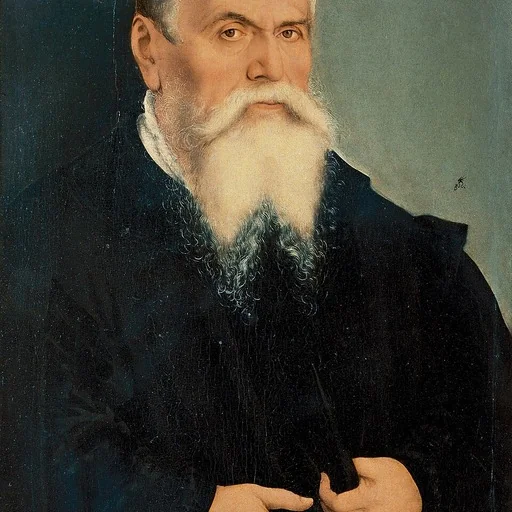
Lucas Cranach the Elder was a German Renaissance painter and printmaker in woodcut and engraving.