Artwork
Portrait of Philipp Melanchton
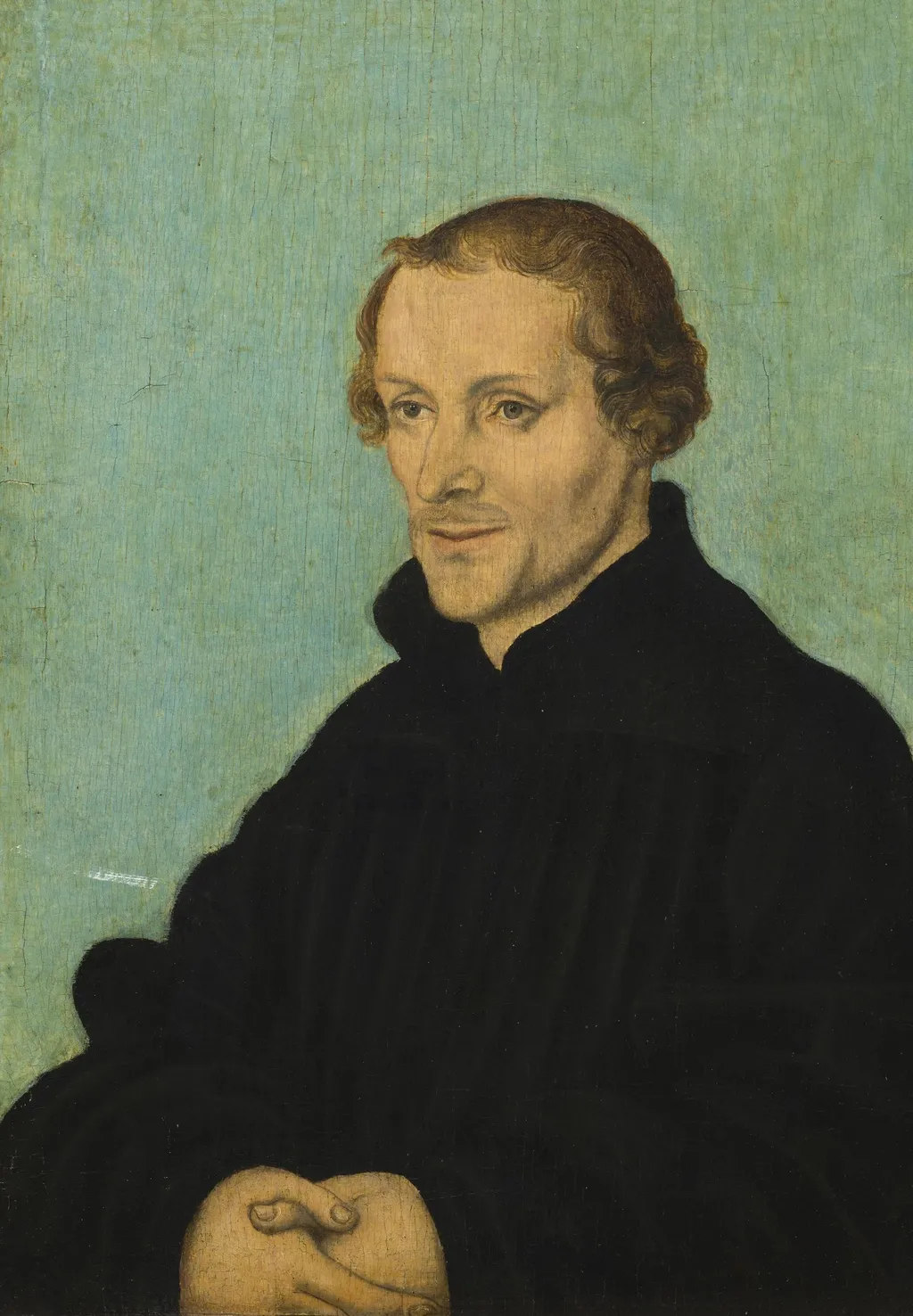
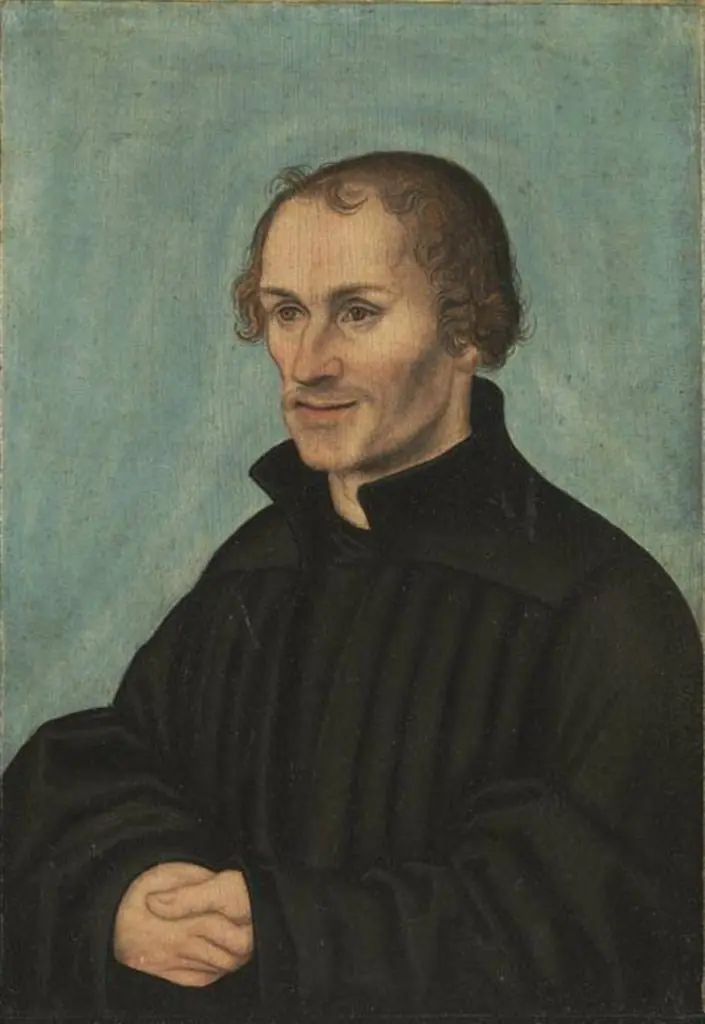
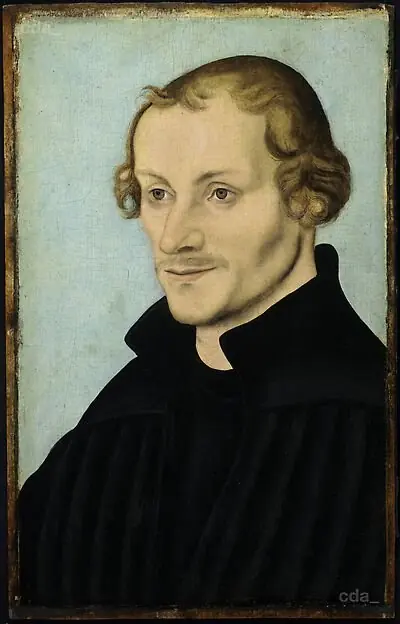
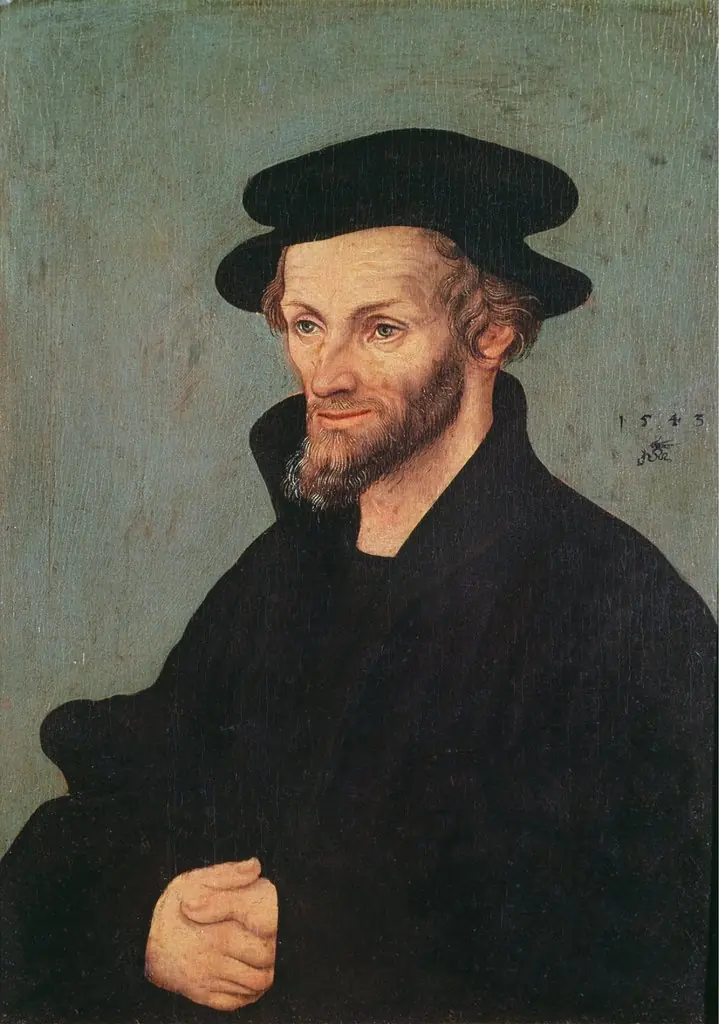
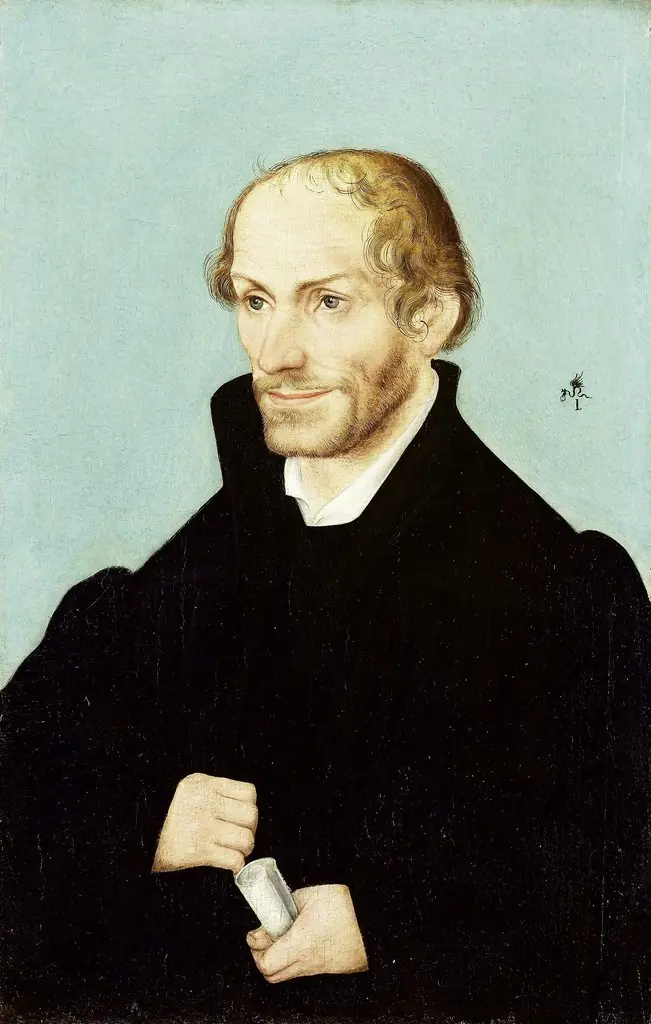
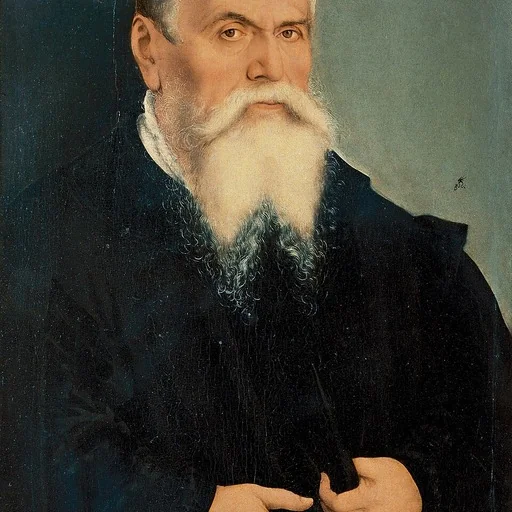
Portrait of Philipp Melanchton is an oil painting by the Northern Renaissance artist Lucas Cranach the Elder. It dates from 1532 and is held in the collection of the Hermitage Museum.
About this work
Overview
Created in 1532, this oil painting by Lucas Cranach the Elder presents a formal portrait of the German reformer Philipp Melanchthon. The work is part of the collection of the State Hermitage Museum in St. Petersburg and exemplifies Cranach’s courtly portraiture during the early Reformation period.
Subject & Meaning
The sitter, Philipp Melanchthon, appears with a composed, serious expression, his gaze meeting the viewer directly. Dressed in a dark, high‑collared robe, his posture and clasped hands convey scholarly dignity and contemplative resolve, reflecting his role as a leading theologian and humanist of the era.
Technique & Style
Cranach employs a restrained chiaroscuro, modeling the face with subtle light and shadow that gives it a three‑dimensional presence against a muted blue‑green backdrop. The short, wavy brown hair and the texture of the fabric are rendered with fine brushwork, while the overall palette remains sober, reinforcing the portrait’s solemn tone.
History & Provenance
The painting has remained in the Hermitage’s holdings since its acquisition in the 19th century, having passed through several private collections after its creation. Its attribution to Cranach the Elder has been confirmed through stylistic analysis and archival documentation linking the work to the artist’s workshop in Wittenberg.
Own this work as a print
Artist & collection
Artist
Lucas Cranach the Elder was a German Renaissance painter and printmaker in woodcut and engraving.