Artwork
St. Jerome in Rocky Landscape
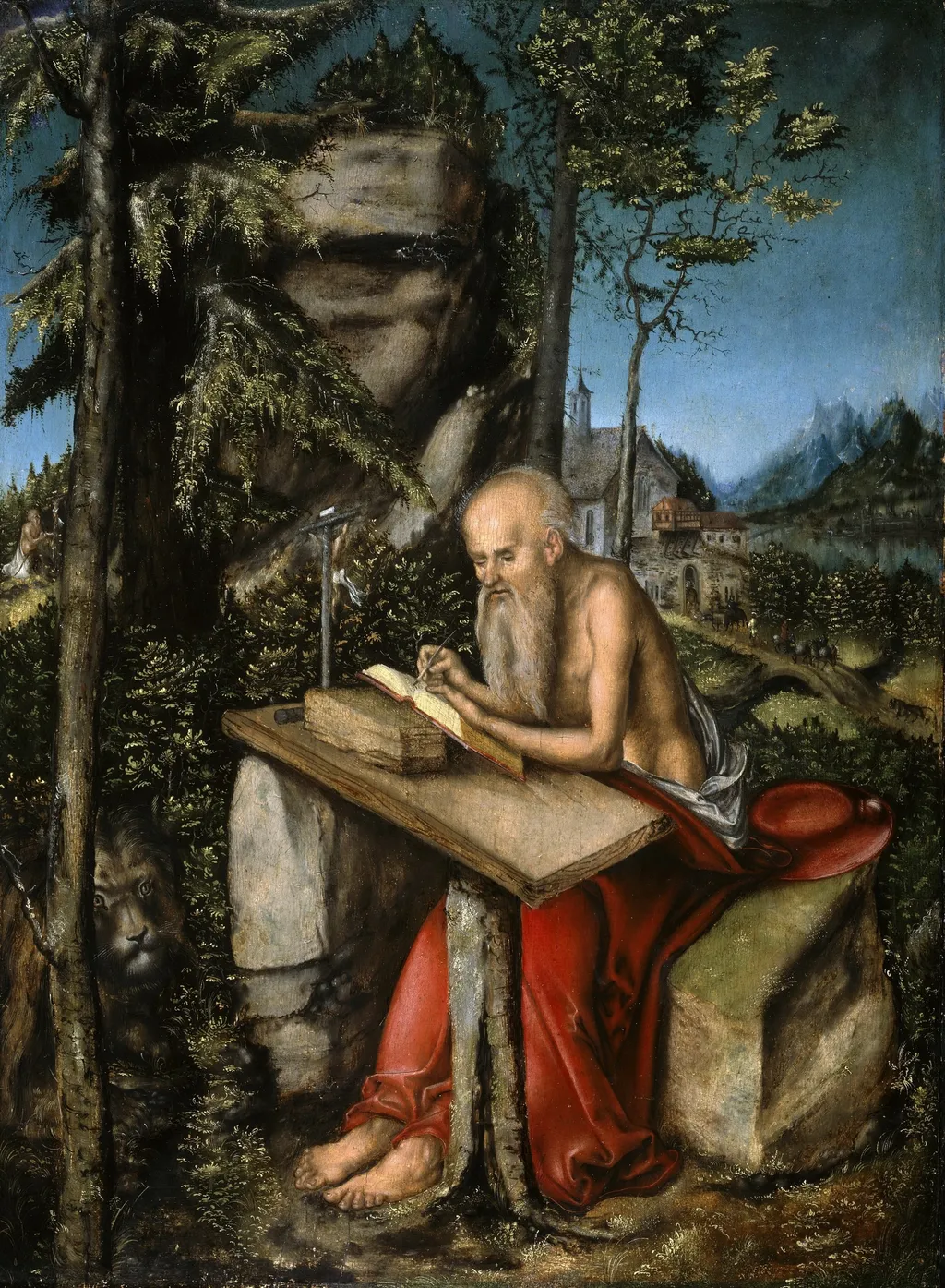
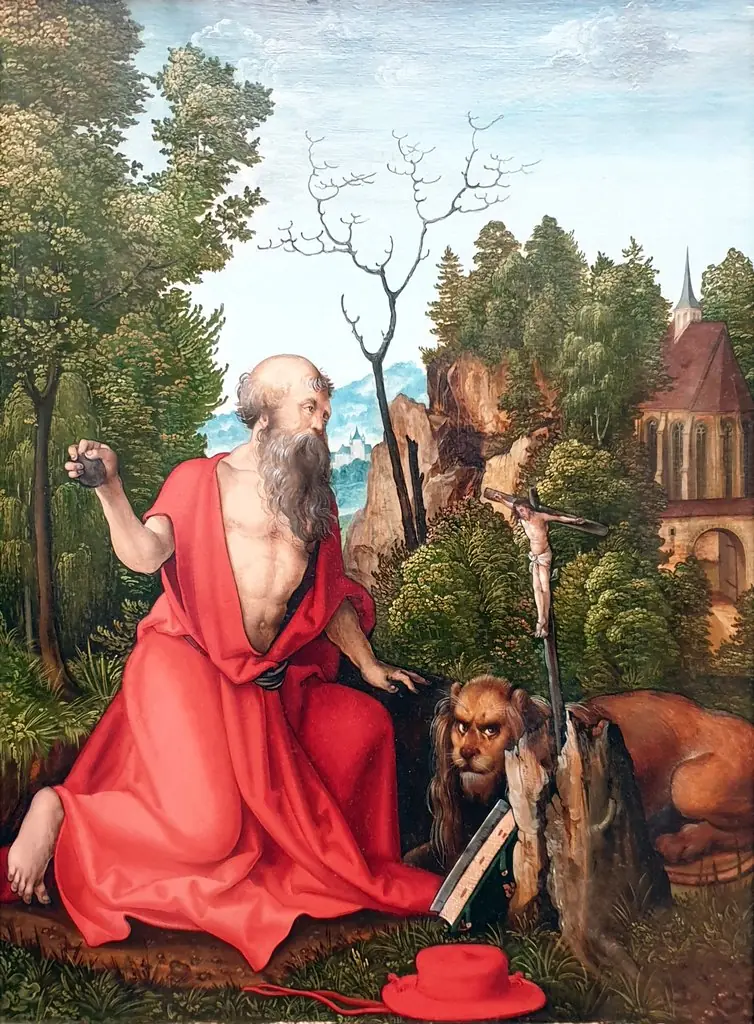
St. Jerome in Rocky Landscape is a paint painting by the Northern Renaissance artist Lucas Cranach the Elder. It dates from 1515 and is held in the collection of the Gemäldegalerie Berlin. Painted in 1515, St.
About this work
Overview
The composition centers on the elderly figure seated on a rocky ledge, characterized by his long white beard, bare chest, and distinctive red trousers.
Painted in 1515, St. Jerome in Rocky Landscape depicts the saint in a moment of scholarly contemplation within a rugged natural setting. The composition centers on the elderly figure seated on a rocky ledge, characterized by his long white beard, bare chest, and distinctive red trousers. He is engaged in writing within a book resting on his lap, while his red cardinal's hat lies discarded beside him. A lion, the saint's traditional companion, emerges subtly from the surrounding foliage, its head visible near the bushes. The background transitions from the immediate rocky foreground into a dense, dark forest that recedes toward distant architectural forms, creating a sense of depth and isolation. This work exemplifies Lucas Cranach the Elder's early mastery of blending religious iconography with the emerging German Renaissance interest in detailed landscape painting. The piece reflects the artist's ability to integrate humanist themes with the dramatic, almost theatrical lighting and texture typical of his mid-career output, establishing a visual language that would influence the Northern Renaissance.
Subject & Meaning
The work portrays Saint Jerome, traditionally associated with scholarly labor and translation of the Bible. By placing him amid a rugged terrain, Cranach emphasizes the saint’s ascetic devotion, contrasting intellectual pursuit with the untamed natural world. The lion, a common attribute of Jerome, reinforces his legendary encounter with the animal, symbolizing mastery over the wild.
Technique & Style
Cranach employs a pronounced chiaroscuro, using strong contrasts of light and shadow to model the figure’s face and the textured rocks. The palette is restrained, dominated by earth tones and muted reds, while the sky introduces a cool blue. The composition balances detailed foreground elements with a softened, atmospheric background, creating depth without sacrificing clarity.
History & Provenance
Created in the early sixteenth century, the painting entered the collection of the Gemäldegalerie in Berlin, where it remains on display. Its provenance traces back to German court collections, reflecting Cranach’s status as a leading painter for the Electors of Saxony and other aristocratic patrons.
Context
The piece belongs to a period when Northern Renaissance artists increasingly combined religious subjects with naturalistic settings. Cranach’s rendition aligns with contemporary humanist interests, presenting a learned saint within a realistic landscape rather than a purely symbolic backdrop, thereby linking spiritual contemplation to the observable world.
Own this work as a print
Artist & collection
Artist
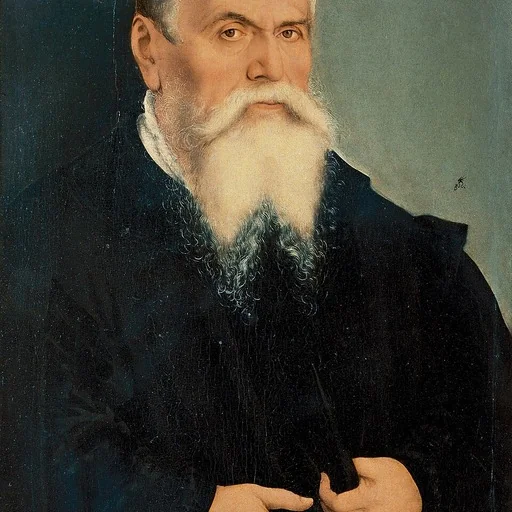
Lucas Cranach the Elder was a German Renaissance painter and printmaker in woodcut and engraving.