Artwork
Venus and Cupid
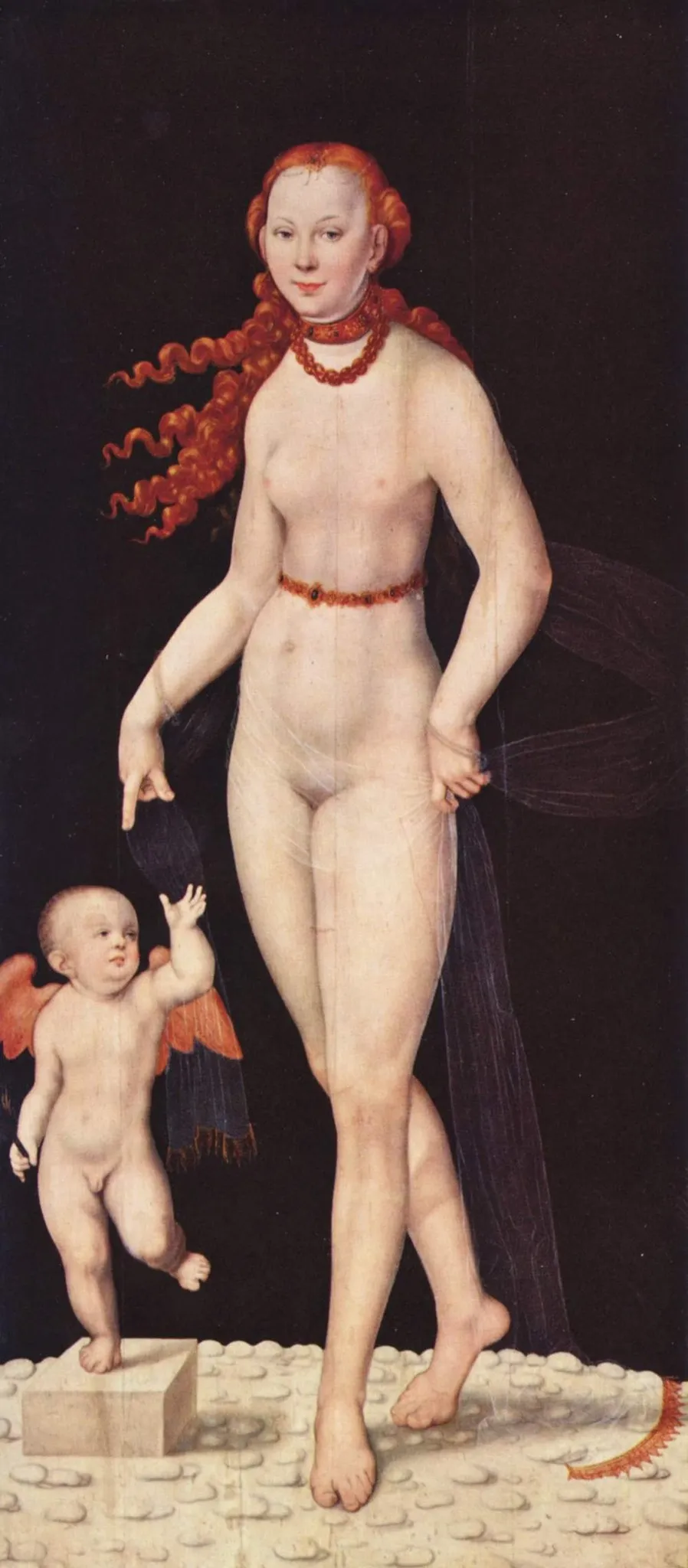
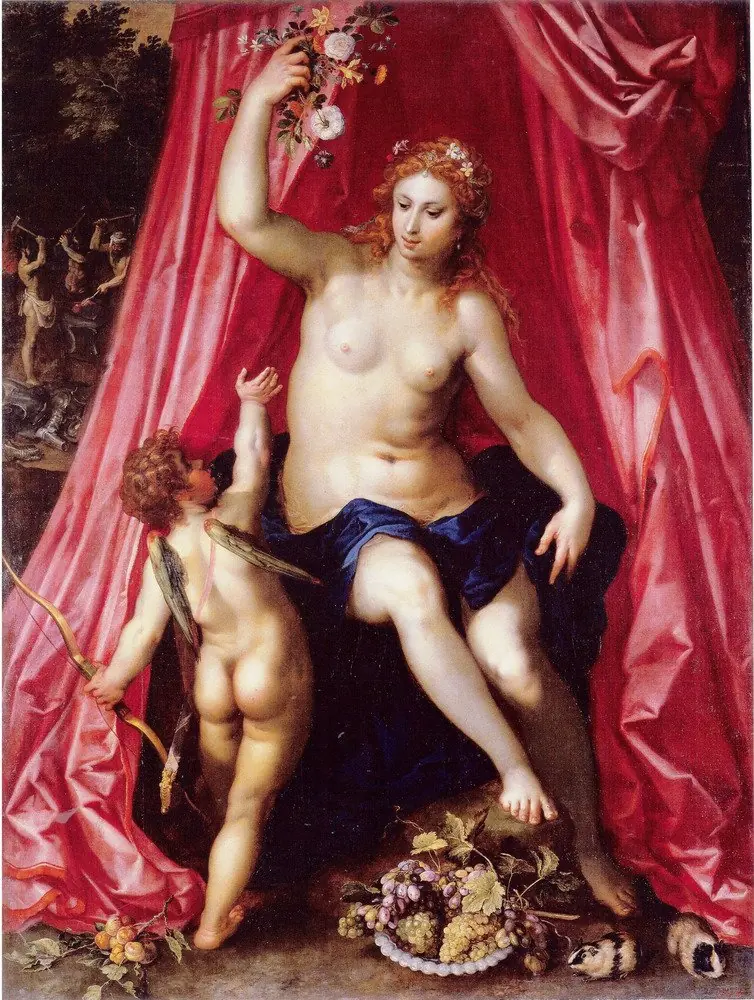
Venus and Cupid is an oil painting by the Early Baroque Italian artist Heinrich Bollandt. It dates from 1625 and is held in the collection of the Bavarian State Painting Collections.
About this work
Overview
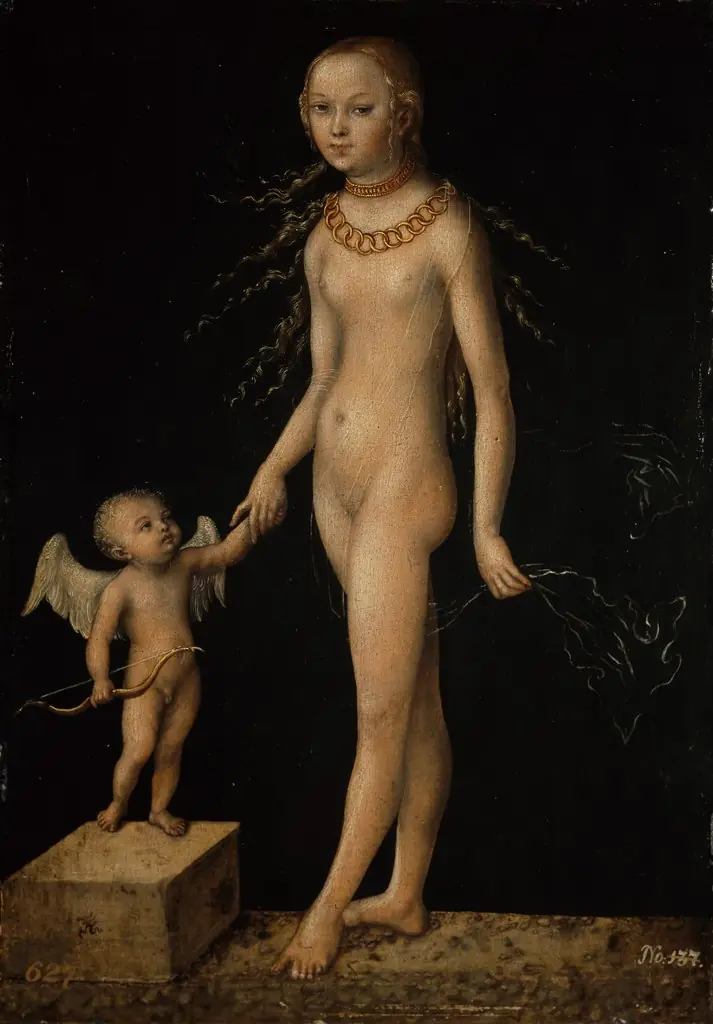
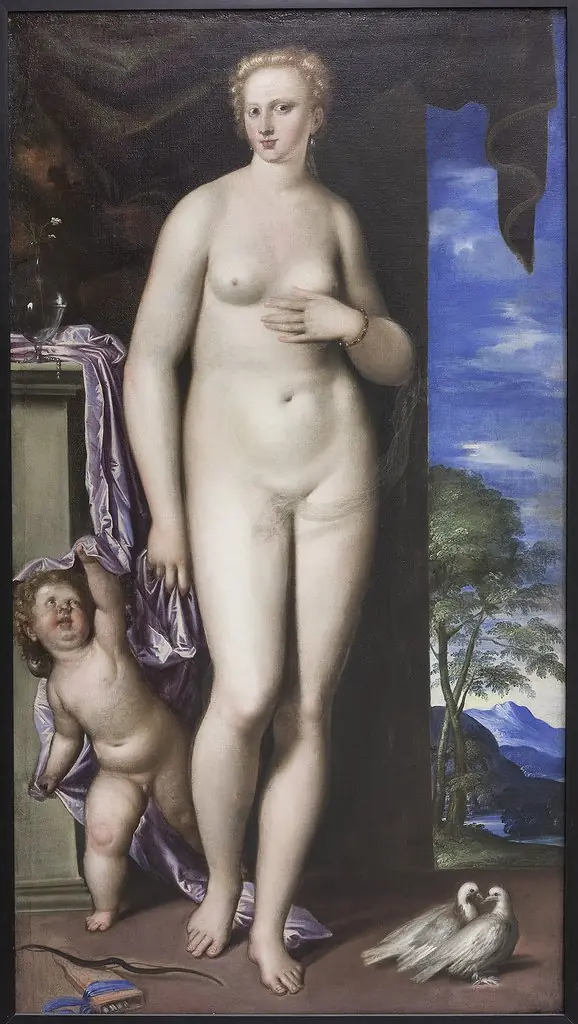
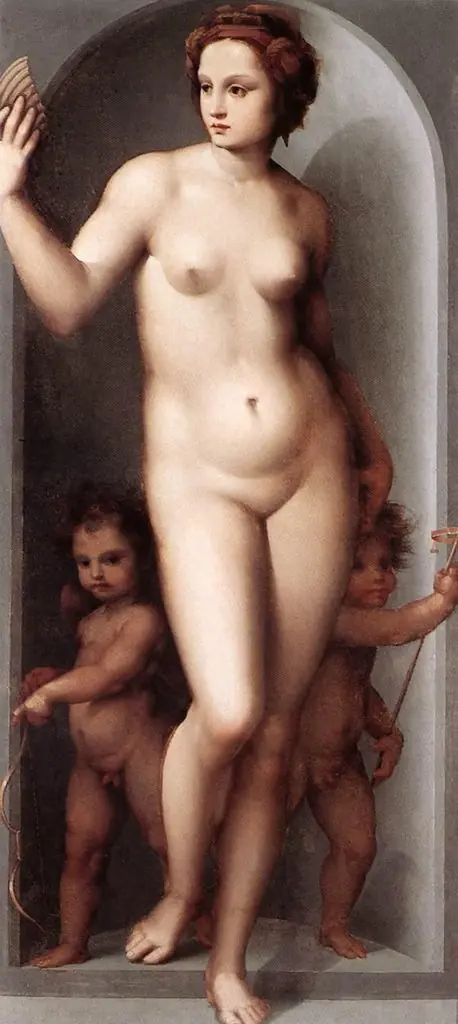
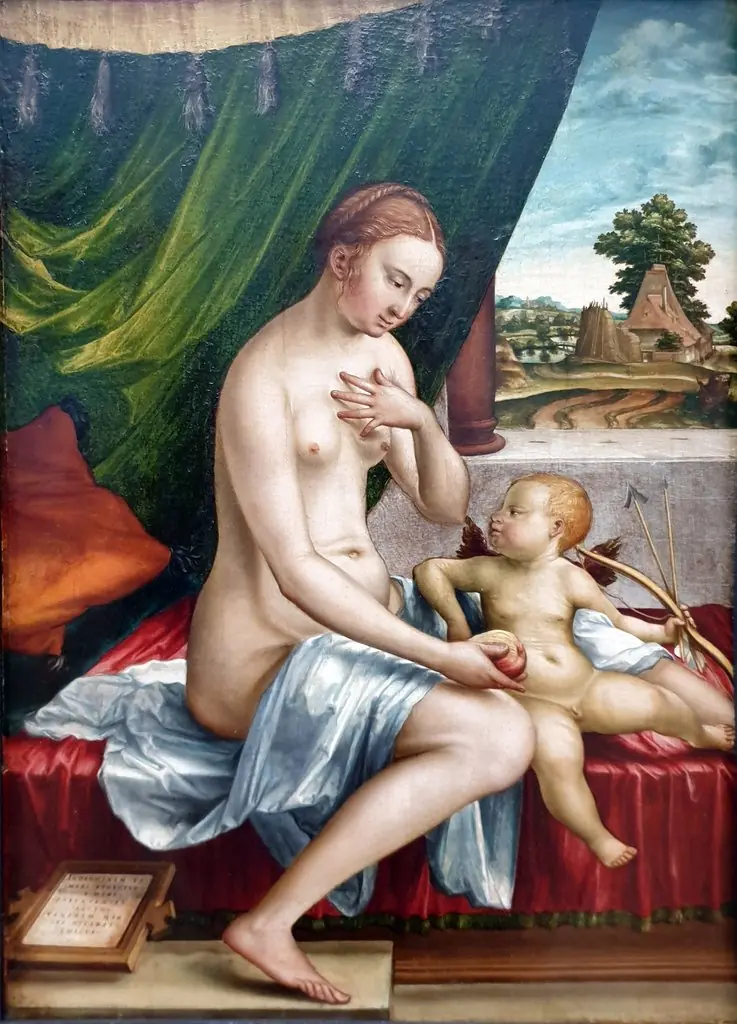
Heinrich Bollandt, who served as court painter to Christian, Margrave of Brandenburg‑Bayreuth, completed the oil painting *Venus and Cupid* in 1625. The work presents the Roman goddess Venus together with her son, the winged Cupid, rendered in a style that reflects early Baroque influences from Italy. It is part of the collection of the Alte Pinakothek in Munich.
Subject & Meaning
The juxtaposition of the goddess’s calm pose with the playful gesture of the child creates a dialogue between divine love and its earthly expression.
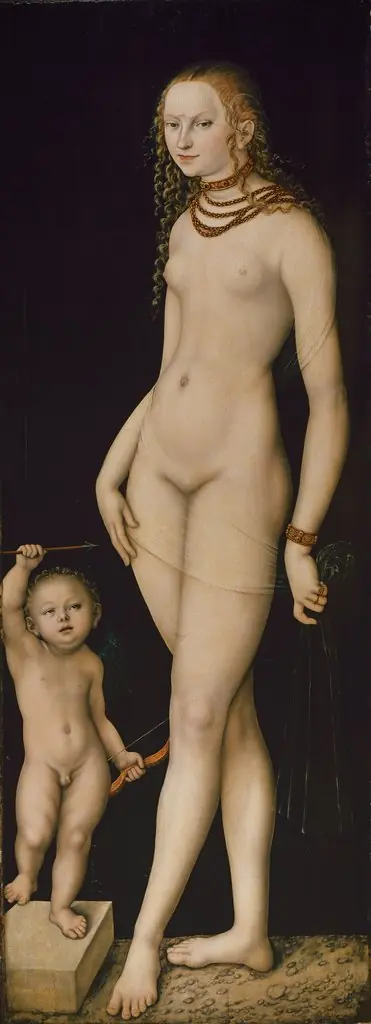
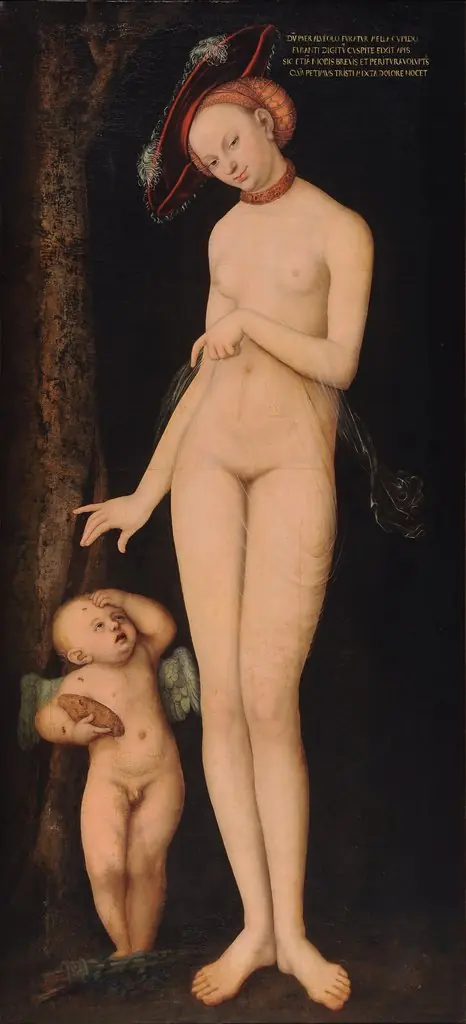
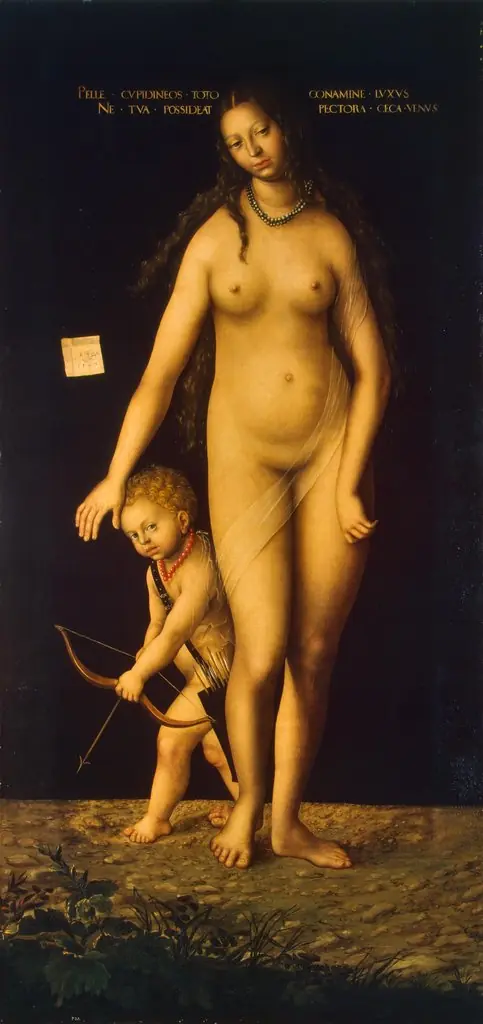
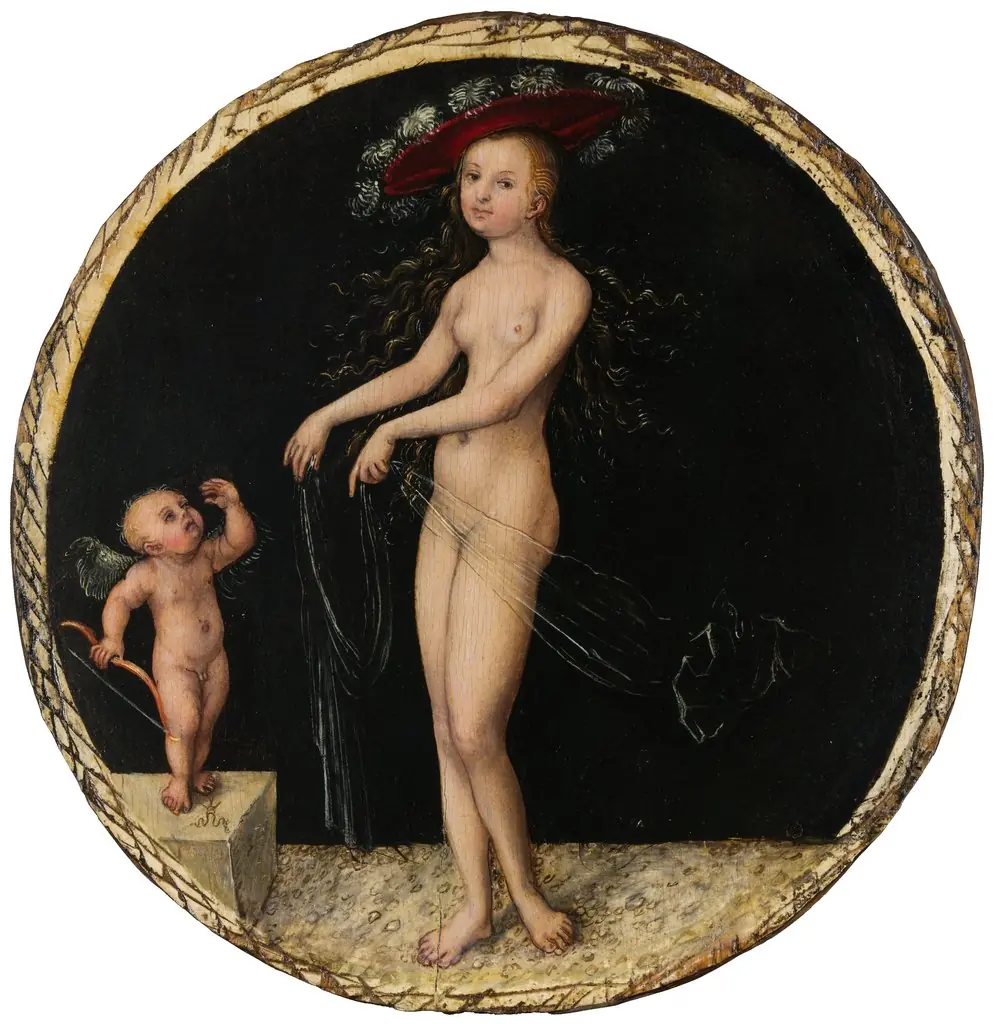
The composition shows a nude female figure with striking red hair, identified as Venus, standing before a dark backdrop. She is adorned only with a red beaded necklace and belt, while her long hair cascades over her shoulders. Beside her, a small winged child—Cupid—reaches upward, his simple cloth garment emphasizing his youthful innocence. The juxtaposition of the goddess’s calm pose with the playful gesture of the child creates a dialogue between divine love and its earthly expression.
Technique & Style
Executed in oil on canvas, Bollandt employs a limited palette that highlights the pallor of the figures against a deep, almost tenebristic background. The smooth rendering of flesh and the delicate treatment of the red accessories contrast with the tiled floor, which is suggested through a subtle mosaic pattern of small round tiles. The handling of light and shadow reflects the early Baroque interest in dramatic chiaroscuro while retaining a restrained, courtly elegance.
History & Provenance
Although Bollandt is chiefly remembered for portraiture, this mythological piece demonstrates his versatility and his engagement with contemporary Italian trends. After its creation, the painting entered the holdings of the Alte Pinakothek, where it remains on display as part of the museum’s German Baroque collection.
Context
In the early seventeenth century, depictions of Venus served both decorative and allegorical purposes, symbolizing beauty, love, and fertility. Bollandt’s choice to pair the goddess with Cupid aligns with a broader European tradition of using mythological subjects to convey moral or philosophical ideas within a courtly setting.
Artist & collection
Artist
Heinrich Bollandt (1577/78, Thuringia - 19 August 1653, Bayreuth) was a court painter to Christian, Margrave of Brandenburg-Bayreuth; one of the first artists of what would come to be known as the "Brandenburg Renaissance".