Artwork
Hadleigh Castle (Large Plate)
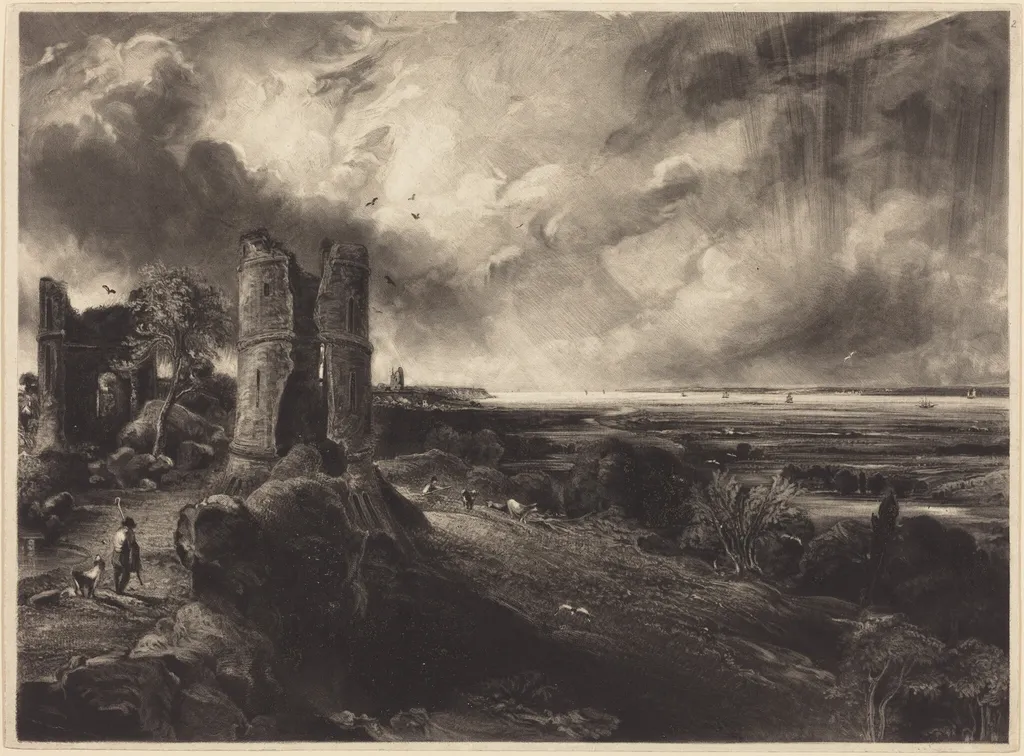
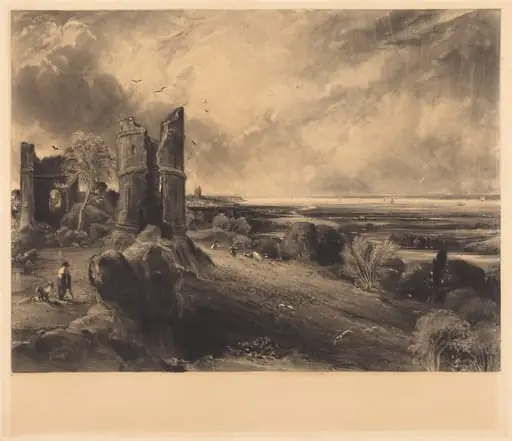
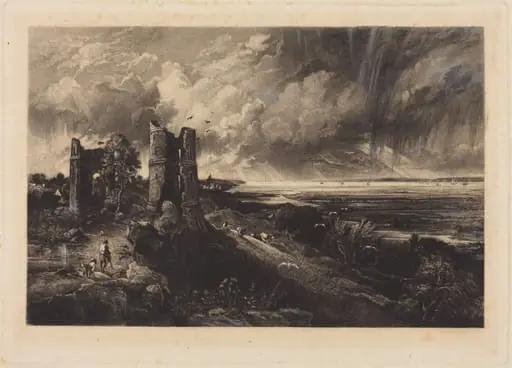
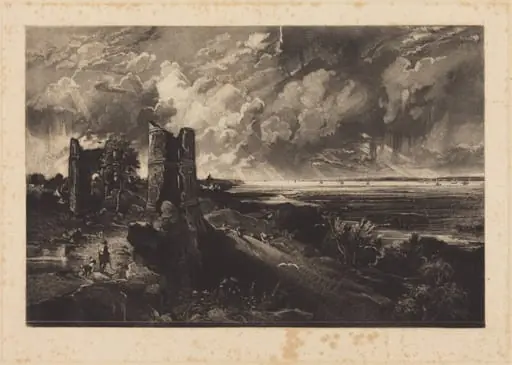
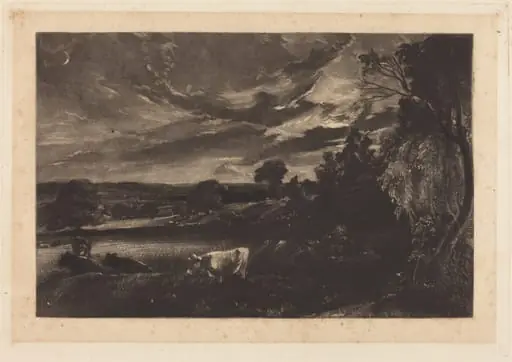
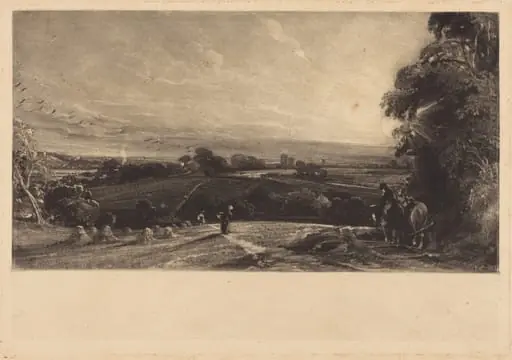
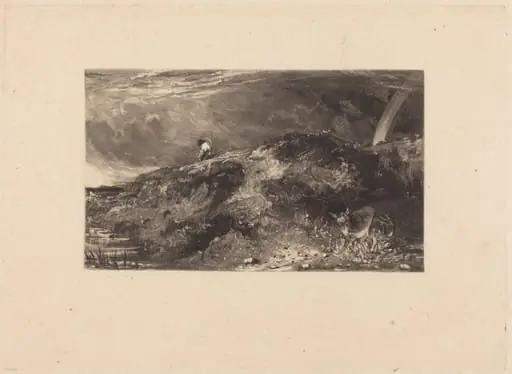
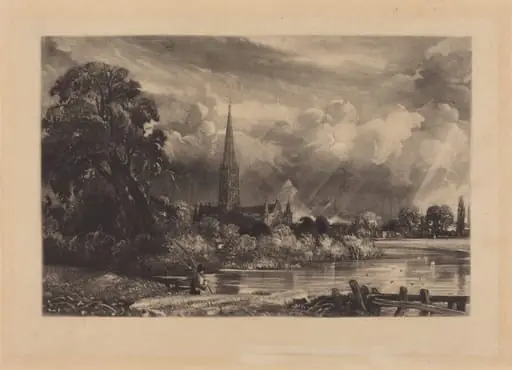
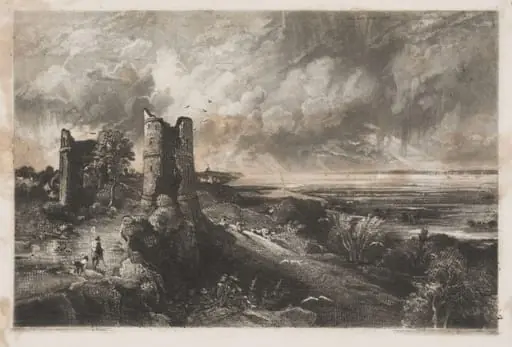
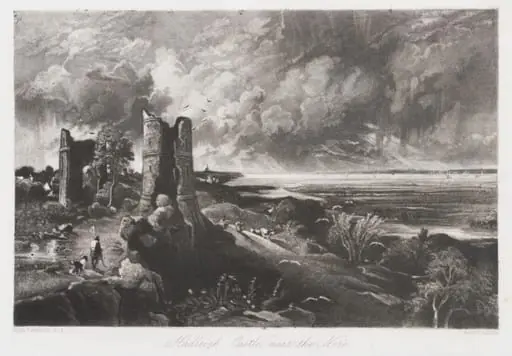
Hadleigh Castle (Large Plate) is an ink print by the Romanticist artist David Lucas. It dates from 1830 and is held in the collection of the National Gallery of Art.
About this work
Overview
It captures the ruins of Hadleigh Castle in Essex, rendered with meticulous attention to atmospheric detail and the quiet decay of the structure.
Hadleigh Castle (Large Plate) is a mezzotint print produced by David Lucas in 1830, based on a drawing by John Constable. Unlike a painting, this work is a printed impression, made through a labor-intensive engraving process that allows for subtle tonal gradations. It captures the ruins of Hadleigh Castle in Essex, rendered with meticulous attention to atmospheric detail and the quiet decay of the structure.
Subject & Meaning
The image portrays the crumbling remains of Hadleigh Castle against a broad, windswept sky. The castle, once a symbol of power, now stands as a quiet monument to time’s erosion. The barren landscape and overcast horizon suggest melancholy and transience, reflecting broader 19th-century contemplations on nature, history, and the impermanence of human endeavor.
Technique & Style
Lucas employed mezzotint, a technique that builds tone from dark to light by roughening a metal plate and then smoothing areas to hold ink. This method allowed for rich, velvety blacks and delicate transitions in light, enhancing the mood of the scene. The result is a textured, almost painterly surface that emphasizes atmospheric depth over linear precision.
History & Provenance
Created as a progress proof, this impression was part of Lucas’s iterative process in translating Constable’s drawings into prints. It was not intended for public sale but served as a working version to refine tonal balance. The print remained within the artists’ circle, later entering institutional collections as a key example of 19th-century printmaking collaboration.
Context
In the 1830s, British artists increasingly turned to landscape as a vehicle for emotional and philosophical expression. Constable’s focus on rural scenes and ruins aligned with Romantic sensibilities, while Lucas’s mezzotints helped disseminate these ideas beyond oil paintings. This print reflects a growing interest in documenting England’s architectural heritage amid rapid industrial change.
Legacy
Hadleigh Castle (Large Plate) stands as a significant example of the collaboration between painter and printmaker in the early Victorian era. Lucas’s technical mastery elevated Constable’s vision into a new medium, influencing later printmakers seeking to capture the subtleties of light and mood. The work remains a touchstone in the history of British printmaking for its emotional resonance and technical precision.
Artist & collection