Artwork
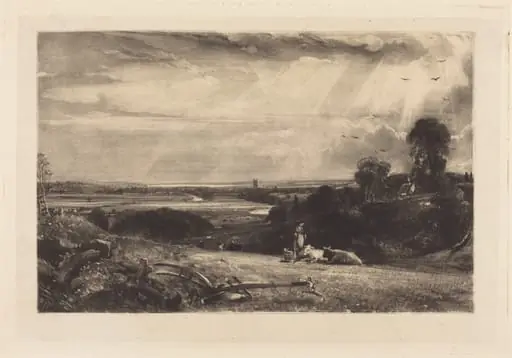
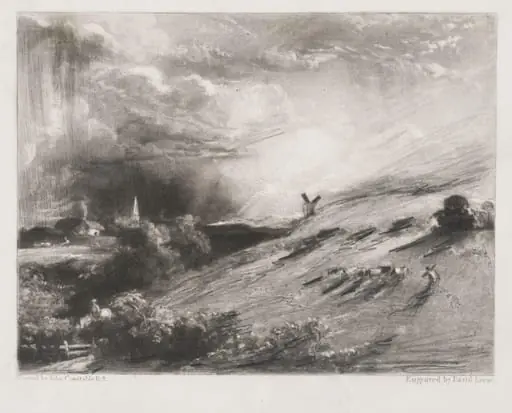
Summer Afternoon, after a Shower
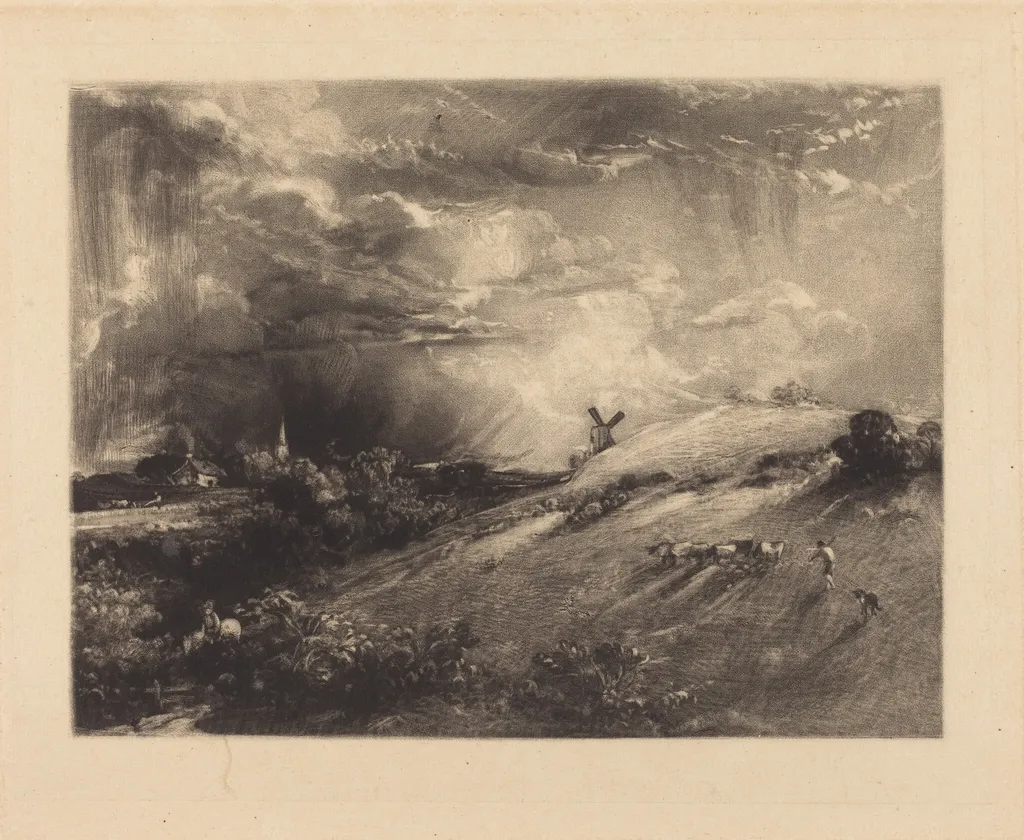
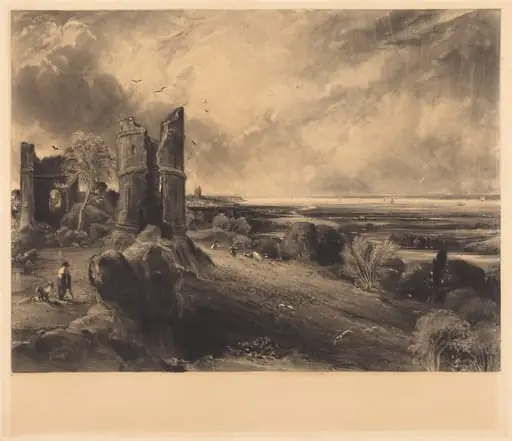
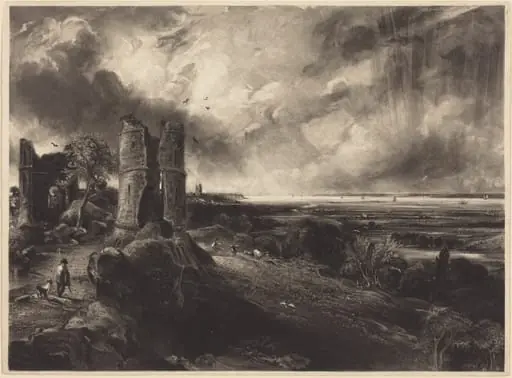
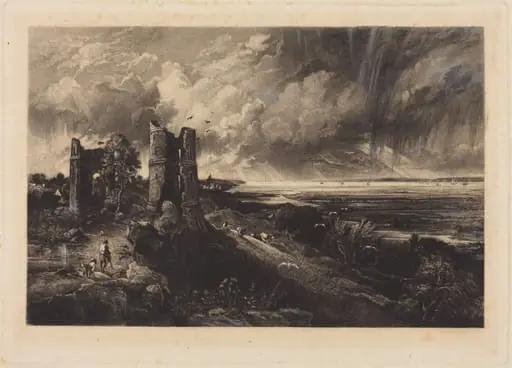
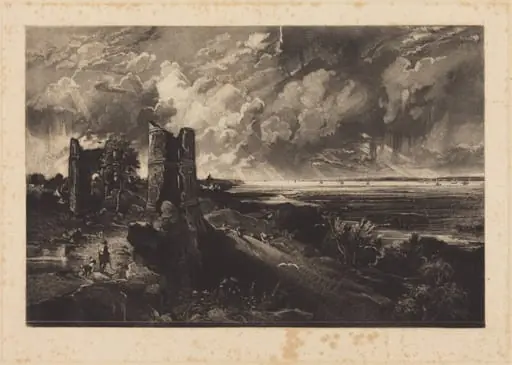
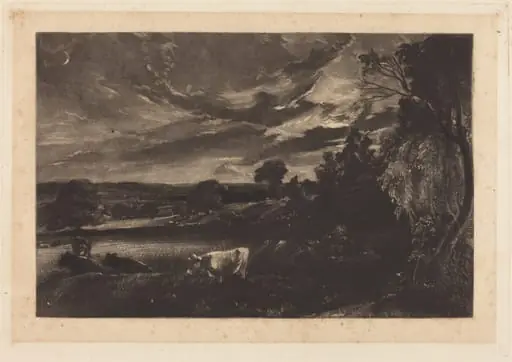
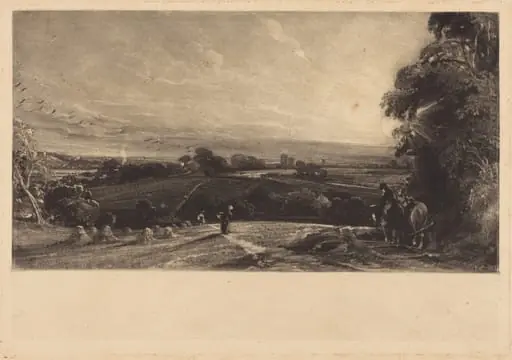
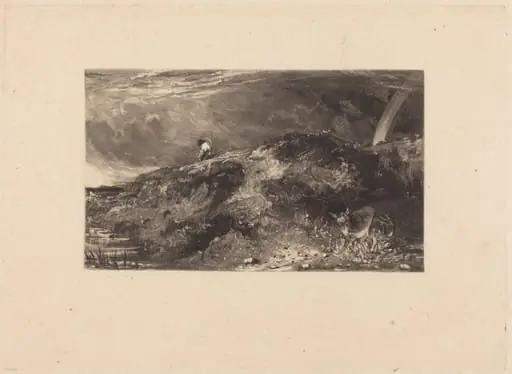
Summer Afternoon, after a Shower is an ink print by the Romanticist artist David Lucas. It dates from 1831 and is held in the collection of the National Gallery of Art.
About this work
Overview
Summer Afternoon, after a Shower is a mezzotint print by David Lucas, produced in 1831 as a progress proof. It captures a rural English landscape moments after a rainstorm, rendered in tonal gradations characteristic of the mezzotint technique. The work reflects Lucas’s close collaboration with landscape painters of the period, translating their atmospheric visions into print form.
Subject & Meaning
The scene depicts a quiet pasture where a flock of sheep grazes on damp, green slopes. A solitary windmill rises in the distance beneath a sky still streaked with dark clouds, while patches of sunlight break through. The stillness of the moment and the lingering moisture suggest renewal, evoking a contemplative mood rather than dramatic action, aligning with quiet Romantic sensibilities.
Technique & Style
Lucas employed mezzotint, a labor-intensive intaglio method, to achieve subtle transitions between light and shadow. By rocking the plate to create a textured ground and selectively smoothing areas, he rendered the glistening wet earth, soft cloud edges, and velvety foliage with remarkable nuance. The result is a tonal harmony that emphasizes atmosphere over detail.
History & Provenance
Created as a progress proof, this impression was likely used to refine the final print before editioning. Lucas frequently worked from drawings by John Constable, and this piece may derive from one of those studies. As a proof, it holds archival value, offering insight into the iterative process of 19th-century reproductive printmaking.
Context
In the 1830s, mezzotint was widely used to reproduce landscape paintings for middle-class collectors. Lucas’s work contributed to the popularization of rural English scenes, aligning with broader cultural interest in nature as a subject of quiet reverence. This print reflects a shift from grand historical themes toward intimate, everyday naturalism.
Legacy
Though not widely exhibited today, Lucas’s mezzotints remain important for understanding how landscape imagery circulated in Victorian Britain. His technical precision helped preserve the tonal qualities of painterly originals, influencing later printmakers and offering a bridge between oil painting and mass-reproduced imagery.
Own this work as a print
Artist & collection