Artwork
Worship of the Golden Calf
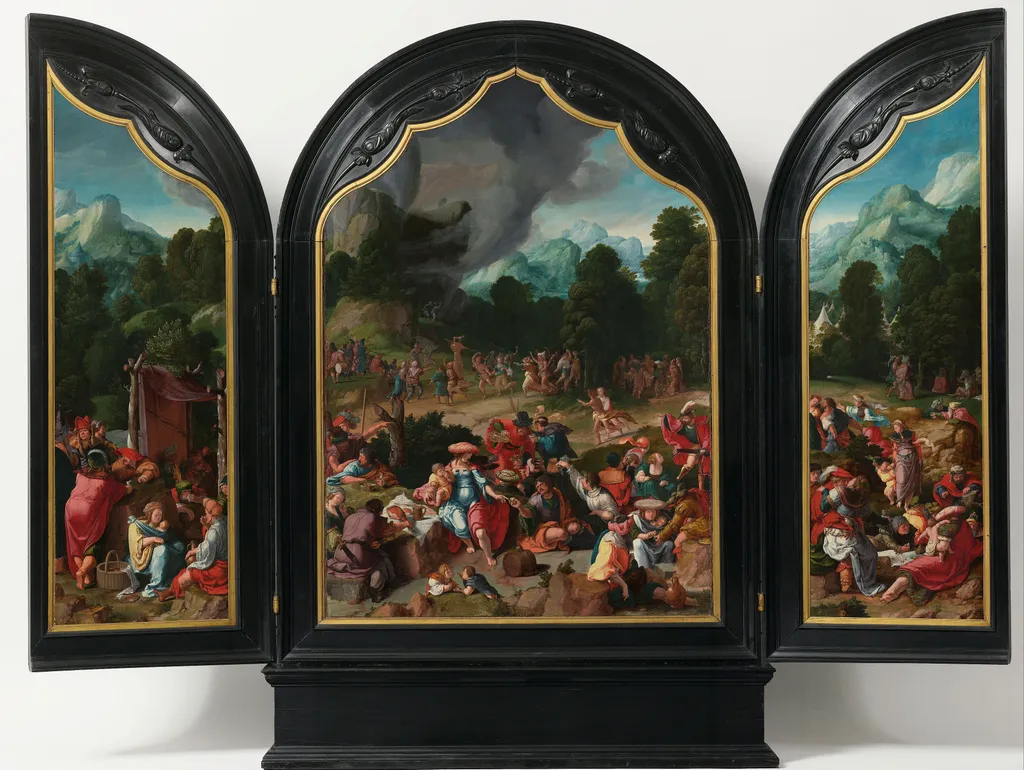
Worship of the Golden Calf is an oil painting by the Northern Renaissance artist Lucas van Leyden. It dates from 1530 and is held in the collection of the Rijksmuseum.
About this work
Overview
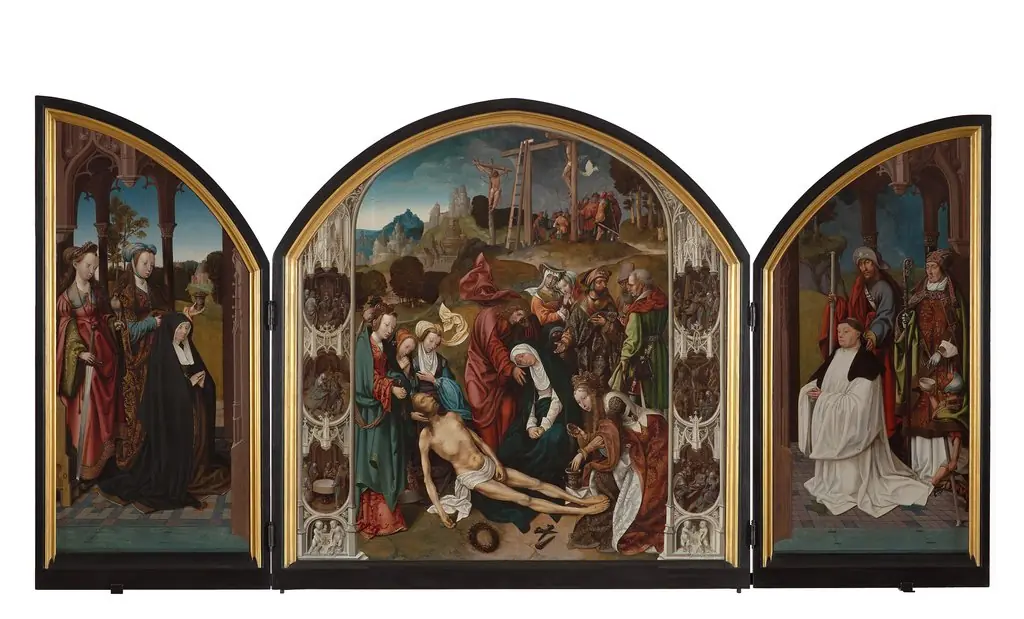
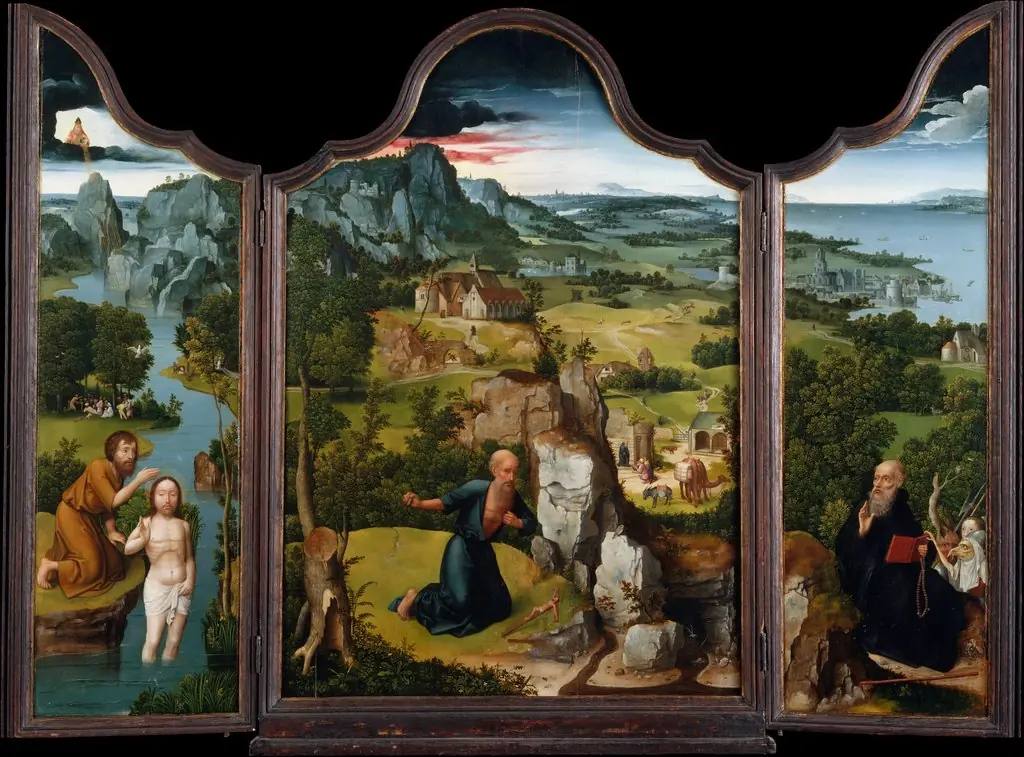
Created circa 1530 by the Dutch artist Lucas van Leyden, this oil painting belongs to the Northern Renaissance’s religious genre. The work is divided into three adjoining panels framed in dark wood with gold edging, and it is currently part of the Rijksmuseum’s collection.
Subject & Meaning
The composition portrays the biblical episode of Israelite worship of the golden calf. A bustling outdoor setting shows a multitude of figures—some standing, others kneeling, a few appearing distressed—gathered around a central altar under a storm‑filled sky, emphasizing the chaotic fervor of the idolatrous rite.
Technique & Style
Van Leyden employs his characteristic fine, precise brushwork to render a dense crowd, giving each participant individual features. Bright reds of robes and hats contrast sharply with the surrounding greens and blues, while the atmospheric background of hills and trees is rendered with delicate gradations that enhance the scene’s depth.
History & Provenance
The painting has remained in the Netherlands since its creation, eventually entering the Rijksmuseum’s holdings where it is displayed as part of the museum’s Dutch Renaissance collection. Its provenance prior to acquisition by the museum is not extensively documented.
Context
During the early 16th century, Northern artists like van Leyden often illustrated biblical narratives to convey moral lessons. This work reflects contemporary concerns about religious devotion and the dangers of false worship, themes that resonated amid the Reformation’s growing scrutiny of ritual practices.
Artist & collection

Artist
Lucas van Leyden (1494 – 8 August 1533), was a Dutch painter and printmaker in engraving and woodcut. Lucas van Leyden was among the first Dutch exponents of genre painting and was a very accomplished engraver.