Artwork
Pe malul Dâmboviței
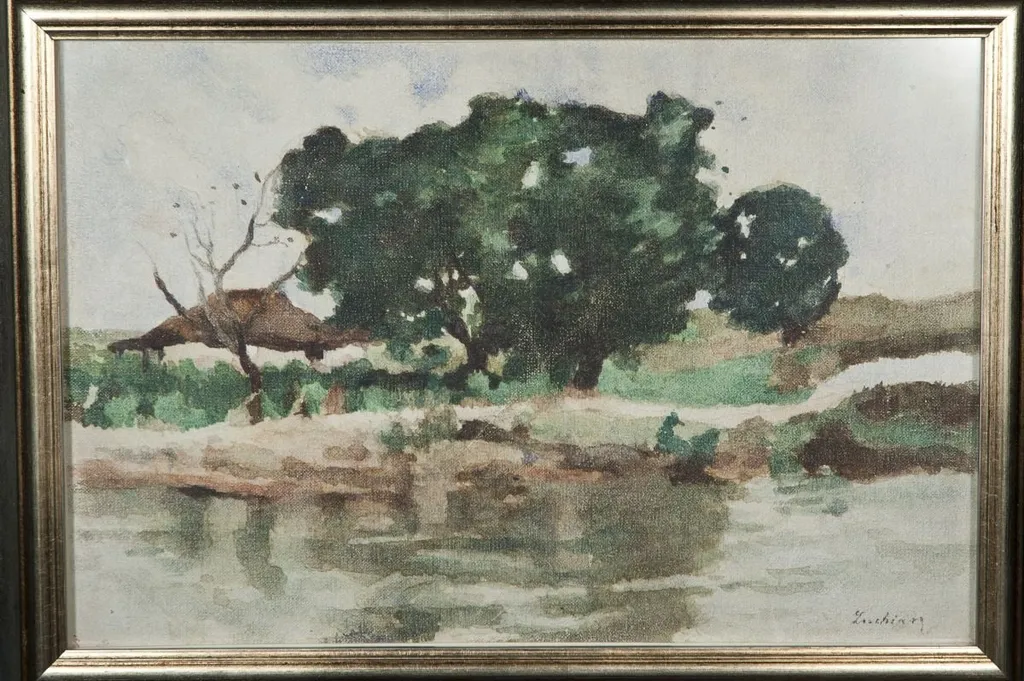
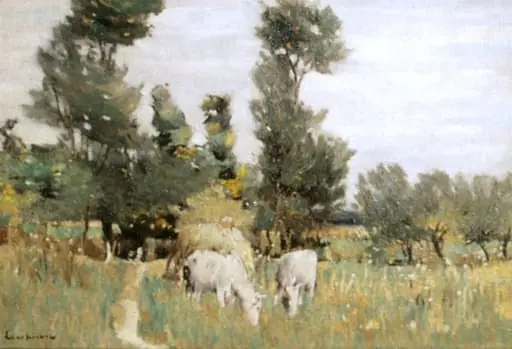
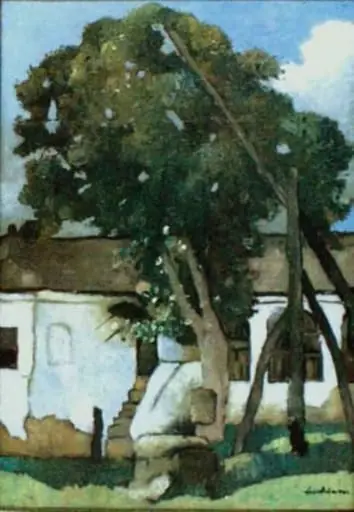
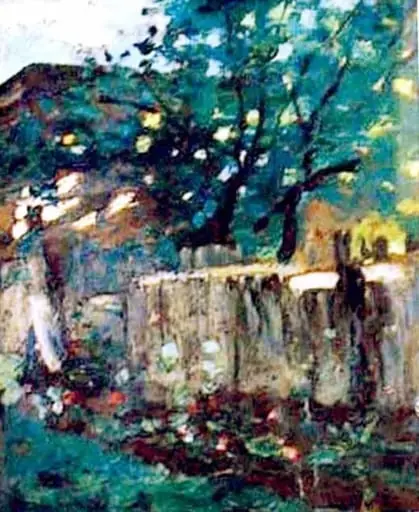
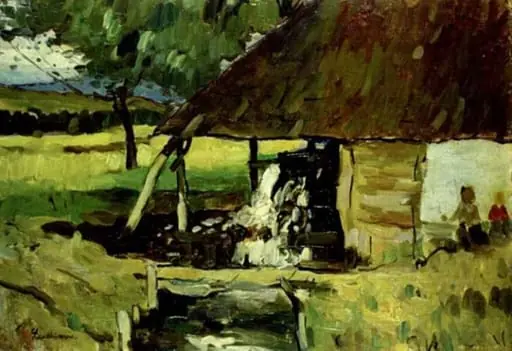
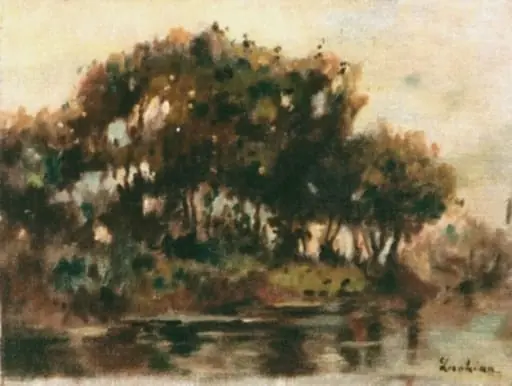
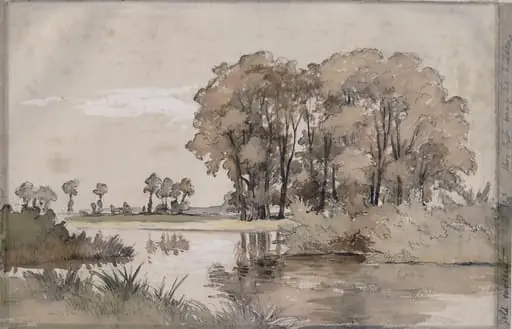
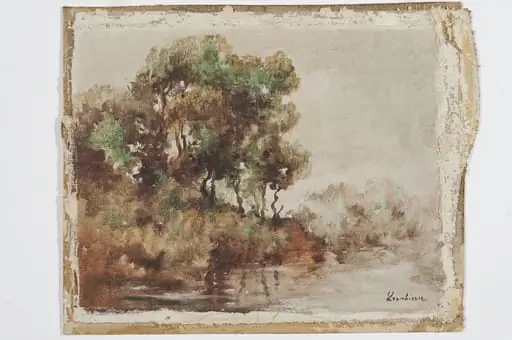
Pe malul Dâmboviței is a print by the Art Nouveau artist Ștefan Luchian. It dates from 1902 and is held in the collection of the National Museum of Art of Romania.
About this work
Overview
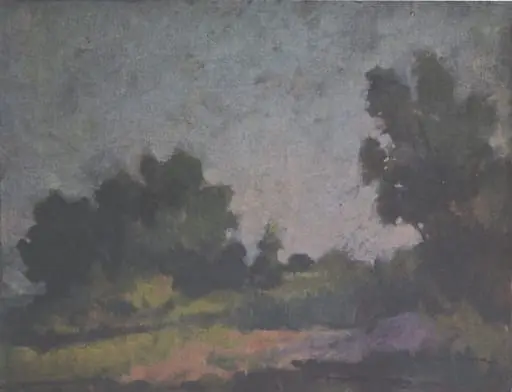
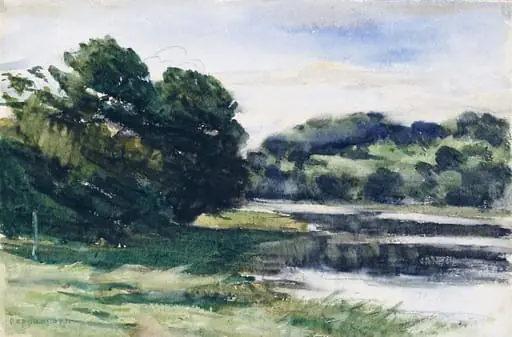
Painted around 1902 by Ștefan Luchian, this landscape captures a quiet stretch along the Dâmbovița River in Romania. The composition focuses on the river’s edge, framed by dense trees and a modest structure on the left. Luchian avoids dramatic elements, favoring a calm, observational tone that reflects the everyday beauty of the Romanian countryside.
Subject & Meaning
The scene presents no narrative or human activity, emphasizing instead the stillness of nature. The river, trees, and distant hill form a harmonious, unembellished environment. This quietude suggests an appreciation for ordinary landscapes, aligning with Luchian’s broader interest in grounding art in authentic, local experience rather than idealized or romanticized views.
Technique & Style
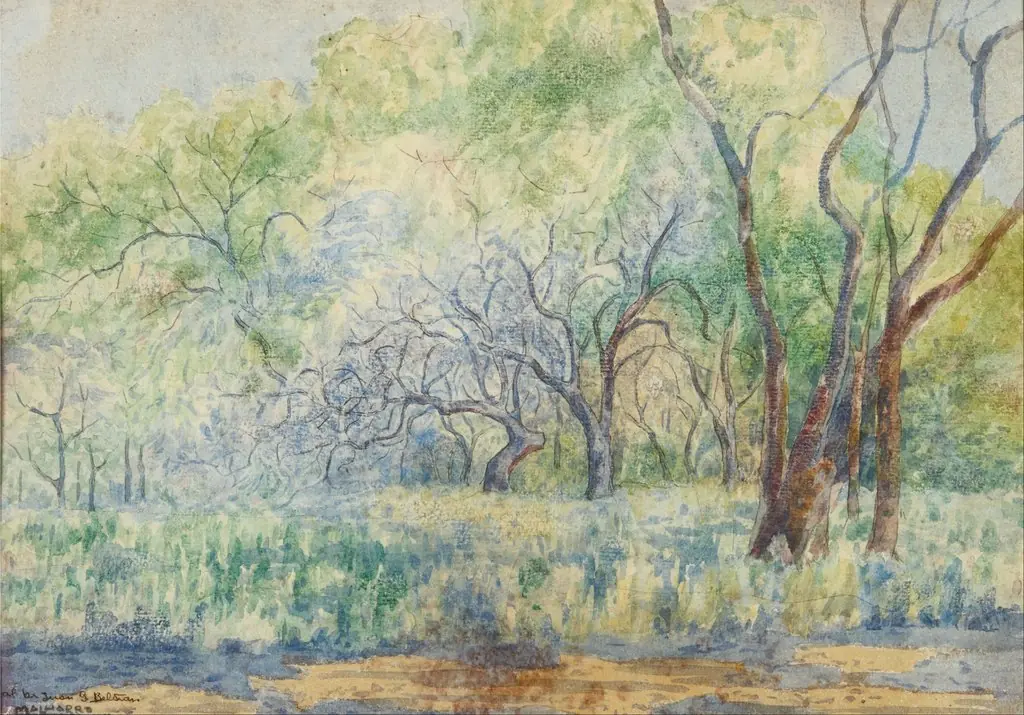
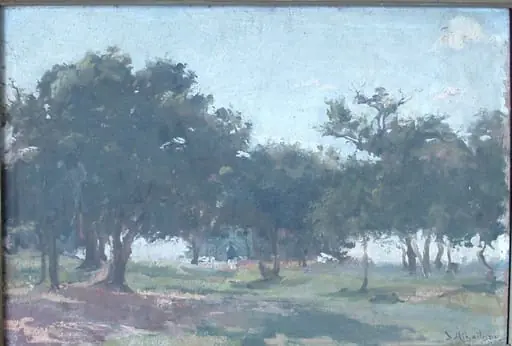
Luchian employs loose, visible brushwork to suggest texture in foliage and water, avoiding smooth finishes. The palette is restrained—dominated by olive greens, earthy browns, and soft grays—which enhances the painting’s subdued mood. Subtle shifts in light and shadow model the forms of trees and ground, giving the scene a quiet three-dimensionality without theatrical contrast.
History & Provenance
Created during Luchian’s mature period, the work reflects his deepening engagement with Romanian natural settings after years spent in European art centers. It likely originated from direct observation, as was his practice. The painting remained within Romanian collections after its creation, contributing to the canon of early 20th-century national landscape painting.
Context
In early 1900s Romania, artists increasingly turned from academic traditions toward personal, intimate depictions of local life and terrain. Luchian’s work, including this piece, was part of that shift—rejecting grand historical themes in favor of quiet, sensory responses to the environment, influenced by French Impressionism but rooted in Romanian topography.
Legacy
The painting exemplifies Luchian’s role in shaping a distinctly Romanian modern landscape tradition. His emphasis on direct observation, restrained color, and tactile brushwork influenced later generations of Romanian painters who sought to define national identity through everyday natural scenes rather than imported styles.
Artist & collection

Artist
Ștefan Luchian was a Romanian painter, famous for his landscapes and still life works.