Artwork
Tufănele în ulcică
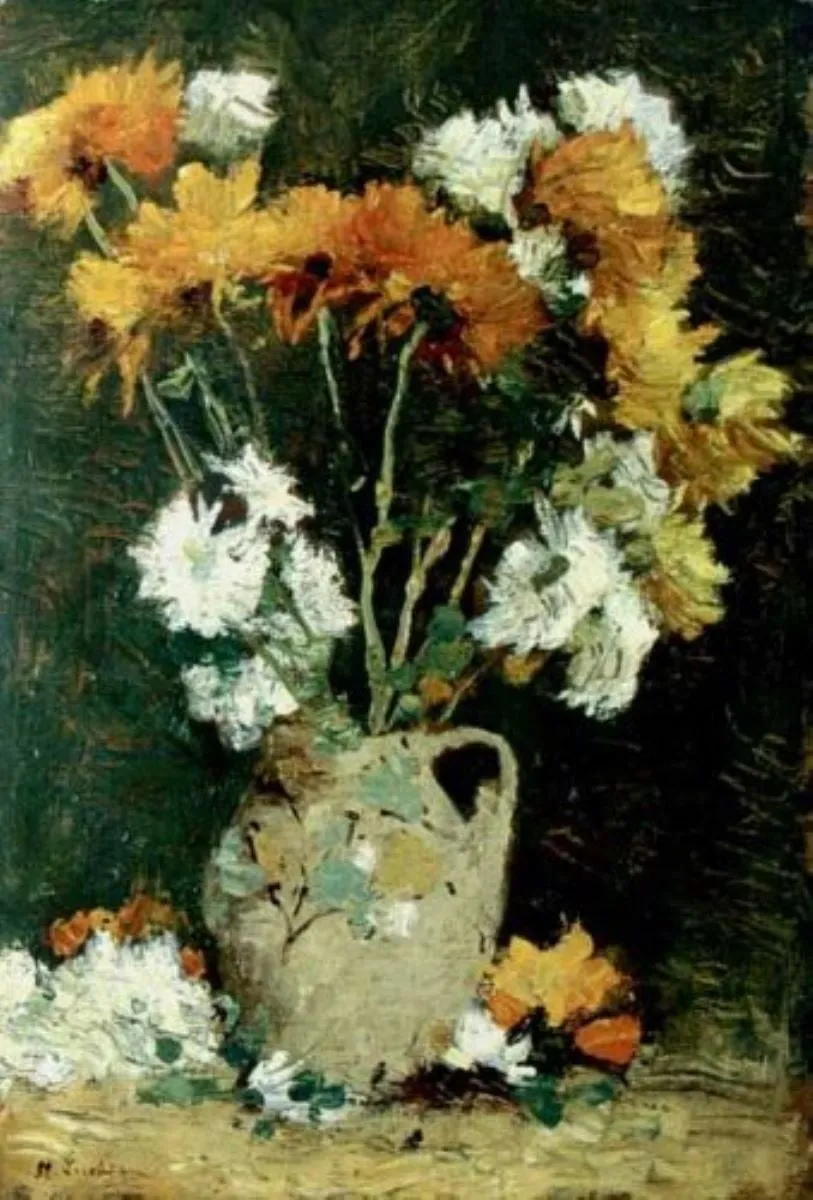
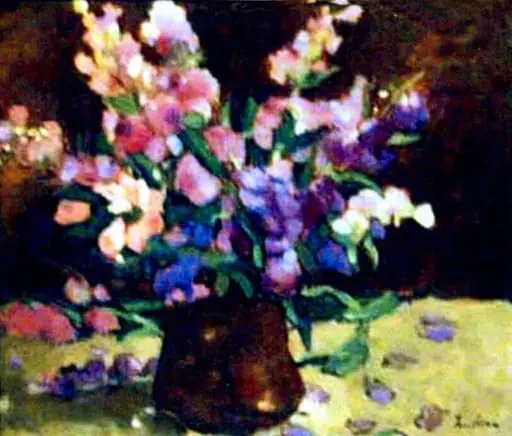
Tufănele în ulcică is an unspecified painting by the Art Nouveau artist Ștefan Luchian. It dates from 1902 and is held in the collection of the National Museum of Art of Romania.
About this work
Overview
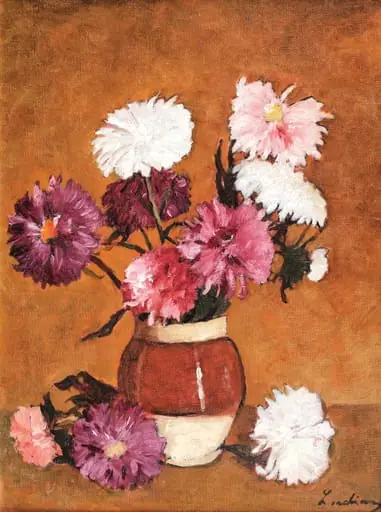
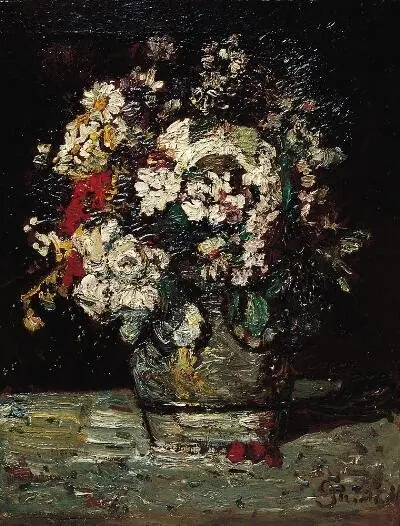
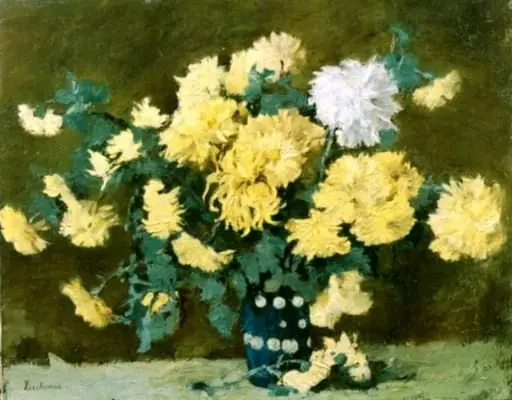
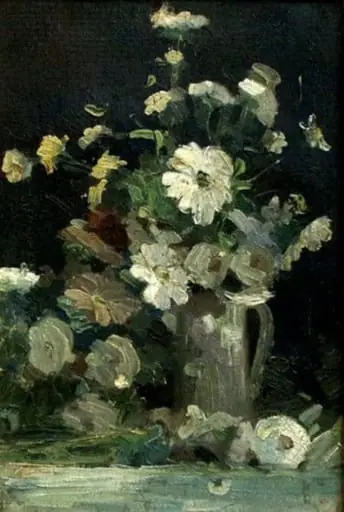
Tufănele în ulcică, painted around 1902 by Ștefan Luchian, is a still life depicting a modest ceramic vessel holding a cluster of wilting flowers.
Tufănele în ulcică, painted around 1902 by Ștefan Luchian, is a still life depicting a modest ceramic vessel holding a cluster of wilting flowers. The composition avoids idealized beauty, instead focusing on the quiet decay of botanical life. The vase, visibly worn and imperfect, anchors the scene, while the flowers suggest a passage of time—some still budding, others spent. The background is dark and uneven, enhancing the tactile presence of the objects.
Subject & Meaning
The painting presents flowers not as symbols of permanence, but as transient beings. Their asymmetrical posture, drooping stems, and scattered petals convey a sense of inevitable decline. The choice of common blooms—white, orange, and yellow—grounds the scene in everyday observation. There is no grand narrative, only an intimate acknowledgment of nature’s rhythms, reflecting a quiet, unromanticized view of life and decay.
Technique & Style
Luchian applied paint with thick, deliberate strokes, using impasto to build texture and weight. The surface of the vase and petals is rough, almost sculpted, contrasting with the flat, shadowed background. Colors are layered and muted, allowing the natural tones of the flowers to emerge through physical texture rather than precise detail. The brushwork feels immediate, unpolished, reinforcing the painting’s focus on material reality over idealized form.
History & Provenance
Created during Luchian’s mature period, the work emerged from his deepening interest in naturalism and the emotional resonance of ordinary objects. It was likely painted in his Bucharest studio, where he often worked despite declining health. The painting remained in Romanian collections after his death, eventually entering a public museum, where its unadorned realism continues to draw attention for its emotional honesty.
Context
In early 20th-century Romania, academic traditions still dominated art institutions, but Luchian aligned more closely with European modernist currents that valued personal expression over formal perfection. His focus on decay and imperfection paralleled broader cultural shifts toward introspection and realism. Tufănele în ulcică reflects this departure, aligning with artists across Europe who found dignity in the humble and the transient.
Legacy
The painting stands as a quiet landmark in Romanian modern art for its rejection of decorative convention. Luchian’s unflinching portrayal of botanical decline influenced later generations who sought authenticity over ornament. Its enduring presence in museum collections underscores its role as a touchstone for artists interested in the emotional power of ordinary, unidealized subjects.
Artist & collection

Artist
Ștefan Luchian was a Romanian painter, famous for his landscapes and still life works.