Artwork
The Agony in the Garden
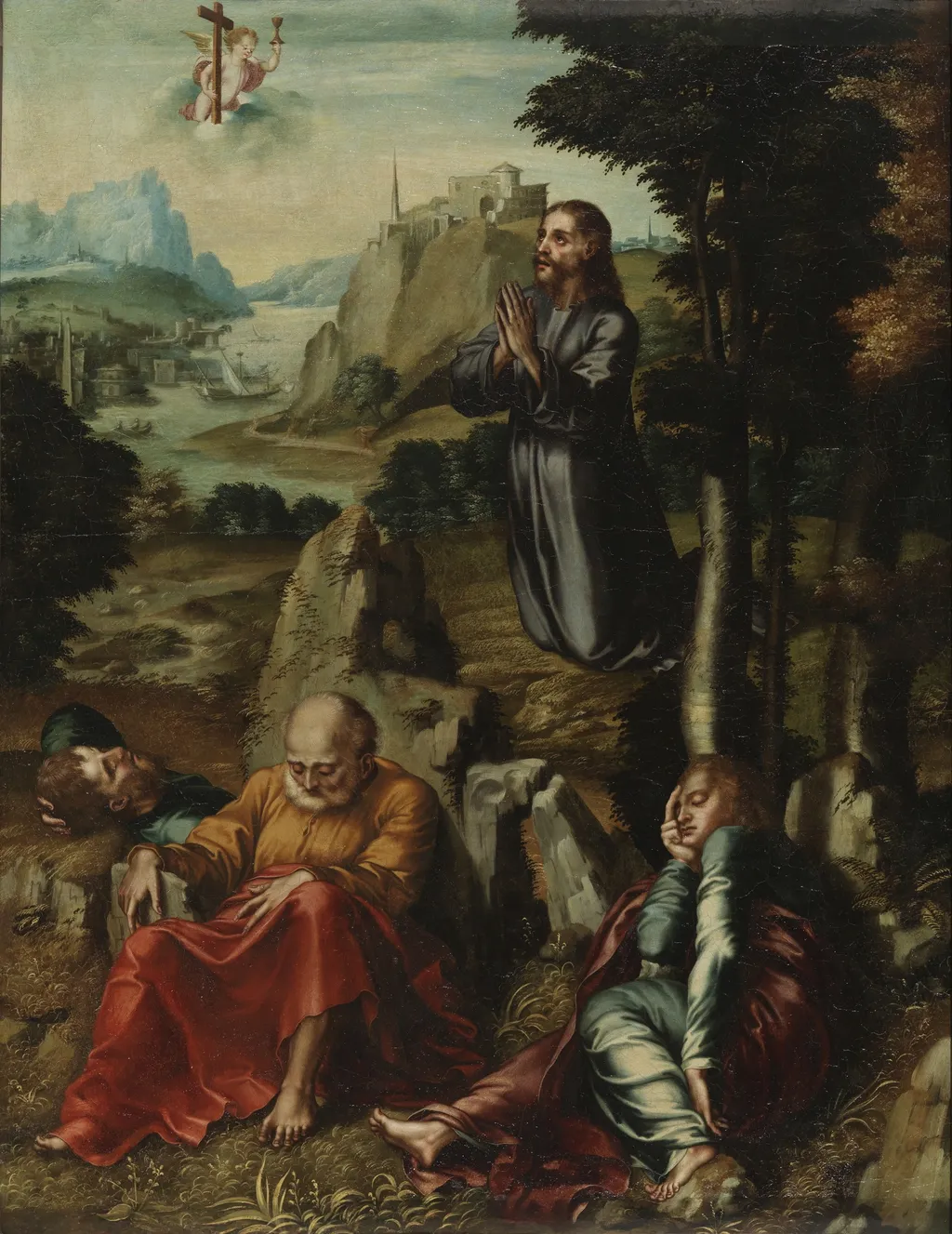
The Agony in the Garden is an oil painting by the Mannerist artist Luis de Morales. It dates from 1545 and is held in the collection of the Museo del Prado.
About this work
Overview
Luis de Morales, a 16th‑century Spanish painter often called “El Divino,” executed *The Agony in the Garden* in 1545 with oil on canvas. The work belongs to the Mannerist phase of the Spanish Renaissance and is part of the Museo del Prado’s permanent collection in Madrid.
Subject & Meaning
The composition portrays a solemn moment from the biblical narrative of Christ’s prayer in Gethsemane. Central to the scene is a dark‑haired, bearded figure clasping his hands in prayer, while an older disciple in orange and red sits dejectedly and a younger one in blue‑green rests asleep. A winged child hovers above, bearing a cross and chalice, underscoring the sacramental theme.
Technique & Style
Morales employs pronounced chiaroscuro, juxtaposing deep shadows with a gentle illumination that isolates each figure against a rocky hillside. The handling of light creates a tactile sense of volume, while the elongated forms and heightened emotional expression reflect the Mannerist aesthetic that followed the High Renaissance.
Context
Active during the Spanish Renaissance, Morales drew inspiration from Italian masters such as Raphael and the Lombard followers of Leonardo da Vinci. His oeuvre is noted for intense devotional subjects, and *The Agony in the Garden* exemplifies his synthesis of Italian compositional models with a distinctly Spanish spiritual fervor.
History & Provenance
Since its creation, the painting has remained in Spain, eventually entering the collection of the Museo del Prado. The museum acquired the work as part of its effort to assemble a comprehensive representation of 16th‑century Spanish religious art.
Own this work as a print
Artist & collection
Artist
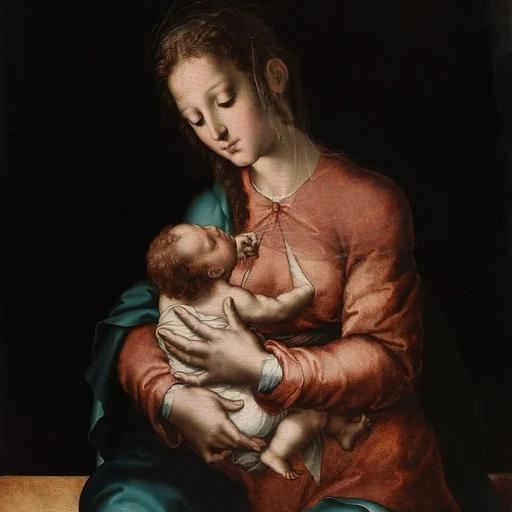
Luis de Morales (1509 – 9 May 1586) was a Spanish painter active during the Spanish Renaissance in the 16th century.