Artwork
Puutarhatyttö
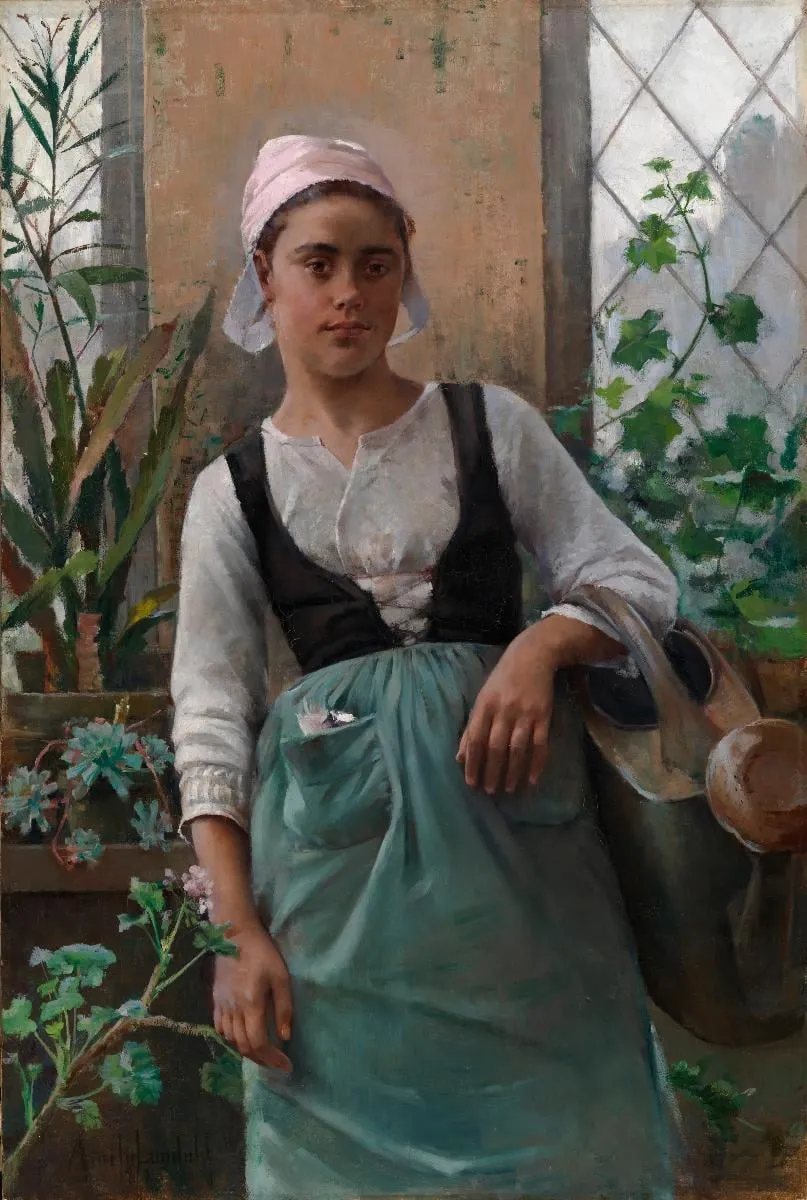
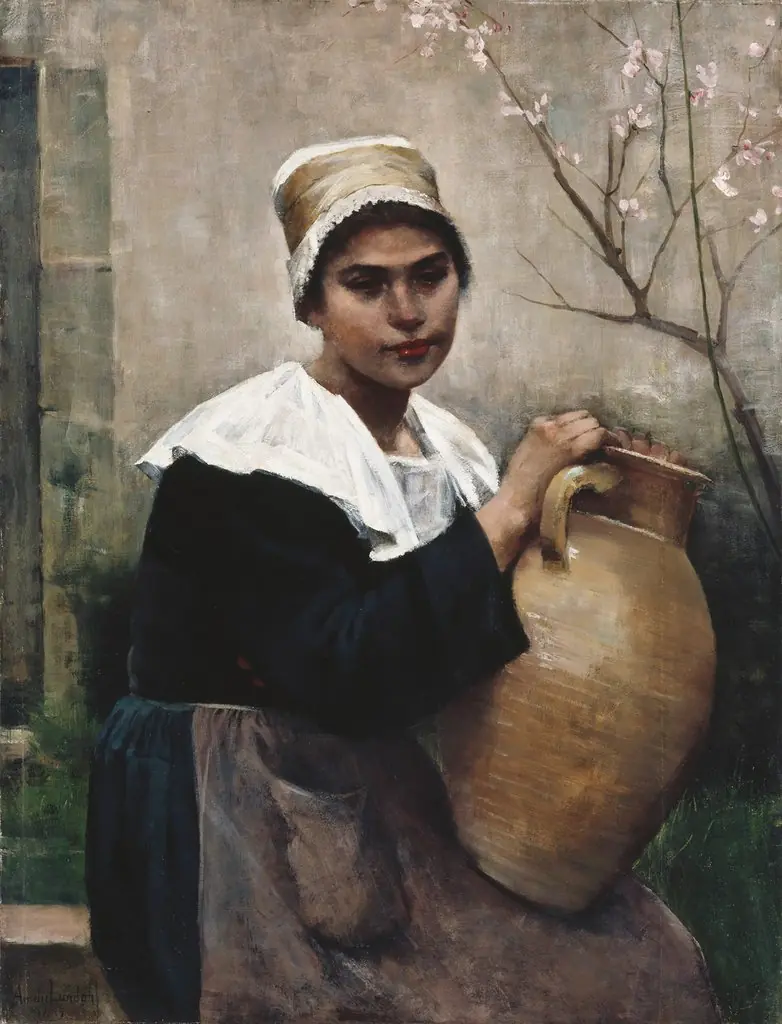
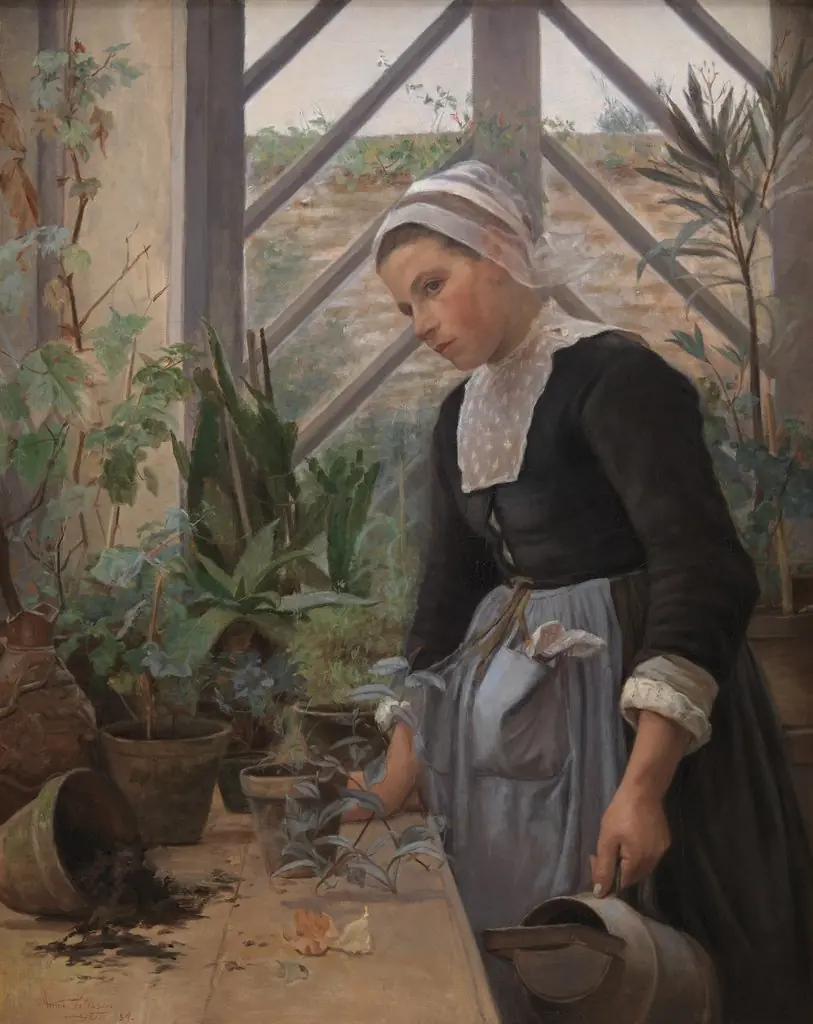
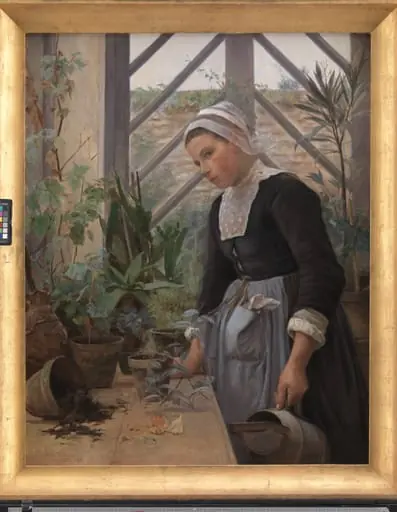
Puutarhatyttö is an unspecified painting by Amélie Lundahl. It dates from 1892 and is held in the collection of the Finnish National Gallery.
About this work
Overview
The composition centers on her stillness amid potted plants and filtered daylight, suggesting a moment of routine care rather than theatrical display.
Puutarhatyttö, created around 1892 by Finnish artist Amélie Lundahl, is a quiet interior scene portraying a young woman in a domestic garden setting. The composition centers on her stillness amid potted plants and filtered daylight, suggesting a moment of routine care rather than theatrical display. The painting’s modest scale and restrained palette reflect a focus on everyday life, typical of late 19th-century Nordic realism.
Subject & Meaning
The figure, likely a gardener or housekeeper, is depicted engaged in the simple act of watering plants. Her attire—white shirt, black vest, and light blue skirt—hints at working-class dress, while the pink headscarf adds a subtle personal touch. The absence of facial detail invites contemplation rather than narrative, emphasizing the dignity of labor and the quiet rhythm of domestic tending over dramatic storytelling.
Technique & Style
Lundahl employs soft, muted tones and careful attention to texture—fabric folds, leaf surfaces, and the diamond-patterned window glass are rendered with quiet precision. Brushwork is controlled, avoiding theatrical lighting or exaggerated contrast. The spatial arrangement, with plants framing the figure and the window acting as a structural anchor, creates a balanced, intimate composition grounded in observational realism.
History & Provenance
The painting was produced during Lundahl’s active years in Finland, a period when female artists were increasingly documenting domestic and natural subjects. While its early ownership is undocumented, it has remained within Finnish collections since at least the early 20th century. Its preservation reflects a growing institutional interest in women’s contributions to Nordic art beyond portraiture and mythological themes.
Context
In the 1890s, Finnish art was shifting toward national identity and everyday realism, influenced by broader European naturalism. Lundahl’s focus on a woman in a garden aligns with contemporaneous interest in domestic spaces as sites of quiet agency. Unlike romanticized rural scenes, this work avoids idealization, presenting labor as unadorned and ordinary—consistent with emerging feminist undercurrents in Nordic visual culture.
Legacy
Puutarhatyttö endures as a modest but resonant example of late 19th-century Finnish women’s art. It contributes to a broader recognition of female artists who depicted domestic life with nuance, countering the male-dominated narratives of the era. Though not widely exhibited internationally, it remains a touchstone in Finnish art history for its understated humanity and attention to the overlooked details of daily existence.
Artist & collection