Artwork
H Beard Print Collection
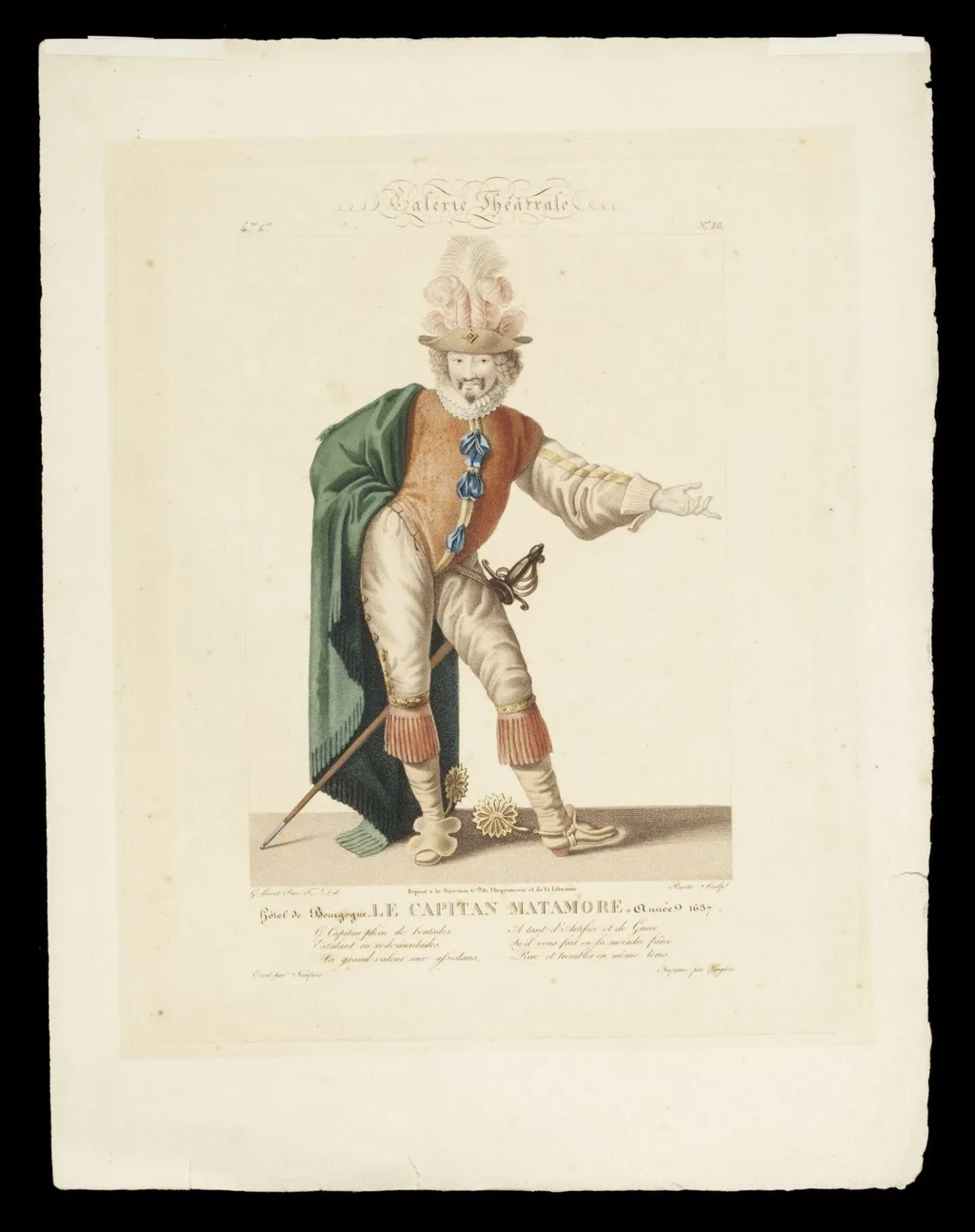
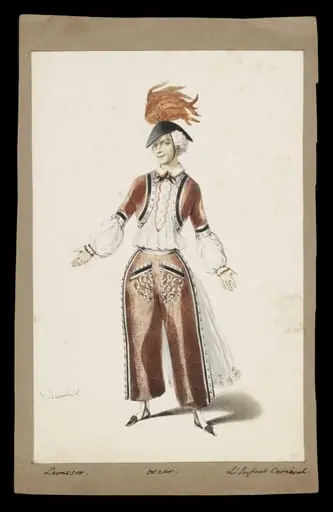
H Beard Print Collection is a print by G. Luret. It dates from 1750 and is held in the collection of the Victoria and Albert Museum.
About this work
The H Beard Print Collection is a print made by artist Luret, G. It's from the late 18th century.
This print is a portrait of Le Capitan Matamore of the Hotel de Bourgogne, a figure from 1637. The print was made in England, which is an interesting fact about its production.
To learn more about printmaking techniques, look up the technique of sfumato.
Overview
This print, part of the H Beard Print Collection, depicts Le Capitan Matamore, a character associated with the Hotel de Bourgogne in 1637.
This print, part of the H Beard Print Collection, depicts Le Capitan Matamore, a character associated with the Hotel de Bourgogne in 1637. Though the subject originates from early 17th-century French theater, the print itself was produced in England during the late 1700s. It was created by artist G. Luret, reflecting a later reinterpretation of an earlier theatrical figure rather than a contemporary portrait.
Subject & Meaning
Le Capitan Matamore was a stock character in 17th-century French comedy, typically portrayed as a boastful, cowardly soldier. The print captures this archetype, drawing from theatrical traditions rather than a real individual. Its reproduction in England suggests an interest in continental stage culture among British audiences, preserving a caricature of military pretension for domestic consumption.
Technique & Style
The print was produced using traditional engraving methods common in late 18th-century England. It features linear precision and tonal contrast typical of the period’s reproductive prints, with no evidence of sfumato, which is a painting technique unrelated to printmaking. The composition emphasizes the figure’s exaggerated posture, aligning with theatrical portraiture conventions of the time.
History & Provenance
Created by G. Luret in England around the 1780s, the print was later acquired by H. Beard, whose collection focused on theatrical imagery. Its existence reflects the 18th-century practice of re-engraving and circulating images of historical stage figures. The print’s origin in England, rather than France, underscores its role as a cultural artifact of reception rather than direct documentation.
Context
During the late 1700s, British audiences showed growing fascination with French theater, particularly its stock characters. Prints like this one served as visual souvenirs of popular plays, circulating among collectors and theater enthusiasts. The choice to depict Matamore—a figure from over a century prior—highlights how theatrical archetypes retained cultural resonance across generations.
Legacy
The print survives as a record of how 18th-century England engaged with earlier French theatrical traditions. It contributes to the broader archive of theatrical portraiture, illustrating the transmission of stage imagery through print culture. While not a primary source from 1637, it remains a valuable artifact of how historical characters were remembered and reimagined in later centuries.
Artist & collection
Artist
Printmaker G. Luret worked in late-18th-century France, leaving behind crisp line engravings of elegant figures and everyday scenes. One of their prints in this set shows a woman reading by candlelight titled *H Beard…

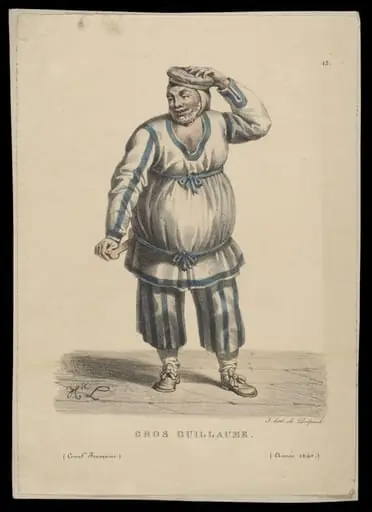 H Beard Print Collection
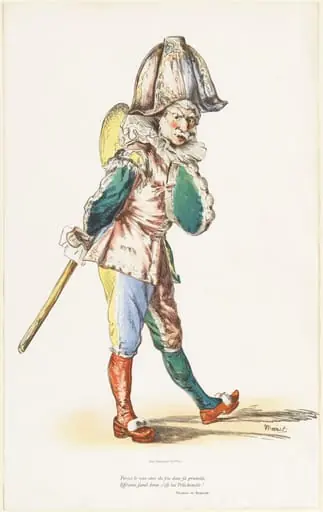 Polichinelle
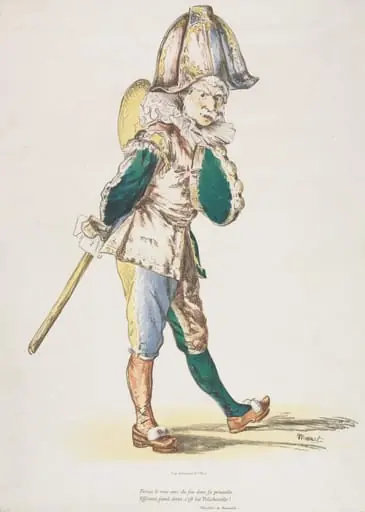 Polichinelle
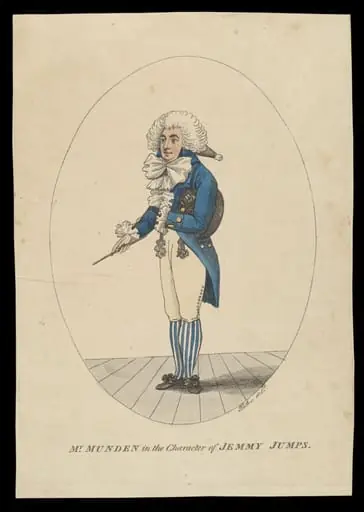 H Beard Print Collection
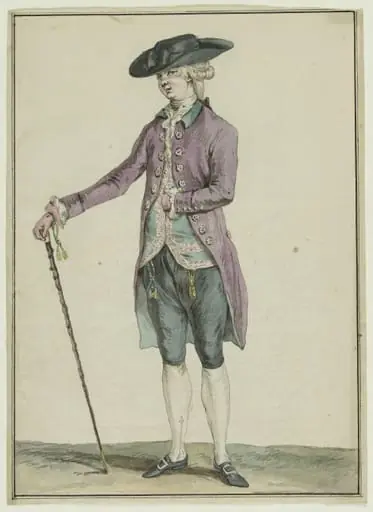 Petit maître en chenille, Habit du matin
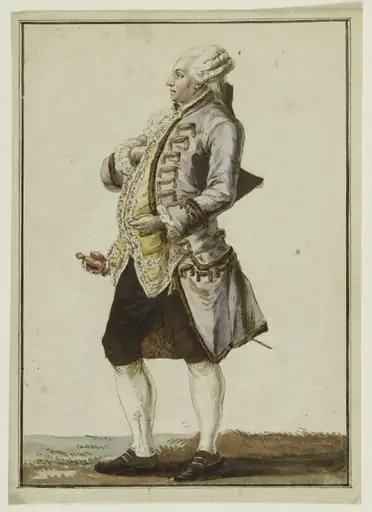 Homme vêtu d'un habit en surtout à brandebourgs de camelot de soie
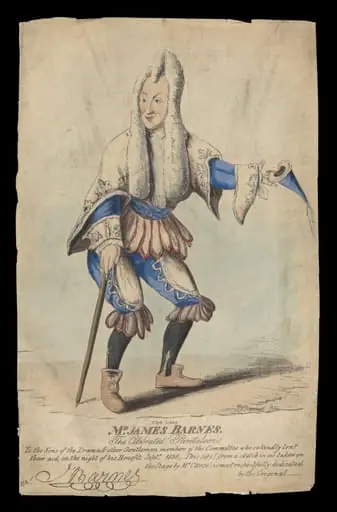 H Beard Print Collection
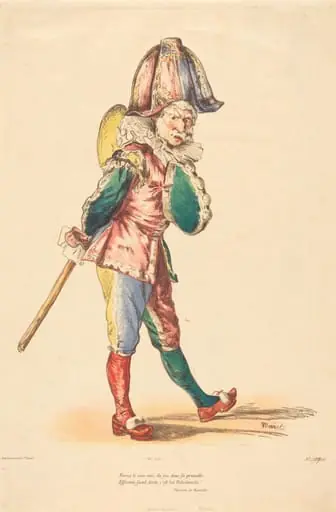 Polichinelle
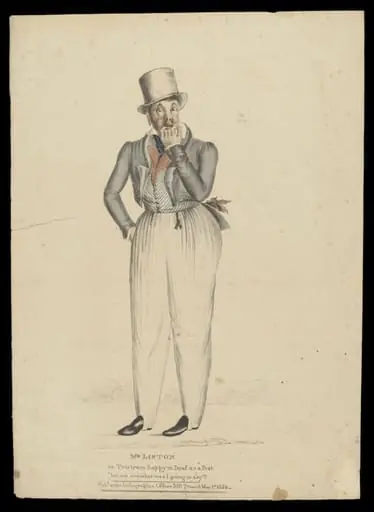 H Beard Print Collection
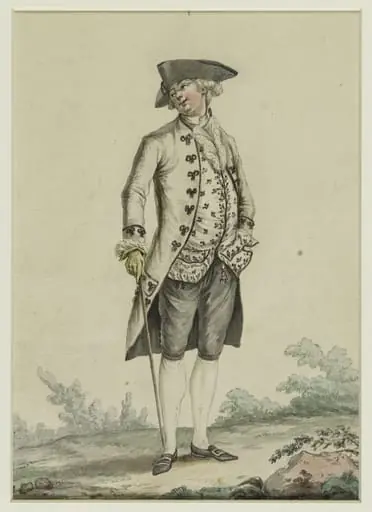 Habit de petit-deuil gris
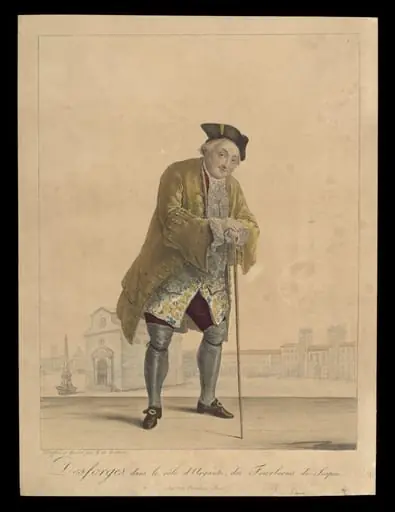 H Beard Print Collection
 H Beard Print Collection