Artwork
Polichinelle
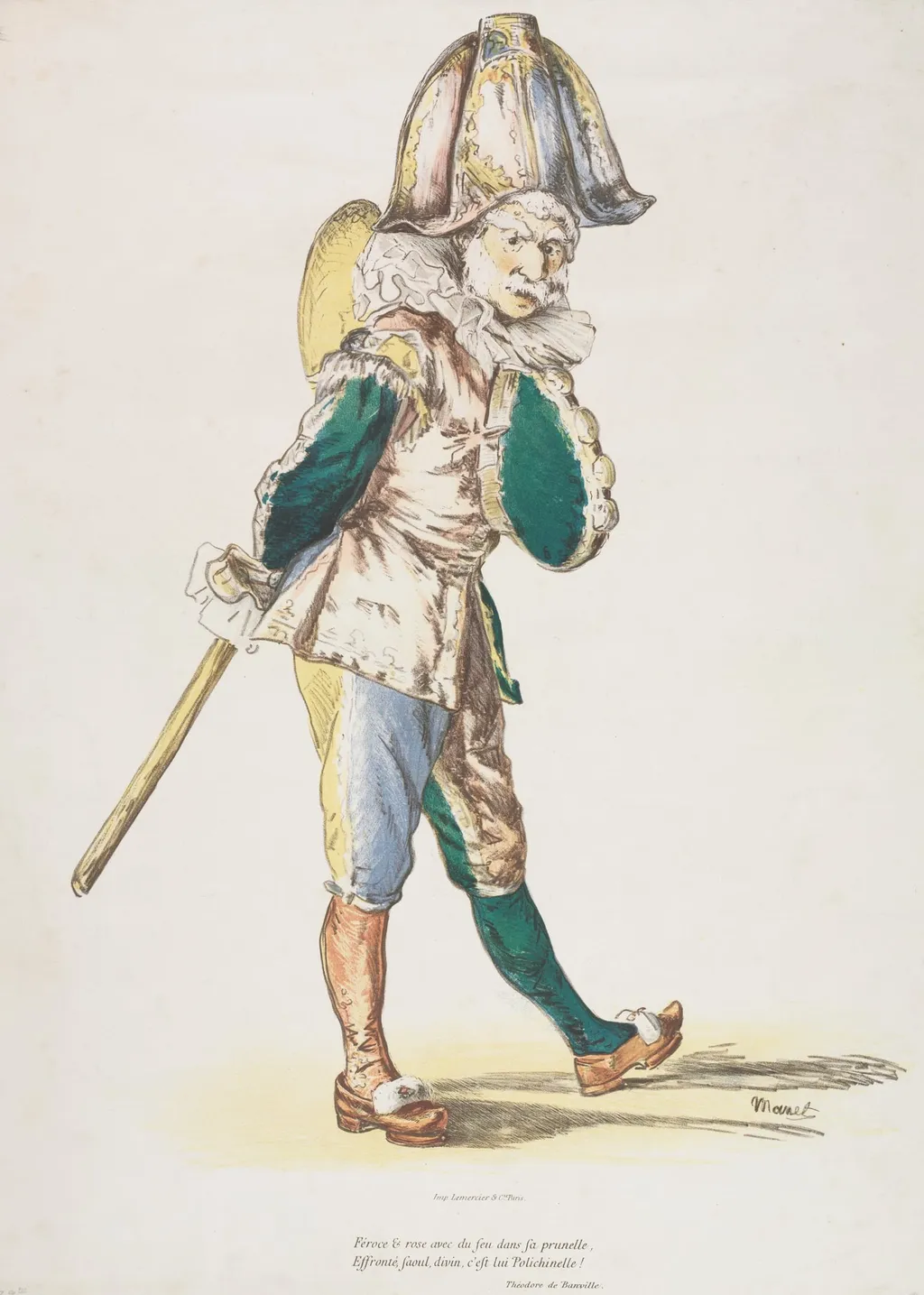
Polichinelle is a print by the Impressionist artist Edouard Manet. It dates from 1876 and is held in the collection of the Cleveland Museum of Art.
About this work
Overview
It is currently held in the collection of The Cleveland Museum of Art, where it is preserved as an example of his late graphic output.
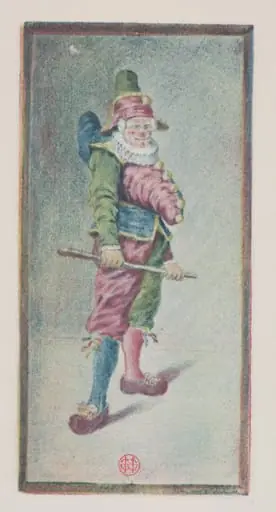
Polichinelle is a lithograph by Édouard Manet, produced in 1876. It portrays a figure in theatrical costume, rendered with bold lines and flat areas of tone. The work is part of a small series of prints Manet made during a period of renewed interest in graphic media. It is currently held in the collection of The Cleveland Museum of Art, where it is preserved as an example of his late graphic output.
Subject & Meaning
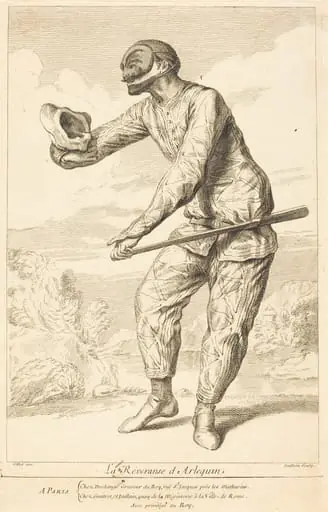
The figure represents Polichinelle, a stock character from Italian commedia dell'arte known for his mischievous nature. Manet depicts him with a solemn demeanor, contrasting the character’s traditional humor. The stillness and direct gaze suggest a psychological depth, transforming a comic archetype into a contemplative presence. The costume, though colorful, is rendered without caricature, reflecting Manet’s interest in identity and performance.
Technique & Style
Manet employed lithography to achieve sharp contrasts and simplified forms. The figure emerges from a pale background through strong outlines and minimal shading, emphasizing silhouette over volume. Details like the collar and belt are suggested rather than fully modeled, aligning with his preference for economy of means. The technique echoes Japanese prints and the flatness of academic drawing, merging realism with stylization.
History & Provenance
Created in 1876, Polichinelle was likely made for private circulation rather than public sale. Manet produced only a few prints in his career, and this work is among the most recognized. It entered The Cleveland Museum of Art’s collection in the 20th century, acquired through a donation that included several of his graphic works. Its provenance reflects its status as a personal, experimental piece rather than a commercial endeavor.
Context
In the mid-1870s, Manet was exploring themes of theater and disguise, influenced by Parisian vaudeville and the rise of modern spectacle. His interest in printmaking coincided with a broader revival among French artists seeking alternatives to oil painting. Polichinelle reflects this moment, bridging his realist approach with the symbolic traditions of theatrical archetypes popular in 19th-century French culture.
Legacy
Though not widely exhibited during Manet’s lifetime, Polichinelle has become a key example of his graphic work. It illustrates his ability to infuse traditional subjects with modern psychological nuance. The print influenced later artists interested in the intersection of theater, identity, and print media, securing its place in studies of 19th-century French art beyond painting.
Artist & collection

Artist
Édouard Manet didn’t have much time to make his mark—he died at 51—but he used every year.