Artwork
Gibraltar
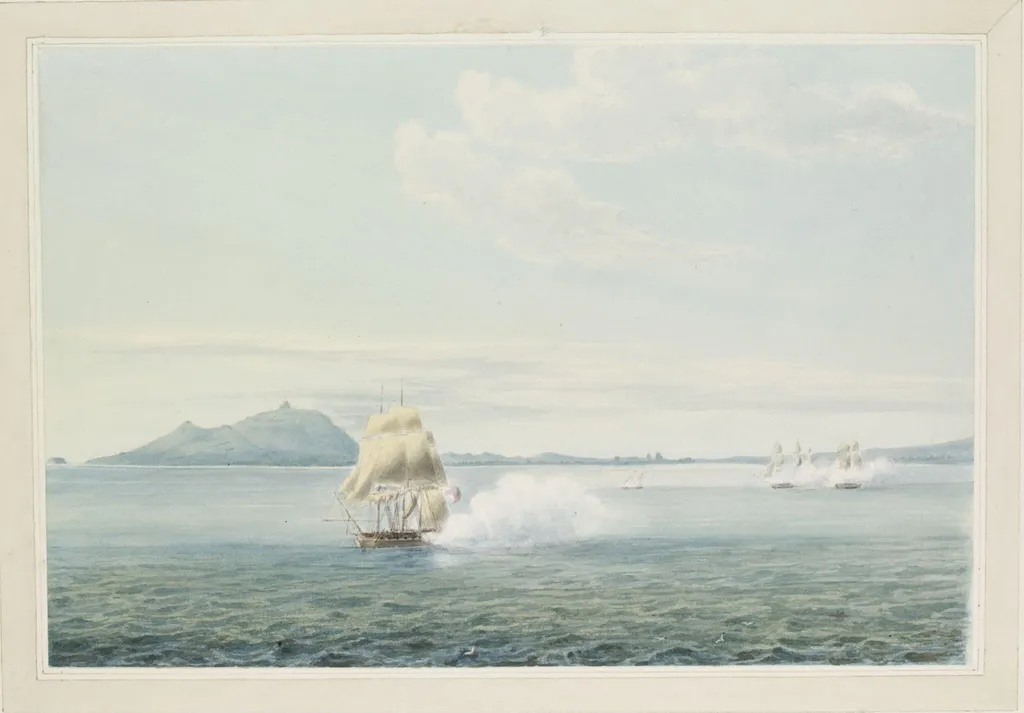
Gibraltar is a watercolor work on paper by the British Romanticist artist Thomas William Ogilvie MacNiven. It dates from 1814 and is held in the collection of the Victoria and Albert Museum.
About this work
Overview
Executed in delicate washes, the piece reflects the artist’s military background and his engagement with topographical observation through a lyrical lens.
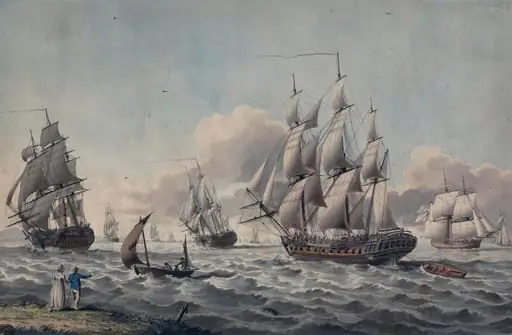
Created in 1814 by Lieutenant-Colonel Thomas William Ogilvie MacNiven, this watercolour depicts the Strait of Gibraltar as seen from sea level. The work captures a quiet maritime scene with three vessels moving across calm waters, framed by distant cliffs and a soft sky. Executed in delicate washes, the piece reflects the artist’s military background and his engagement with topographical observation through a lyrical lens.
Subject & Meaning
The painting presents a serene view of Gibraltar’s waters, emphasizing the presence of ships without identifying them specifically. The absence of human figures or overt activity suggests a contemplative mood, possibly reflecting the strategic yet tranquil nature of the strait during the post-Napoleonic era. The composition invites stillness, aligning with the era’s interest in nature’s quiet grandeur over dramatic spectacle.
Technique & Style
MacNiven employed transparent watercolour washes to build subtle gradations of blue and green, creating depth without heavy outlines. Light is suggested through faint highlights on sails and water, while the mountainous backdrop is rendered with soft, blended tones. The muted palette and restrained brushwork reflect a topographical tradition adapted for atmospheric effect, prioritizing harmony over detail.
History & Provenance
The watercolour remained in private hands until July 1965, when it was acquired by Rodney Searight from dealer F. T. Sabin for £18. No record of earlier ownership or exhibition history is documented. Its transition from a personal military sketch to a collected artwork reflects changing attitudes toward 19th-century topographical watercolours in the mid-20th century.
Context
Painted shortly after the Napoleonic Wars, the work emerges from a British military tradition where officers often documented landscapes during postings. Gibraltar, a key naval outpost, was frequently sketched for both strategic and personal reasons. MacNiven’s approach aligns with contemporaries who blended cartographic precision with emerging Romantic sensibilities, favoring mood over monumentality.
Legacy
Though not widely exhibited or reproduced, the painting contributes to a broader corpus of British military watercolours that document imperial geography through quiet observation. Its preservation underscores the value placed on such works as historical records, offering insight into how soldiers perceived and recorded the landscapes they encountered beyond battlefield narratives.
Artist & collection
Artist
Thomas William Ogilvie MacNiven
This artist painted military and coastal scenes in the early 1800s. Their watercolor *Gibraltar* (1814) shows the fortress rock from the harbor, with careful details of ships and buildings. Though their life dates are…

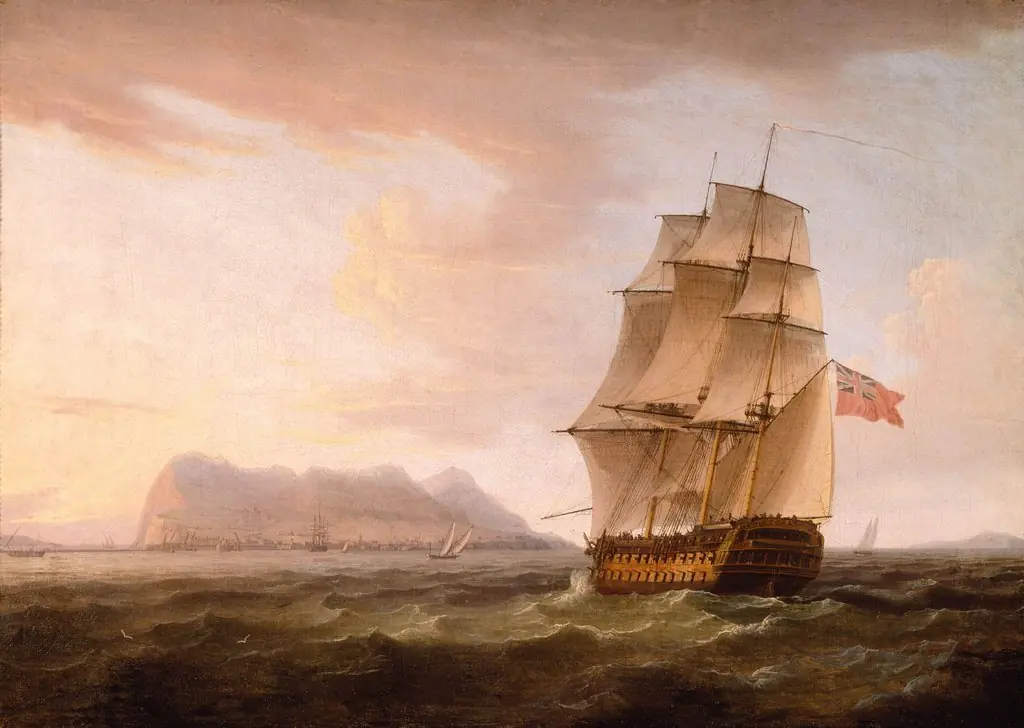 A British Man of War before the Rock of Gibraltar.
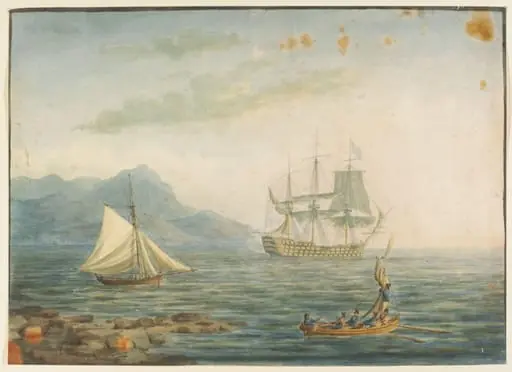 H.M.S. Victory off N. Africa
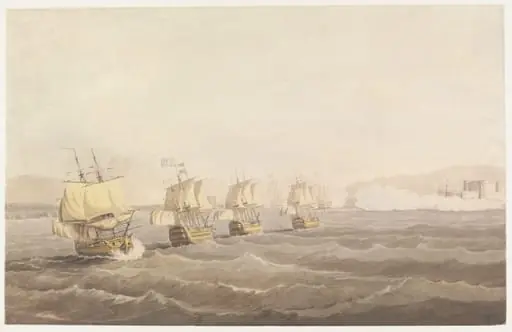 The Passage of Admiral Duckworth's Fleet in 1806-07 through the Dardanelles'
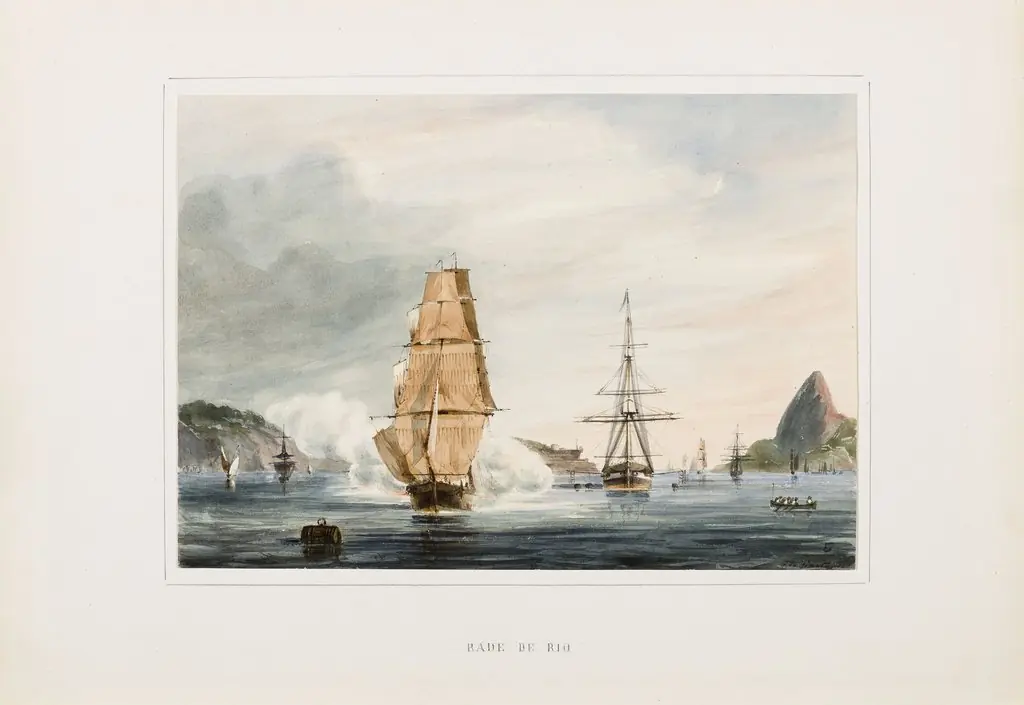 Rade de Rio
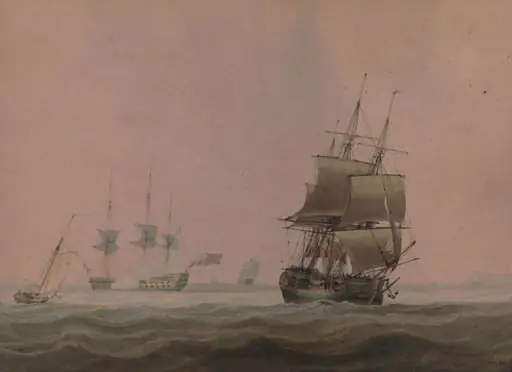 Shipping off the north foreland
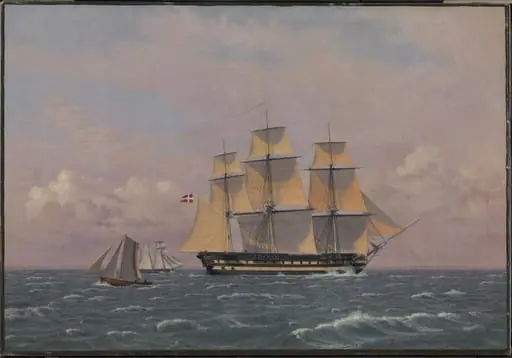 The 84-Gun Danish Warship "Dronning Marie" in the Sound
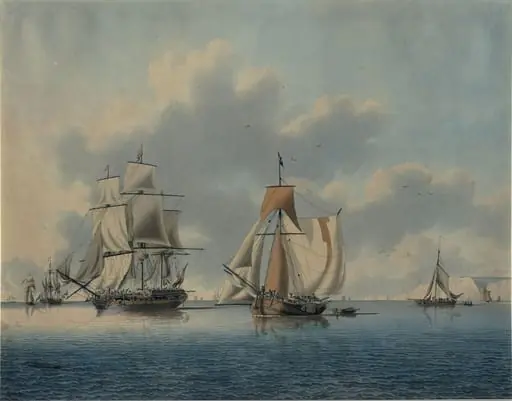 A frigate and Dutch fishing boats off the Isle of Wight
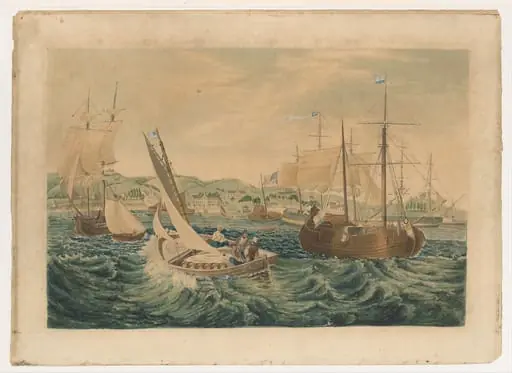 Quarantine, Staten Island
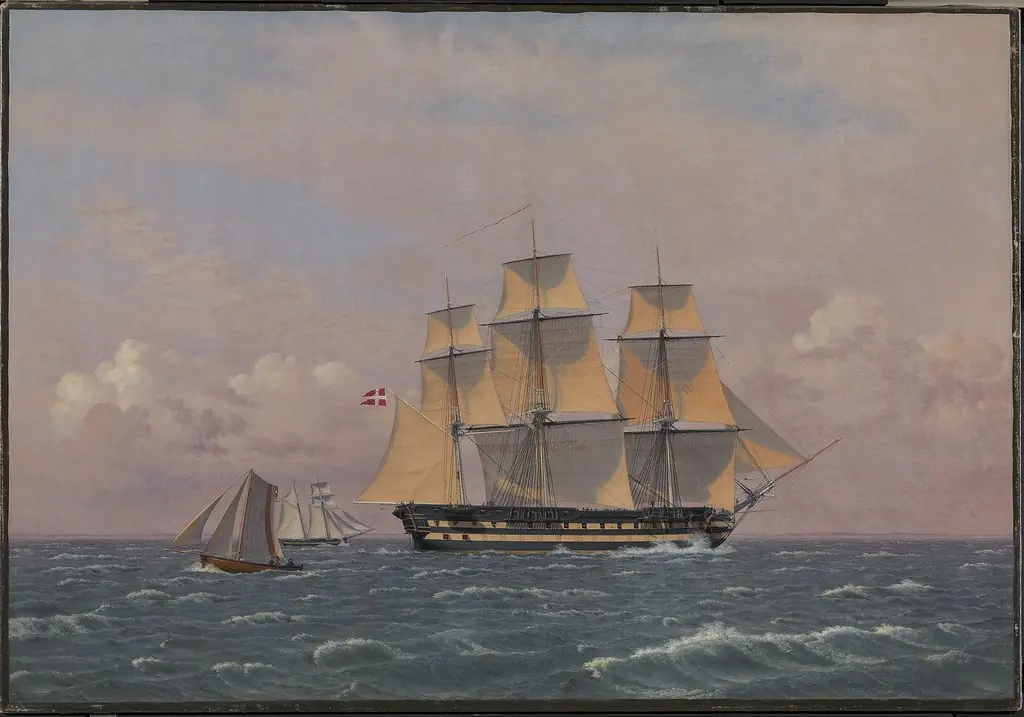 The 84-Gun Danish Warship "Dronning Marie" in the Sound
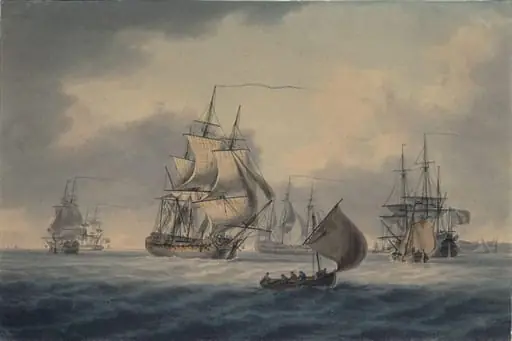 Shipping
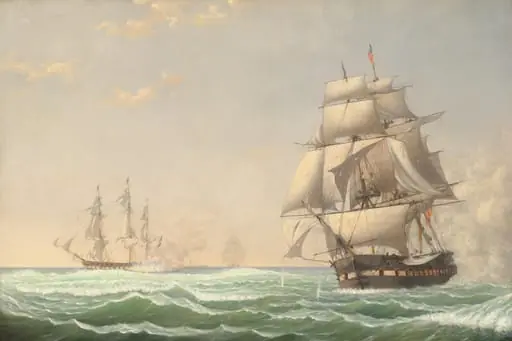 The United States Frigate "President" Engaging the British Squadron, 1815
 Shipping