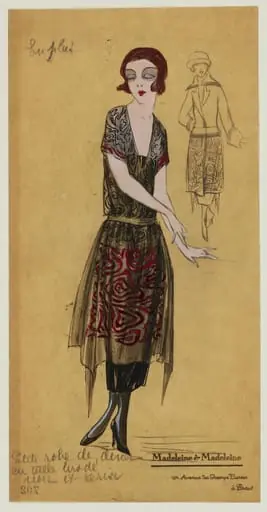
Artwork
1920
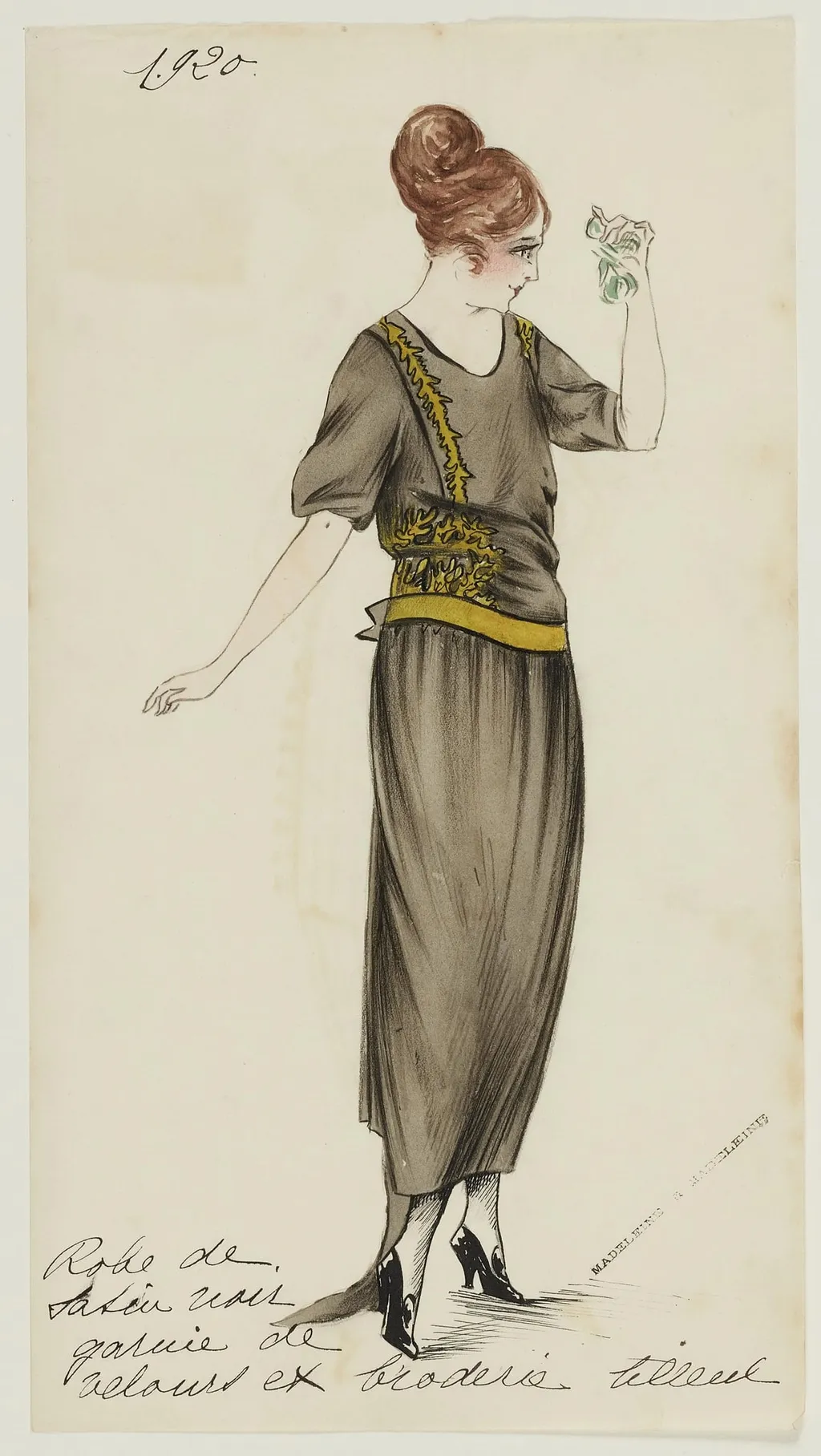
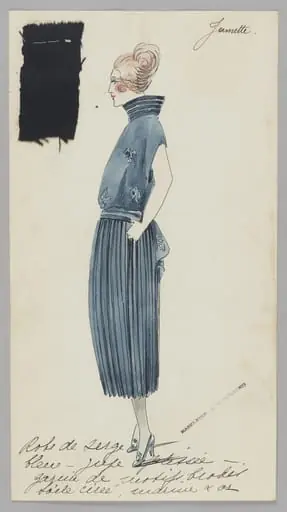
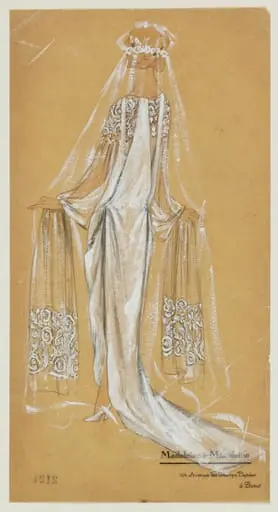
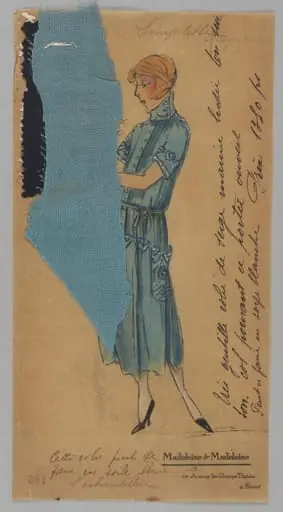
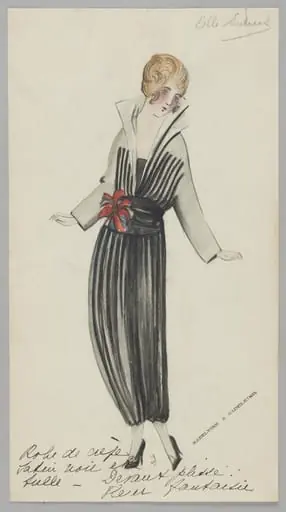
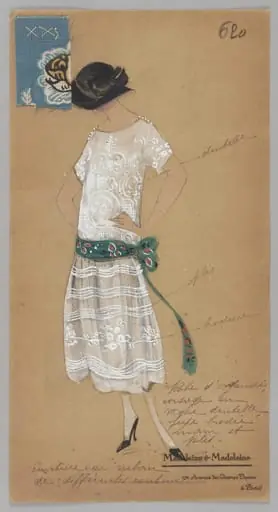
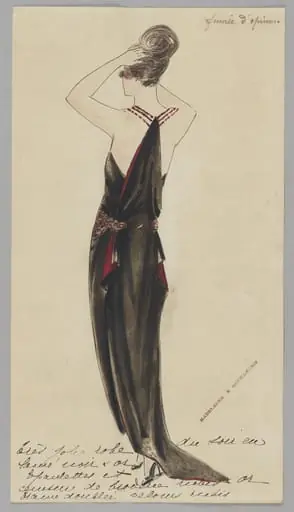
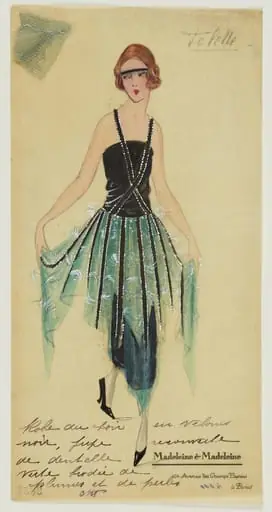
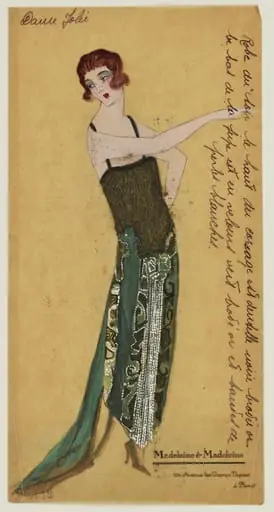
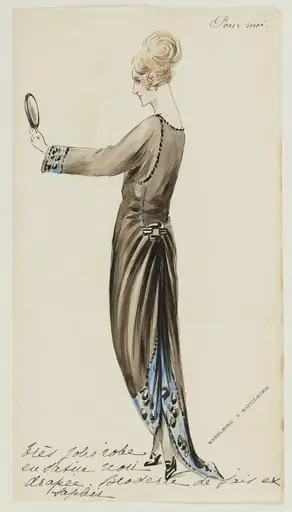
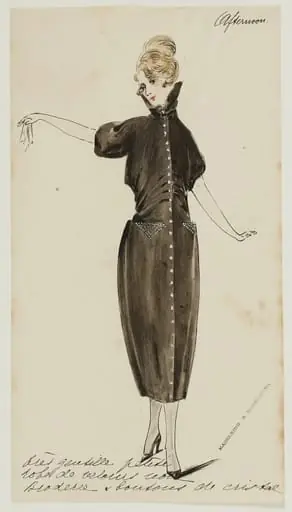
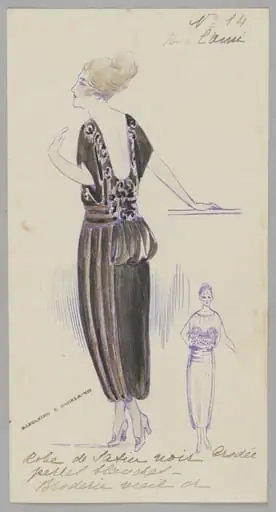
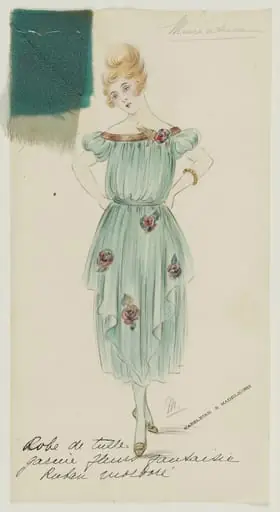
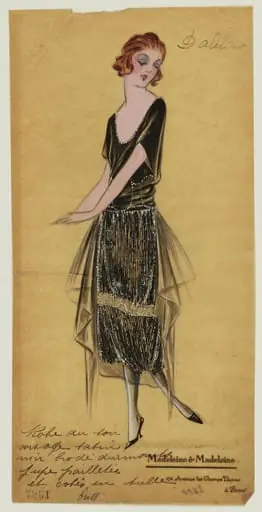
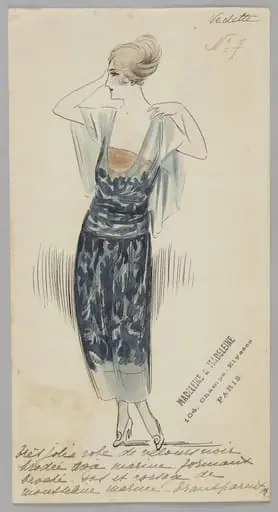
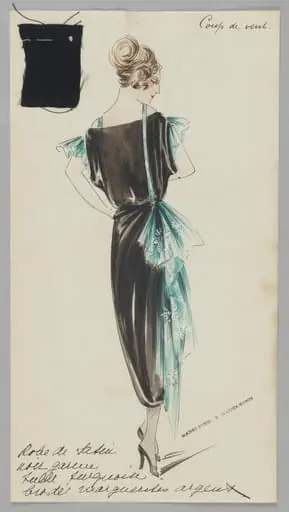
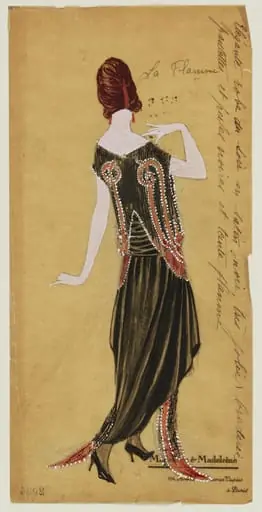
1920 is a drawing by Madeleine & Madeleine. It dates from 1924 and is held in the collection of the Palais Galliera - Musée de la Mode de la Ville de Paris.
About this work
Overview
Created in 1924 by the design house Madeleine & Madeleine, this garment is a black satin dress adorned with velvet trim and lime-green embroidery.
Created in 1924 by the design house Madeleine & Madeleine, this garment is a black satin dress adorned with velvet trim and lime-green embroidery. It is part of the collection at the Museum of Ethnography, where it is preserved as an example of early 20th-century French fashion craftsmanship. The piece reflects the interwar period’s blend of luxury and restraint, combining rich materials with subtle decorative detail.
Subject & Meaning
The garment is not a portrait but a designed object meant for wear, embodying the quiet sophistication of post-war Parisian style. Its dark hue and restrained embellishment suggest a move away from pre-war opulence toward refined elegance. The lime-green embroidery introduces a deliberate contrast, hinting at modernist sensibilities without overt symbolism. The dress functions as a cultural artifact of feminine attire during a time of social transition.
Technique & Style
The dress is constructed from black satin, with velvet used for edging and structural definition. The embroidery, executed in lime-green silk thread, features fine, linear patterns likely stitched by hand. The combination of smooth satin and plush velvet creates tactile contrast, while the embroidery adds rhythmic detail without overwhelming the silhouette. Construction techniques reflect the precision of atelier work, prioritizing durability and refined finish.
History & Provenance
The dress entered the Museum of Ethnography’s collection in the mid-20th century, likely acquired through donation or institutional purchase. Its origin traces to the Parisian design studio Madeleine & Madeleine, known for high-quality women’s wear in the 1920s. No documented owner or wearer is recorded, but its condition suggests limited use and careful preservation, aligning with its later role as a museum specimen rather than everyday clothing.
Context
Produced in 1924, the dress emerged during a period when fashion was redefining femininity after World War I. Silhouettes grew straighter, colors more muted, and ornamentation became intentional rather than ornamental. This piece aligns with trends favoring understated luxury, influenced by both Art Deco geometry and the rise of ready-to-wear culture. It reflects Paris’s continued dominance in fashion, even as tastes shifted toward simplicity and modernity.
Legacy
The garment remains a representative example of interwar French textile design, studied for its material choices and construction. It contributes to scholarly understanding of how fashion responded to societal change without overt rebellion. While not widely publicized, its presence in a museum of ethnography underscores its value as a cultural object, illustrating the quiet artistry embedded in everyday wear of the era.
Artist & collection
Artist
These artists left a small but striking set of 1924 drawings and designs that mix fashion and line.
Museum
Palais Galliera - Musée de la Mode de la Ville de Paris
Continue through works from the same source collection.