Artwork
Moussette
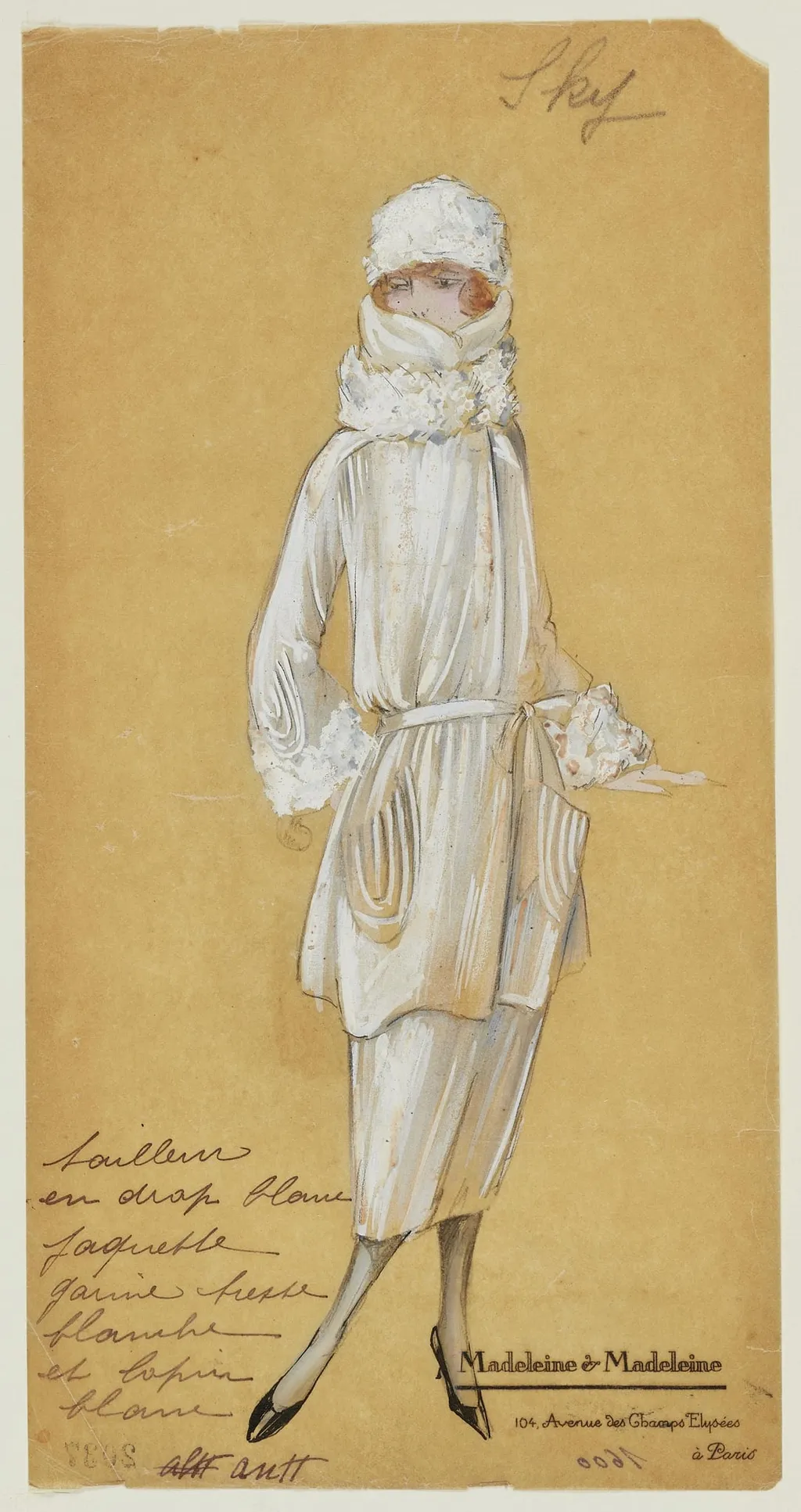
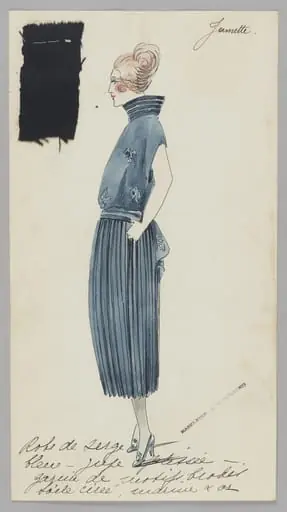
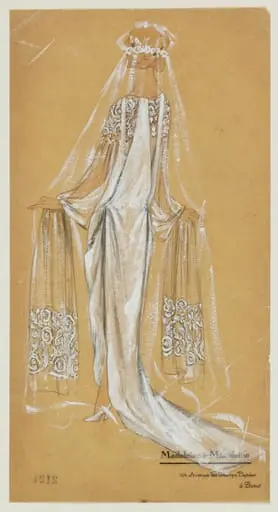
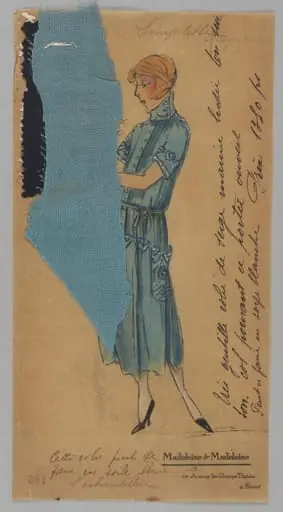
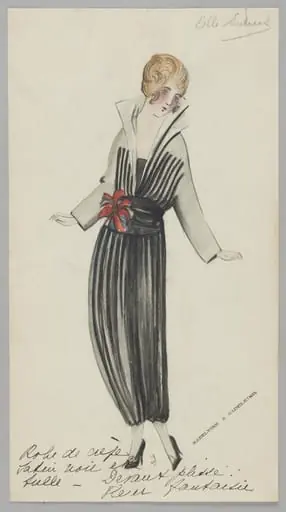
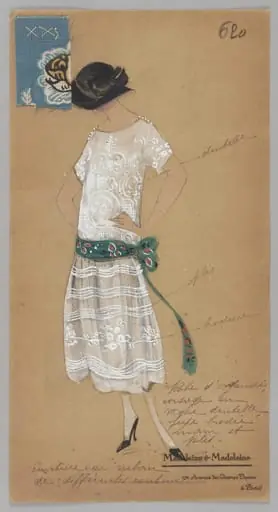
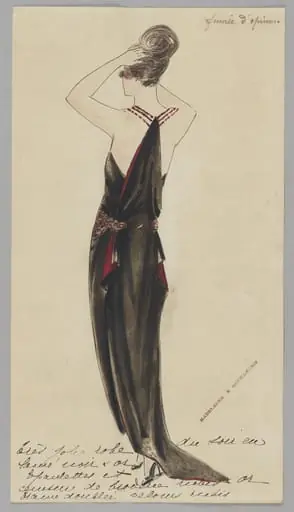
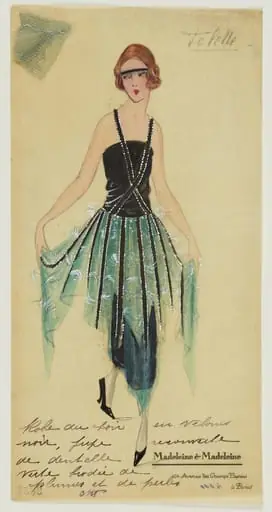
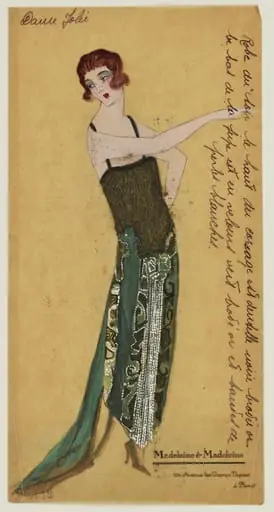
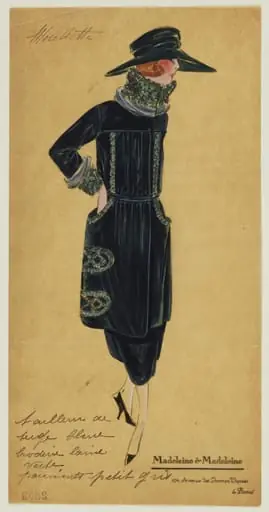
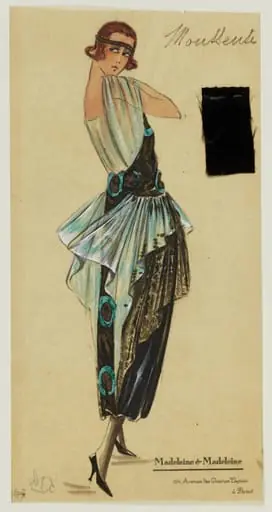
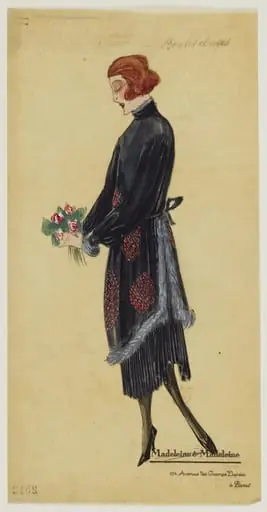
Moussette is a drawing by Madeleine & Madeleine. It dates from 1924 and is held in the collection of the Palais Galliera - Musée de la Mode de la Ville de Paris.
About this work
Overview
Created in 1924 by the design duo Madeleine & Madeleine, this ink sketch documents a specific garment from early 20th-century French fashion.
Created in 1924 by the design duo Madeleine & Madeleine, this ink sketch documents a specific garment from early 20th-century French fashion. Executed in a rapid, observational style, it functions as a technical record rather than a finished illustration. The drawing is held in the collection of the Museum of Ethnography, where it serves as evidence of textile craftsmanship and dress construction practices of the period.
Subject & Meaning
The figure depicts a woman wearing a long, loose coat with wide sleeves and a low-drawn hat that obscures her face. Her posture and attire suggest anonymity, possibly indicating a working-class or domestic role. The focus is not on individual identity but on the garment’s structure and materials, reflecting the designers’ interest in documenting utilitarian clothing rather than fashionable portraiture.
Technique & Style
Rendered with swift, economical lines, the sketch resembles a field note or pattern draft. The artist used minimal shading and no color, relying instead on handwritten annotations in French to specify fabric types: 'serge bleue' for the coat, 'broderie laine verte' for the embroidery, and 'parements petit gris' for the lining. This method prioritizes accuracy over aesthetic finish, aligning with ethnographic documentation practices of the time.
History & Provenance
The drawing entered the Museum of Ethnography’s collection shortly after its creation, likely as part of the designers’ archival efforts to catalog regional dress. Madeleine & Madeleine were known for systematic recording of textile details, and this piece is one of many such studies preserved for academic use. Its survival reflects institutional interest in preserving everyday clothing as cultural artifacts.
Context
In the 1920s, French fashion designers increasingly turned to ethnographic methods to study traditional garments, seeking inspiration in regional textiles and construction techniques. This sketch aligns with that trend, capturing a garment likely worn by working women in rural or suburban France. The emphasis on wool, serge, and hand embroidery points to a time when machine-made fabrics were still supplementing, not replacing, artisanal methods.
Legacy
This sketch remains a valuable resource for historians studying early 20th-century textile use and dressmaking practices. Its unembellished style and precise annotations offer insight into how designers documented material specifics before mass production altered garment construction. It contributes to broader understandings of how everyday clothing reflected social and economic conditions in interwar France.
Artist & collection
Artist
These artists left a small but striking set of 1924 drawings and designs that mix fashion and line.
Museum
Palais Galliera - Musée de la Mode de la Ville de Paris
Continue through works from the same source collection.