Artwork
Vierge
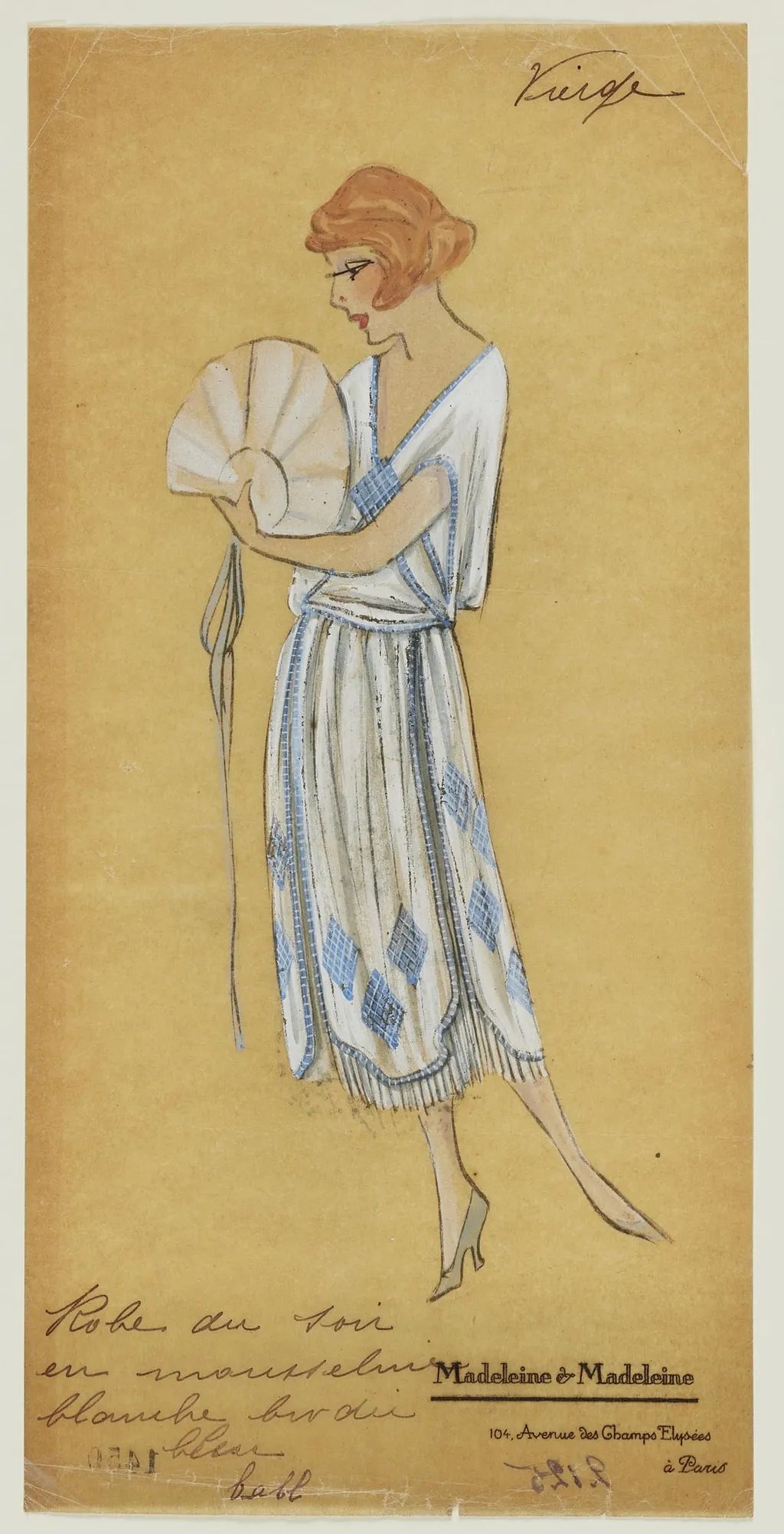
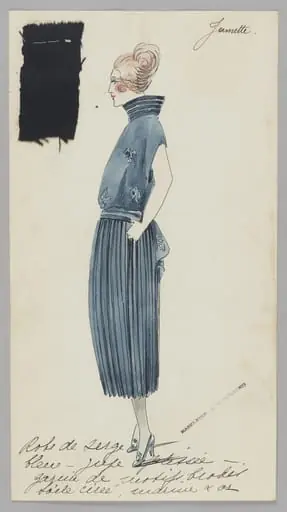
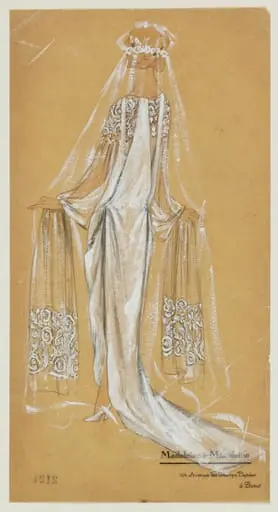
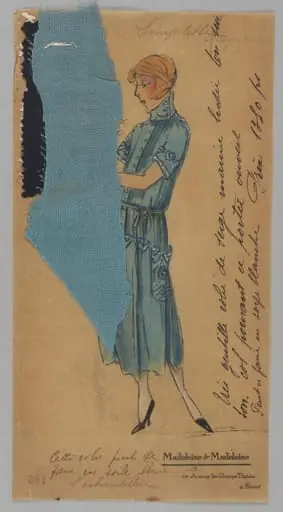
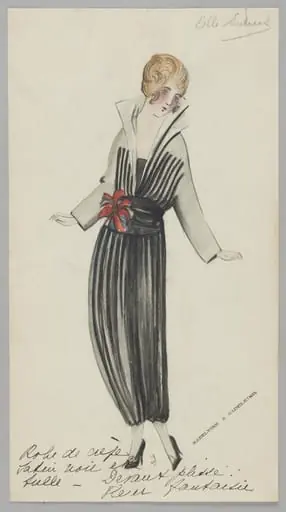
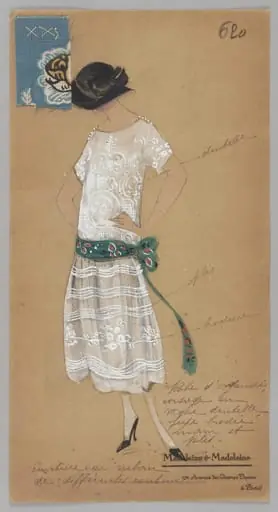
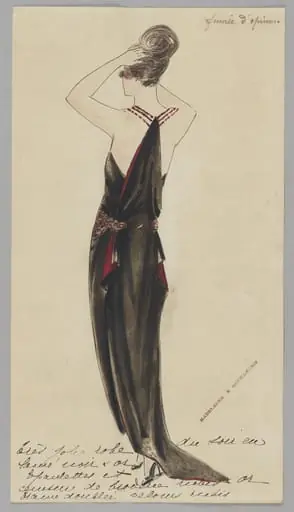
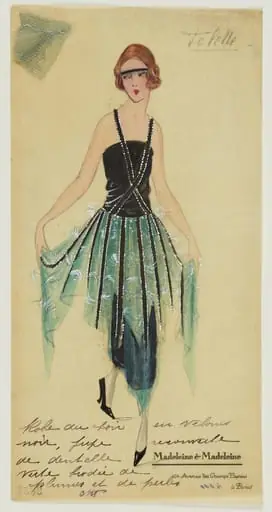
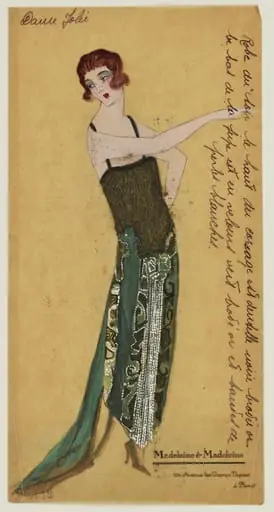
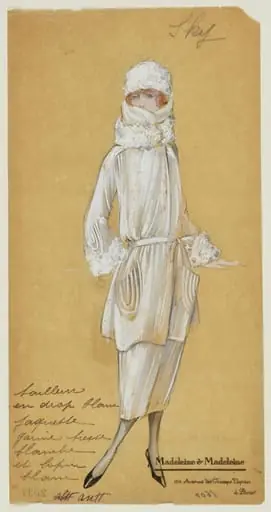
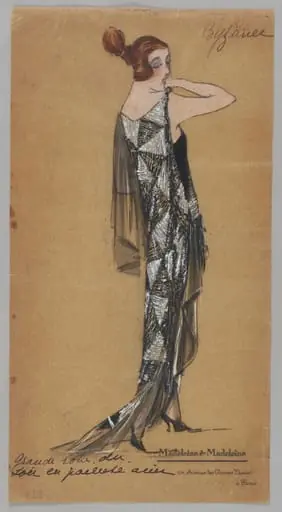
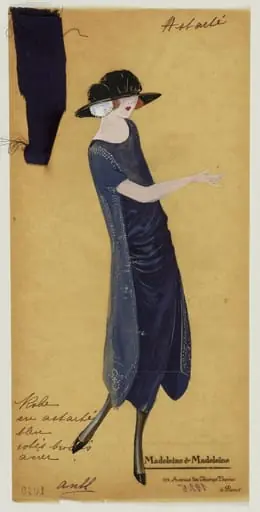
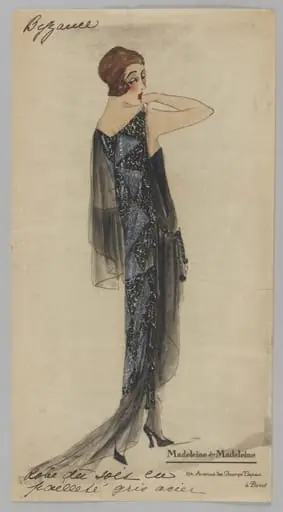
Vierge is a drawing by Madeleine & Madeleine. It dates from 1924 and is held in the collection of the Palais Galliera - Musée de la Mode de la Ville de Paris.
About this work
Overview
The work is held in the collection of the Museum of Ethnography, where it is valued for its documentation of early 20th-century dress and feminine silhouette.
Created in 1924 by the collaborative duo Madeleine & Madeleine, this ink sketch depicts a woman in an evening gown of white muslin trimmed with blue. Executed with swift, loose lines, the drawing captures a momentary pose rather than a polished portrait. The work is held in the collection of the Museum of Ethnography, where it is valued for its documentation of early 20th-century dress and feminine silhouette.
Subject & Meaning
The figure, rendered in profile with one arm crossed, wears a sleeveless evening dress of lightweight fabric, suggesting informal elegance. The label 'Robe du soir' identifies the garment as intended for evening wear, while the plain background focuses attention on the costume. The sketch may reflect an observation of contemporary fashion rather than a specific individual, emphasizing textile and form over identity.
Technique & Style
The drawing employs minimal, fluid ink lines to suggest volume and movement, avoiding detail in favor of impression. The fabric’s translucency is implied through sparse hatching and open spaces, characteristic of quick observational sketches. The artist’s handwritten annotations, including fabric type and garment function, reveal an ethnographic intent—recording clothing as cultural artifact rather than artistic subject.
History & Provenance
The work entered the Museum of Ethnography’s collection shortly after its creation, likely acquired as part of a broader effort to document fashion as material culture. Its attribution to 'Madeleine & Madeleine'—a collaborative pseudonym—suggests a shared practice, possibly among designers or dressmakers. No earlier ownership records are documented, and its survival as a sketch underscores its role as a working record rather than a finished piece.
Context
In the 1920s, muslin became popular for evening wear due to its lightness and drape, aligning with the era’s shift toward relaxed silhouettes. This sketch reflects a broader interest among designers and ethnographers in recording everyday garments, especially those worn by women in urban settings. The focus on fabric texture and construction mirrors contemporary efforts to systematize fashion as a subject of study.
Legacy
Though not widely exhibited, the sketch remains a quiet testament to the intersection of fashion documentation and artistic practice in the early 20th century. Its preservation in an ethnographic context highlights how clothing was increasingly viewed as cultural evidence. The work continues to inform studies of interwar dress, particularly in its unembellished recording of textile and form.
Artist & collection
Artist
These artists left a small but striking set of 1924 drawings and designs that mix fashion and line.
Museum
Palais Galliera - Musée de la Mode de la Ville de Paris
Continue through works from the same source collection.