Artwork
Paris
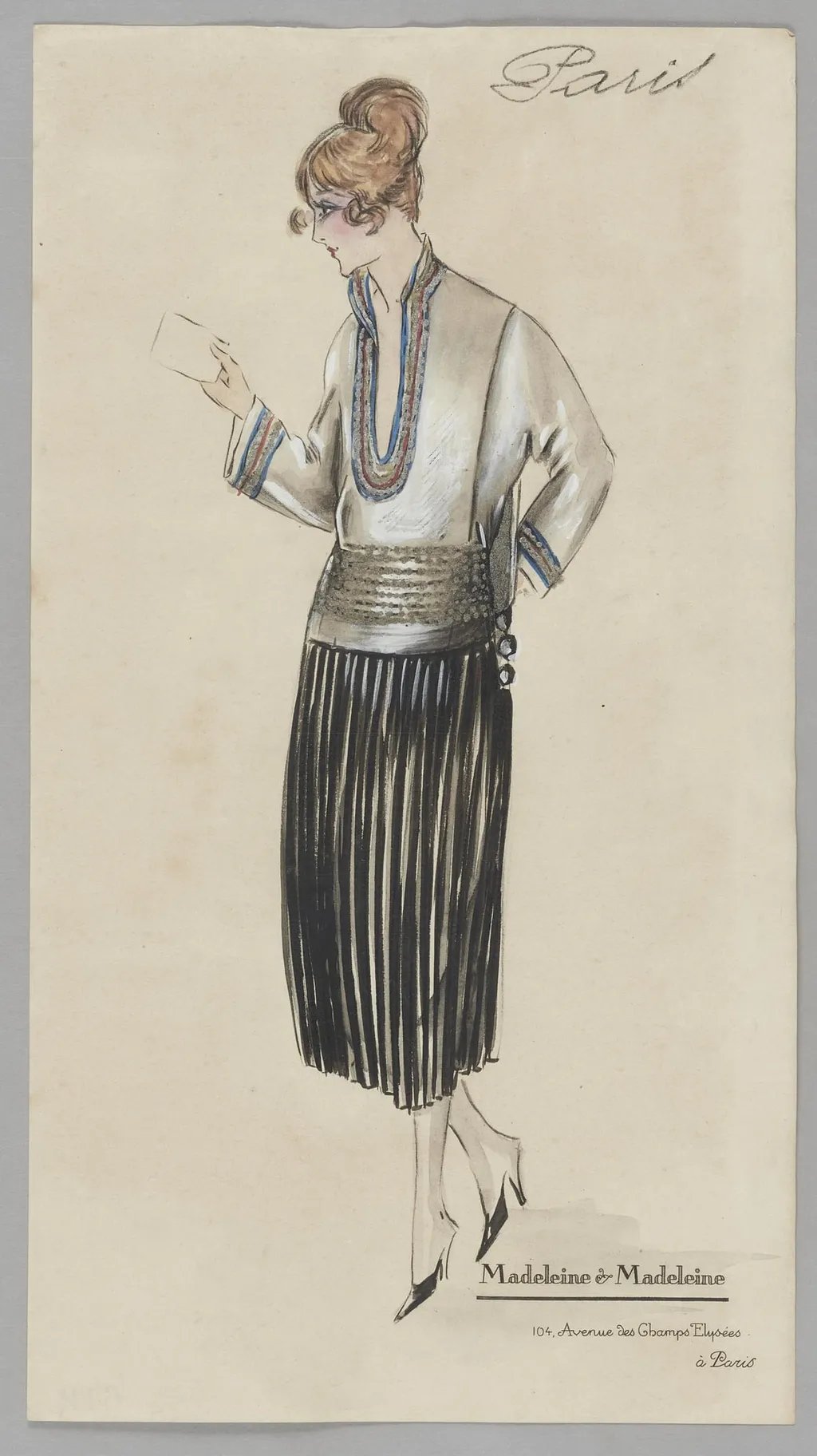
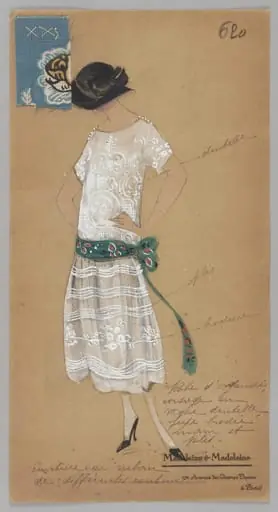
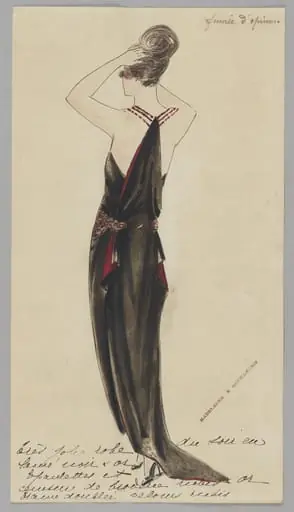
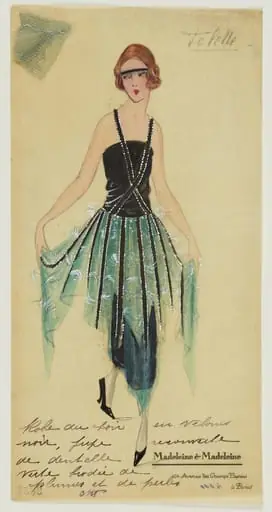
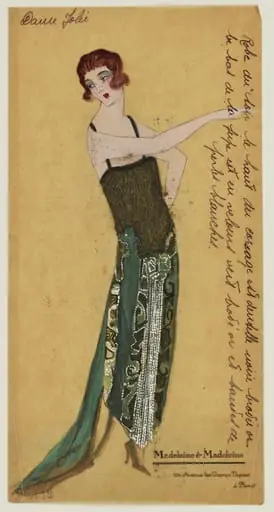
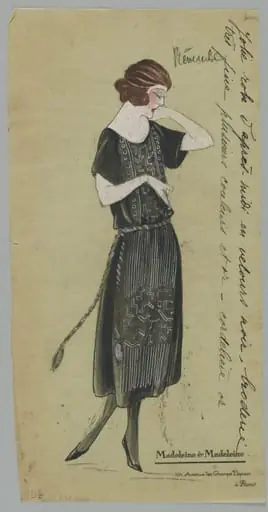
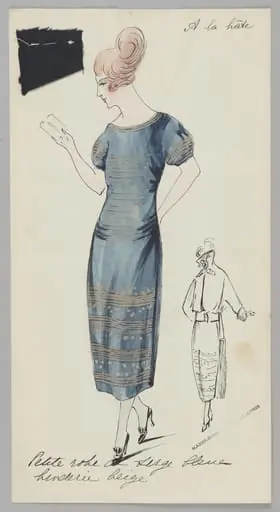
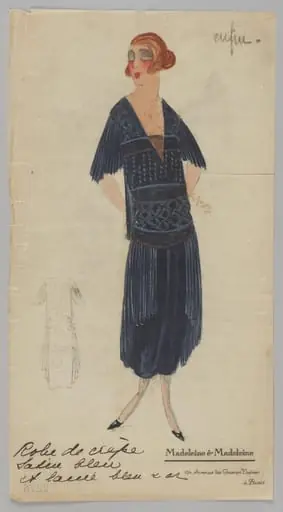
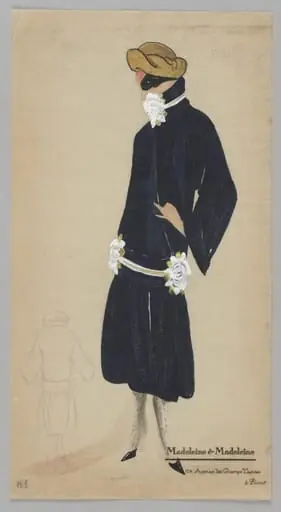
Paris is a drawing by Madeleine & Madeleine. It dates from 1924 and is held in the collection of the Palais Galliera - Musée de la Mode de la Ville de Paris.
About this work
Overview
The artist’s signature and the studio’s address are inscribed on the piece, confirming its role as a promotional artifact rather than a fine art study.
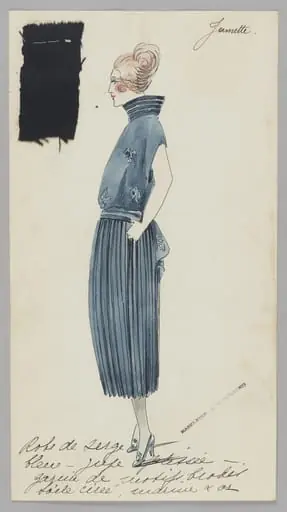
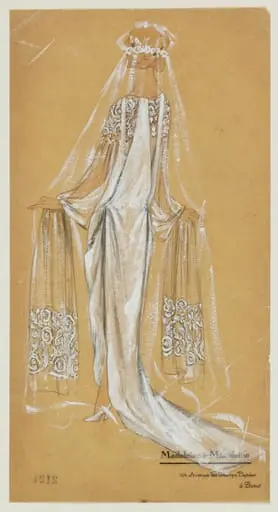
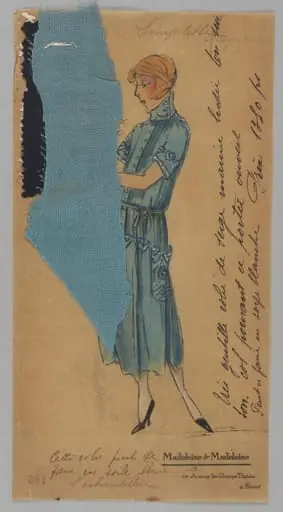
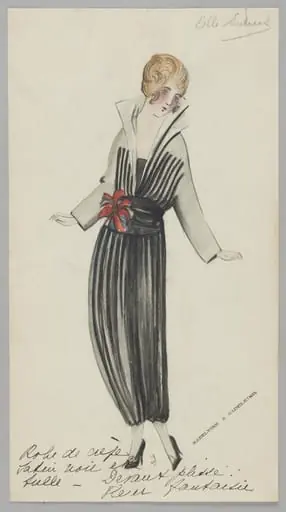
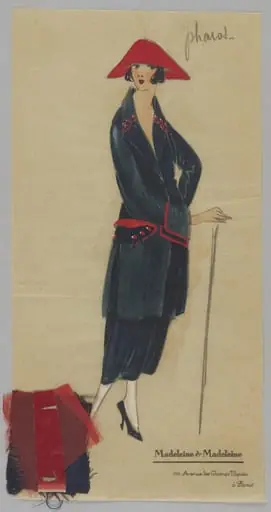
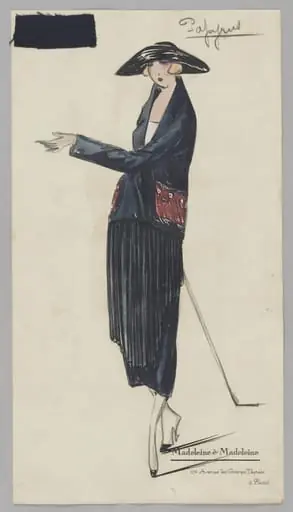
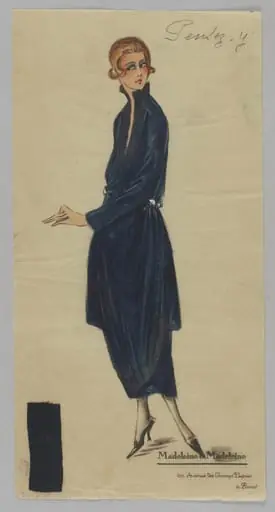
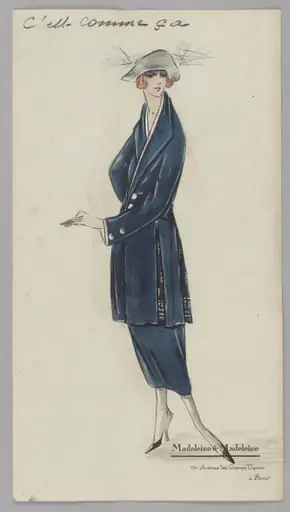
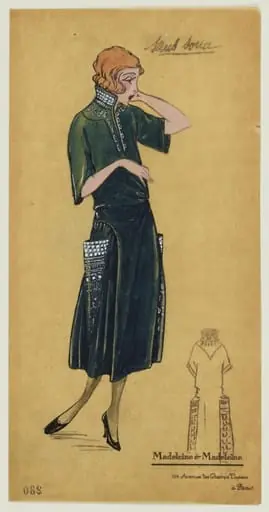
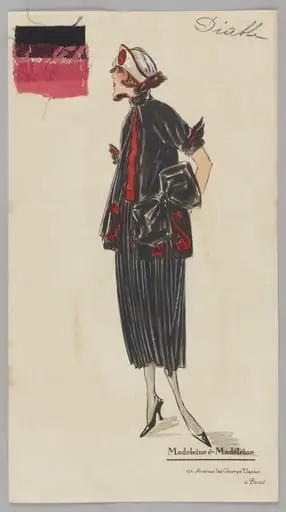
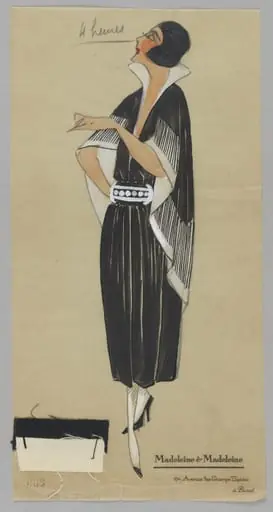
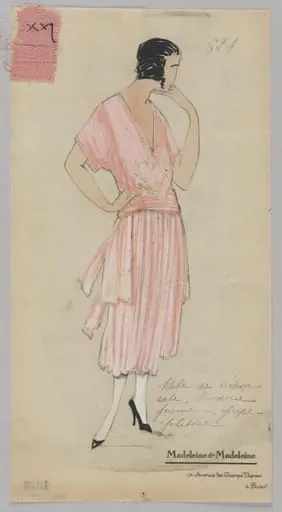
Created in 1924 by the Parisian fashion house Madeleine & Madeleine, this ink sketch functions as a commercial illustration for women’s apparel. Rendered in a clean, linear style, it depicts a standing female figure in profile, dressed in garments bearing decorative trim and striped patterns. The artist’s signature and the studio’s address are inscribed on the piece, confirming its role as a promotional artifact rather than a fine art study.
Subject & Meaning
The figure represents an idealized customer of the atelier, embodying contemporary Parisian elegance through restrained posture and refined attire. Her posture and minimal expression suggest poise and discretion, aligning with the brand’s aesthetic of understated sophistication. The envelope she holds may imply correspondence or personal errands, subtly anchoring the garment in everyday life rather than theatrical performance.
Technique & Style
Executed in precise ink lines, the drawing emphasizes silhouette and textile detail over shading or depth. Stripes on the tunic’s cuffs, collar, and skirt are rendered with rhythmic regularity, while the beaded necklace is suggested through clustered dots. The absence of background or context focuses attention entirely on the clothing, reflecting advertising conventions of the period that prioritized garment clarity.
History & Provenance
The drawing was produced by Madeleine & Madeleine, a boutique fashion studio operating in Paris during the 1920s. It entered the collection of the Museum of Ethnography as part of a broader effort to document material culture tied to commercial fashion. Its preservation reflects growing institutional interest in ephemeral design artifacts as cultural records rather than mere advertisements.
Context
In the 1920s, fashion houses increasingly used illustrated catalogs and sketches to communicate new designs to clients and retailers. This piece aligns with a trend of minimalist, detail-oriented illustrations that highlighted textile patterns and construction. The use of galloon—narrow decorative braid—on the tunic reflects contemporary interest in embellished trims as markers of craftsmanship and luxury.
Legacy
The drawing survives as a tangible example of how fashion branding operated before mass photography. It illustrates the transition from hand-drawn promotion to photographic advertising, preserving the aesthetic values of interwar Parisian design. Its presence in an ethnographic museum underscores its value as a cultural artifact, documenting the intersection of commerce, gender, and material culture in early 20th-century Europe.
Artist & collection
Artist
These artists left a small but striking set of 1924 drawings and designs that mix fashion and line.

Museum
Palais Galliera - Musée de la Mode de la Ville de Paris
Continue through works from the same source collection.