Artwork
Rubannette
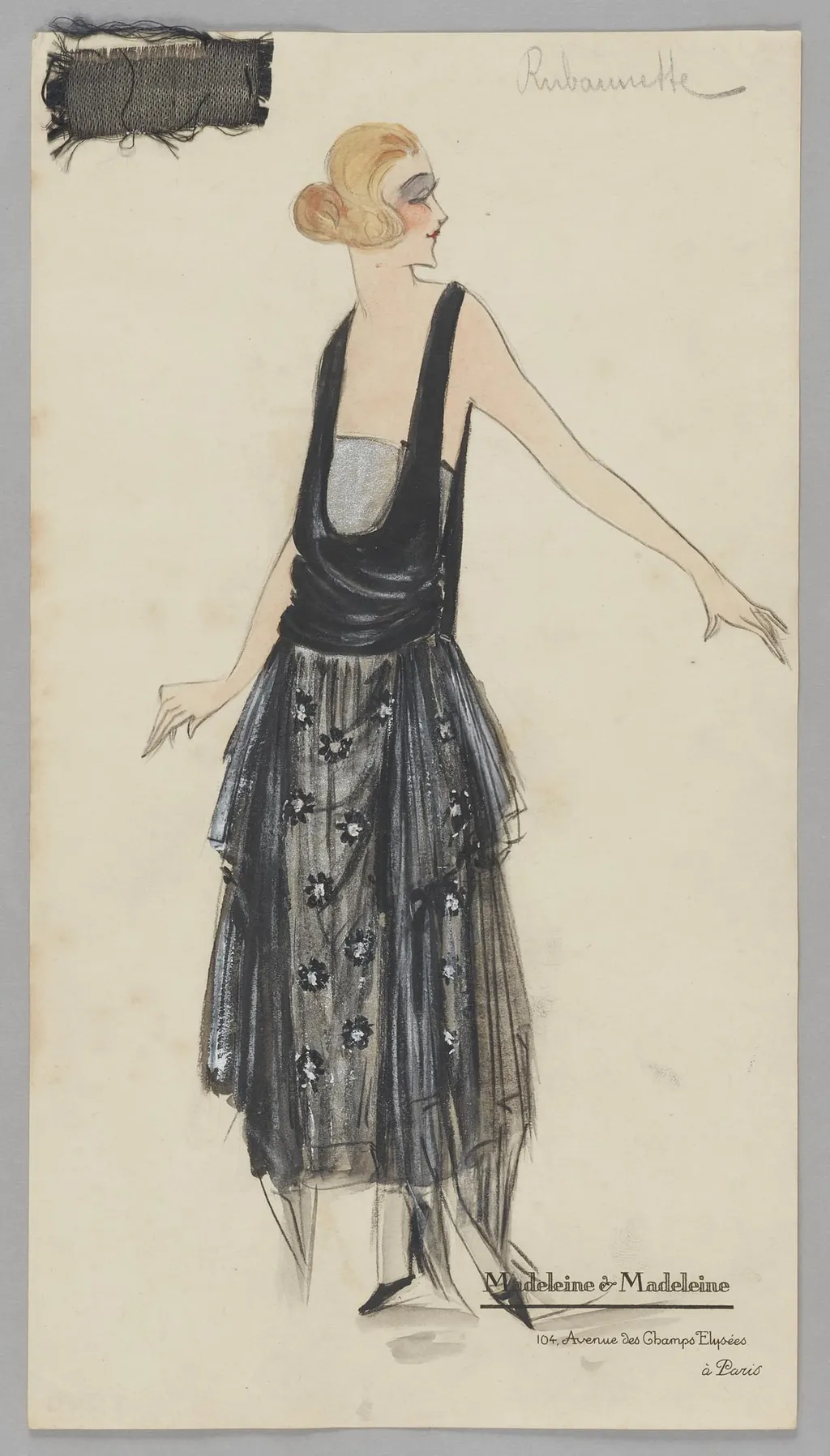
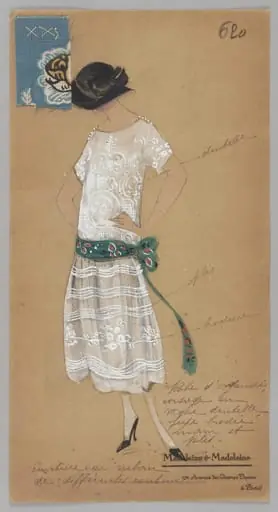
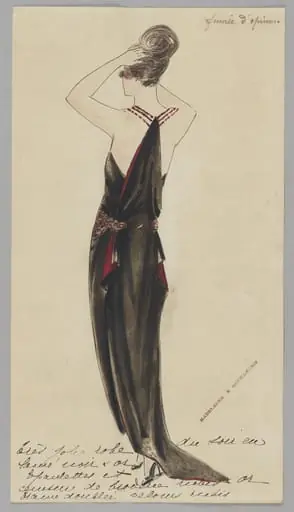
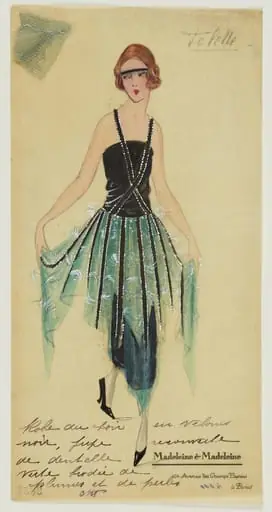
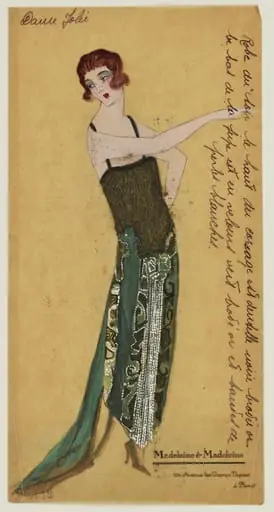
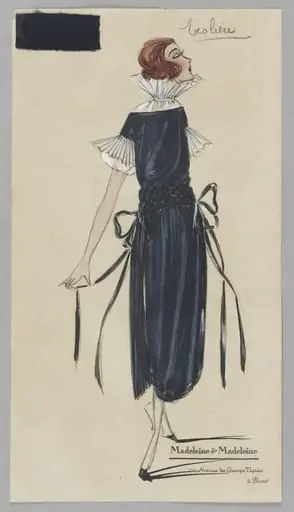
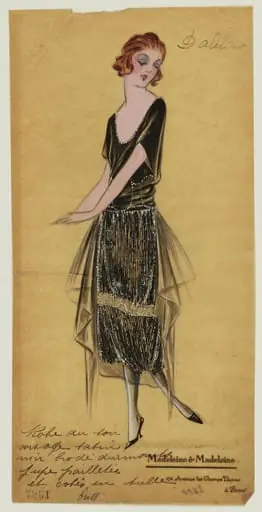
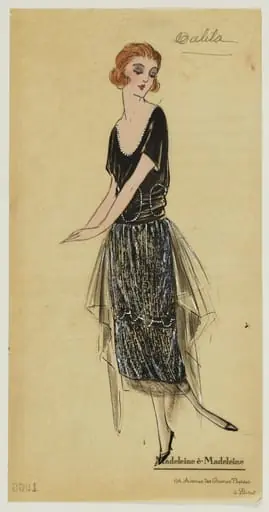
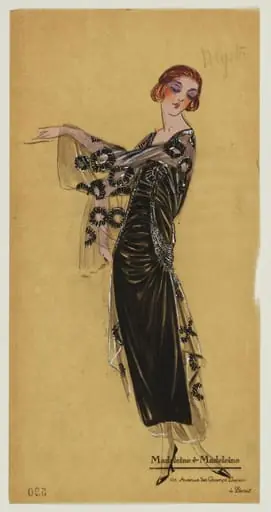
Rubannette is a drawing by Madeleine & Madeleine. It dates from 1924 and is held in the collection of the Palais Galliera - Musée de la Mode de la Ville de Paris.
About this work
Overview
Rubannette is a 1924 drawing by the collaborative duo Madeleine & Madeleine, currently held in the Museum of Ethnography’s collection.
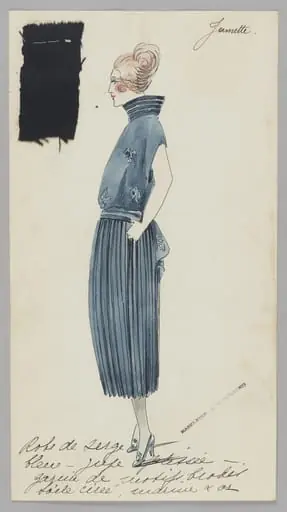
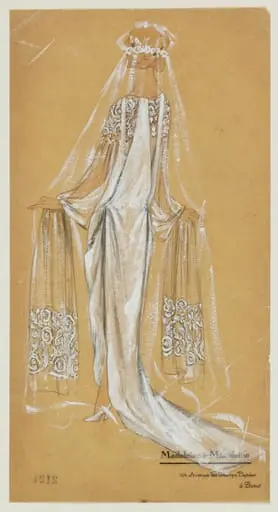
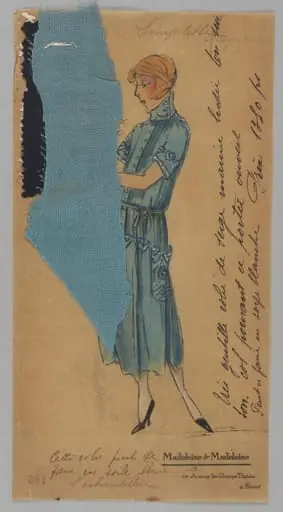
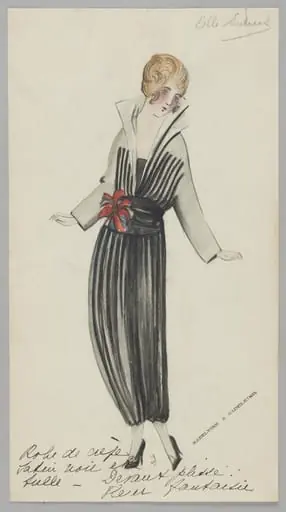
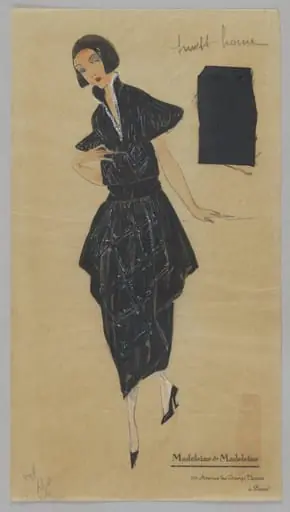
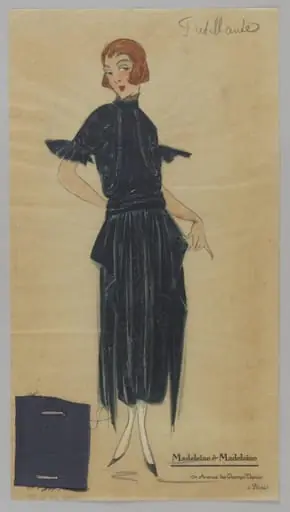
Rubannette is a 1924 drawing by the collaborative duo Madeleine & Madeleine, currently held in the Museum of Ethnography’s collection. The work combines ink and collage, integrating an actual fabric swatch from the dress depicted. Its intimate scale and precise detail suggest it was intended as a study or fashion record rather than a finished illustration. The signature 'Rubannette' appears in the upper right, possibly indicating a fictional persona or alias used by the artists.
Subject & Meaning
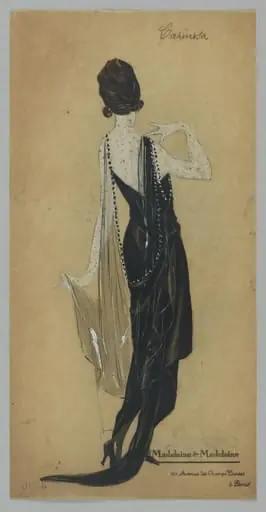
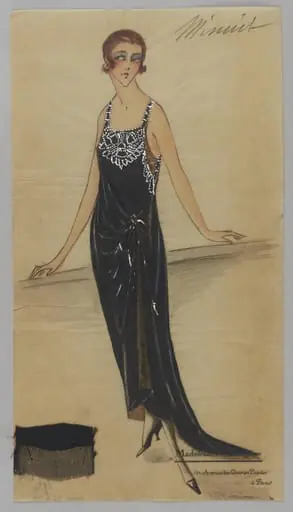
The figure is a woman dressed in a sleek black gown with a low back and flared skirt, adorned with tiny silver floral motifs. Her loose waves and poised stance evoke the quiet elegance of 1920s urban femininity. The object she holds is indistinct, leaving interpretation open—perhaps a fan, a cigarette, or a token. The inclusion of the fabric swatch anchors the image in material reality, suggesting a connection between fashion and identity in daily life.
Technique & Style
The drawing employs fine ink lines to define the dress’s contours and the woman’s form, with delicate shading to suggest texture. The silver flowers are rendered with metallic ink or wash, catching light subtly. The real fabric swatch, affixed to the upper corner, introduces tactility into a two-dimensional medium. This hybrid technique reflects an interest in blurring the boundaries between art, design, and archival practice.
History & Provenance
Created in 1924, Rubannette entered the Museum of Ethnography’s collection shortly after its making, likely through direct donation or acquisition by a curator interested in material culture. Its preservation as a single sheet, rather than as part of a larger album, suggests it was valued for its unique combination of image and artifact. The artists’ identity remains obscure, with no further works definitively attributed to Madeleine & Madeleine.
Context
In the 1920s, fashion illustration increasingly incorporated real materials to convey authenticity. Designers and illustrators used fabric samples to communicate texture and drape to clients and manufacturers. Rubannette aligns with this trend, positioning fashion not merely as aesthetic but as embodied experience. Its ethnographic placement implies an interest in documenting everyday material practices, not just high fashion.
Legacy
Rubannette remains a rare example of early 20th-century fashion drawing that integrates physical textiles. While the artists’ broader output is unknown, the work has influenced later studies on the materiality of fashion representation. It is occasionally referenced in exhibitions on the intersection of art, dress, and archival practice, valued for its quiet innovation rather than its fame.
Artist & collection
Artist
These artists left a small but striking set of 1924 drawings and designs that mix fashion and line.
Museum
Palais Galliera - Musée de la Mode de la Ville de Paris
Continue through works from the same source collection.