Artwork
Saint Anthony of Padua
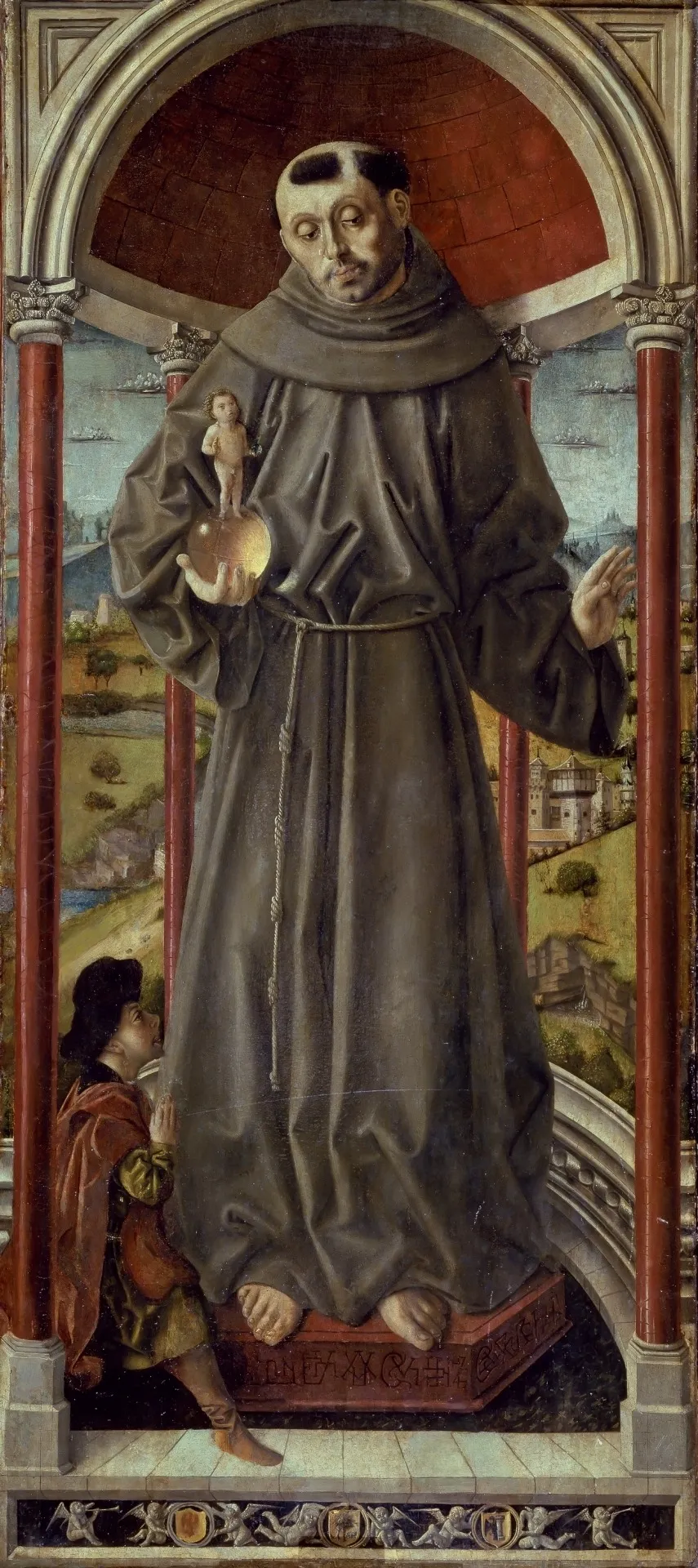
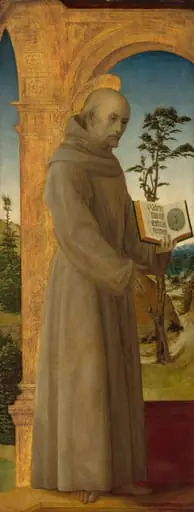
Saint Anthony of Padua is an unspecified painting by the Byzantine icon painting artist Maestro de los Luna. It dates from 1501 and is held in the collection of the Museo del Prado.
About this work
Overview
A diminutive, unclothed child rests atop the sphere, while a tranquil landscape of hills and distant structures fills the background.
Created in 1501 by the Spanish painter known as Maestro de los Luna, this oil work portrays Saint Anthony of Padua. The figure stands before an arched opening, his dark, hooded habit contrasting with the luminous gold of the orb he cradles. A diminutive, unclothed child rests atop the sphere, while a tranquil landscape of hills and distant structures fills the background. The composition is housed in Madrid’s Museo del Prado.
Subject & Meaning
The central figure is Saint Anthony, a 13th‑century Franciscan preacher revered for his miracles and teachings. The golden orb he holds symbolizes the world, and the tiny naked child perched on it references the saint’s legendary vision of the infant Christ, a motif that underscores his role as a mediator between the divine and humanity.
Technique & Style
Maestro de los Luna employs a restrained palette, using deep browns and muted tones for the habit while allowing the orb’s metallic sheen to catch the eye. Fine brushwork renders the textures of the fabric and the delicate features of the child, and the softly modeled landscape recedes with atmospheric perspective, creating a calm, contemplative ambience typical of early 16th‑century Spanish devotional art.
History & Provenance
The painting was completed in the early 1500s and entered the Spanish royal collections before being transferred to the national museum in the 19th century. It has remained in the Museo del Prado since that time, where it is displayed among other works of religious iconography from the same period.
Context
At the turn of the 16th century, Spanish art was increasingly influenced by both Italian Renaissance ideals and local Gothic traditions. Maestro de los Luna’s work reflects this synthesis, combining a clear, humanistic portrayal of a saint with the lingering ornamental richness of earlier Spanish painting, situating the piece within the broader evolution of Iberian religious art.
Artist & collection
Artist
This anonymous Spanish painter worked in the late 1400s, making religious paintings filled with quiet emotion.