Artwork
Marile victorii
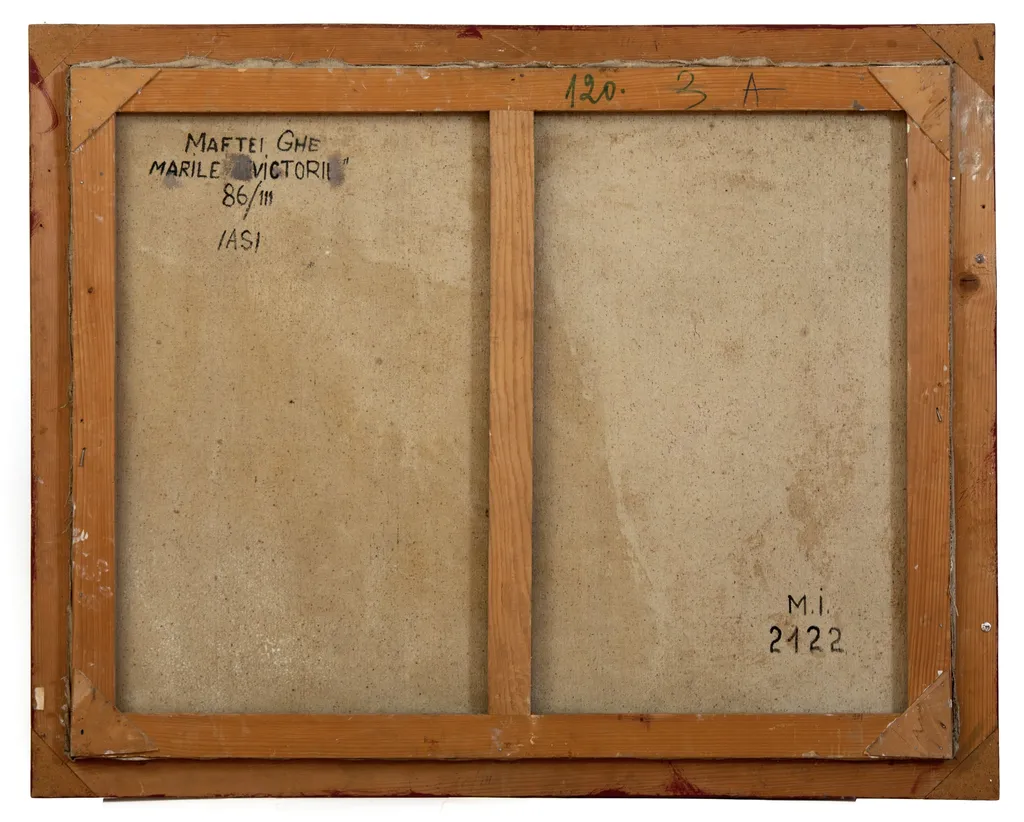
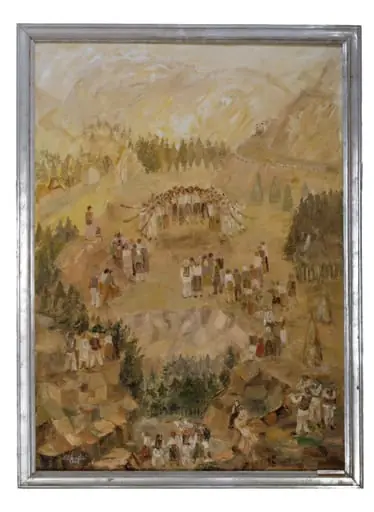
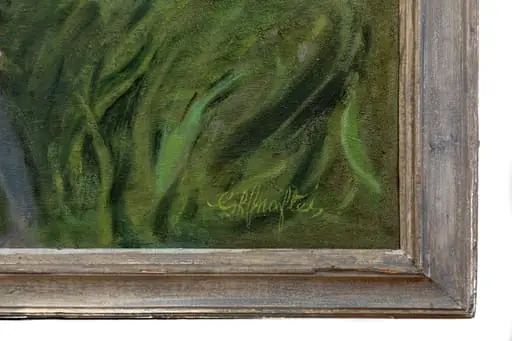
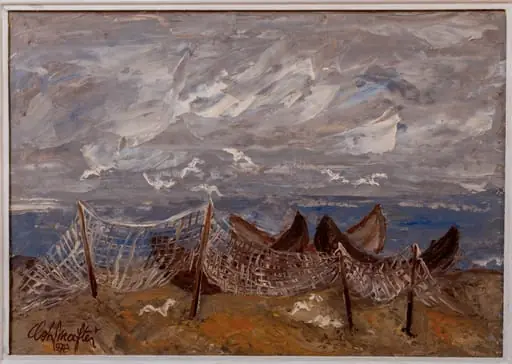
Marile victorii is a print by Maftei Gheorghe. It dates from 1974 and is held in the collection of the Moldova National Museum Complex.
About this work
Overview
The overall aesthetic favors restraint, with no overt imagery or decorative elements, emphasizing quiet formal balance.
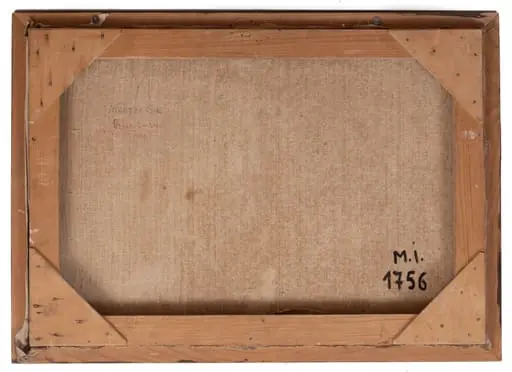
Marile victorii is a 1974 work by Romanian artist Maftei Gheorghe, executed on a lightly textured beige canvas. It is presented in a worn, light brown wooden frame that adds subtle organic character to the composition. The artist’s name and the title appear in black script in the upper-left corner, integrated without ornamentation. The overall aesthetic favors restraint, with no overt imagery or decorative elements, emphasizing quiet formal balance.
Subject & Meaning
The title, meaning 'Great Victories,' suggests a thematic reference to triumph or historical resonance, yet the work contains no figurative or symbolic content. Its abstraction invites interpretation through tone rather than narrative. The absence of explicit imagery shifts focus to the material presence of the surface and the quiet authority of its minimal composition, leaving meaning open to contemplation rather than declaration.
Technique & Style
The surface exhibits a soft, even texture consistent with a printed or stenciled medium rather than brushwork. Colors are muted and limited to the beige ground and black lettering, creating a monochromatic harmony. Clean, unbroken edges and precise alignment of text reflect a deliberate, almost industrial precision. The style rejects expressive gesture in favor of understated clarity, aligning with postwar tendencies toward conceptual minimalism.
History & Provenance
Created in 1974 during Romania’s communist era, the work emerged in a cultural climate where artistic expression was often constrained. Maftei Gheorghe’s choice of abstraction and textual minimalism may reflect a quiet resistance to state-mandated realism. The frame’s wear suggests prolonged display or private ownership, though no public exhibition history is documented. Its survival as a private object underscores its non-conformist nature.
Context
In the context of 1970s Romanian art, where socialist realism dominated official circles, works like Marile victorii represented a subdued alternative. Its lack of political iconography and emphasis on materiality aligned with underground avant-garde practices that prioritized form over ideology. The piece exists in dialogue with international minimalist movements, yet remains grounded in the local conditions of its production.
Legacy
Marile victorii remains a quiet example of Romanian conceptual minimalism from a period when such approaches were rarely documented or exhibited publicly. It contributes to a broader understanding of how artists navigated repression through restraint. While not widely known outside Romania, it stands as a testament to the power of understatement in artistic expression under political constraint.
Artist & collection
Artist
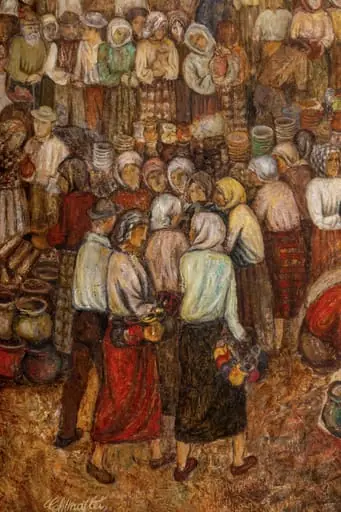
Gheorghe Maftei made prints and a few paintings of Romanian village life and work.