Artwork
Peisaj cu vaci
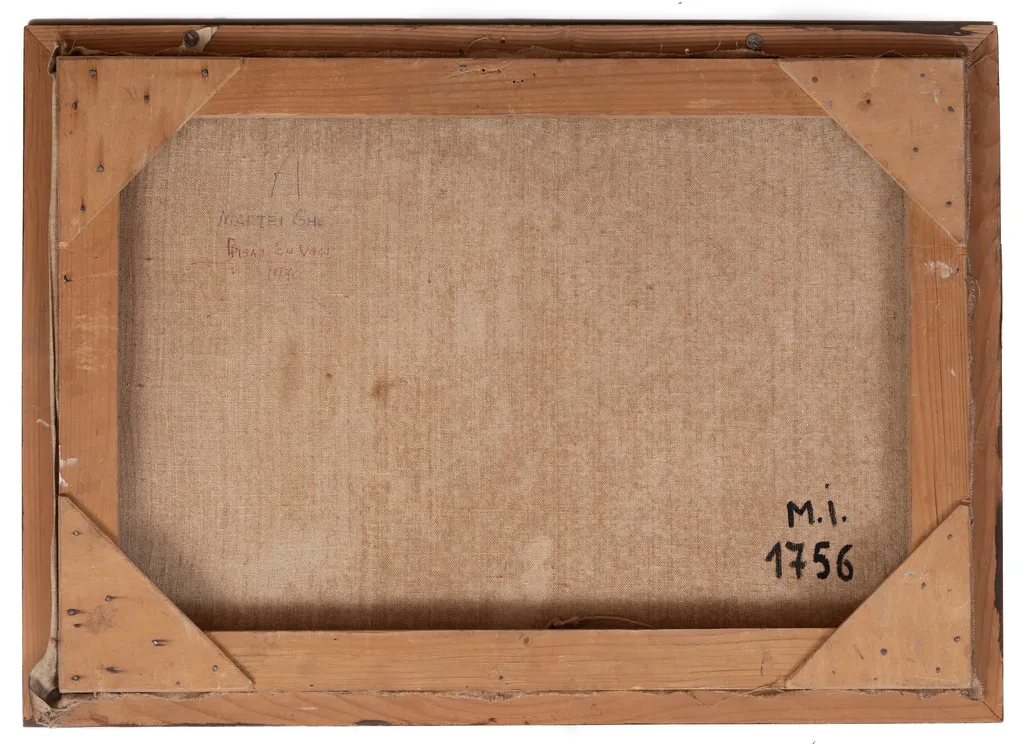
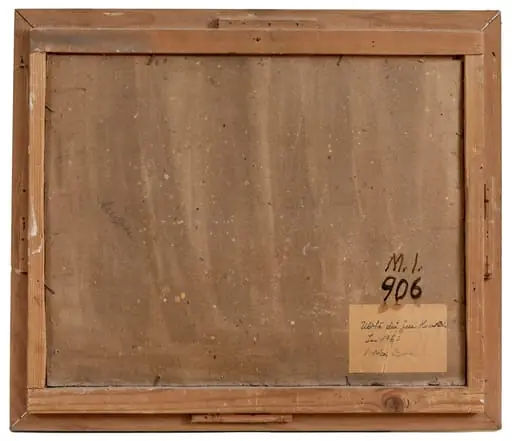
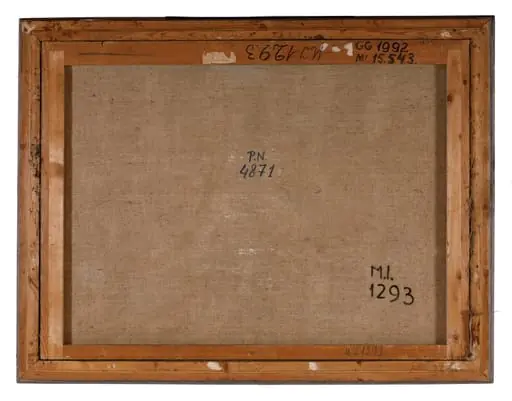
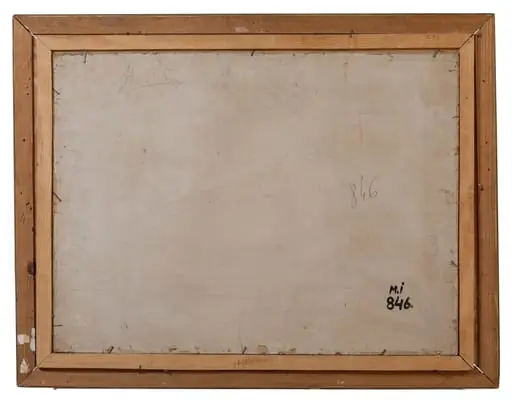
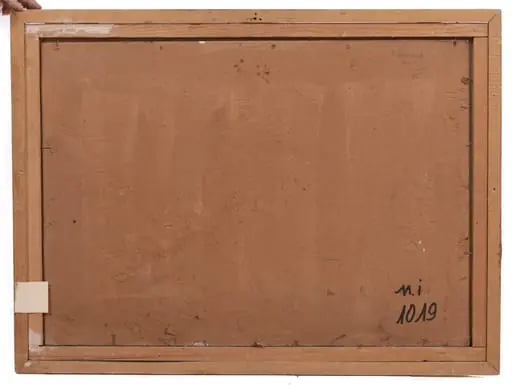
Peisaj cu vaci is an unspecified painting by Maftei Gheorghe. It is held in the collection of the Moldova National Museum Complex. The object consists of an aged wooden frame that houses a faded, light‑toned canvas.
About this work
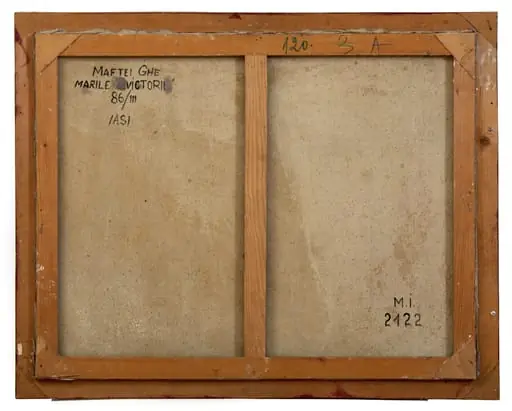
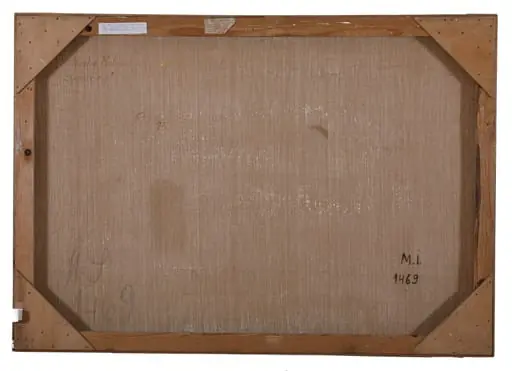
On the back of the canvas, there’s some faded writing in cursive and a black ink stamp with the numbers "1756.
This is an empty wooden frame with a faded canvas inside. The frame looks old, with simple nails holding it together. On the back of the canvas, there’s some faded writing in cursive and a black ink stamp with the numbers "1756."
The writing says "Peisaj cu vaci," which means "Landscape with cows" in Romanian. The canvas is plain and light-colored, but it’s clearly meant to hold a painting.
If you’re curious about old paintings stored this way, check out the Museum of Ethnography.
Overview
The object consists of an aged wooden frame that houses a faded, light‑toned canvas. Simple iron nails secure the frame, suggesting a utilitarian construction typical of modest works. The canvas itself bears no visible paint, appearing as a blank surface prepared for a picture that is no longer present.
Subject & Meaning
A cursive inscription on the reverse side reads “Peisaj cu vaci,” the Romanian phrase for “Landscape with cows.” This title indicates the original composition likely depicted a rural scene populated by bovine figures, a common motif in agrarian visual culture that emphasizes the relationship between land and livestock.
Technique & Style
While the painting is missing, the remaining materials point to a conventional 18th‑century approach. The plain canvas, primed for oil or tempera, would have been stretched within the frame and painted with a limited palette suitable for depicting pastoral scenery. The simple frame construction aligns with functional, rather than decorative, aesthetics of the period.
History & Provenance
A black ink stamp on the back bears the date “1756,” providing a terminus post quem for the object's creation. The presence of this stamp suggests an administrative or inventory record, possibly from a local workshop or collector, indicating the work was catalogued or authenticated at that time.
Context
The title and date place the piece within the Romanian artistic milieu of the mid‑18th century, when rural landscapes were a frequent subject for both folk and academic painters. Such works often served decorative purposes in domestic settings, reflecting the agrarian economy and cultural identity of the region.
Artist & collection
Artist
Gheorghe Maftei made prints and a few paintings of Romanian village life and work.