Artwork
Seashore with a High Sea
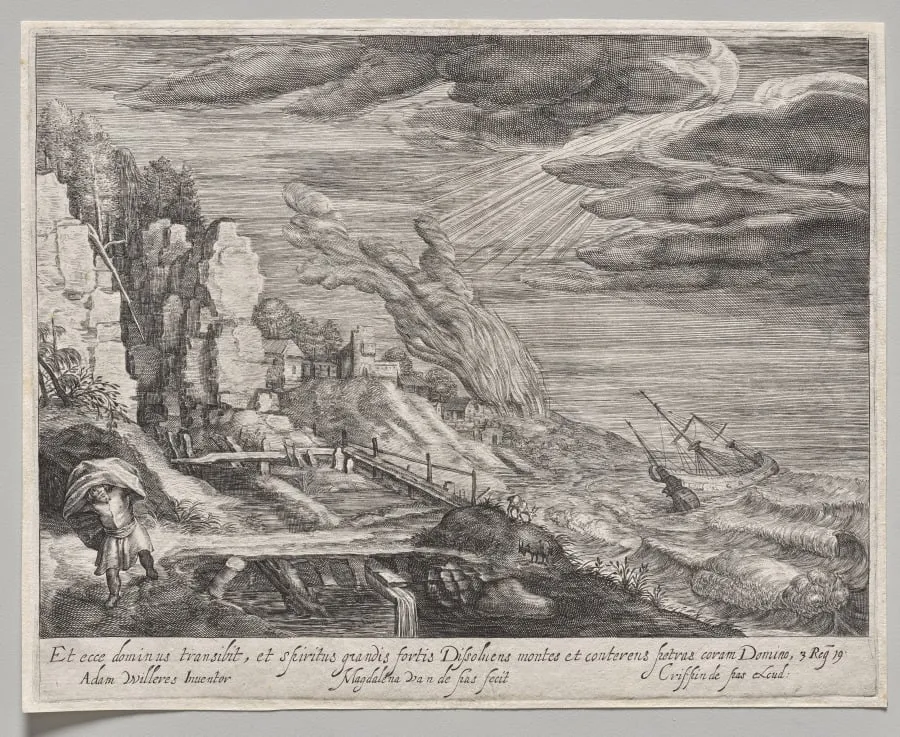
Seashore with a High Sea is a print by the Baroque artist Magdalena van de Passe. It dates from 1620 and is held in the collection of the Cleveland Museum of Art.
About this work
Overview
Magdalena van de Passe was one of the few women in early 17th-century Europe to establish a professional reputation as a printmaker.
Magdalena van de Passe was one of the few women in early 17th-century Europe to establish a professional reputation as a printmaker. Her engraving Seashore with a High Sea adapts a coastal composition by Adam Willaerts, a fellow Utrecht artist, but transforms it through the addition of a biblical narrative. The work stands out for its technical precision and the rarity of female authorship in printmaking at the time.
Subject & Meaning
Van de Passe inserted the prophet Elijah into Willaerts’s naturalistic seascape, depicting him emerging from a cave as described in 1 Kings 17–19. Below the scene, engraved passages from the text reinforce the moment of divine revelation in the wind. This fusion of landscape and scripture invites contemplation of solitude and spiritual listening, aligning the wild coast with a moment of sacred encounter.
Technique & Style
Her engraving technique employs fine, irregular lines that mimic the texture of weathered rock and churning water. The delicate, closely spaced marks capture the turbulence of the sea and the ruggedness of the shore, while the tiny figure of Elijah is rendered with subtle clarity. This meticulous approach enhances the atmospheric tension without overwhelming the composition’s naturalism.
History & Provenance
Created in the 1620s or 1630s, the print reflects van de Passe’s active career in Utrecht, where she worked alongside male relatives in the family’s printmaking workshop. Few of her prints survive, and this one is particularly uncommon due to its combination of landscape and religious narrative. Its survival underscores her recognition during her lifetime, despite the gendered constraints of the profession.
Context
In early modern Europe, printmaking was dominated by male artists and guild members. Van de Passe’s access to training and distribution networks was unusual for a woman. Her ability to adapt a painting by a known artist and infuse it with theological meaning suggests both technical skill and cultural literacy, positioning her within broader artistic and religious discourses of the Dutch Republic.
Legacy
Van de Passe’s work remains a rare example of a woman’s contribution to Northern European printmaking before the 18th century. Her integration of narrative into landscape influenced later interpretations of nature as a site of spiritual significance. Though not widely studied until recently, her prints are now recognized for their technical refinement and quiet innovation.
Artist & collection

![Seashore with HIgh Seas, a Ship, and the Prophet Elijah [God Helping the Israelites Fight the Moabites], by Magdalena van de Passe](https://artifactworldgallery.com/img/magdalena-van-de-passe--seashore-with-high-seas-a-ship-and-the-prophet-elijah-god-he--df292978c0f7c85a-w320.webp) Seashore with HIgh Seas, a Ship, and the Prophet Elijah [God Helping the Israelites Fight the Moabites]
Seashore with HIgh Seas, a Ship, and the Prophet Elijah [God Helping the Israelites Fight the Moabites] The Baptism of Christ
 Landscape with a Chateau at the right
 Landscape with Large Roman Ruins
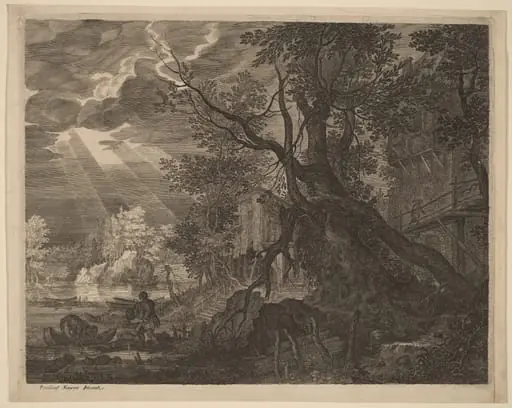 Landscape with Men Fishing by Moonlight
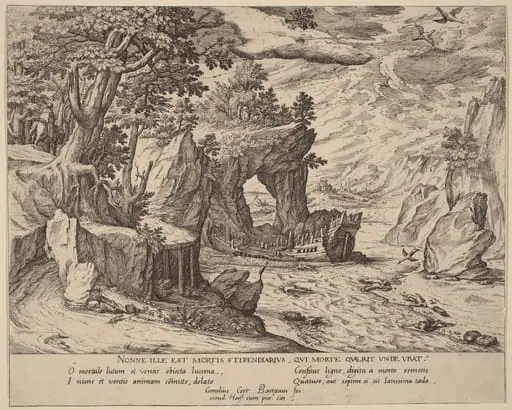 After the Shipwreck
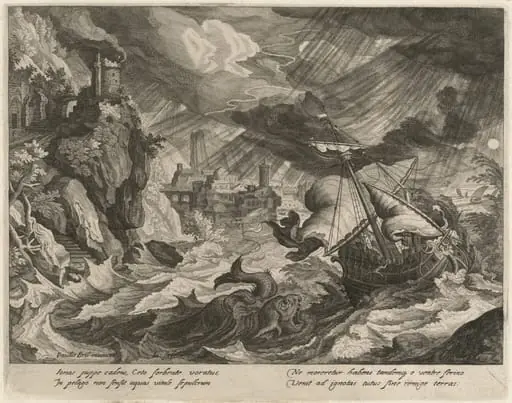 Jonah Thrown into the Stormy Sea
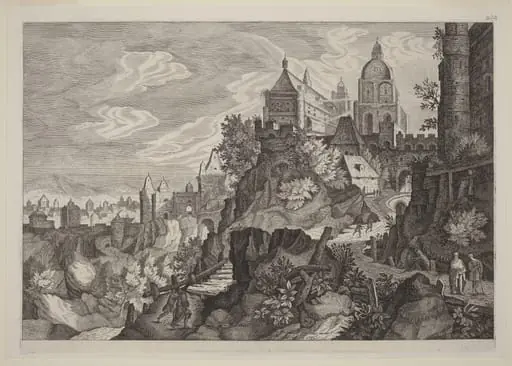 Rocky Landscape in Bohemia
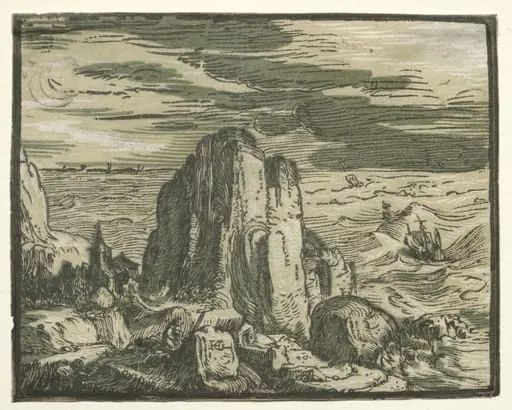 Four Small Landscapes: No. 4, Cliff on the Seashore
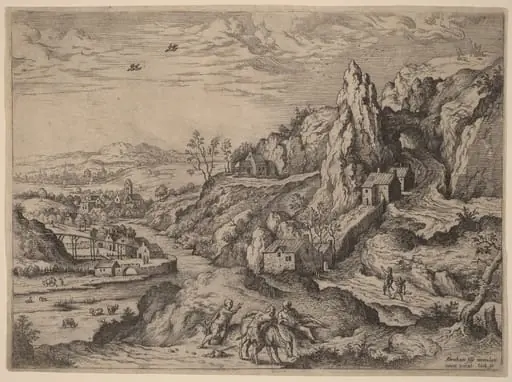 Sacrifice of Abraham
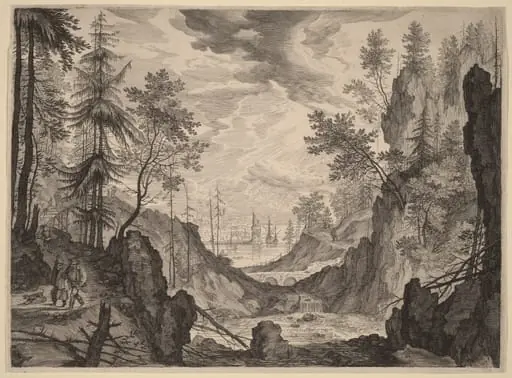 Woodland Scene with a Waterfall
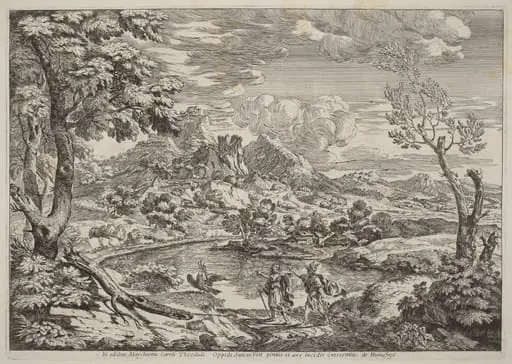 A Man Showing Mercury the Eagle of Jupiter