Artwork
St. George's, Bloomsbury
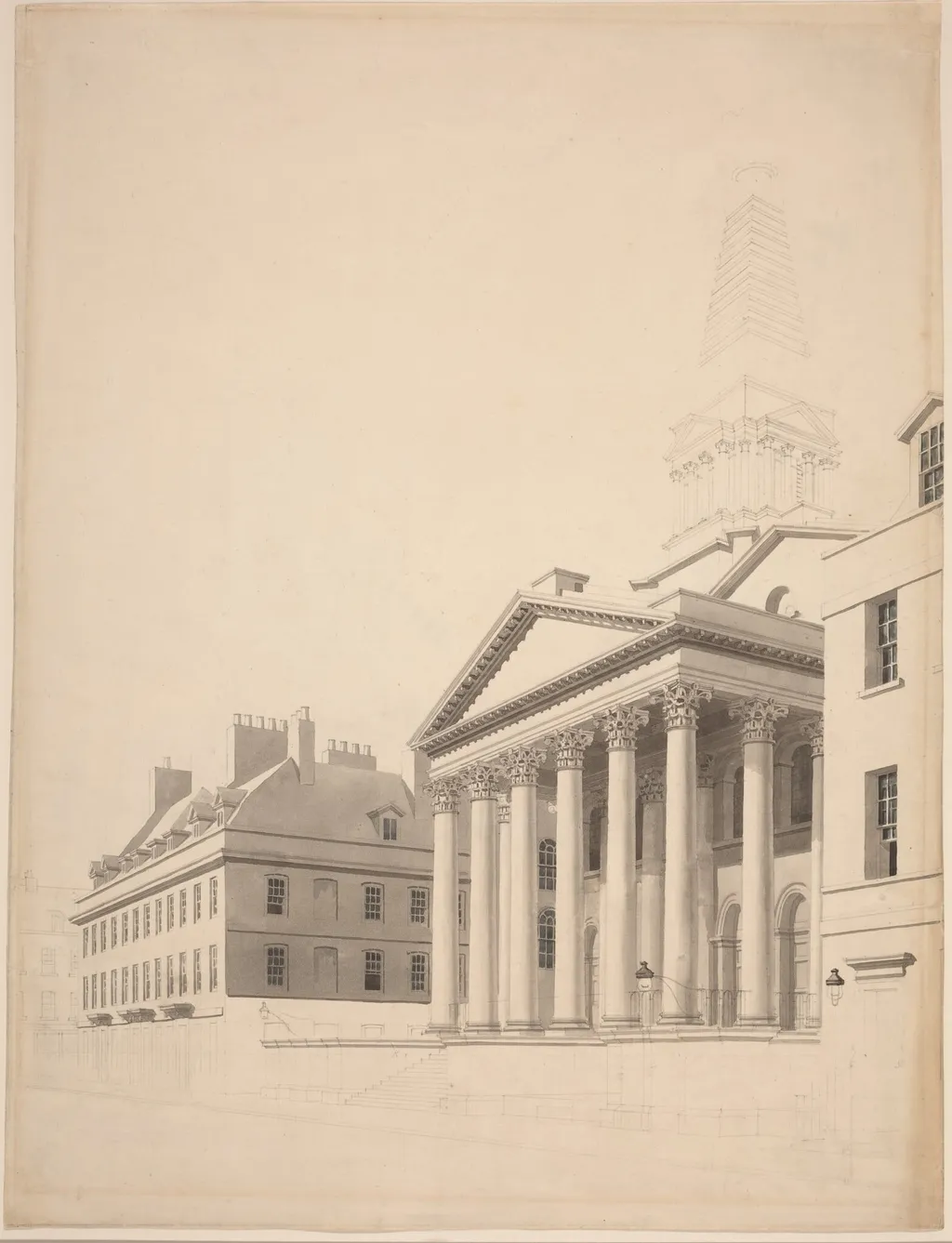
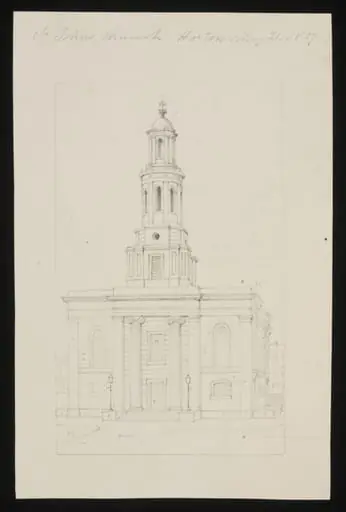
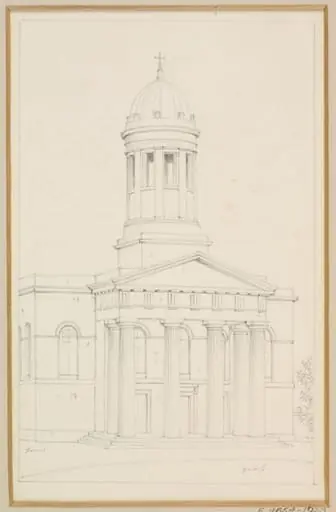
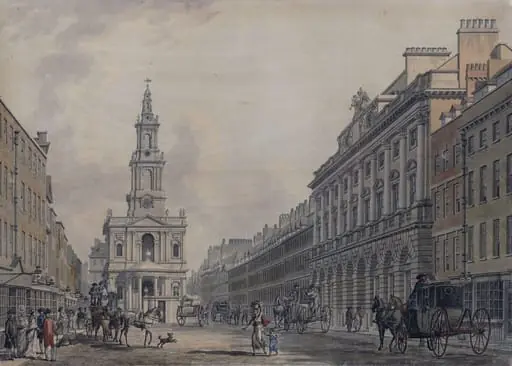
St. George's, Bloomsbury is an ink drawing by the Romanticist artist Thomas Malton. It dates from 1799 and is held in the collection of the National Gallery of Art.
About this work
Overview
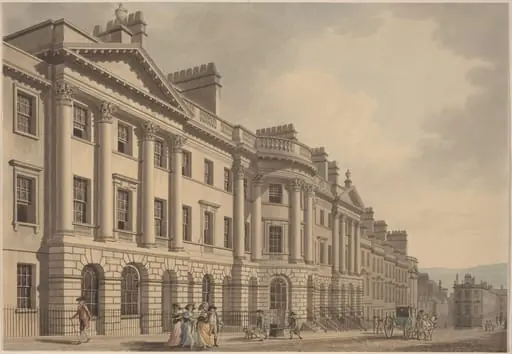
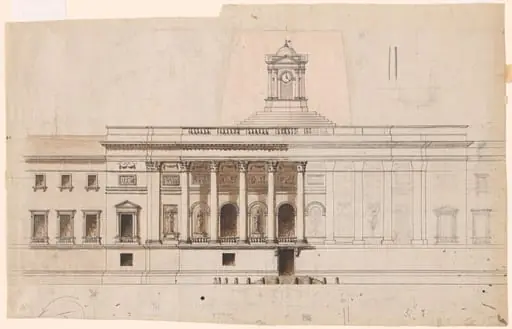
Thomas Malton’s 1799 drawing, titled St. George’s, Bloomsbury, records the façade of a London residence. Executed with pen and black ink, softened by a gray wash and reinforced with graphite, the work measures the building’s contrasting architectural elements on a sheet of wove paper.
Subject & Meaning
The composition divides the structure into two distinct zones.
The composition divides the structure into two distinct zones. The left side presents a modest, dark‑brick block with small windows and an unadorned roof, while the right side features an elaborate portico with fluted columns and a pediment. The juxtaposition highlights the coexistence of plain vernacular housing and a more formal, classical addition, suggesting a dialogue between older and newer building styles.
Technique & Style
Malton employs fine pen lines to delineate architectural details, then overlays a muted gray wash to convey depth and surface texture. Subtle graphite underdrawings remain visible, revealing the artist’s preparatory stages. The rendering balances precise linear accuracy with a softer tonal atmosphere, characteristic of late‑eighteenth‑century topographical drawing.
History & Provenance
Created in 1799, the drawing was likely produced as part of Malton’s series of urban studies documenting London’s built environment. Its subsequent ownership history is not extensively recorded, but the work now resides in a public collection that focuses on British architectural drawing.
Context
The drawing emerges at a time when London’s streetscapes were undergoing rapid change, with new classical façades being added to older medieval structures. Malton’s attention to such hybrid buildings reflects contemporary interest in cataloguing the city’s evolving architectural character.
Artist & collection