Artwork
The Philosopher (Le philosophe)
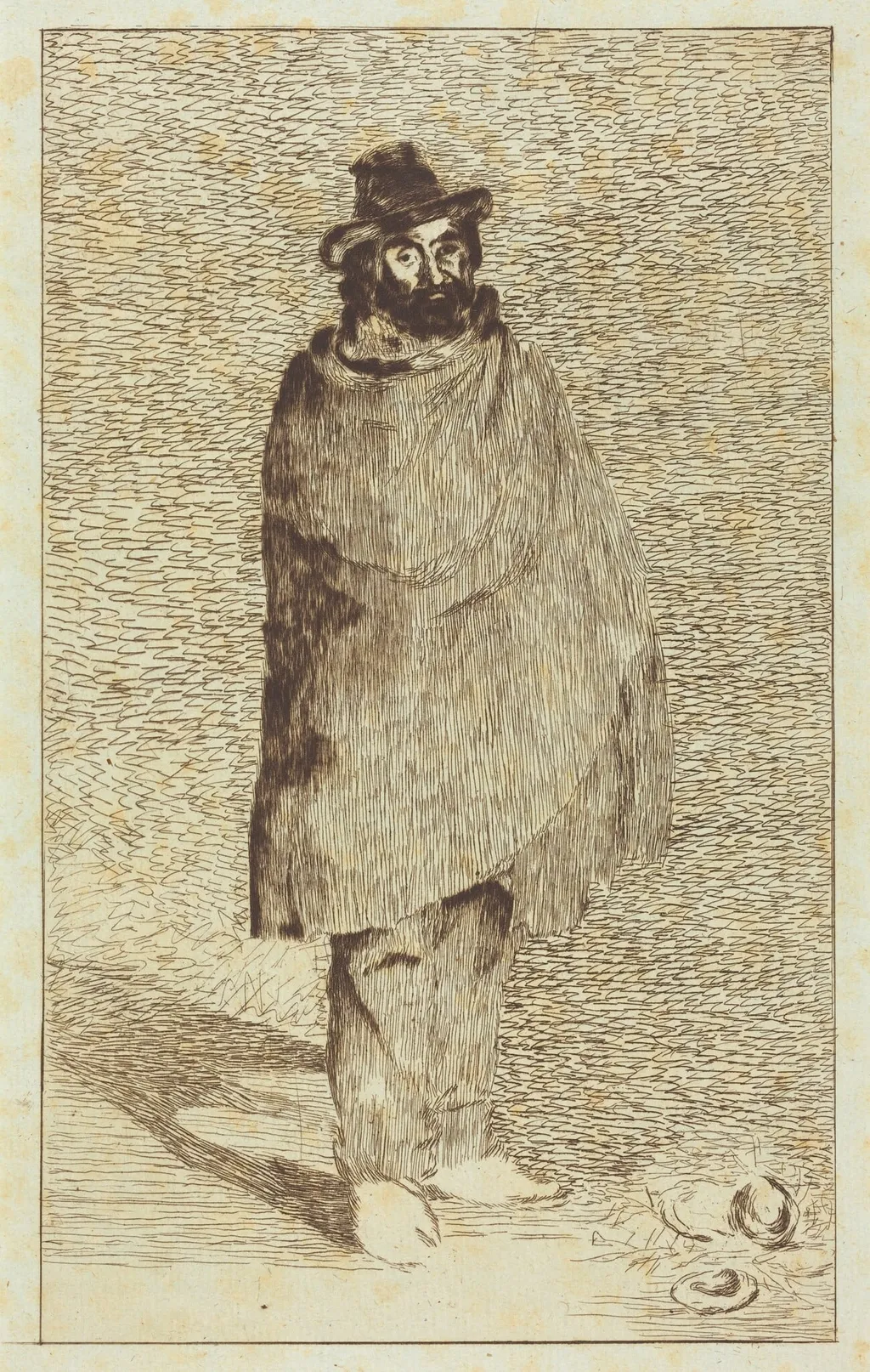
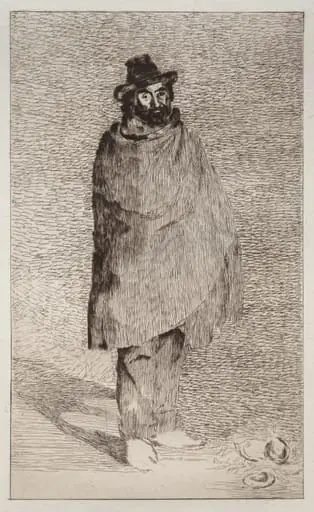
The Philosopher (Le philosophe) is an ink print by the Impressionist artist Edouard Manet. It dates from 1866 and is held in the collection of the National Gallery of Art.
About this work
Overview
Edouard Manet’s print titled The Philosopher (Le philosophe) was produced in 1866 using a combination of etching and drypoint techniques. The work presents a solitary figure dressed in a voluminous coat, set against an unadorned backdrop, and is executed in a monochrome, highly linear manner.
Subject & Meaning
The composition centers on a single individual whose face is largely concealed by a low‑set hat and a high‑collared coat that suggests both warmth and anonymity. The obscured visage and the stark setting invite contemplation of the figure’s inner life, hinting at a contemplative or introspective mood.
Technique & Style
Manet employed the fine, incised lines characteristic of drypoint alongside the broader tonal washes of etching. The surface is marked by a grainy, sketch‑like quality, achieved through dense, tiny strokes that build shadow and depth without the smoothness of paint. The texture of the coat is rendered with a tactile, fur‑like pattern.
History & Provenance
Created in the mid‑1860s, The Philosopher belongs to Manet’s early print output, a period when he was experimenting with graphic media. The work has been documented in several collections of 19th‑century French prints, though specific ownership details remain limited in the public record.
Context
The print emerges at a time when French artists were exploring the expressive possibilities of printmaking, moving beyond purely reproductive purposes. Manet’s choice of a solitary, enigmatic figure aligns with contemporary interests in modern life and the psychological depth of everyday subjects.
Artist & collection

Artist
Édouard Manet didn’t have much time to make his mark—he died at 51—but he used every year.

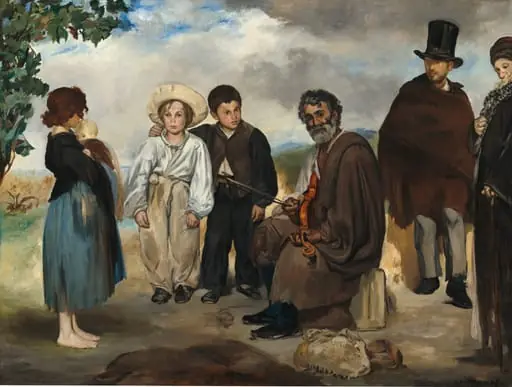
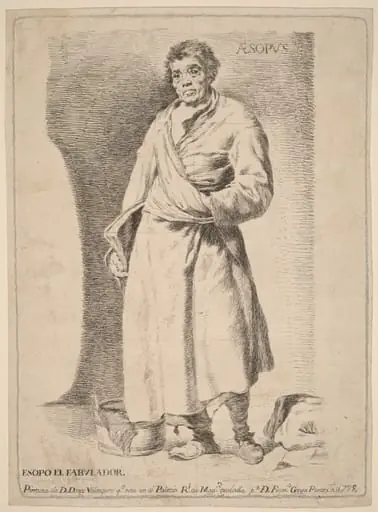 Aesopvs (Aesop)
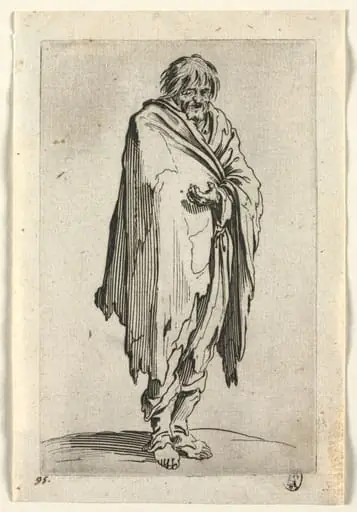 The Beggars: Beggar without Hat or Shoes
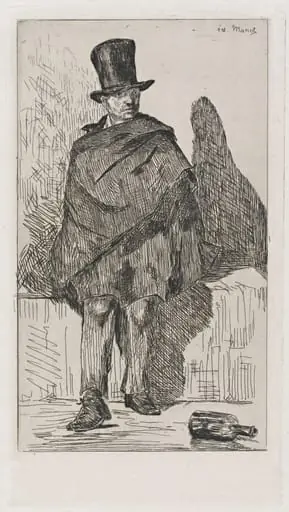 The Absinthe Drinker (Le buveur d'absinthe)
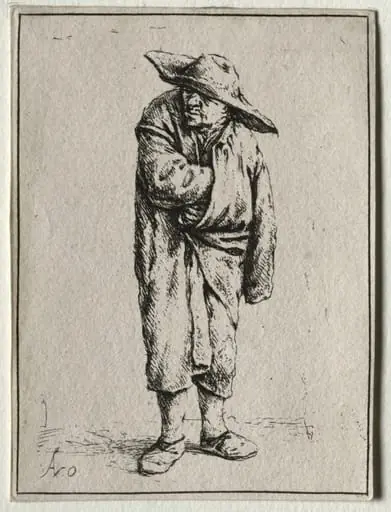 Peasant with his hand in his cloak
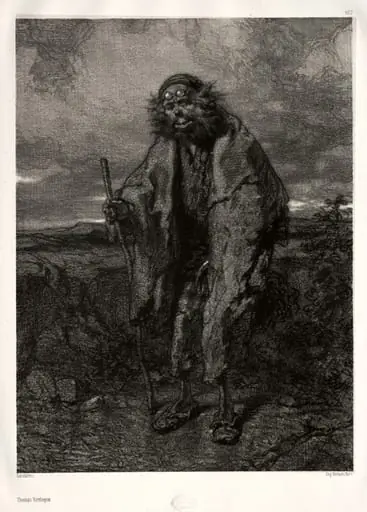 Old and Modern Artists: Thomas Vireloque
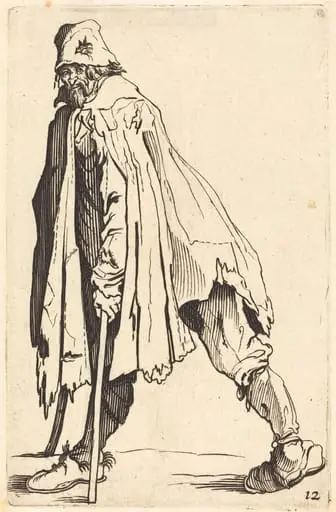 Beggar with Crutches and Cap
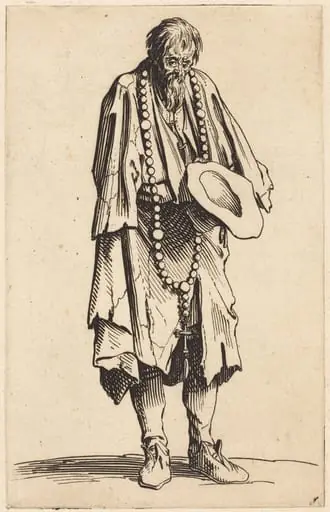 Beggar with Rosary
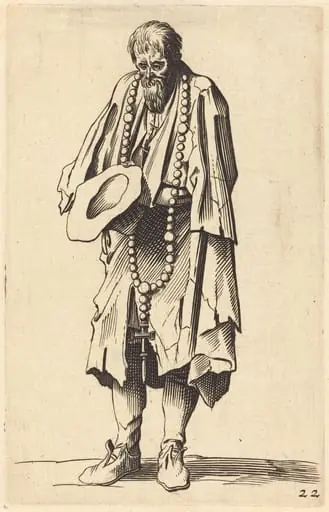 Beggar with Rosary
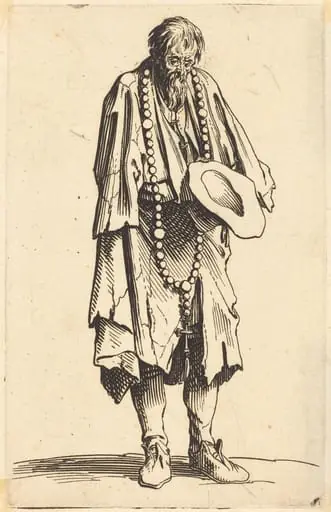 Beggar with Rosary
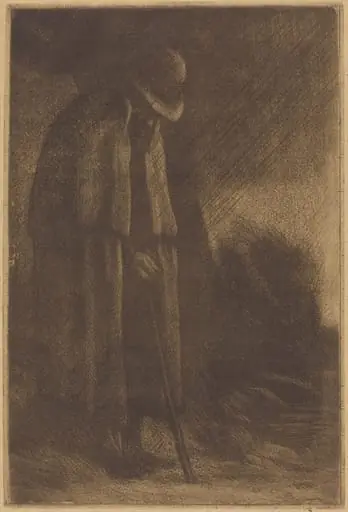 Traveler taking Shelter (Le voyageur a l'abri)
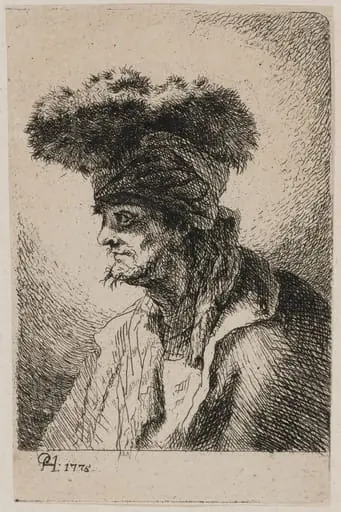 Oriental with a Fur Hat, Looking Left
 The Philosopher