Artwork
Beggar with Crutches and Cap
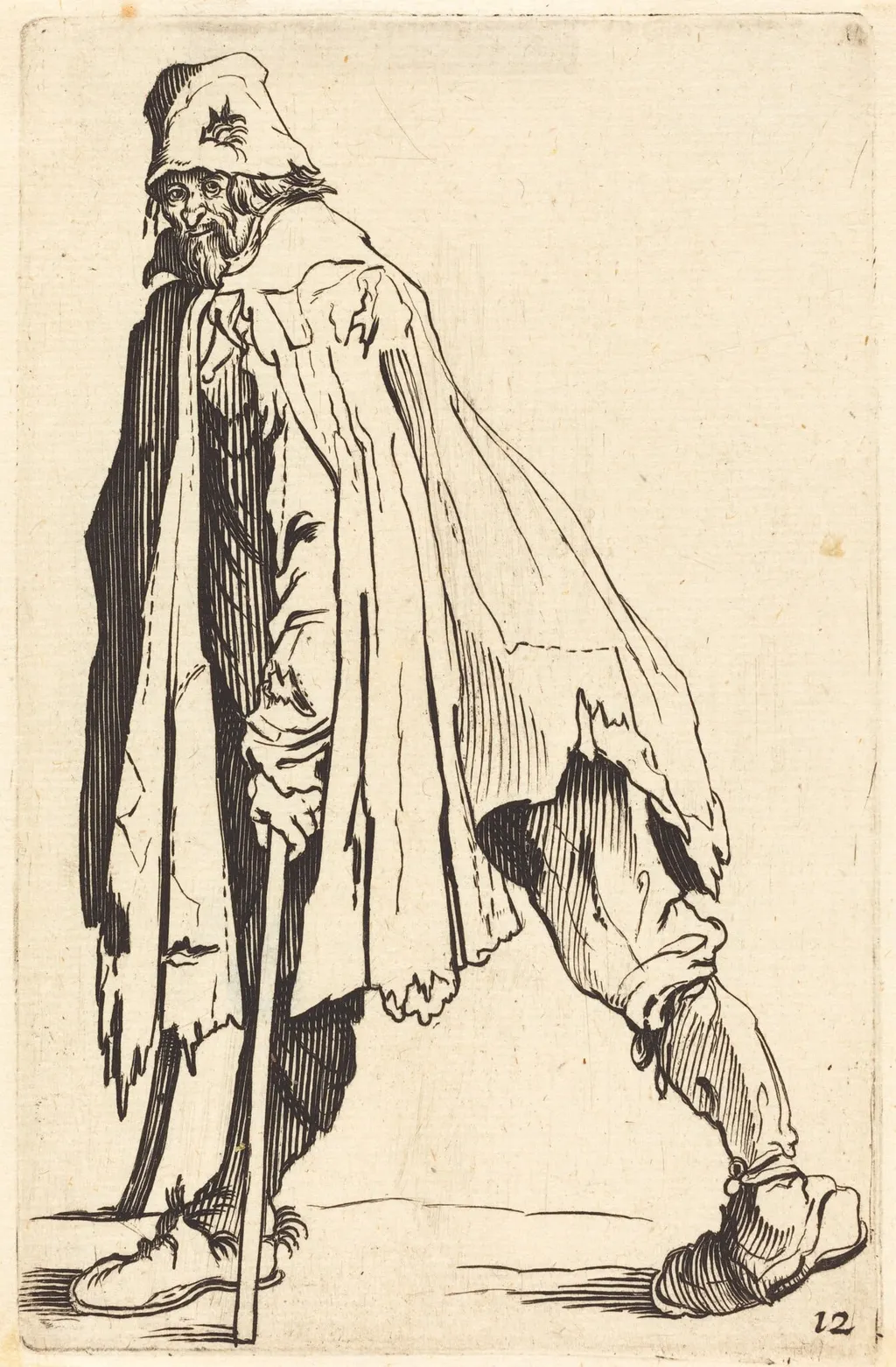
Beggar with Crutches and Cap is an ink print by the Baroque artist French 17th Century. It dates from 1622 and is held in the collection of the National Gallery of Art.
About this work
Overview
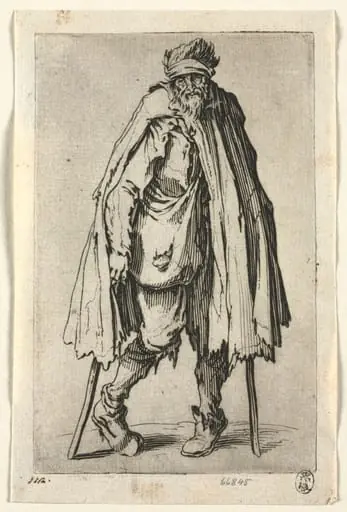
Beggar with Crutches and Cap is an etching on laid paper depicting a hunched, bearded man reliant on crutches, conveying a sense of weariness and hardship through its visual elements.
Subject & Meaning
The subject is a impoverished, elderly man, emphasized by his tattered clothing, worn shoes, and the use of crutches and a staff. The image likely highlights the plight of the poor, a common theme in 17th-century art.
Technique & Style
The etching employs quick, rough lines to render wrinkles, fabric folds, and the figure's posture, characteristic of the expressive, economical style prevalent in etchings of the period.
Context
Created during a time when depictions of the poor and marginalized were increasingly common, this work reflects the artistic trend of addressing social realities through humble, everyday subjects.
Artist & collection

Artist
Seventeenth-century French printmakers turned ink into story. Their tools were burin and acid, paper their stage. Look at the Beggar Woman with Rosary (1622), etched on laid paper, her hands folded around faith, or The…


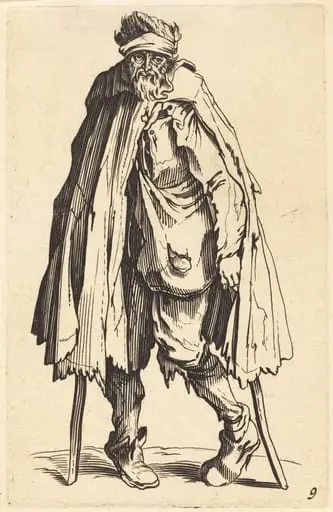 Beggar with Crutches and Sack
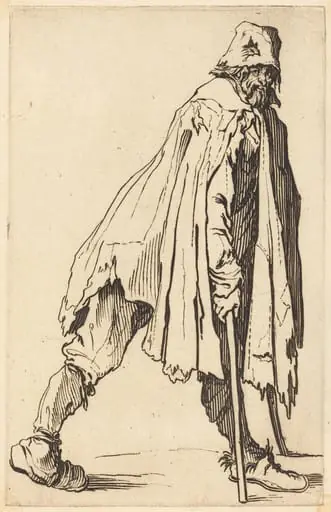 Beggar with Crutches and Cap
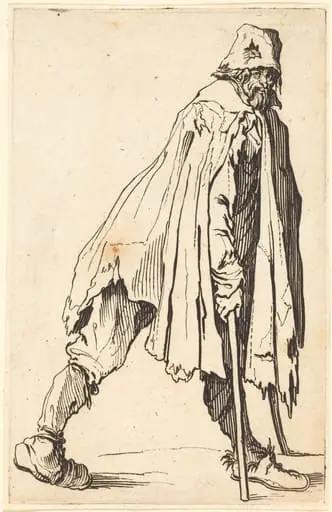 Beggar with Crutches and Cap
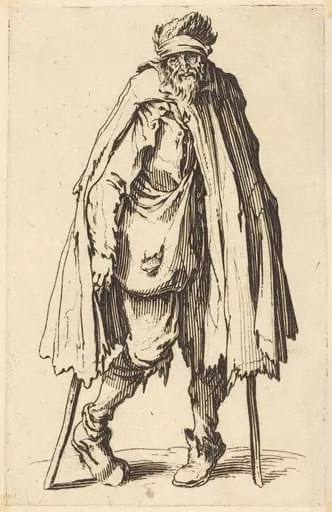 Beggar with Crutches and Sack
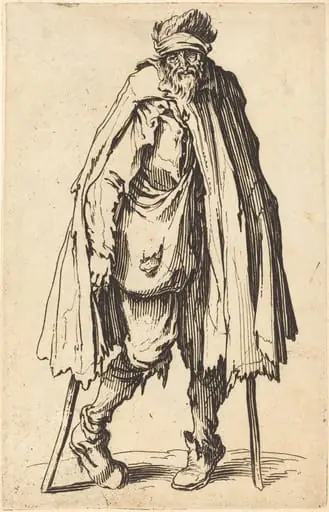 Beggar with Crutches and Sack
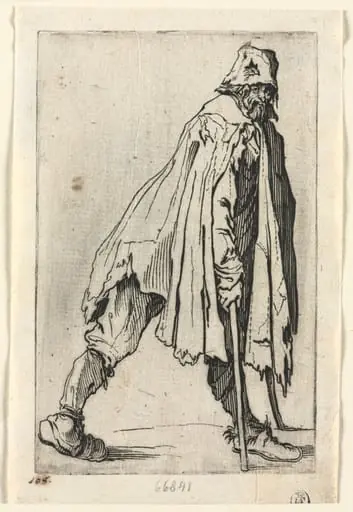 The Beggars: The Beggar on Crutches, Wearing a Cap
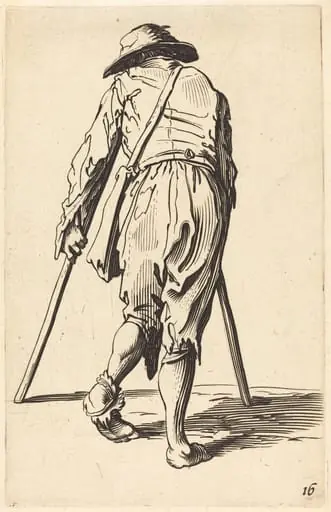 Beggar with Crutches and Hat, Back View
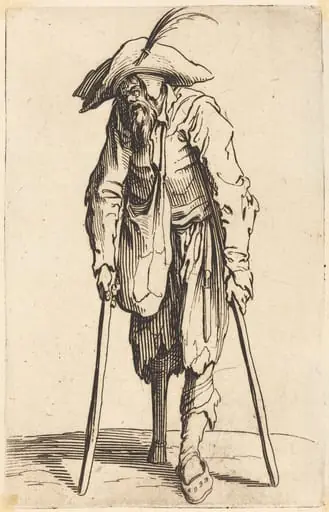 Beggar with Wooden Leg
 The Beggars: Beggar on Crutches with a Bag
 Beggar with Bare Head and Feet