Artwork
Marină
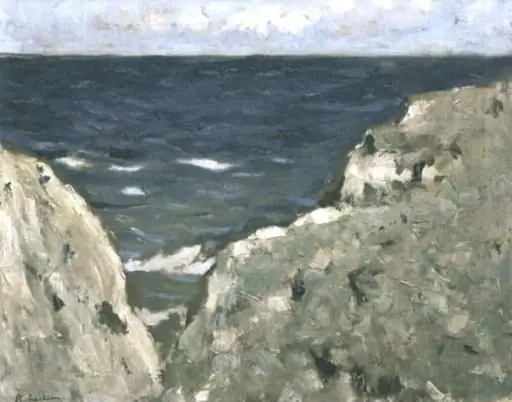
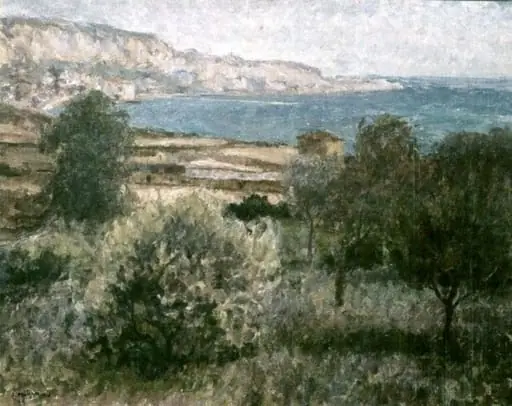
Marină is an unspecified painting by Rodica Maniu. It is held in the collection of the National Museum of Art of Romania. This artwork presents a tranquil coastal landscape with minimal human presence.
About this work
Overview
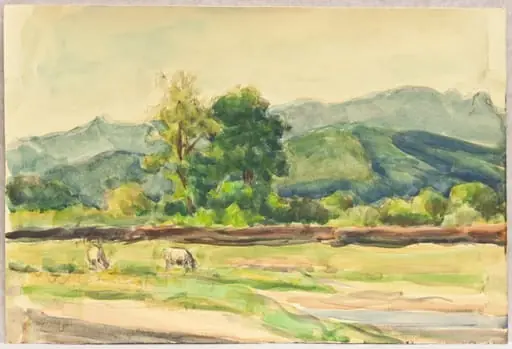
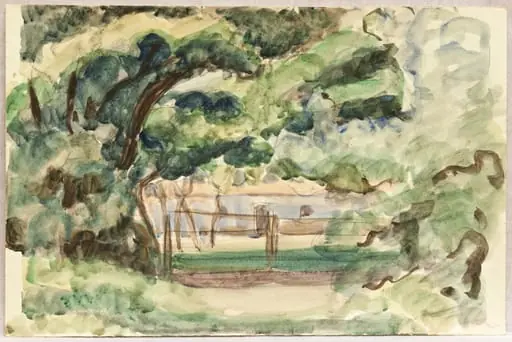
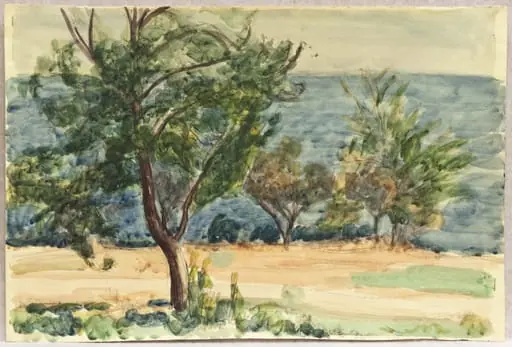
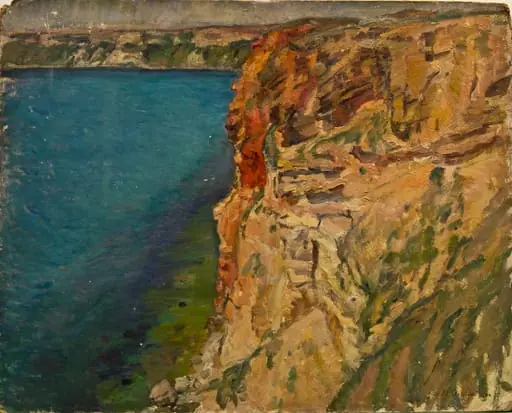
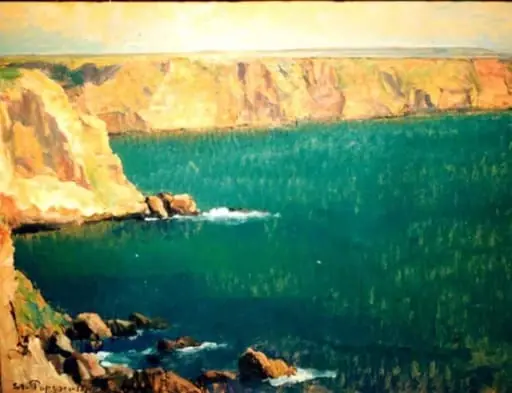
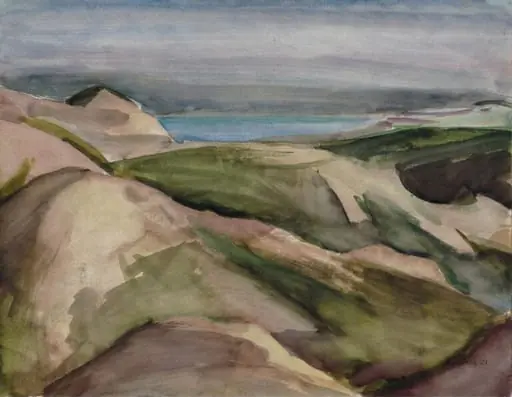
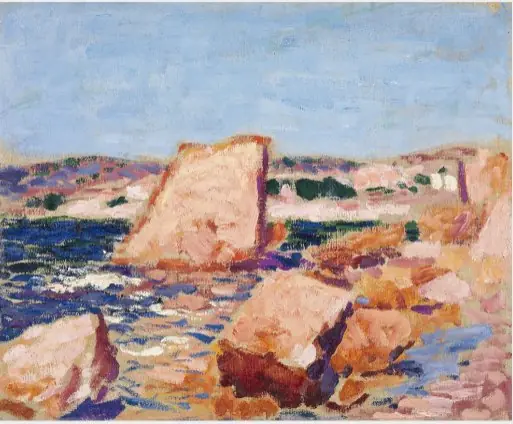
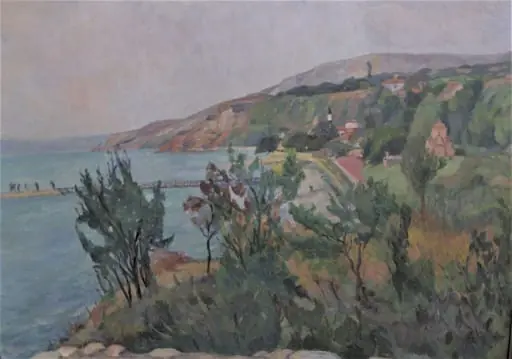
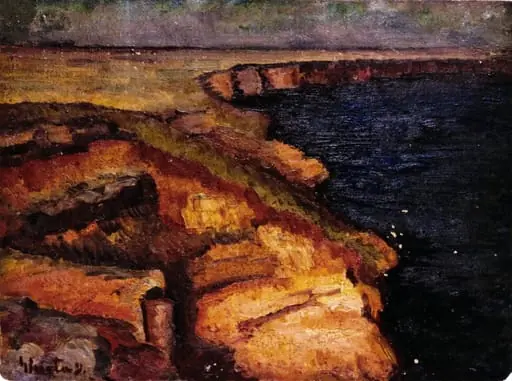
This artwork presents a tranquil coastal landscape with minimal human presence. The composition emphasizes horizontal bands—sky, sea, and land—creating a sense of stillness. Thick brushwork defines the rocky shoreline, while the rest of the scene is rendered with softer, blended tones. The palette favors subdued earth tones and pale blues, reinforcing a quiet, contemplative mood.
Subject & Meaning
The scene depicts an unpopulated stretch of coastline, where land meets water in a gentle, undramatic transition. No figures or structures interrupt the natural rhythm of the environment. The focus on subtle textures and muted colors suggests an interest in the quiet beauty of ordinary places, inviting quiet observation rather than narrative interpretation.
Technique & Style
The artist employs impasto in areas like the rocks, applying paint thickly to create tactile surfaces and catch light differently across the surface. Elsewhere, the paint is thinly layered, allowing colors to blend softly. This contrast between textured and smooth areas enhances the sense of material presence without drawing attention to technique itself.
History & Provenance
The work’s origins are not documented in the provided details. Its unassuming subject and restrained execution suggest it may have been part of a personal study or a smaller-scale exploration rather than a commissioned piece. No known exhibition history or collector lineage is indicated.
Context
Created in a period when many artists turned to landscapes as a response to industrialization, this piece reflects a broader interest in natural quietude. Its muted palette and lack of dramatic elements align with regional traditions that valued understated observation over grandeur, particularly in coastal regions of Europe.
Legacy
Though not widely recognized in major collections, the work contributes to a quieter strand of landscape painting that values texture and atmosphere over spectacle. Its approach to natural form through materiality influenced later artists seeking to convey emotion through paint’s physical presence rather than symbolic content.
Artist & collection