Artwork
Peisaj la margine de râu
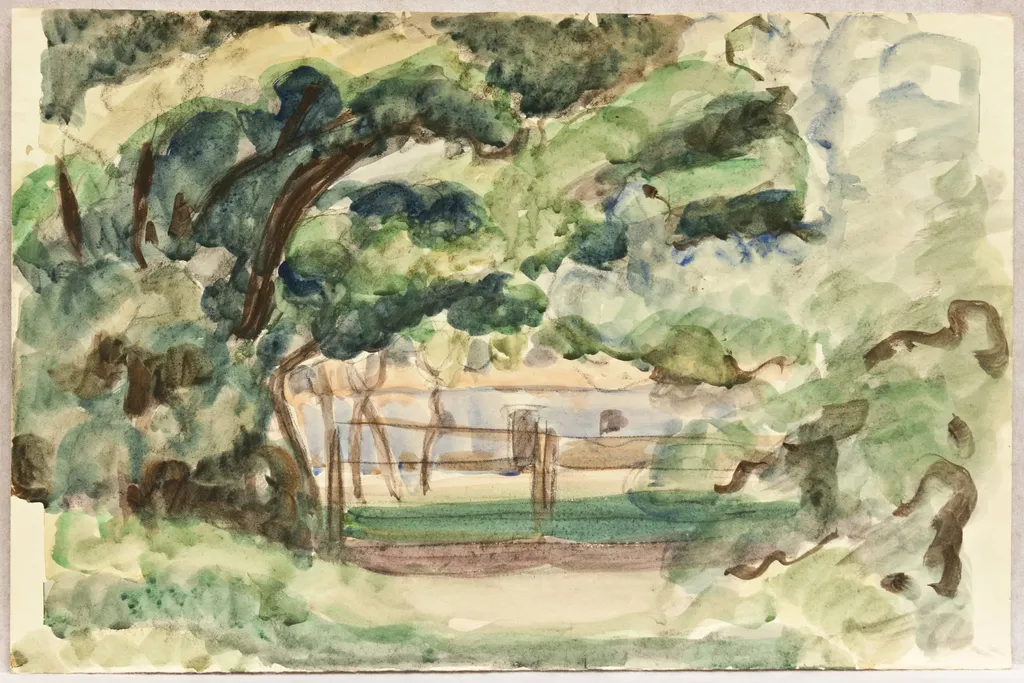
Peisaj la margine de râu is an unspecified painting by Rodica Maniu. It dates from 1950 and is held in the collection of the Gavrila Simion Eco-Museum Research Institute Tulcea.
About this work
Overview
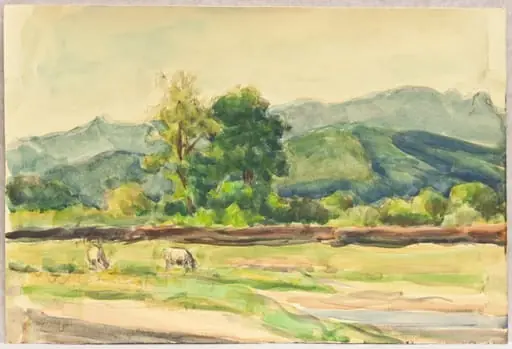
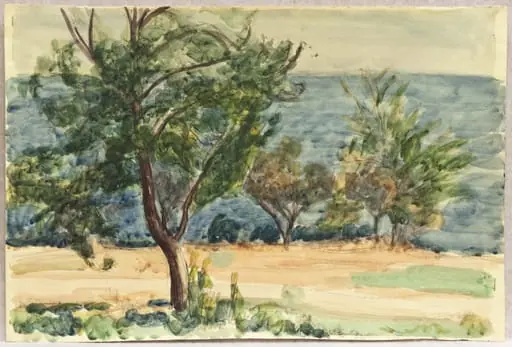
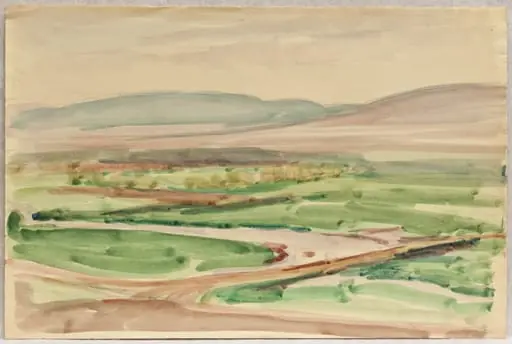
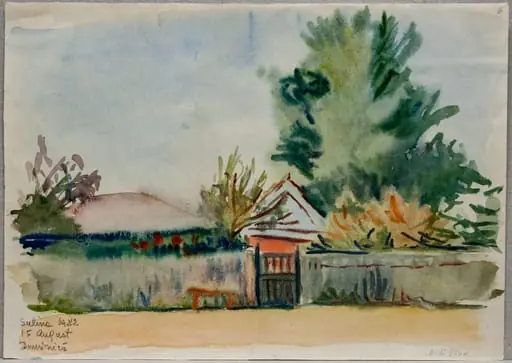
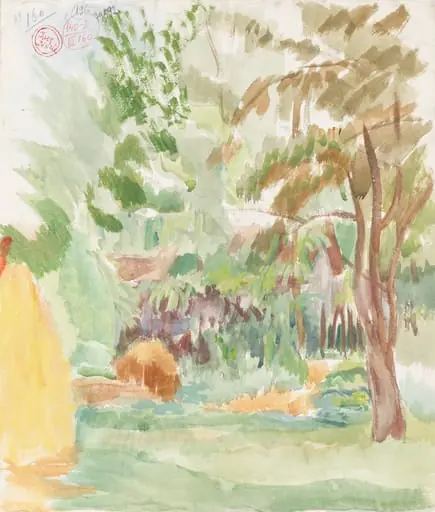
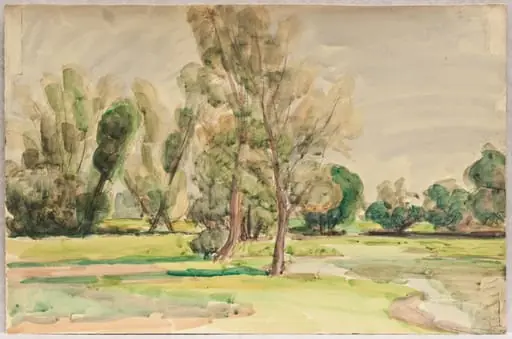
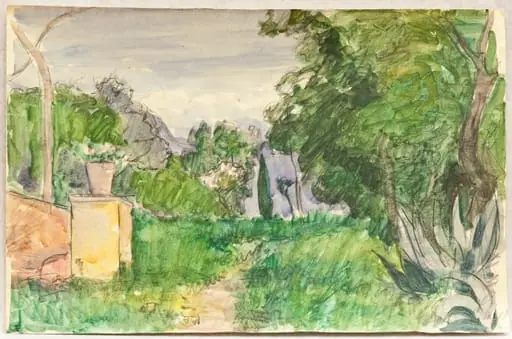
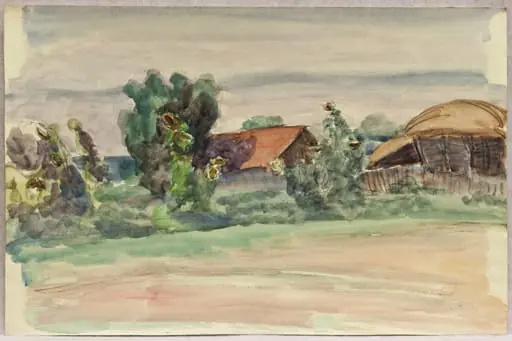
Created around 1950 by Romanian artist Rodica Maniu, this landscape depicts a tranquil riverside setting. The work is part of the collection at the Museum of Ethnography, where it is preserved as an example of mid-20th-century Romanian painting. Its intimate scale and quiet atmosphere reflect a personal engagement with the natural environment rather than a grand narrative.
Subject & Meaning
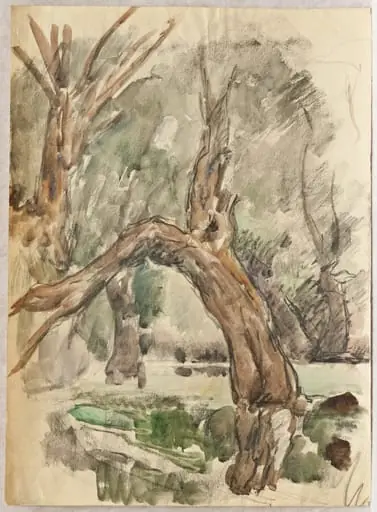
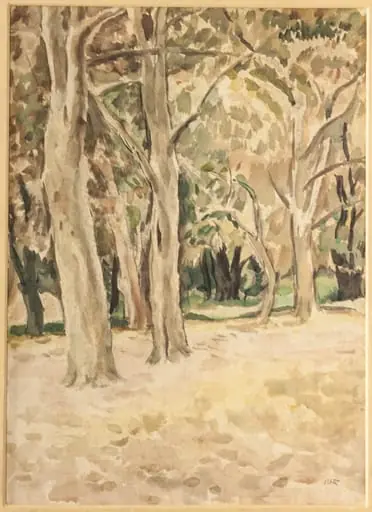
The scene centers on a gently curved wooden bridge spanning a narrow stream, flanked by dense trees with broad trunks and lush canopies. The absence of human figures and the subdued tones suggest solitude and stillness. The composition invites contemplation, emphasizing harmony between the man-made structure and the surrounding woodland, evoking a sense of quiet endurance in the landscape.
Technique & Style
This approach aligns with a sketch-like immediacy, capturing the essence of the moment rather than its exact details.
Maniu employed loose, fluid brushwork that blurs edges and softens forms, creating a hazy, atmospheric effect. Colors are muted—greens and browns blend seamlessly, suggesting mist or distance. The paint appears thinly applied, with visible strokes that prioritize mood over precision. This approach aligns with a sketch-like immediacy, capturing the essence of the moment rather than its exact details.
History & Provenance
The painting has been held by the Museum of Ethnography since at least the mid-20th century, likely acquired as part of a broader effort to document Romanian artistic responses to rural and natural environments. Its presence in the collection underscores its value as a representative work of domestic landscape painting from the period, though specific details of its creation or early ownership remain undocumented.
Context
In postwar Romania, many artists turned to landscape as a refuge from political upheaval, focusing on quiet, unpopulated scenes. Maniu’s work fits within this trend, reflecting a broader cultural interest in nature as a site of continuity and personal expression. Unlike official socialist realism, this painting avoids ideological messaging, instead offering a subtle, introspective view of the countryside.
Legacy
Though not widely exhibited beyond institutional collections, the painting contributes to an understudied strand of Romanian modernism that valued emotional resonance over formal innovation. Its preservation in the Museum of Ethnography highlights its role in documenting regional aesthetics and the quiet persistence of personal artistic vision during a period of state-controlled culture.
Artist & collection
Museum
Gavrila Simion Eco-Museum Research Institute Tulcea
Continue through works from the same source collection.