Artwork
Port breton (Finistère)
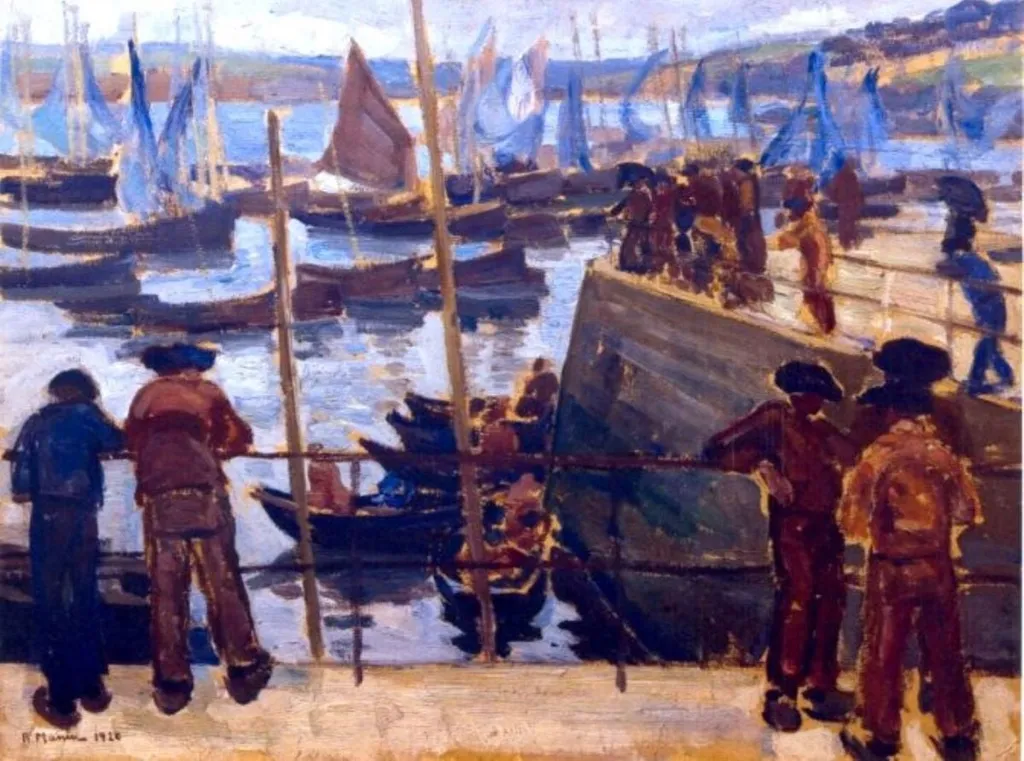
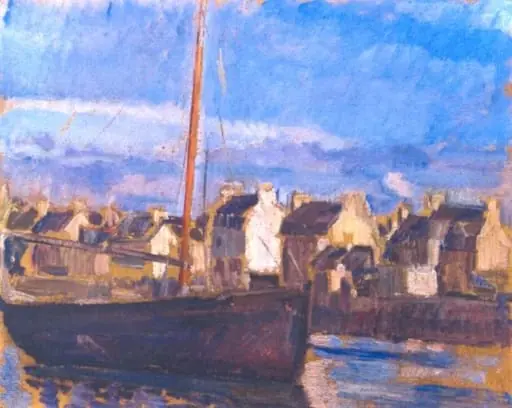
Port breton (Finistère) is an unspecified painting by Rodica Maniu. It dates from 1920 and is held in the collection of the National Museum of Art of Romania.
About this work
Overview
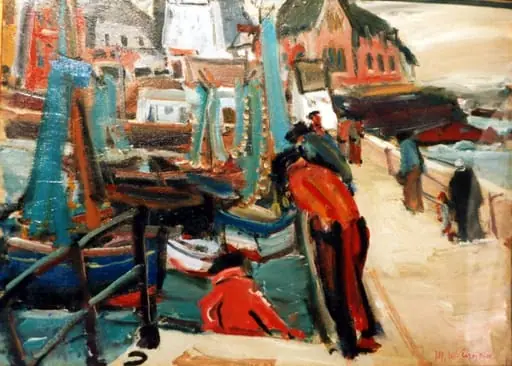
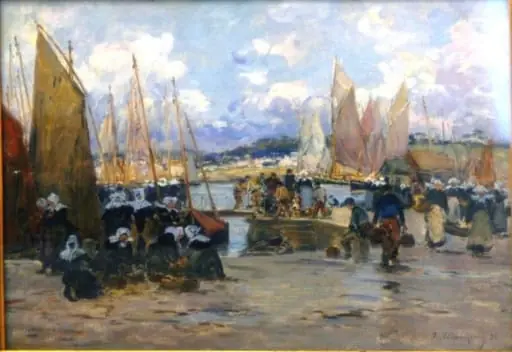
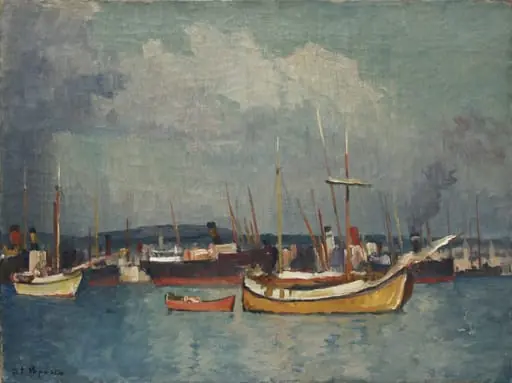
Port breton (Finistère), painted in 1920 by Rodica Maniu-Mützner, captures a quiet moment in a Breton harbor. The scene is neither dramatic nor idealized, instead focusing on the routine rhythms of coastal life. With muted tones and an unembellished composition, the work conveys a sense of stillness amid gentle activity, reflecting the artist’s interest in ordinary human environments.
Subject & Meaning
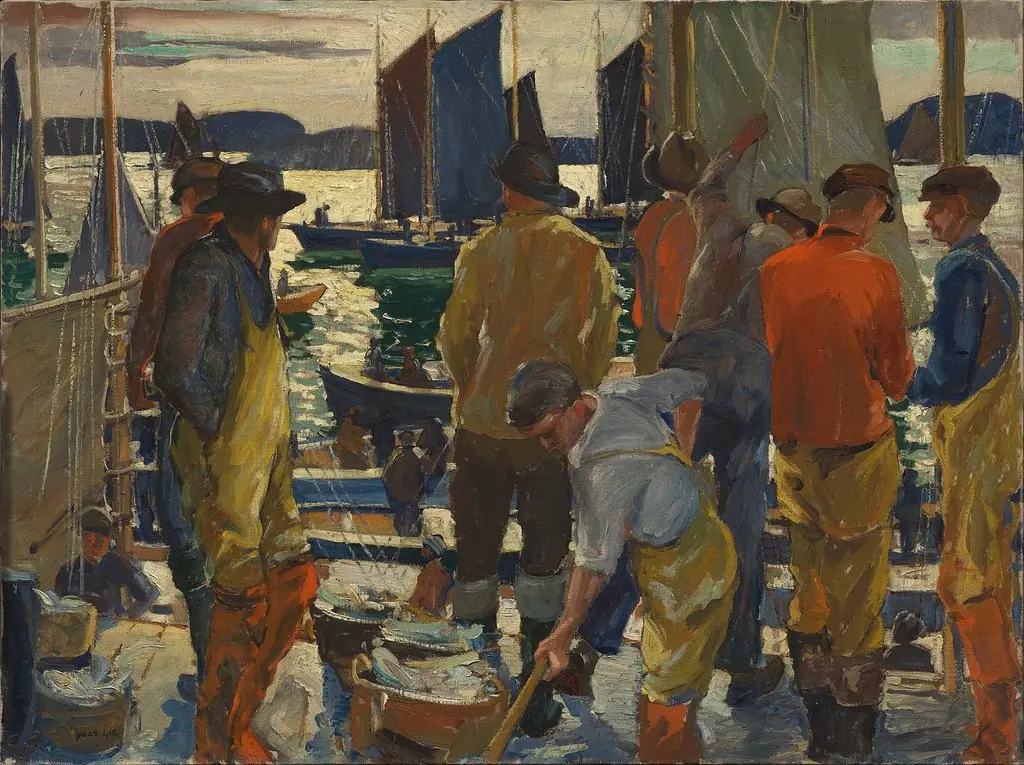
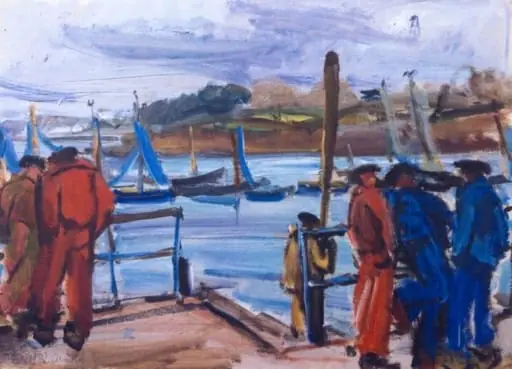
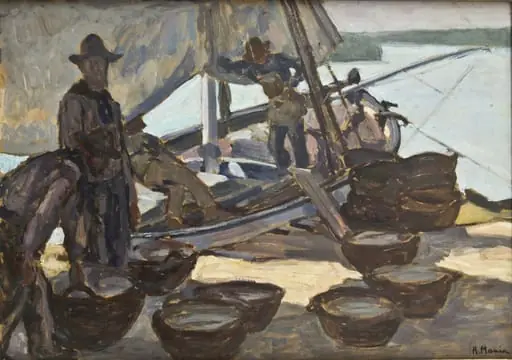
The painting depicts dockworkers and fishermen gathered on a wooden pier, their postures suggesting pause rather than labor. Their simple attire and the furled sails of nearby boats imply a lull between tasks. The absence of overt narrative invites contemplation of daily endurance, framing the harbor not as a site of spectacle but as a space of quiet, recurring existence.
Technique & Style
The technique prioritizes mood and light over precision, aligning with early 20th-century tendencies to capture transient sensory impressions.
Maniu-Mützner employs a loose, impressionistic brushwork that emphasizes texture over detail. The sky and water blend in soft grays, while the wooden dock is rendered with quick, tactile strokes. Colors are restrained, avoiding saturation to reinforce the overcast atmosphere. The technique prioritizes mood and light over precision, aligning with early 20th-century tendencies to capture transient sensory impressions.
History & Provenance
Created in 1920, the painting emerged during a period when Maniu-Mützner was engaged with regional French subjects following her move to Brittany. Its provenance remains largely undocumented in public records, and it has not been widely exhibited. The work survives as a private or institutional holding, reflecting its modest reception compared to more prominent contemporaries.
Context
In the aftermath of World War I, many artists turned to rural and coastal scenes as a counterpoint to urban upheaval. Maniu-Mützner’s focus on Breton life aligns with this trend, echoing the regionalist sensibilities of painters like Émile Bernard or the Pont-Aven School. Yet her approach remains personal, avoiding romanticism in favor of understated observation.
Legacy
Though not widely known today, Port breton (Finistère) contributes to a quieter strand of early 20th-century European painting that valued everyday realism over grandeur. It reflects Maniu-Mützner’s consistent interest in marginalized landscapes and laboring communities, offering a subtle but persistent voice within the broader narrative of modernist regional art.
Artist & collection