Artwork
Untitled
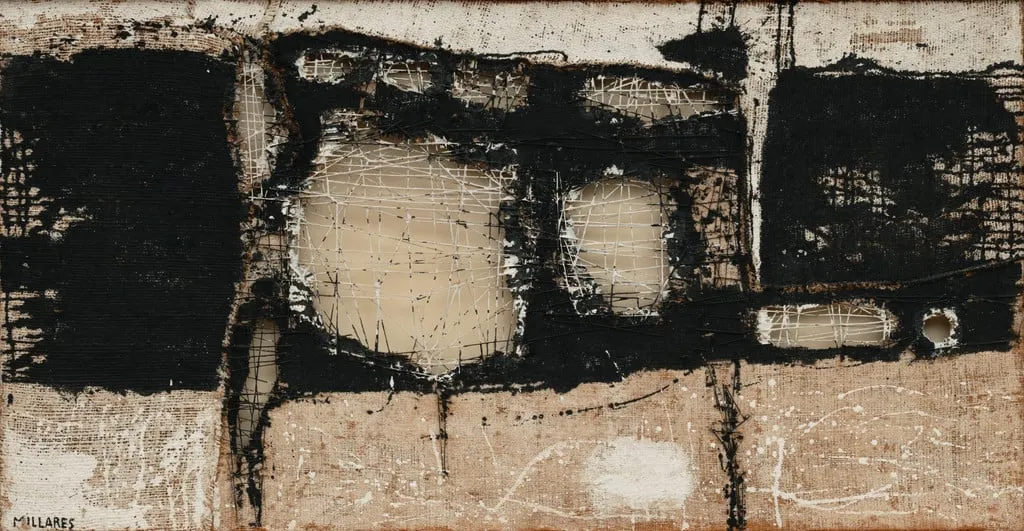
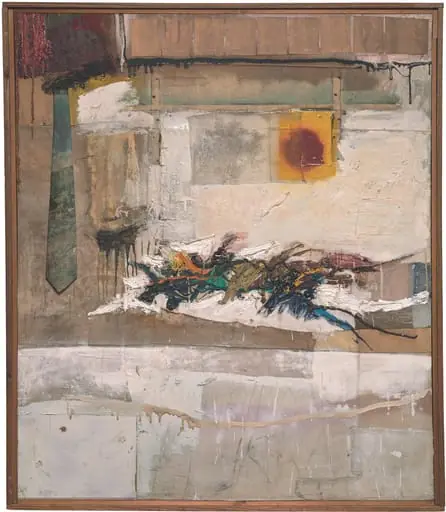
Untitled is an unspecified painting by Manolo Millares. It dates from 1957 and is held in the collection of the Museum of Modern Art.
About this work
Overview
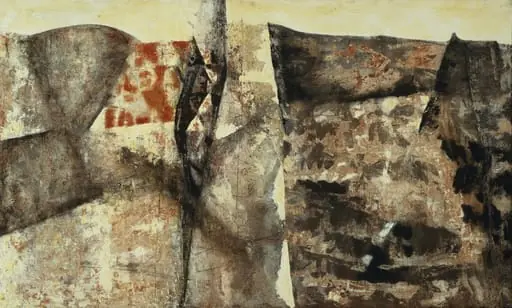
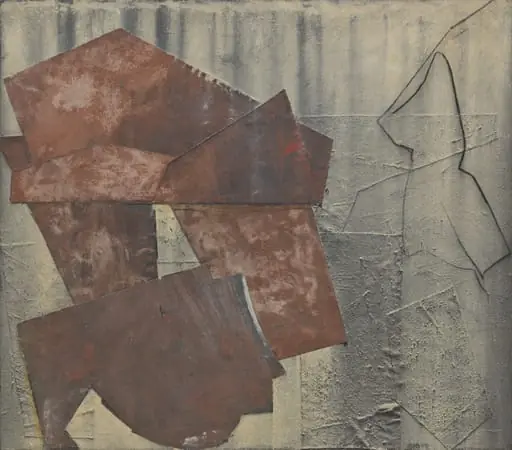
Created in 1957, this painting by Manolo Millares combines burlap, string, lampblack, and whiting to form an abstract composition.
Created in 1957, this painting by Manolo Millares combines burlap, string, lampblack, and whiting to form an abstract composition. The materials are applied directly and roughly, emphasizing texture over representation. The work resists traditional painting techniques, instead embracing the physicality of its components. Its fragmented structure suggests decay and reconstruction, reflecting postwar European concerns with material and memory.
Subject & Meaning
The painting does not depict a recognizable scene but evokes emotional and psychological states through abstraction. The two circular forms, bound by crisscrossed string, suggest wounded or sealed openings—perhaps windows, eyes, or wounds. Jagged edges and smudged pigments imply violence or erosion. The work conveys absence and rupture, aligning with existential themes common in postwar Spanish art.
Technique & Style
Millares applied lampblack and whiting directly onto burlap, scraping and smearing the pigments to create uneven, granular surfaces. String was sewn and stretched across the fabric, forming taut, intersecting lines that resemble fractures or bindings. The canvas was torn and reassembled, preserving raw edges. This method prioritized tactile immediacy, rejecting polished finishes in favor of an art of ruin and repair.
History & Provenance
The work entered The Museum of Modern Art’s collection after being exhibited in Europe during the late 1950s. It was part of a broader movement among Spanish artists who rejected formalism in favor of material experimentation. Millares’s use of humble, industrial materials aligned with Informel trends in postwar Europe, positioning this piece within a transnational dialogue on artistic renewal after conflict.
Context
Made during Franco’s dictatorship, the work reflects a cultural climate of repression and silence. Millares, like other Spanish artists, turned to abstraction as a means of expressing dissent without direct political imagery. The torn fabric and dark stains can be read as metaphors for societal wounds. His approach echoed European Informel but was rooted in Spain’s specific post-civil war trauma.
Legacy
This piece contributed to the recognition of Spanish abstraction as a vital force in postwar art. Millares’s material innovations influenced later generations who explored the expressive potential of non-traditional media. His integration of found textiles and raw pigments prefigured aspects of Arte Povera and other post-1960s movements, establishing a precedent for art grounded in physical and historical residue.
Artist & collection