Artwork
Pedir limosna para enterrar a don Álvaro de Luna
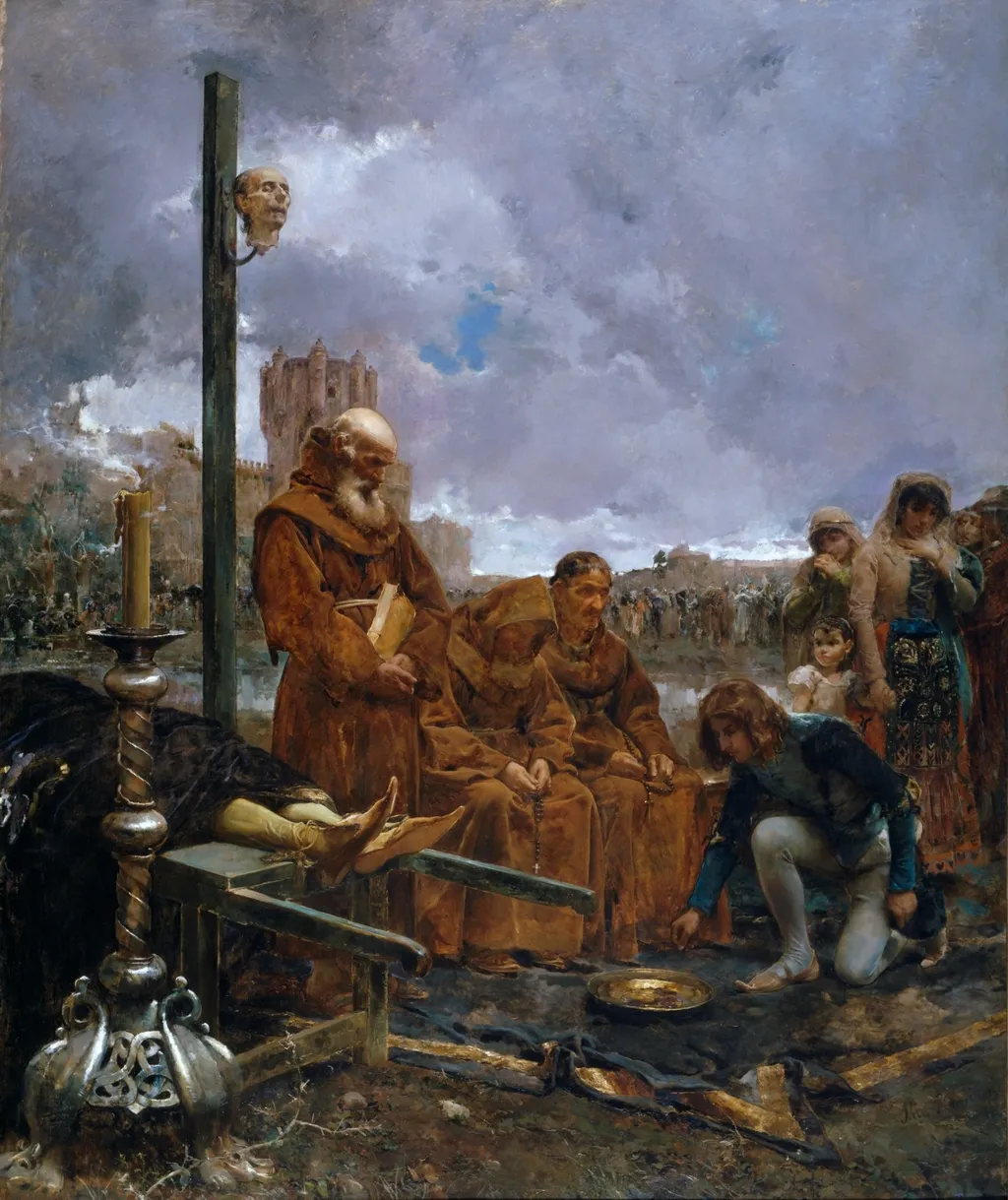
Pedir limosna para enterrar a don Álvaro de Luna is an oil painting by the Post-Impressionist artist Manuel Ramírez Ibáñez. It dates from 1892 and is held in the collection of the Museo del Prado.
About this work
Overview
Manuel Ramírez Ibáñez completed the oil painting *Pedir limosna para enterrar a don Álvaro de Luna* in 1892. Executed in a post‑impressionist idiom, the canvas measures a modest size and is part of the Prado Museum’s holdings. The work reflects the artist’s focus on narrative scenes drawn from Spanish history and everyday life.
Subject & Meaning
The composition gathers a group of figures in brown garments on a raised platform beside a river, where a severed arm lies as a stark focal point. A standing man holds an open book, while a woman, a child, and other onlookers cluster around a candle on a metal holder. In the distance, a crowd watches near a castle, suggesting a public plea for alms to fund a burial.
Technique & Style
Ibáñez employs a pronounced chiaroscuro, letting the candle’s flame illuminate the foreground while deep shadows engulf the surrounding space. Warm brown tones dominate, creating a somber atmosphere that heightens the drama. The brushwork combines the loose handling typical of post‑impressionism with careful modeling of facial expressions, lending both immediacy and narrative clarity.
History & Provenance
Born in 1856, the Madrid‑based painter was known for historical and genre scenes that often explored social themes. After its exhibition in the late 19th century, the painting entered the collection of the Museo del Prado, where it remains on display as part of the institution’s representation of Spanish narrative art.
Own this work as a print
Artist & collection
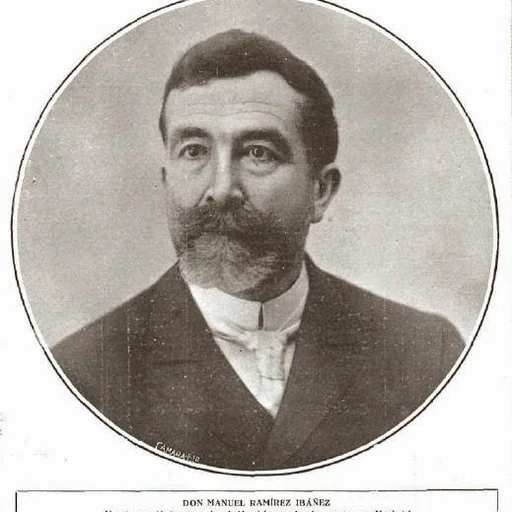
Artist
Manuel Ramírez Ibáñez (21 May 1856 in Arjona – January 1925 in Madrid) was a Spanish painter; primarily known for historical and genre scenes.
