Artwork
Holy Family
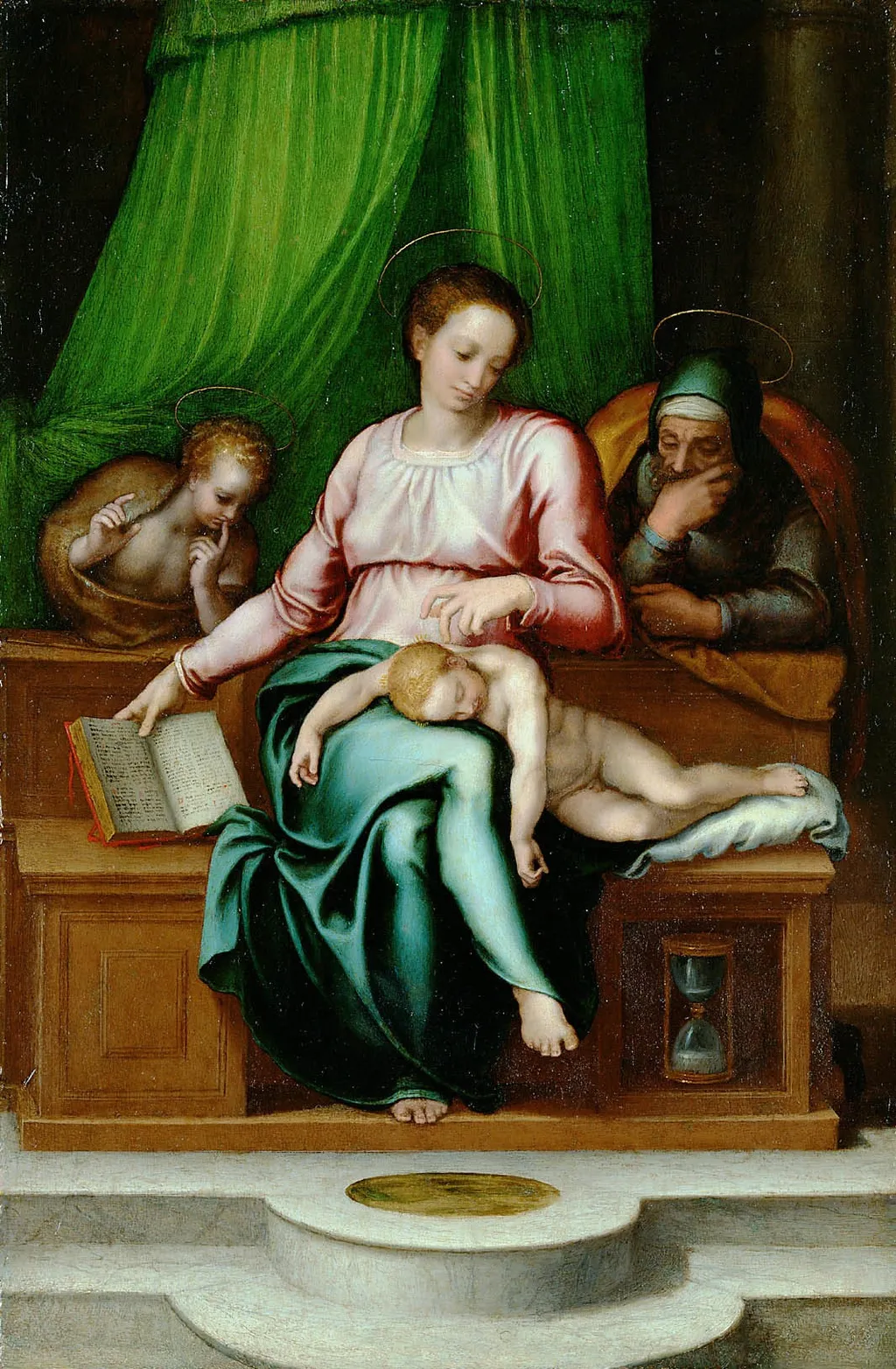
Holy Family is an unspecified painting by the Mannerist artist Marcello Venusti. It dates from 1565 and is held in the collection of the Kunsthistorisches Museum.
About this work
Overview
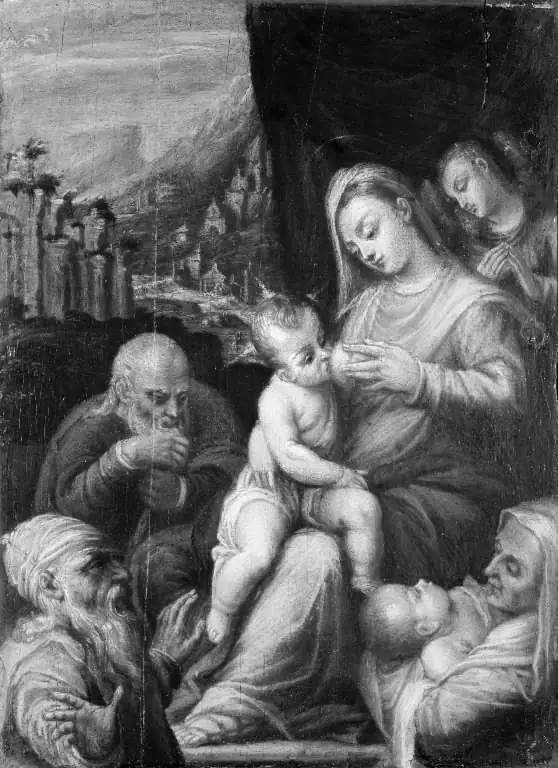
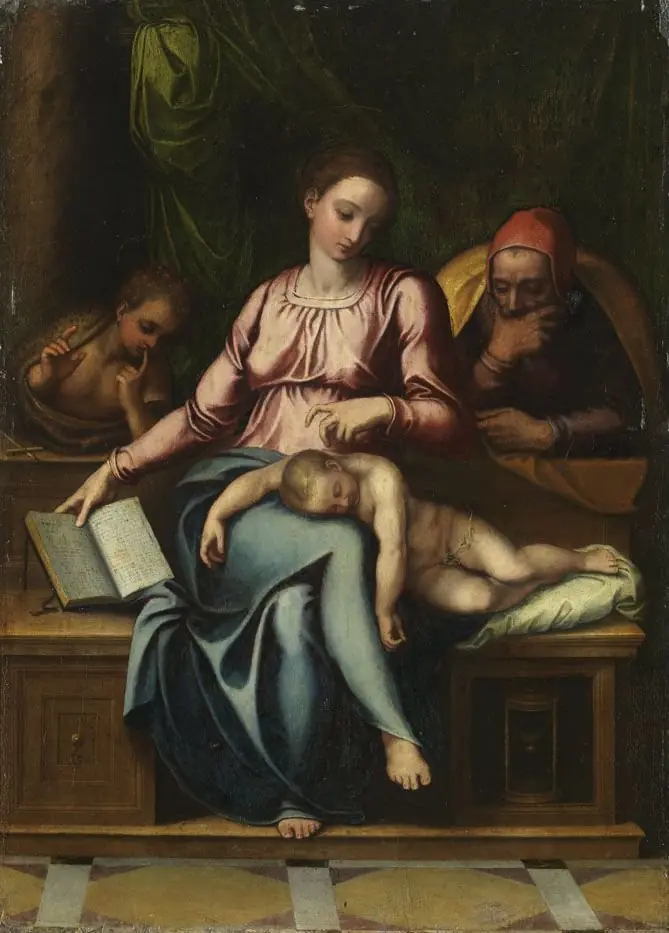
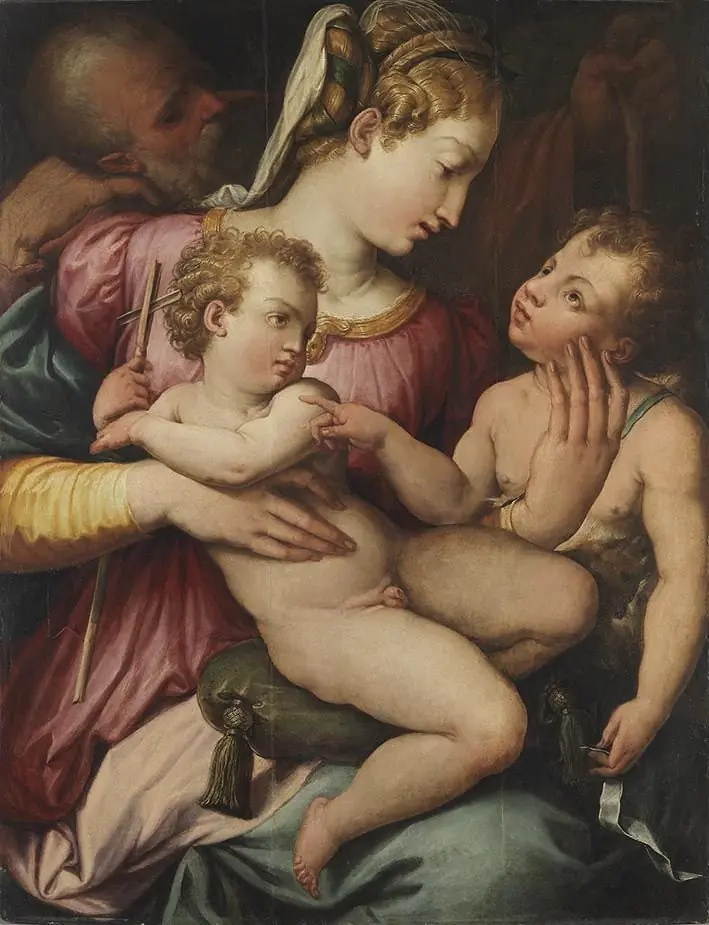
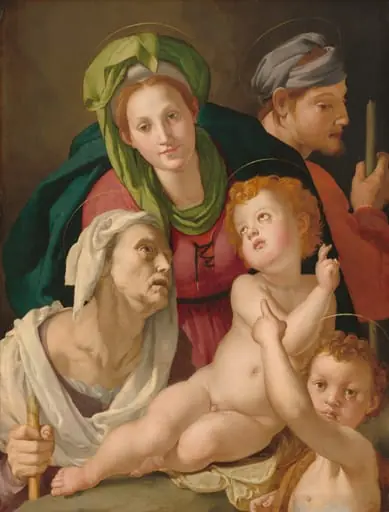
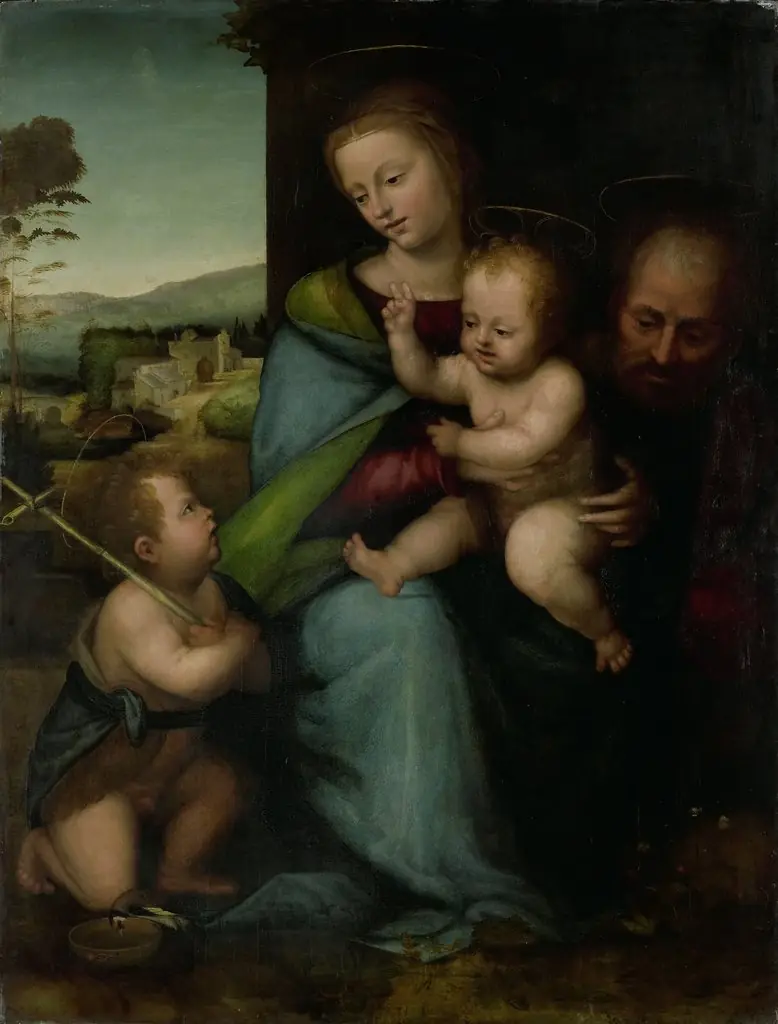
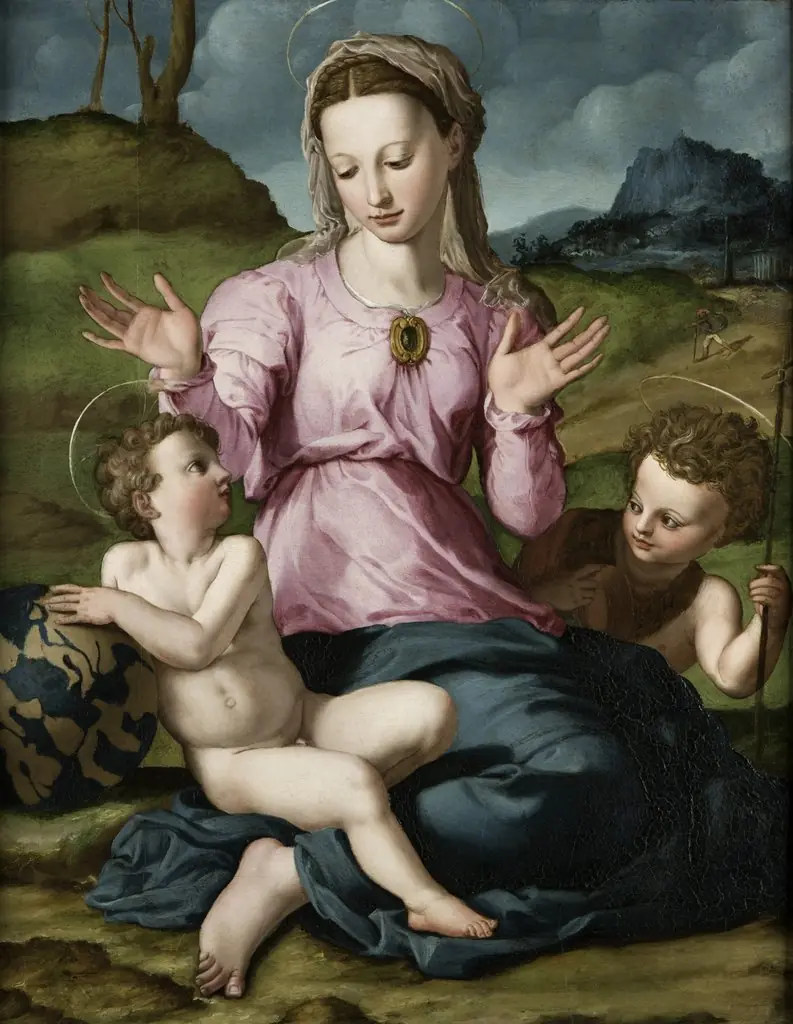
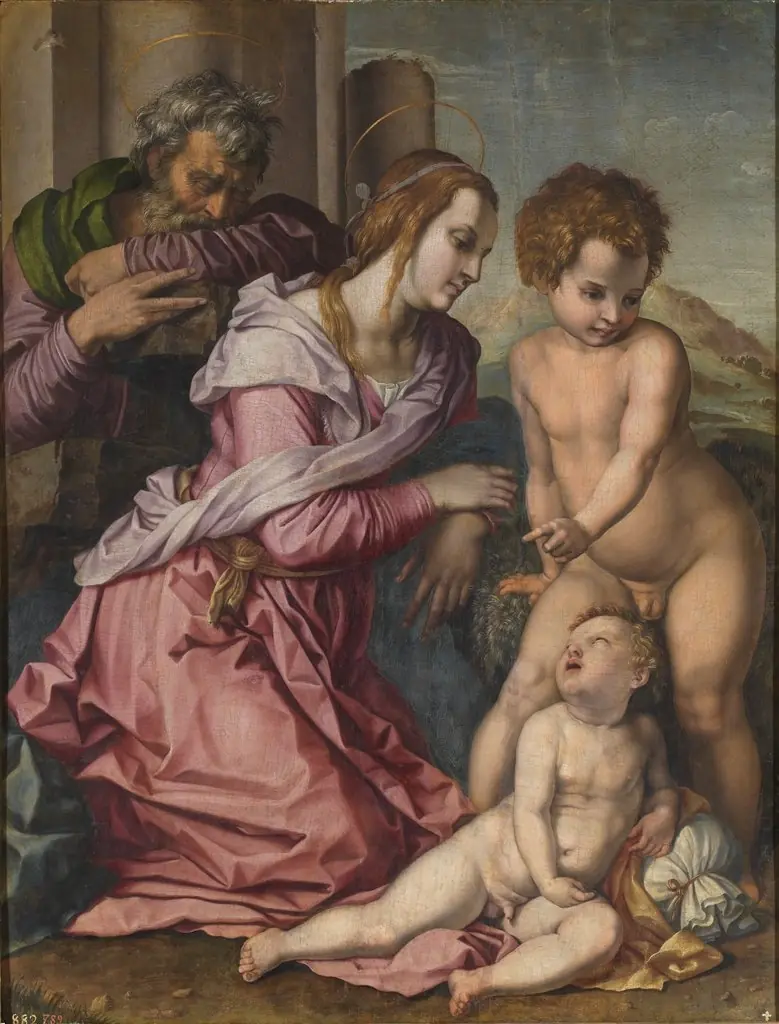
Created in 1565, this oil painting presents a domestic portrayal of the Holy Family, with the Virgin Mary cradling the infant Jesus, Joseph observing nearby, and a diminutive angel adding a celestial touch. The composition is rendered in warm tonalities that convey a serene intimacy, and the figures are arranged to achieve a harmonious equilibrium within the pictorial space.
Subject & Meaning
The work illustrates a familiar devotional theme of the Renaissance, emphasizing the tender bond between mother, child, and protector. The inclusion of the angel underscores the divine endorsement of the family unit, while the relaxed setting invites contemplation of the humanity of the sacred figures, reflecting contemporary theological interest in relatable representations of holy narratives.
Technique & Style
Executed in the mannerist idiom, the painting displays elongated forms and a refined elegance characteristic of the period.
Executed in the mannerist idiom, the painting displays elongated forms and a refined elegance characteristic of the period. Venusti employs a limited palette of warm hues, allowing subtle gradations of light to model the bodies. The careful handling of oil paint yields a smooth surface, while the balanced arrangement of the figures demonstrates the artist’s skill in orchestrating compositional harmony.
History & Provenance
Marcello Venusti, an Italian painter active in mid‑16th‑century Rome and known for his collaborations with Perino del Vaga and his copy of Michelangelo’s Last Judgment, produced this work during his mature phase. The painting entered the collection of the Kunsthistorisches Museum in Vienna, where it remains part of the museum’s holdings of Renaissance art.
Artist & collection
Artist
Marcello Venusti (1512 – 15 October 1579) was an Italian Mannerist painter active in Rome in the mid-16th century.