Artwork
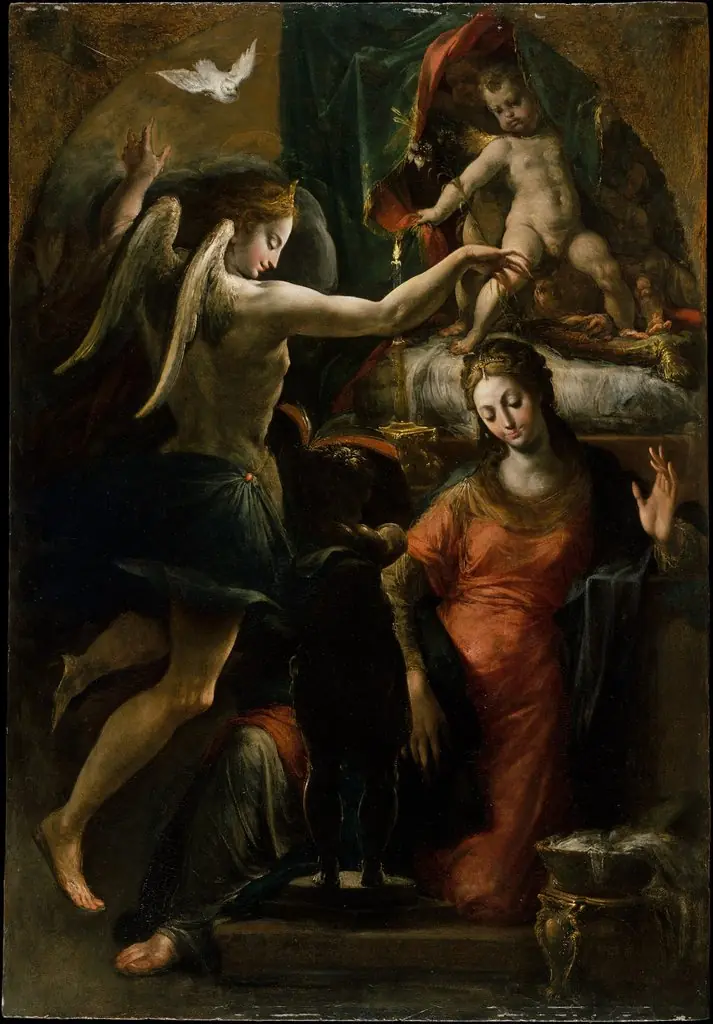
Annunciation to the Virgin
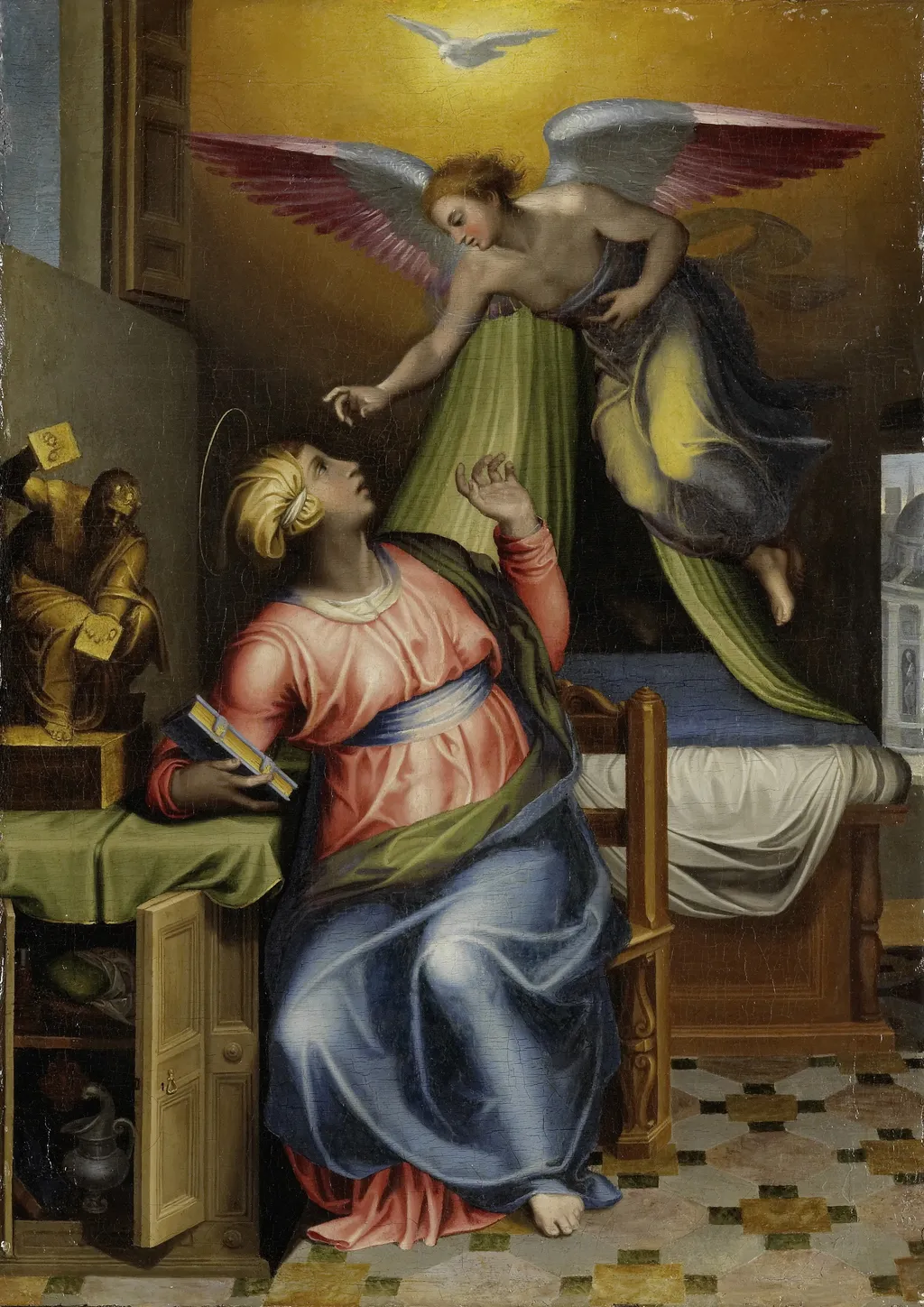
Annunciation to the Virgin is an oil painting by the Mannerist artist Marcello Venusti. It dates from 1550 and is held in the collection of the Rijksmuseum.
About this work
Overview
Created circa 1550, this oil painting portrays the biblical Annunciation, showing the Virgin Mary in a kneeling posture of prayer as an angel descends to announce the forthcoming birth of Christ. The work is part of the Rijksmuseum’s collection and exemplifies mid‑sixteenth‑century Italian religious art.
Subject & Meaning
The composition captures the moment when the angel Gabriel informs Mary of her divine selection. Mary is shown in a blue robe with a green sash, her blonde hair gathered, while the angel, robed in yellow and blue, extends a benediction. The serene interaction emphasizes obedience and reverence, central themes of the Annunciation narrative.
Technique & Style
Executed in oil on canvas, the painting reflects the Mannerist sensibility of its creator, with elongated forms and a refined palette. The angel’s wings are rendered in contrasting red and white feathers, and the subtle modeling of light on fabric and drapery creates a calm, luminous atmosphere.
History & Provenance
The work is attributed to Marcello Venusti, a Roman painter active in the mid‑1500s who was likely trained under Perino del Vaga. Venusti is also noted for producing a reduced‑size oil replica of Michelangelo’s Last Judgment. The painting entered the Rijksmuseum’s holdings through acquisition in the twentieth century.
Context
Venusti’s career unfolded during the late Renaissance, a period when Italian artists often revisited biblical subjects for private devotion and public display. His approach combines the compositional clarity of the High Renaissance with the elegant elongation characteristic of Mannerism, situating the Annunciation within contemporary artistic trends.
Own this work as a print
Artist & collection
Artist
Marcello Venusti (1512 – 15 October 1579) was an Italian Mannerist painter active in Rome in the mid-16th century.