Artwork
Westminster
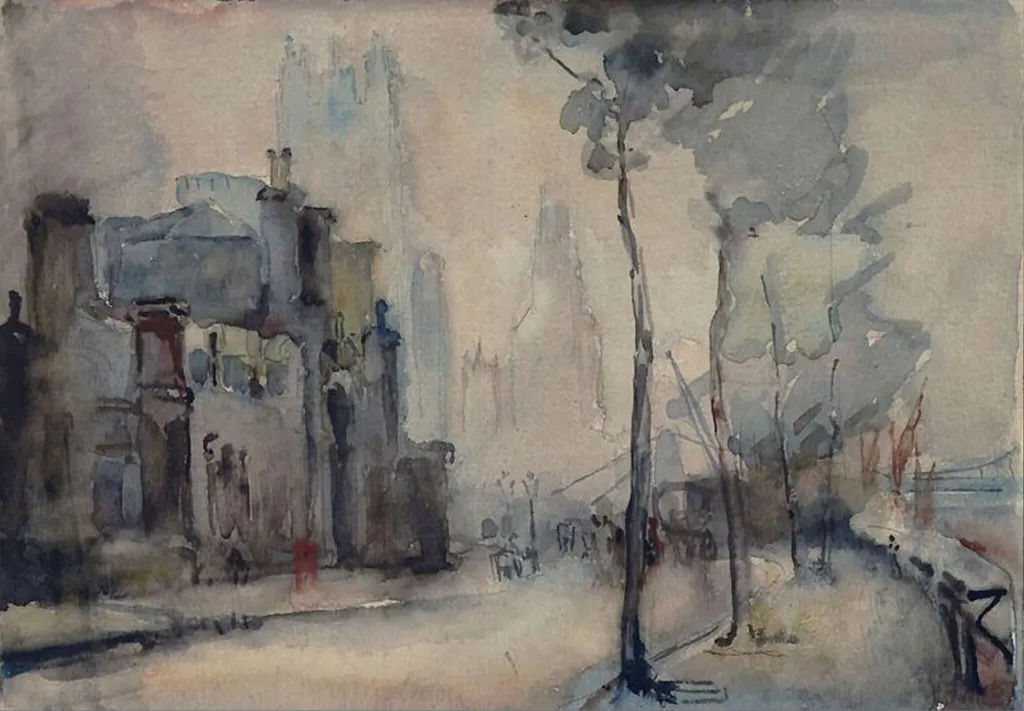
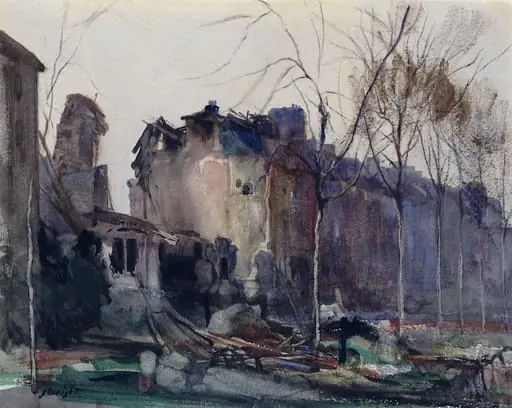
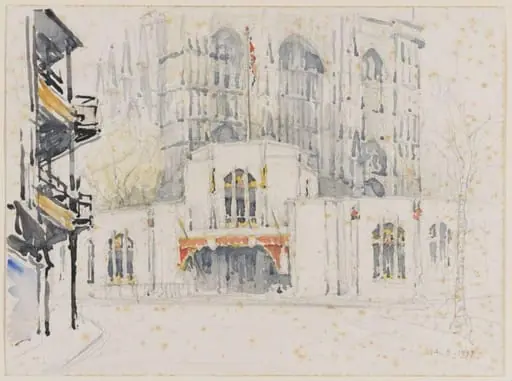
Westminster is a watercolor work on paper by Vernon March. It is held in the collection of the Victoria and Albert Museum.
About this work
Overview
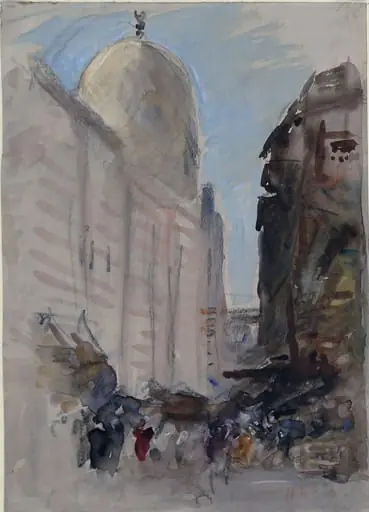
The composition balances structure and atmosphere, with the building anchoring the left side while the sky and distant elements dissolve into muted grays.
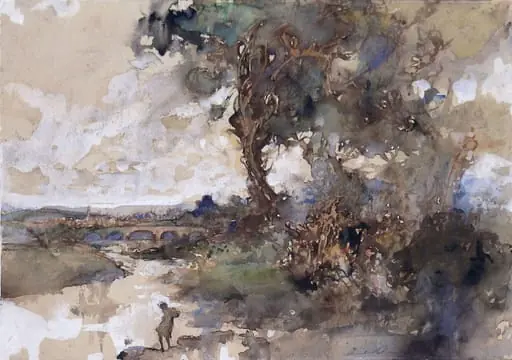
This watercolour captures a quiet stretch of Westminster, London, focusing on a single architectural form rising from the urban fabric. The composition balances structure and atmosphere, with the building anchoring the left side while the sky and distant elements dissolve into muted grays. The medium’s transparency allows light to suggest volume without harsh definition, reinforcing the scene’s stillness.
Subject & Meaning
The painting presents an unremarkable urban corner, devoid of figures or activity. The prominent building, likely a civic or ecclesiastical structure, stands as a silent witness to the passage of time. Its varied tonal shifts and visible windows hint at human presence, yet the absence of life amplifies a sense of solitude. The scene invites reflection rather than narrative, emphasizing quiet endurance over spectacle.
Technique & Style
The artist employs watercolour’s fluidity to build depth through layered washes, avoiding sharp outlines. Subtle transitions between light and shadow create form without detail, while the tree in the foreground adds vertical rhythm and contrast. The grayed sky and softened edges suggest atmospheric perspective, with minimal pigment used to imply vastness. The technique prioritizes mood over precision, aligning with 19th-century British watercolour traditions.
History & Provenance
The work’s origin is undocumented, but its style and subject align with mid-19th-century British topographical watercolours. It likely emerged from a period when artists documented London’s evolving streetscapes with quiet precision. No record of exhibition or ownership is known, suggesting it may have been a private study or sketch, valued for its observation rather than public display.
Context
Created during a time of rapid urban expansion, the painting offers a counterpoint to industrial imagery. While London grew with railways and factories, this view preserves a contemplative, almost pastoral fragment of the city. It reflects a broader artistic interest in ordinary spaces, where architecture and weather merge into a meditative whole, separate from grand historical themes.
Legacy
Though not widely known, the work exemplifies a quiet strand of British watercolour practice that valued atmosphere over drama. Its restrained palette and focus on everyday architecture influenced later topographical artists who sought to capture the emotional texture of urban life. It remains a modest but enduring record of how light and space were rendered with sensitivity in the 19th century.
Artist & collection

Artist
Vernon March (1891–1930) was an English sculptor, renowned for major monuments such as the National War Memorial of Canada in Ottawa, Ontario, the Samuel de Champlain Monument in Orillia, Ontario, and the Cape Town Cenotaph, South Africa.