Artwork
Dutch Woman
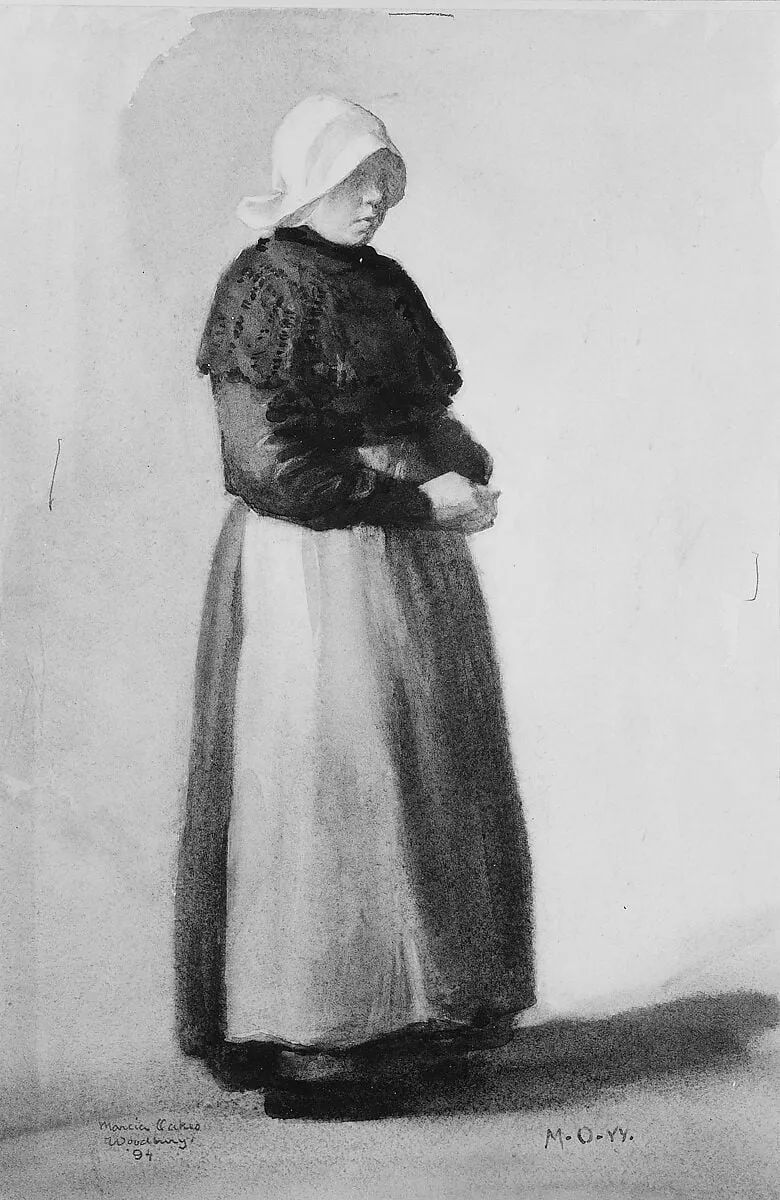
Dutch Woman is a watercolor work on paper by the American Impressionist artist Marcia Oakes Woodbury. It dates from 1894 and is held in the collection of the Metropolitan Museum of Art.
About this work
Overview
Marcia Oakes Woodbury’s 1894 work, titled Dutch Woman, is executed in watercolor, gouache, and graphite on wove paper. The composition presents a solitary female figure dressed in a white cap, blue apron, and shawl, her hands folded and gaze directed downward. Soft illumination highlights the contours of her face and the drapery, creating a calm, intimate atmosphere.
Subject & Meaning
The portrait captures an everyday individual rather than a celebrated or mythic figure, emphasizing a moment of quiet domesticity. By focusing on a modest woman in simple attire, Woodbury invites contemplation of ordinary life in the late nineteenth‑century Netherlands, offering a glimpse into the private sphere without narrative embellishment.
Technique & Style
Woodbury employed layered watercolor glazing, building tone through translucent washes that render delicate shadows and subtle color shifts. Gouache adds opacity in areas such as the cap and apron, while graphite outlines define form without harsh lines. This combination yields a nuanced surface where light and texture are rendered with restrained precision.
History & Provenance
Created during a period when many artists favored grand historical or portrait commissions, the piece reflects Woodbury’s personal preference for intimate genre scenes. The work entered the American Wing collection of the museum in the early twentieth century, where it has remained part of the institution’s representation of American women artists working abroad.
Artist & collection

Artist
Marcia Oakes Woodbury (1865–1913) was an artist, born in South Berwick.
