Artwork
Untitled
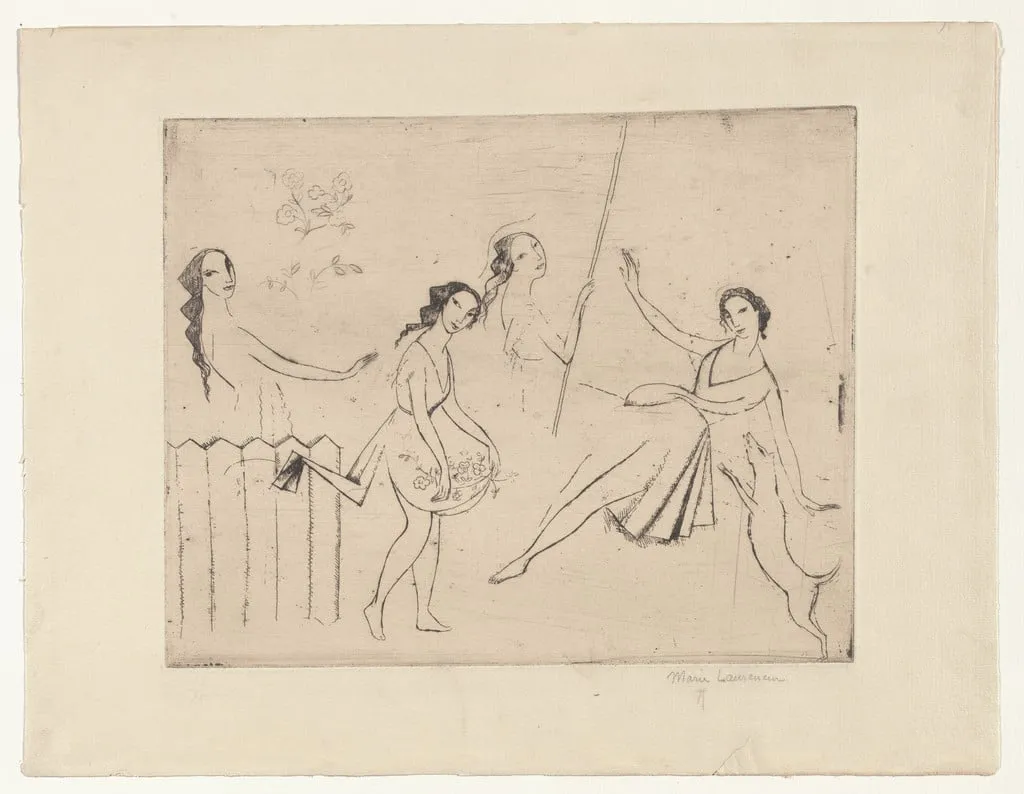
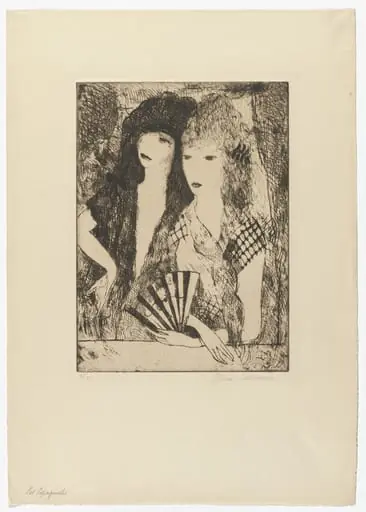
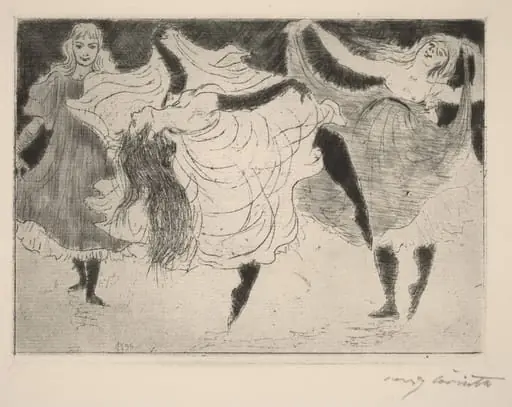
Untitled is an ink print by Marie Laurencin. It dates from 1912 and is held in the collection of the Museum of Modern Art.
About this work
She often painted women in dreamy groups, but here she used etching—a way to scratch lines into metal that hold ink—to give the scene a quiet, hazy feel.
You see two young women in soft, flowing dresses, their faces turned toward each other like they’re sharing a secret. The lines are light and sketchy, almost like a quick memory caught on paper.
Laurencin made this in 1912, right when Paris was buzzing with new art ideas. She often painted women in dreamy groups, but here she used etching—a way to scratch lines into metal that hold ink—to give the scene a quiet, hazy feel.
Look up the technique called drypoint next.
Overview
Created in 1912, this drypoint and etching by Marie Laurencin is a quiet, intimate print that captures two women in tender proximity. Unlike the angular forms of contemporary Cubist works, Laurencin’s approach favors fluid lines and delicate tonal gradations. The medium allowed her to achieve a soft, atmospheric quality, aligning with her broader interest in evoking emotional nuance over structural rigor.
Subject & Meaning
The two figures, dressed in flowing garments, face each other with a sense of private communion. Their gestures suggest an unspoken connection, reinforcing Laurencin’s recurring focus on female relationships as sites of quiet intimacy. The absence of narrative detail or external context invites contemplation rather than interpretation, emphasizing mood over story.
Technique & Style
Laurencin employed drypoint to scratch fine, burr-rich lines into a metal plate, producing a soft, velvety texture when printed. Combined with etching, the technique allowed subtle variations in line weight and tone. The resulting image appears translucent and ephemeral, mirroring the delicate, dreamlike quality of her painted subjects and distinguishing her from the more rigid aesthetics of her Cubist peers.
History & Provenance
Made during Laurencin’s active years in Paris’s avant-garde circles, the print reflects her engagement with the Section d'Or group, though she maintained a distinct visual language. While few of her prints survive from this period, this work is among the few documented examples of her printmaking during the early 1910s, a time when she was refining her signature style away from mainstream Cubism.
Context
In 1912, Paris was a crucible for artistic experimentation, with Cubism dominating discourse. Laurencin, though connected to the movement through association, pursued a more lyrical, feminine-coded aesthetic. Her focus on interior emotional spaces and fluid forms contrasted with the fractured geometries of Picasso and Gris, carving out a unique space for sensibility in modernist printmaking.
Legacy
Laurencin’s prints, including this one, contributed to a broader redefinition of feminine subjectivity in early 20th-century art. Her use of etching and drypoint to convey intimacy influenced later generations of printmakers who sought emotional resonance over formal innovation. Though less celebrated than her male contemporaries, her work remains a quiet but persistent presence in the history of modern printmaking.
Artist & collection
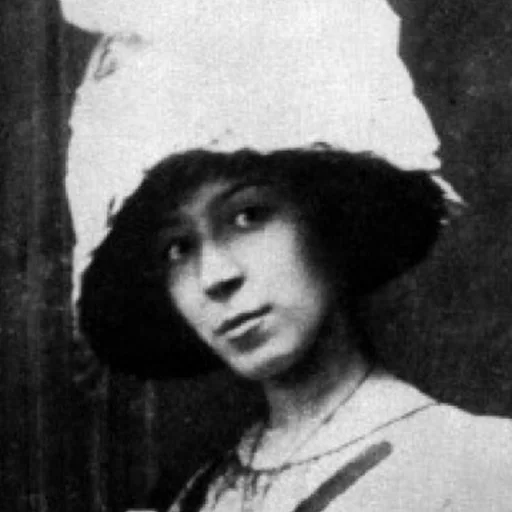
Artist
Marie Laurencin (31 October 1883 – 8 June 1956) was a French painter and printmaker. She became an important figure in the Parisian avant-garde as a member of the Cubists associated with the Section d'Or.