Artwork
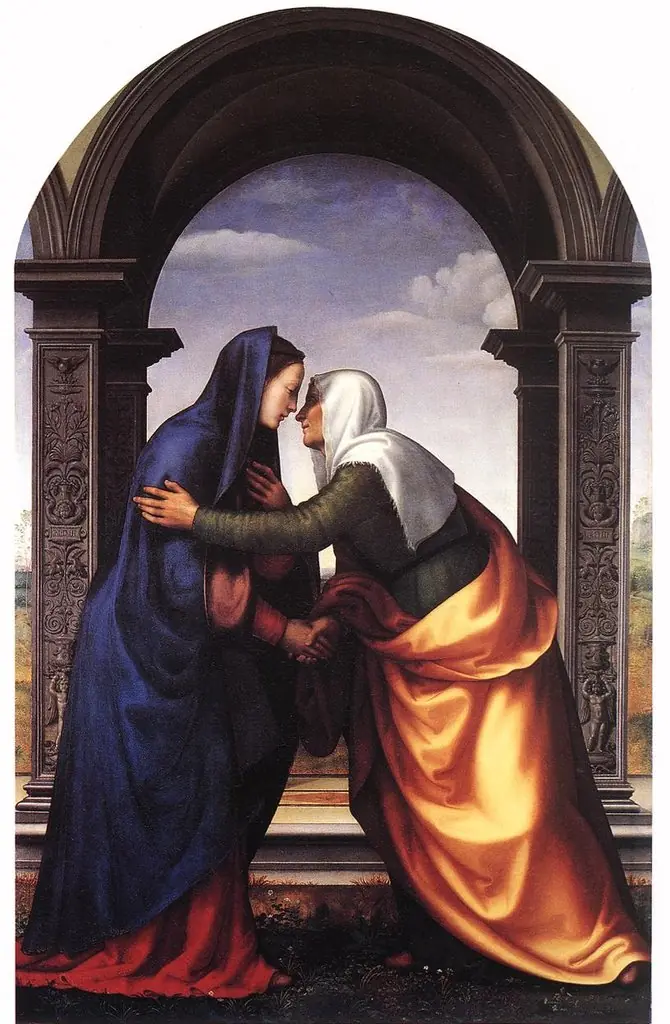
Copy after The Visitation (The meeting of Mary and Elizabeth), Mariotto Albertinelli in the Uffizi (Florence)
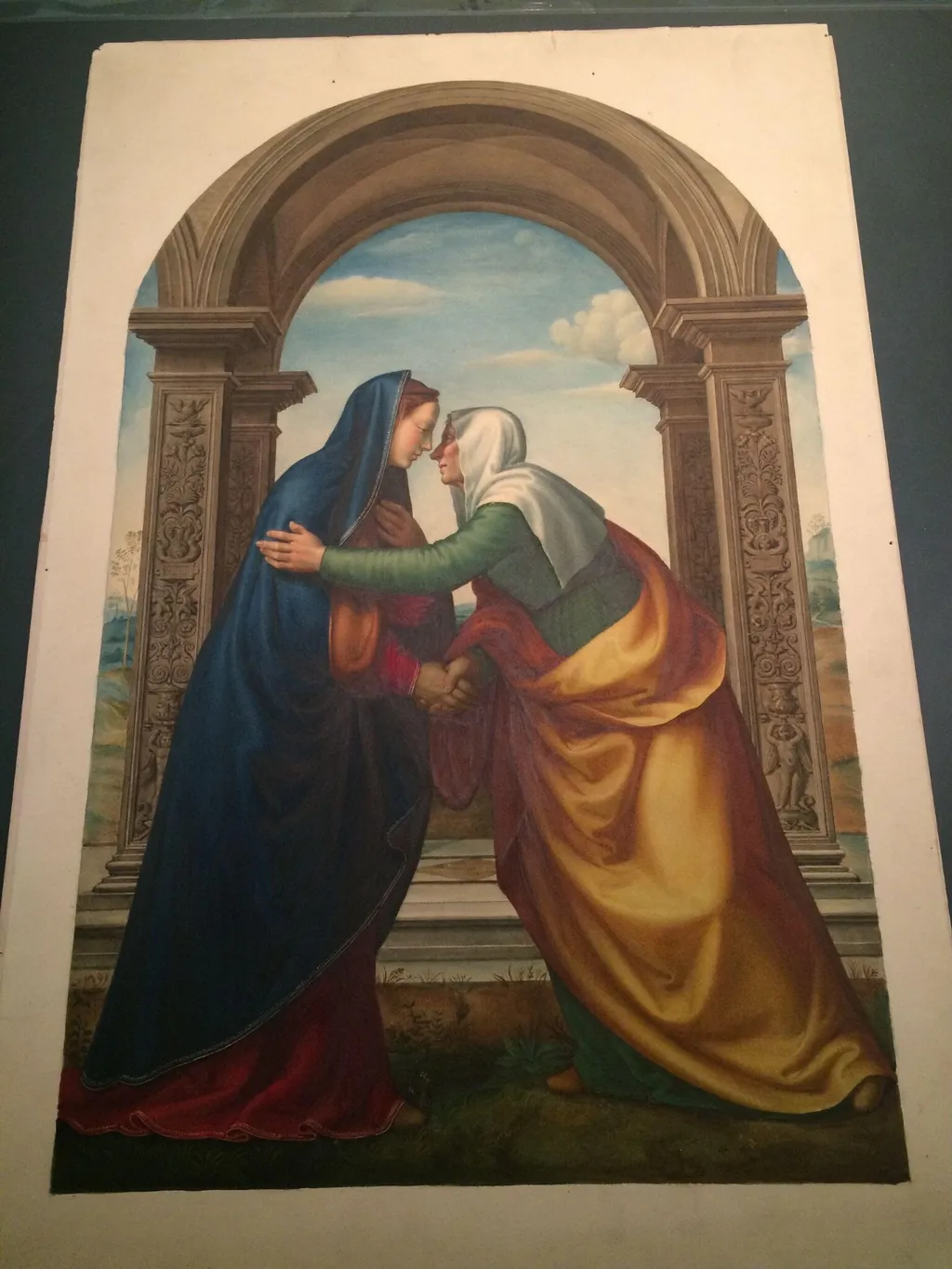
Copy after The Visitation (The meeting of Mary and Elizabeth), Mariotto Albertinelli in the Uffizi (Florence) is a watercolor work on paper by the Impressionist artist Mariotto Albertinelli. It is held in the collection of the Victoria and Albert Museum.
About this work
Overview
This watercolour is a 19th-century reproduction by Cesare Mariannecci, made after Mariotto Albertinelli’s original altarpiece panel.
This watercolour is a 19th-century reproduction by Cesare Mariannecci, made after Mariotto Albertinelli’s original altarpiece panel. Commissioned by the Arundel Society, it was produced to disseminate Renaissance art through printed reproductions. Created in 1875, it serves as a study piece rather than an independent work, reflecting Victorian-era efforts to preserve and circulate images of early Italian painting for scholarly and public audiences.
Subject & Meaning
The scene depicts the biblical meeting between the Virgin Mary and her cousin Elizabeth, both pregnant with Jesus and John the Baptist. The moment, drawn from the Gospel of Luke, symbolizes divine recognition and spiritual kinship. Albertinelli’s composition emphasizes tender gesture and quiet reverence, aligning with devotional ideals of the early Renaissance while retaining a sense of human intimacy uncommon in earlier medieval treatments.
Technique & Style
Mariannecci rendered the image in watercolour, a medium favored by the Arundel Society for its clarity and affordability in reproduction. His approach faithfully follows Albertinelli’s original composition and palette, though with a lighter, more transparent handling typical of 19th-century academic copying. The work reflects a deliberate adherence to the source, prioritizing accuracy over interpretive innovation.
History & Provenance
The original painting by Albertinelli was completed in 1503 for the church of San Martino in Florence. It later became part of the Uffizi’s collection. Mariannecci’s watercolour was produced under the Arundel Society’s initiative, which systematically documented Italian Renaissance works between 1848 and the early 20th century. The copy was published in 1875 as part of their illustrated series, catalogued under Museum No. 27418.
Context
The Arundel Society emerged amid a broader 19th-century revival of interest in pre-Renaissance and early Renaissance art, often termed 'primitives.' This movement sought to elevate medieval and Quattrocento works as morally and aesthetically pure, countering prevailing neoclassical tastes. Reproductions like Mariannecci’s watercolour played a key role in shaping public and academic understanding of Italian art history during this period.
Legacy
Though not an original creation, Mariannecci’s watercolour preserves a detailed record of Albertinelli’s composition at a time when photographic reproduction was still emerging. It stands as evidence of how 19th-century institutions mediated access to Renaissance art, influencing both scholarly study and public taste. The piece remains a historical artifact of Victorian art education practices.
Artist & collection
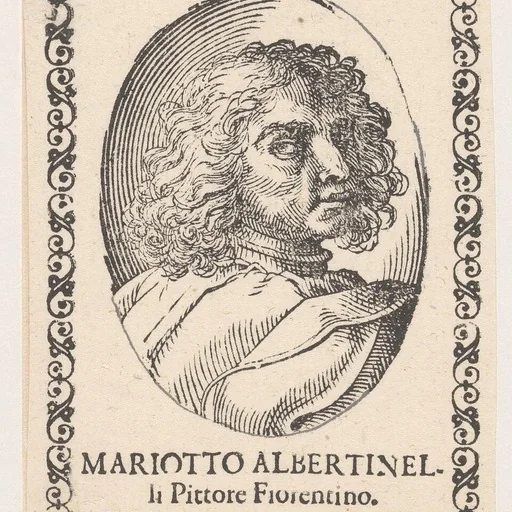
Artist
Mariotto di Bindo di Biagio Albertinelli (13 October 1474 – 5 November 1515) was an Italian Renaissance painter active in Florence.

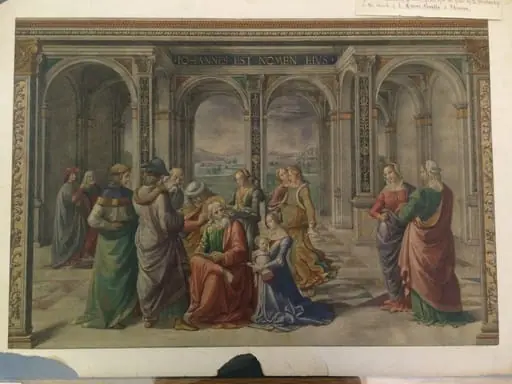 Copy after Zacharias writes down the name of his Son, Domenico Ghirlandaio in the Tornabuoni Chapel, Santa Maria Novella (Florence)
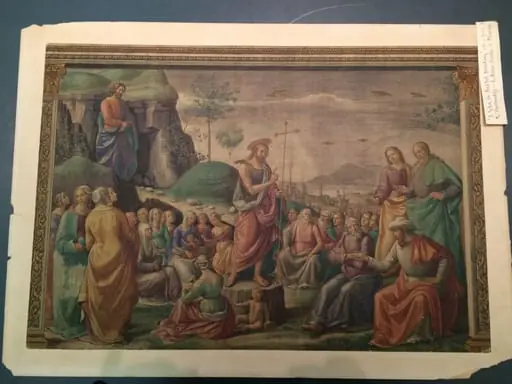 Copy after the Preaching of St. John the Baptist, Domenico Ghirlandaio in the Tornabuoni Chapel, Santa Maria Novella (Florence)
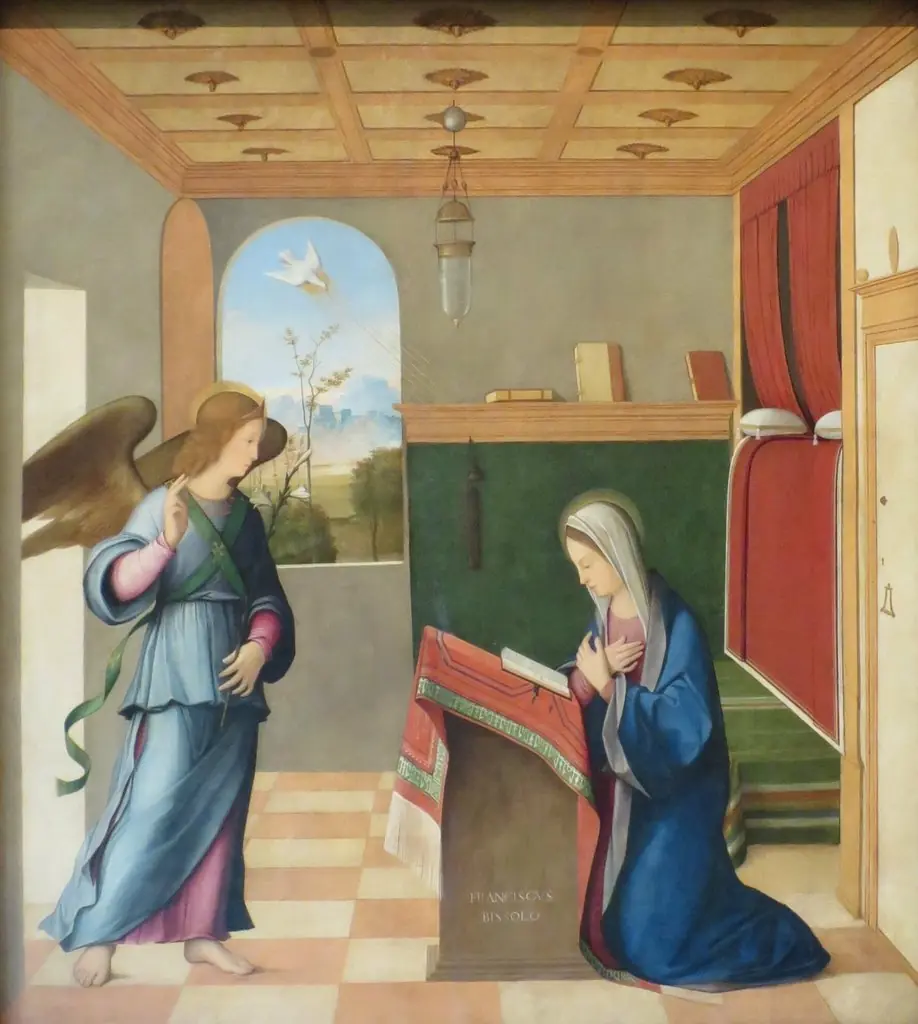 Annunciation
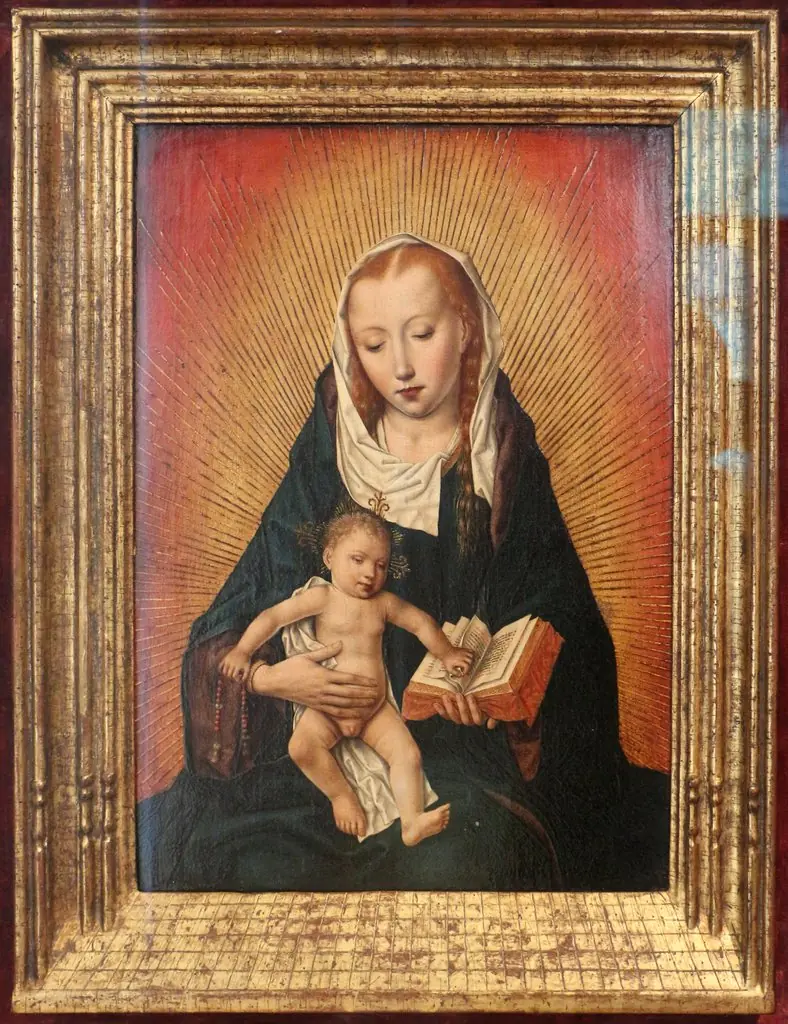 Virgin and Child in a halo
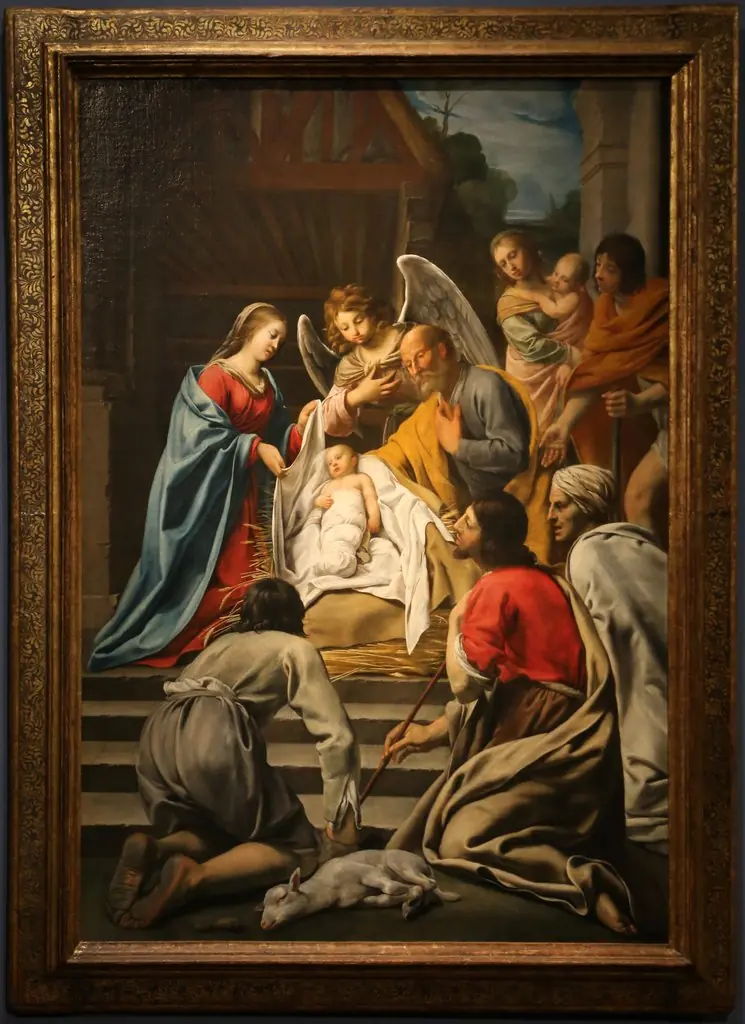 Adoration of the Shepherds
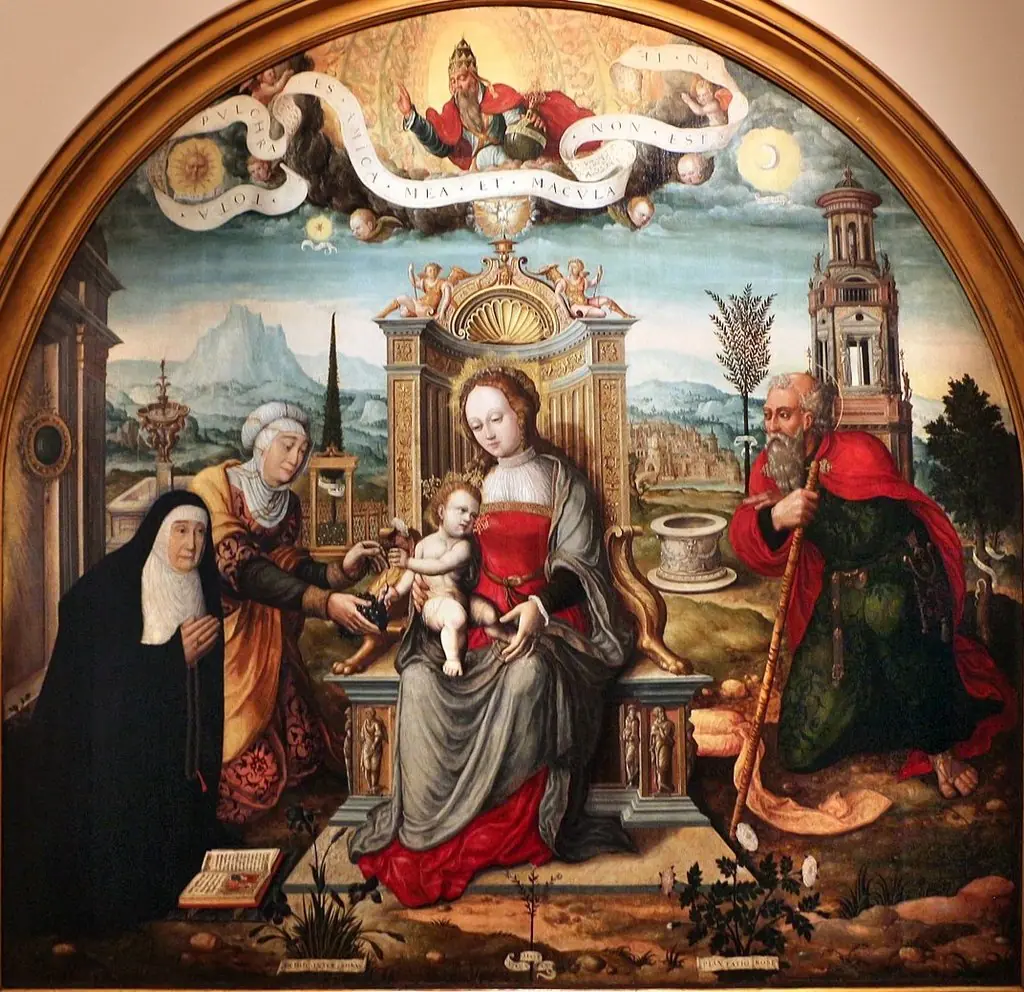 A Virgem Maria e o Menino Jesus com Santa Ana, São Joaquim e Doadora
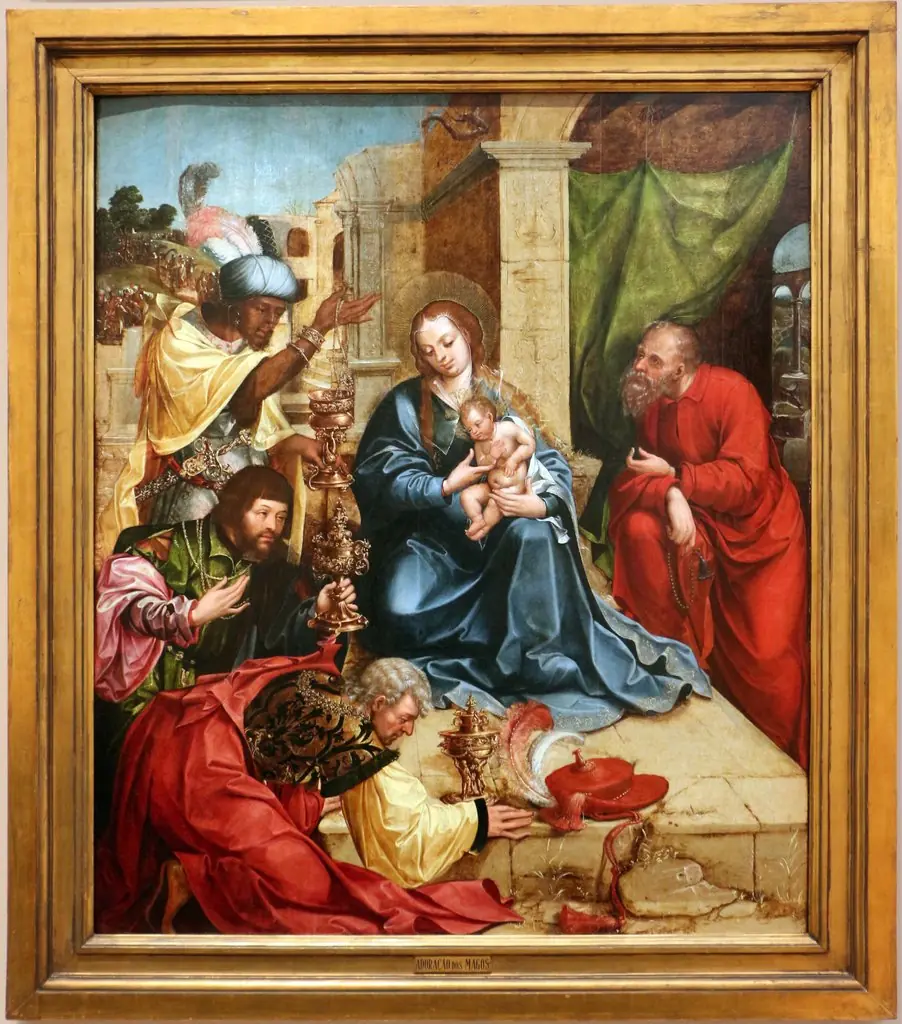 Adoração dos Reis Magos