Artwork
Rhode Island Landscape
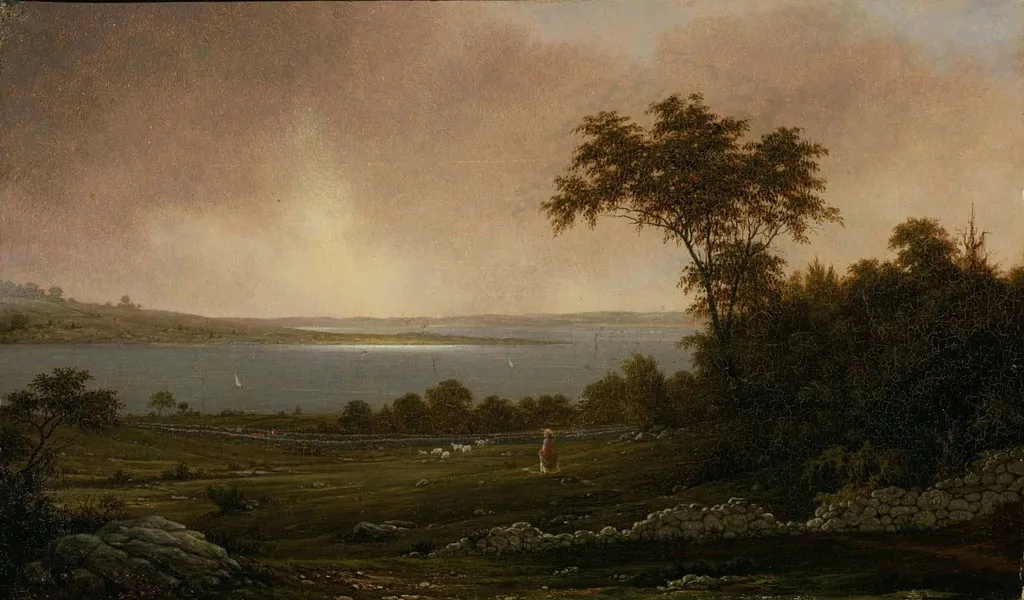
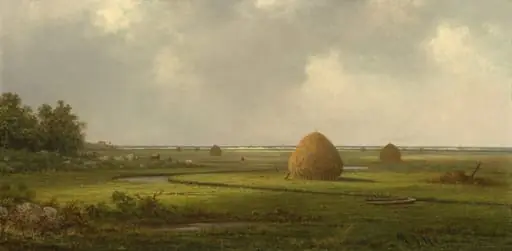
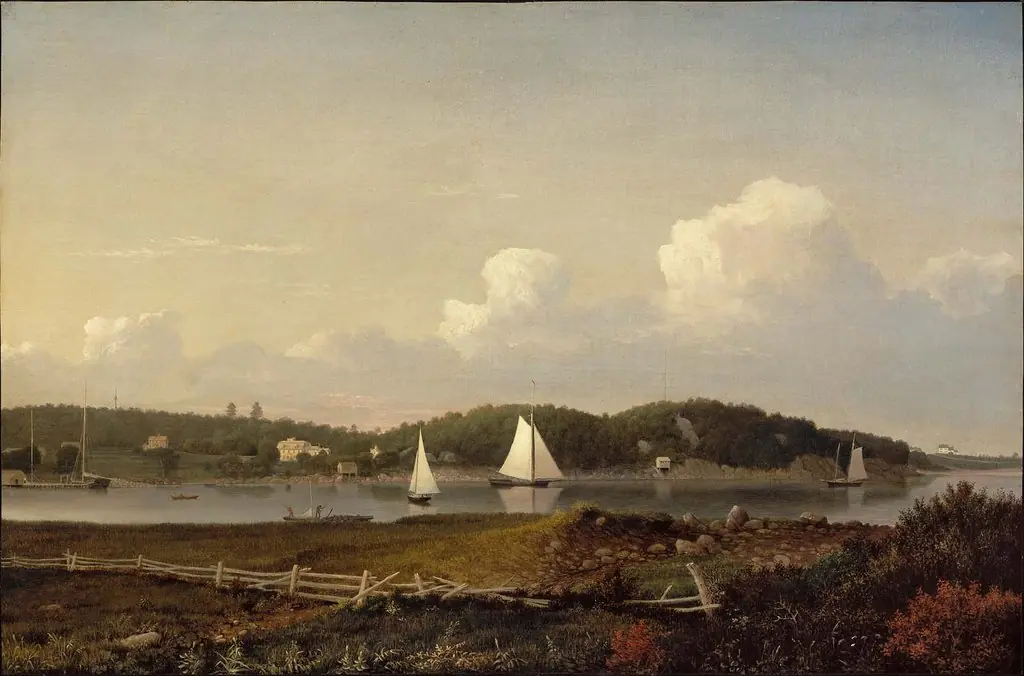
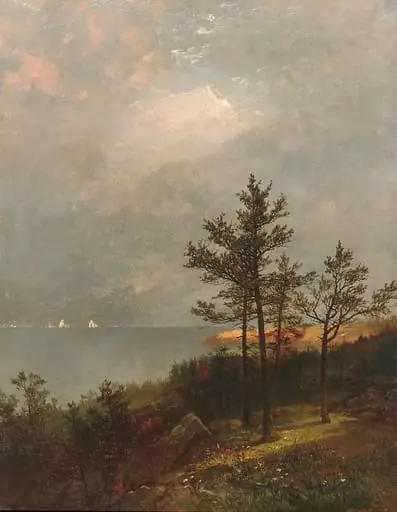
Rhode Island Landscape is an oil painting by Martin Johnson Heade. It dates from 1859 and is held in the collection of the Museum of Fine Arts Boston. Created in 1859, this oil on canvas portrays a tranquil coastal scene in Rhode Island.
About this work
Overview
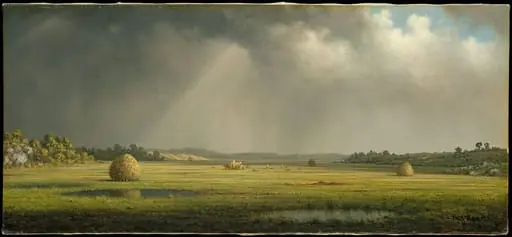
Created in 1859, this oil on canvas portrays a tranquil coastal scene in Rhode Island. A broad expanse of water stretches toward a hazy horizon, flanked by a rocky shoreline on the left and a solitary figure in a long dress near a small flock of sheep on the right. Sparse trees punctuate the landscape, while a pale sky merges with distant hills, conveying a sense of quiet stillness.
Subject & Meaning
The composition juxtaposes human presence with a pastoral environment, suggesting a moment of contemplation amid nature. The lone figure, positioned near the sheep, underscores a harmonious relationship between people and the land, while the misty atmosphere and subdued lighting evoke a reflective mood, inviting viewers to consider the serenity of everyday rural life.
Technique & Style
Heade renders the scene with delicate modulation of light, allowing subtle highlights to dance across water and grass. His palette is restrained, dominated by muted tones, yet he introduces occasional brighter accents where sunlight strikes rock surfaces and the wool of the sheep. The brushwork captures the soft diffusion of mist, emphasizing atmosphere over dramatic contrast.
History & Provenance
The painting entered the collection of the Museum of Fine Arts, Boston, where it remains on view. It was acquired as part of the museum’s effort to represent mid‑nineteenth‑century American landscape painting, reflecting Heade’s reputation for nuanced depictions of coastal and rural settings.
Context
During the 1850s, Heade’s work diverged from the overt romanticism of many contemporaries, favoring a more restrained, observational approach. This piece exemplifies his interest in New England’s shoreline, aligning with a broader American movement toward realistic, light‑focused landscape painting that emphasized local geography and everyday scenes.
Own this work as a print
Artist & collection