Artwork
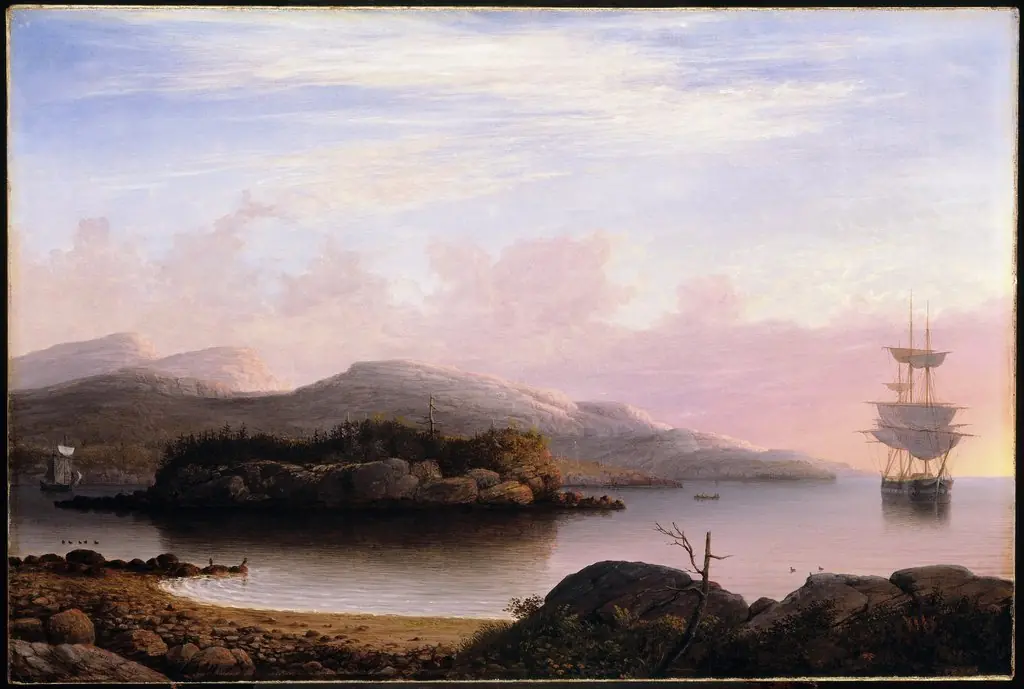
Owl's Head, Penobscot Bay, Maine
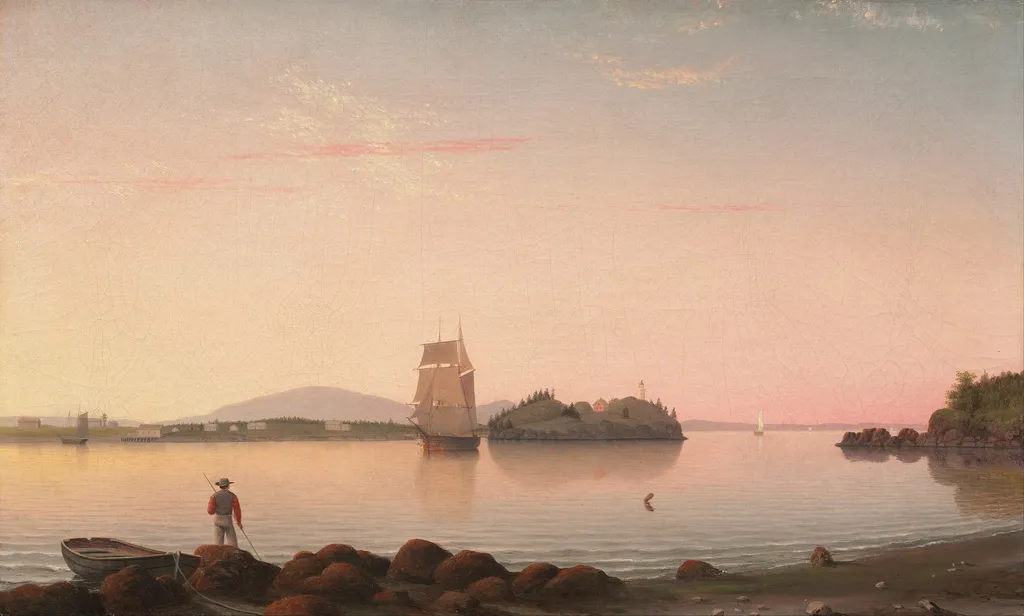
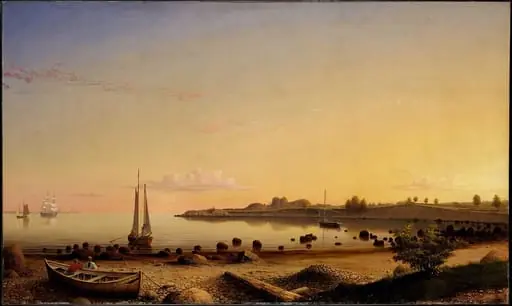
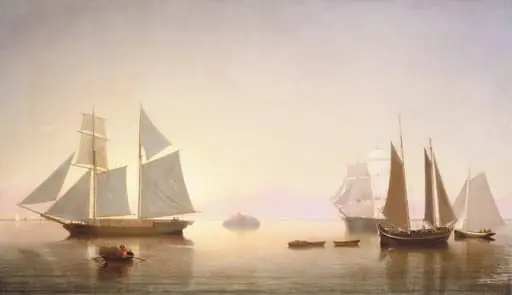
Owl's Head, Penobscot Bay, Maine is an oil painting by the American Impressionist artist Fitz Henry Lane. It dates from 1862 and is held in the collection of the Museum of Fine Arts Boston.
About this work
Overview
Painted in 1862 by Fitz Henry Lane, 'Owl's Head, Penobscot Bay, Maine' is an oil-on-canvas work that captures a quiet coastal scene in northern Maine.
Painted in 1862 by Fitz Henry Lane, 'Owl's Head, Penobscot Bay, Maine' is an oil-on-canvas work that captures a quiet coastal scene in northern Maine. Lane, known for his precise rendering of maritime subjects, focused on the interplay of light and stillness rather than dramatic action. The painting belongs to the Museum of Fine Arts, Boston, and exemplifies the luminist tradition in 19th-century American art, distinguished by its calm atmosphere and attention to atmospheric effects.
Subject & Meaning
The scene portrays a solitary figure on the shore, holding a long pole, beside a small rowboat resting on rocks. In the distance, a sailing vessel glides across the bay under a soft sky. There is no narrative drama—only the quiet presence of human activity within a vast, undisturbed natural setting. The composition suggests contemplation, emphasizing harmony between people and the sea, and evoking a sense of time suspended in the hush of twilight.
Technique & Style
Lane employed fine, controlled brushwork to render water, sky, and land with seamless transitions. He avoided visible strokes, instead building subtle gradations of color to suggest the diffusion of light across surfaces. The palette is restrained—soft pinks, blues, and muted greens—enhancing the stillness of the scene. Light is not cast as dramatic shadows but as an even, ambient glow that unifies the entire composition, a hallmark of luminism.
History & Provenance
Fitz Henry Lane, born Nathaniel Rogers Lane, lived and worked in Gloucester, Massachusetts, and frequently painted the Maine coast. 'Owl's Head' was completed during a period when he was refining his mature style, following years of experience as a lithographer and marine artist. The painting entered the Museum of Fine Arts, Boston, in the early 20th century and has remained in its collection since, recognized as a key example of American luminist painting.
Context
Created during the height of the Hudson River School’s influence, Lane’s work diverged by minimizing grandeur in favor of intimate, quiet observations. While contemporaries emphasized dramatic landscapes, Lane focused on the subtle effects of light on water and sky at transitional hours. His paintings reflect a growing American interest in regional specificity and the emotional resonance of everyday coastal life, distinct from European romantic traditions.
Legacy
Lane’s approach to light and stillness influenced later American landscape painters and contributed to the development of a uniquely American visual language. 'Owl's Head' remains a touchstone for studies of luminism, admired for its restraint and emotional quietude. Though not widely known in his lifetime, his work gained critical recognition in the 20th century as scholars reevaluated 19th-century American art beyond its more overtly dramatic expressions.
Own this work as a print
Artist & collection
Artist
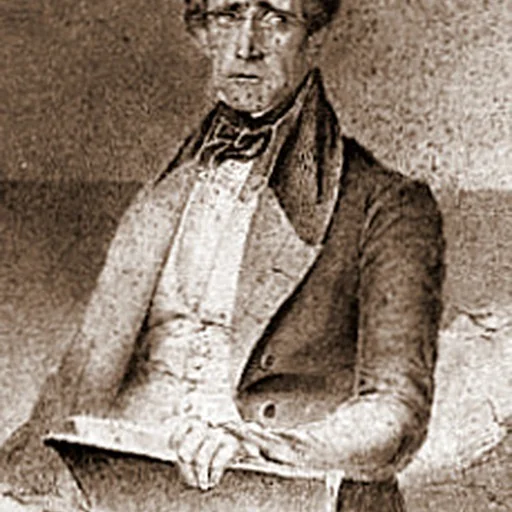
Fitz Henry Lane (born Nathaniel Rogers Lane; also formerly, mistakenly, known as Fitz Hugh Lane; December 19, 1804 – August 14, 1865) was an American painter and printmaker of a style that would later be called Luminism, for its use of…