Artwork
Salt Marshes, Newburyport, Massachusetts
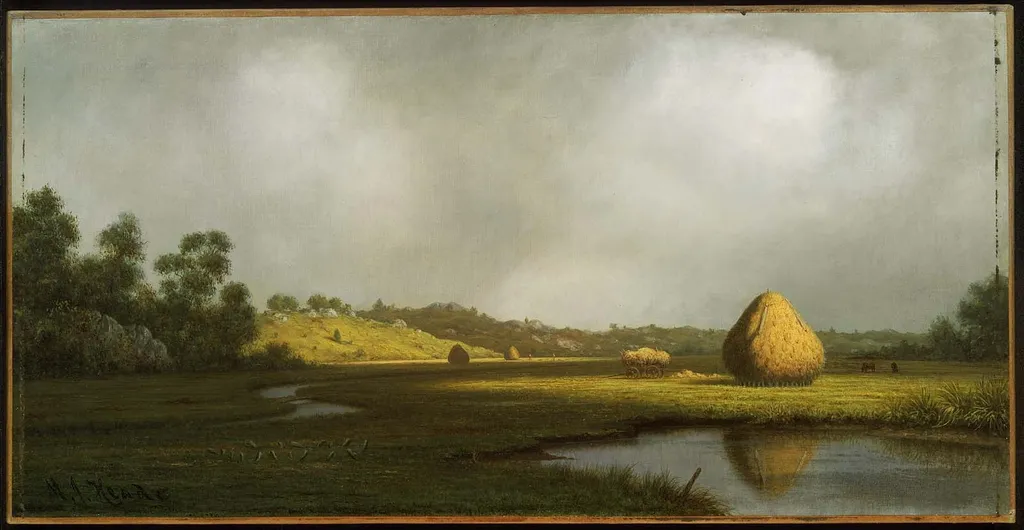
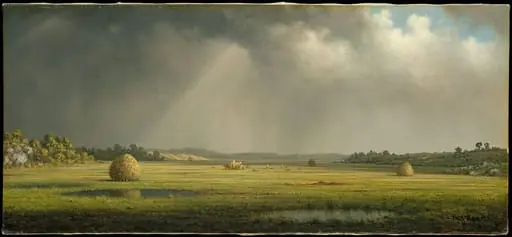
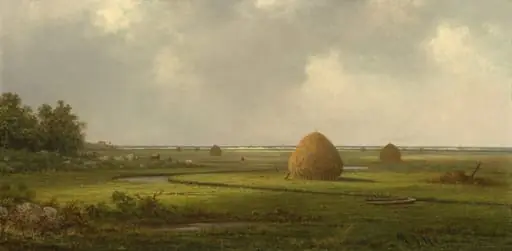
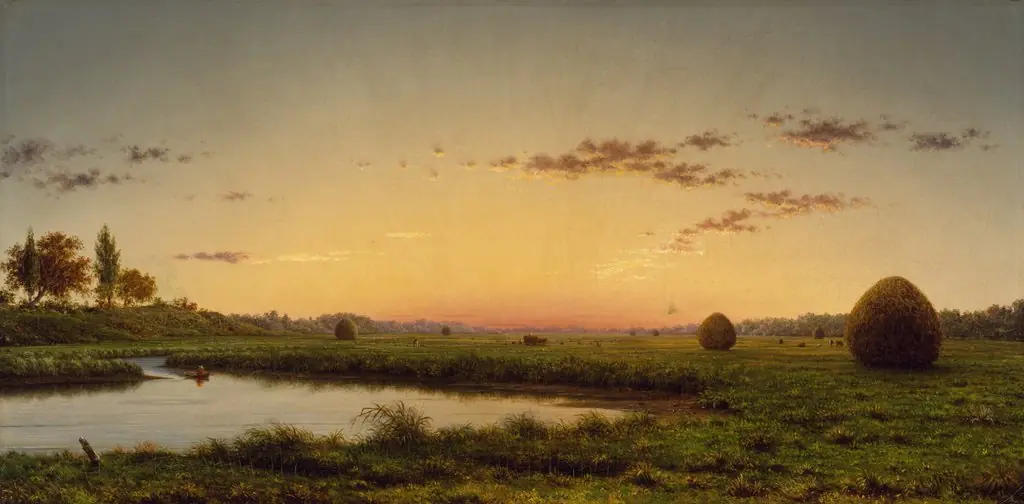
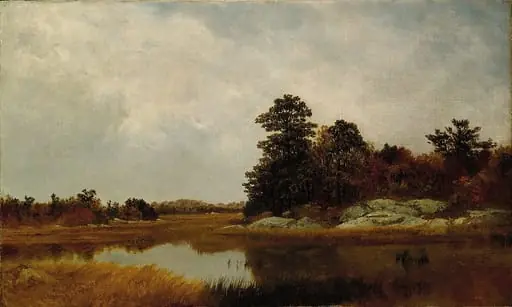
Salt Marshes, Newburyport, Massachusetts is an oil painting by Martin Johnson Heade. It dates from 1869 and is held in the collection of the Museum of Fine Arts Boston.
About this work
Overview
This work exemplifies his dedication to capturing the quiet rhythms of the New England shoreline, rendered with a restrained palette and deliberate stillness.
Painted around 1869, *Salt Marshes, Newburyport, Massachusetts* is an oil on canvas landscape by Martin Johnson Heade, an American artist known for his quiet coastal scenes. Unlike the grand, dramatic landscapes favored by many of his peers, Heade focused on subtle, understated environments. This work exemplifies his dedication to capturing the quiet rhythms of the New England shoreline, rendered with a restrained palette and deliberate stillness.
Subject & Meaning
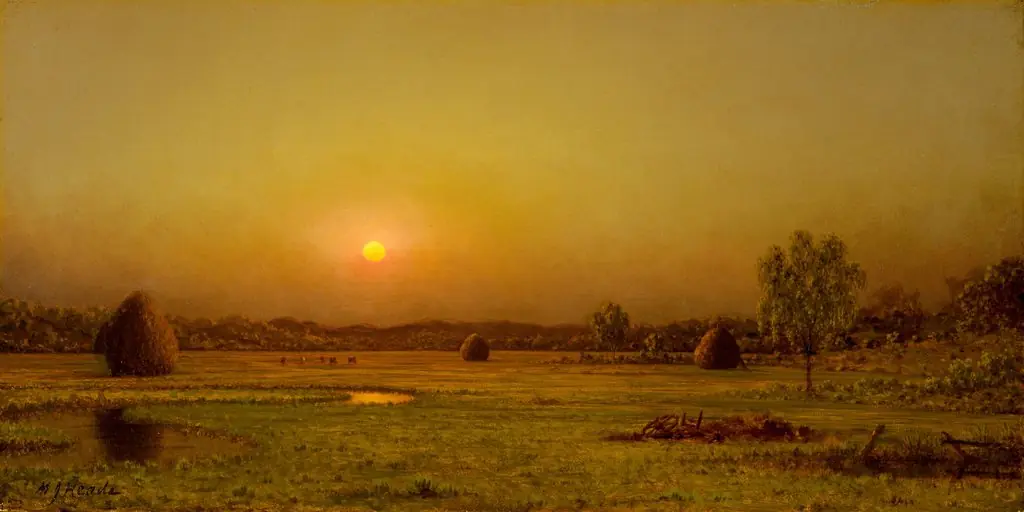
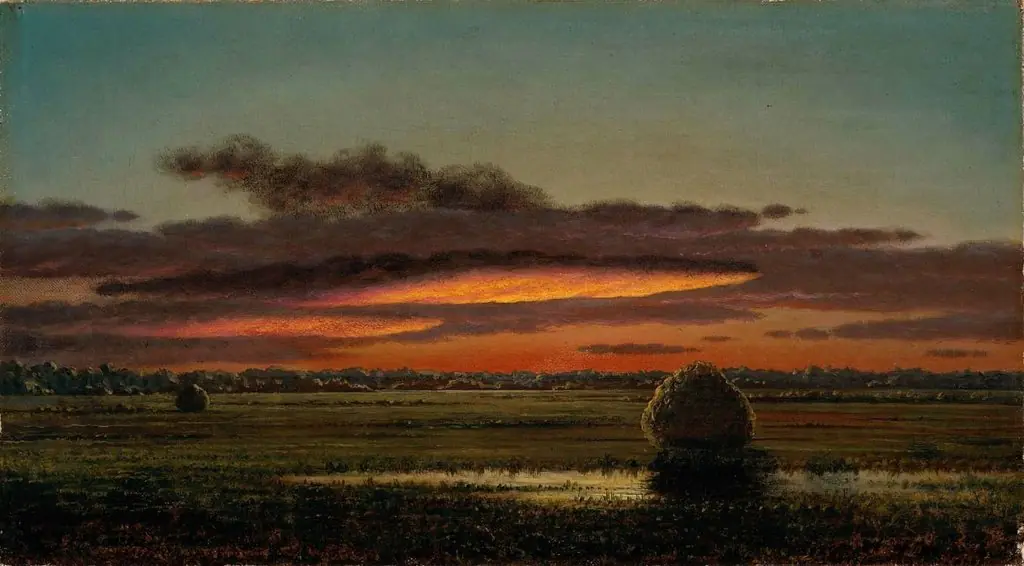
The painting depicts a tranquil salt marsh near Newburyport, Massachusetts, with a narrow stream winding through tall grasses toward the horizon. Distant hay bales and sparse vegetation suggest human presence without intrusion. The scene conveys neither celebration nor melancholy, but a meditative observation of nature’s quiet cycles. Heade’s choice of subject reflects an interest in the overlooked margins of the landscape, where land and water meet in quiet equilibrium.
Technique & Style
Heade employed soft, muted tones and delicate gradations of light to evoke atmosphere rather than drama. The sky and water are rendered with subtle shifts in hue, creating a sense of stillness and reflection. Brushwork is precise yet unobtrusive, particularly in the rendering of grasses and reeds, which are detailed without becoming ornate. His handling of light avoids strong chiaroscuro, favoring a diffuse, even glow that enhances the painting’s calm mood.
History & Provenance
Created during Heade’s most productive period, the painting was likely made after his return to the northeastern coast following years of travel. It entered the collection of the Museum of Fine Arts, Boston, in the early 20th century, where it remains today. While not widely exhibited in his lifetime, the work gained recognition in later decades as scholars reevaluated his contribution to American landscape painting beyond the Hudson River School tradition.
Context
In the late 1860s, American art was dominated by expansive, heroic landscapes. Heade’s focus on modest, tidal wetlands stood in contrast, aligning more closely with emerging interests in realism and intimate observation. His work resonated with scientific curiosity about natural environments and reflected a growing appreciation for the ecological specificity of coastal regions, even as industrialization reshaped the American countryside.
Legacy
Heade’s salt marsh paintings, including this one, are now recognized for their quiet originality and influence on later American tonalism. His emphasis on atmosphere, subtle color, and restrained composition prefigured the work of artists like James McNeill Whistler and George Inness. Though overshadowed in his time, his approach to landscape as a site of contemplation rather than spectacle has secured his place in the evolution of American art.
Artist & collection