Artwork
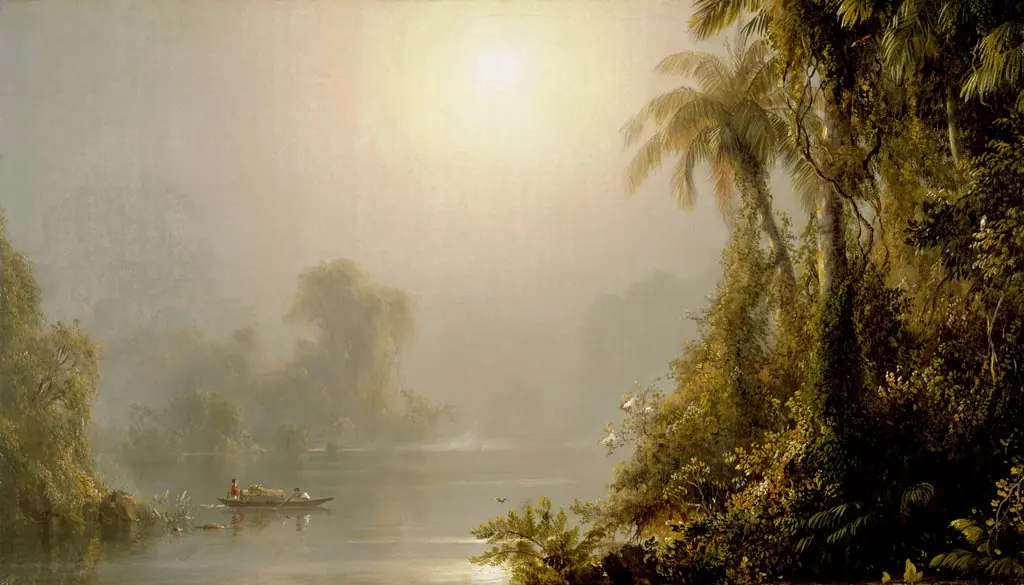
South American River
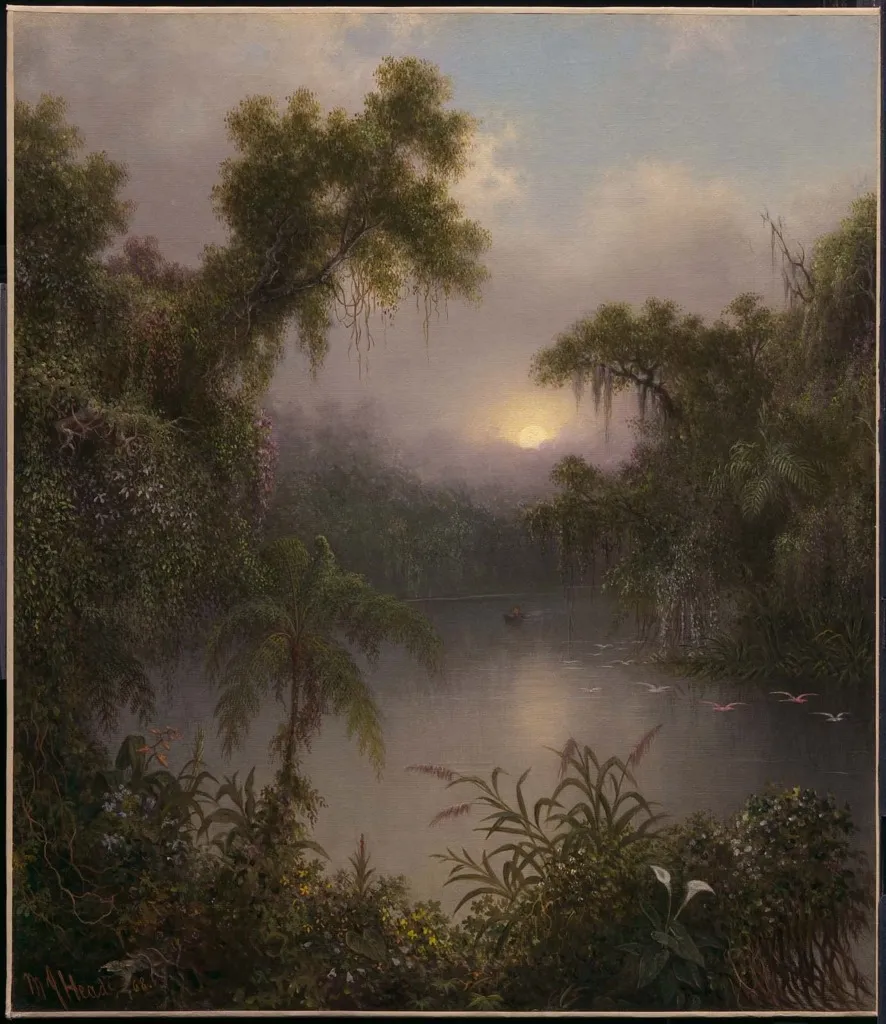
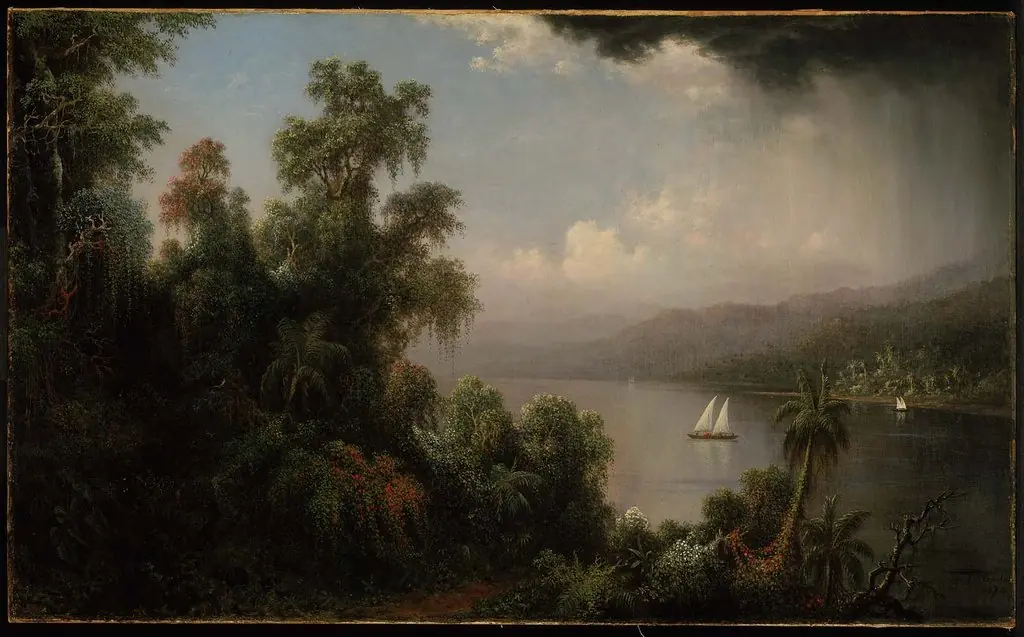
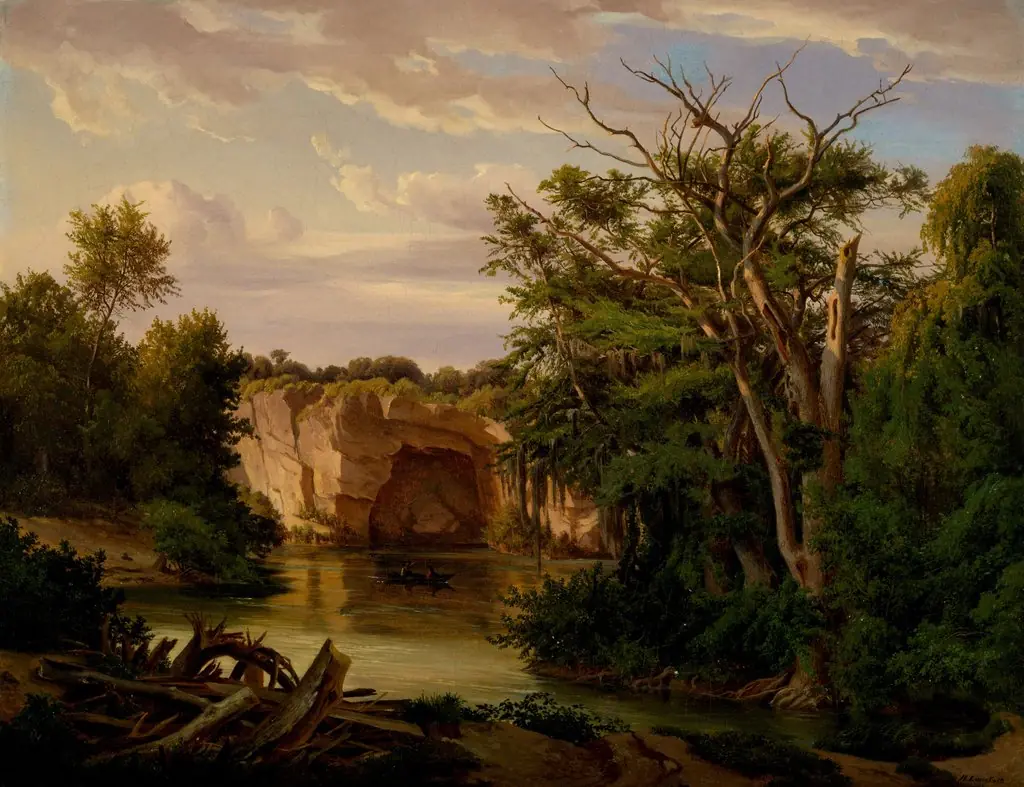
South American River is an oil painting by the American Impressionist artist Martin Johnson Heade. It dates from 1868 and is held in the collection of the Museum of Fine Arts Boston.
About this work
Overview
It captures a tranquil waterway in a tropical region, reflecting Heade’s sustained interest in natural landscapes beyond North America.
Painted in 1868, *South American River* is an oil on canvas work by American artist Martin Johnson Heade. It captures a tranquil waterway in a tropical region, reflecting Heade’s sustained interest in natural landscapes beyond North America. The painting belongs to the collection of the Museum of Fine Arts, Boston, and exemplifies his quiet, observant approach to nature, distinct from the more dramatic styles of his contemporaries.
Subject & Meaning
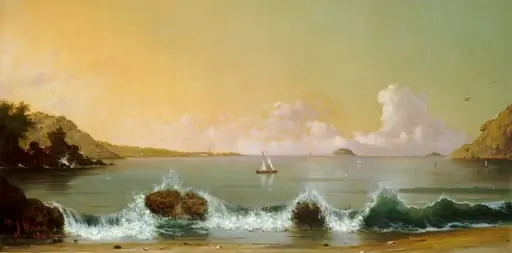
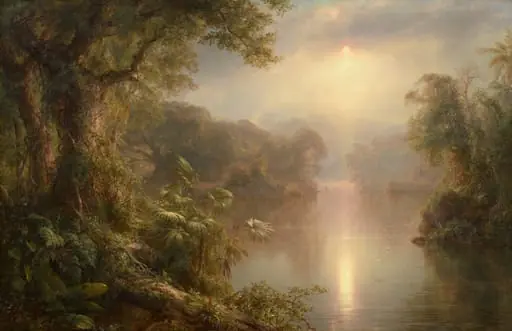
The scene portrays a quiet river winding through dense vegetation, with a solitary boat barely visible in the distance. No human figures are present, emphasizing solitude and the quiet dominance of the natural world. The soft light filtering through clouds suggests a moment of calm transition—neither dawn nor dusk—inviting contemplation rather than narrative. The absence of overt drama underscores Heade’s preference for understated, atmospheric presence.
Technique & Style
Heade employed fine brushwork to render intricate foliage and subtle variations in water surface reflections. His use of muted tones and layered glazes creates a hazy, atmospheric depth, while the diffused sunlight enhances the sense of humidity and stillness. Though sometimes linked to American Impressionism, his method is more precise and less concerned with optical effects, favoring controlled observation over spontaneous brushwork.
History & Provenance
Created during Heade’s travels in South America, the painting emerged from a period when he sought new subjects beyond the northeastern U.S. coastlines he had previously painted. It entered the Museum of Fine Arts, Boston, in the early 20th century and has remained in its collection since. Its provenance reflects Heade’s modest public profile during his lifetime and the later scholarly reassessment of his work.
Context
In the late 1860s, American artists increasingly looked beyond domestic landscapes for inspiration, drawn by scientific curiosity and exoticism. Heade’s South American scenes aligned with broader interests in tropical botany and natural history, yet he avoided picturesque clichés. His focus on quiet, unpopulated vistas contrasted with the grandeur favored by Hudson River School painters, offering a more intimate, introspective vision.
Legacy
Though largely overlooked during his lifetime, Heade’s *South American River* and similar works gained recognition in the 20th century for their quiet originality. Scholars now note his unique synthesis of detailed observation and atmospheric mood, influencing later generations interested in nature’s subtleties. The painting remains a key example of how American art engaged with global environments without resorting to spectacle.
Artist & collection