Artwork
Peisaj în pădure
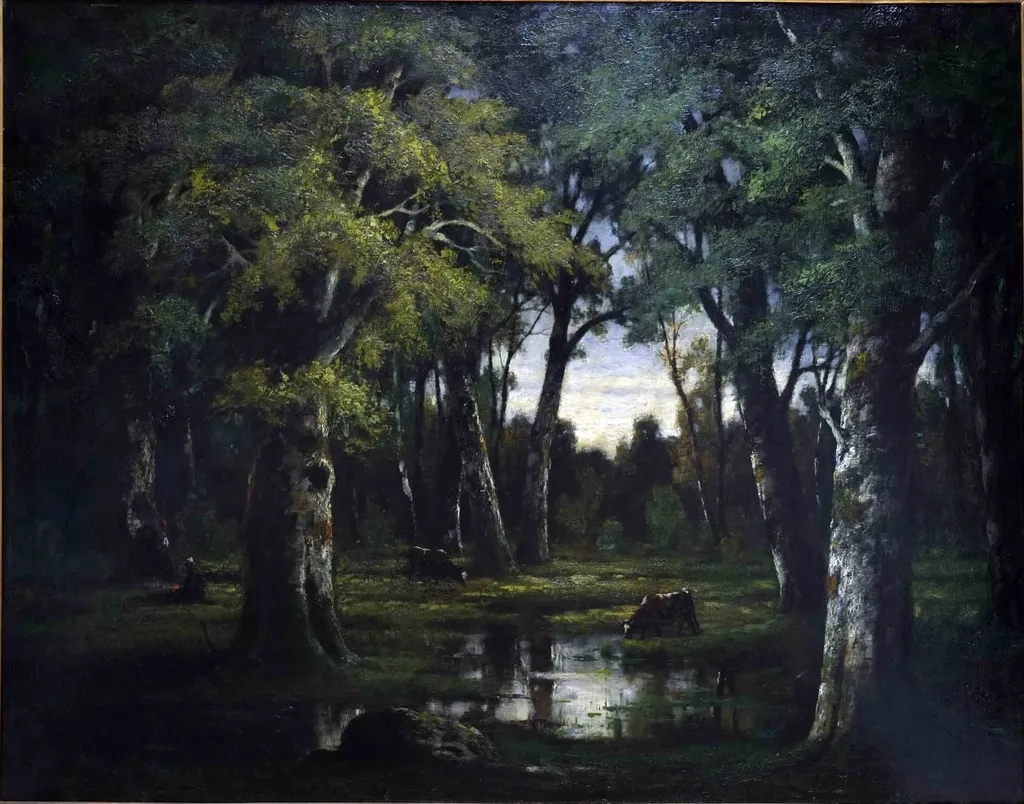
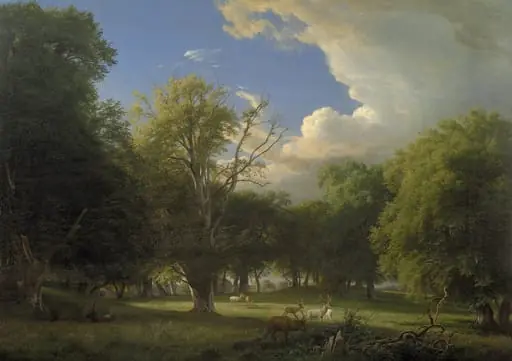
Peisaj în pădure is an unspecified painting by the Barbizon school artist Jules Dupré. It dates from 1846 and is held in the collection of the National Museum of Art of Romania.
About this work
Overview
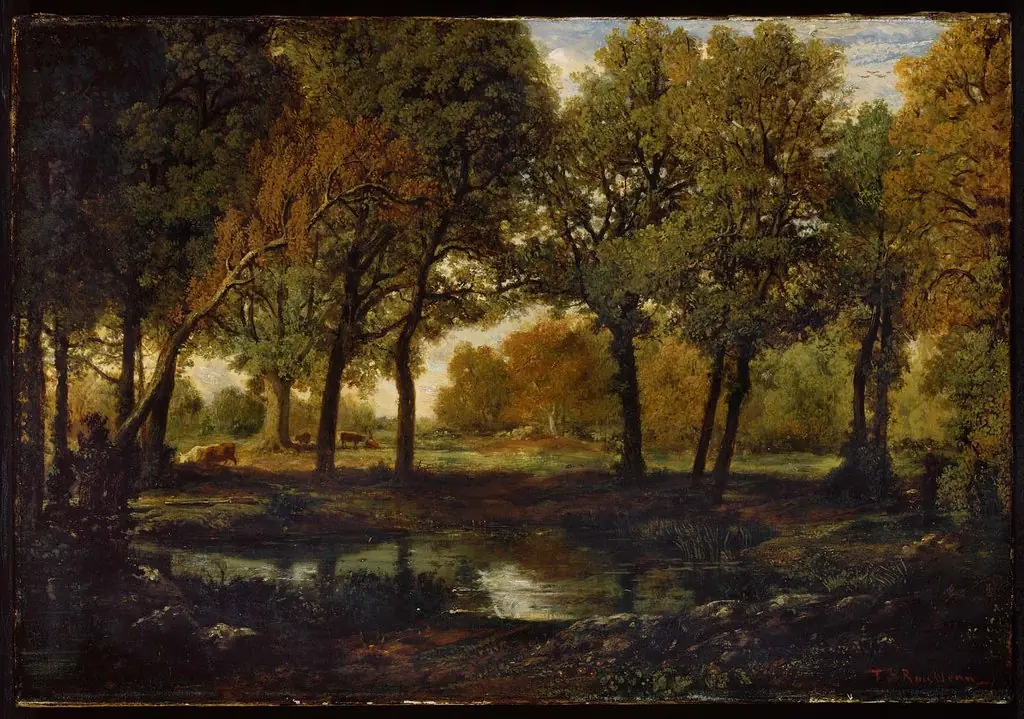
Jules Dupré’s Peisaj în pădure, executed around 1846, depicts a densely wooded scene. The composition is dominated by towering trunks that rise into a dim canopy, allowing only muted shafts of light to reach the forest floor where a modest patch of grass and a shallow pool collect.
Subject & Meaning
The work presents a quiet, introspective view of nature, emphasizing the interplay between darkness and the scarce illumination that filters through the leaves. The limited light suggests a moment of stillness, inviting contemplation of the forest’s secluded interior.
Technique & Style
Dupré employs a pronounced chiaroscuro, contrasting deep shadows with isolated highlights to model the trees and undergrowth. The restrained palette and soft transitions of light create a moody atmosphere, while the focal point is guided toward the central clearing by the subtle glow on the mossy ground.
History & Provenance
Created in the mid‑1840s, the painting belongs to Dupré’s mature period, during which he explored atmospheric effects in landscape painting. Its provenance traces back to private collections in France before entering public holdings in the early twentieth century.
Context
Peisaj în pădure reflects the Romantic interest in the sublime aspects of nature, aligning with contemporaneous French landscape artists who sought to convey emotional resonance through natural settings rather than idealized vistas.
Artist & collection


 Pool in the Forest
 Landscape
 Pădure
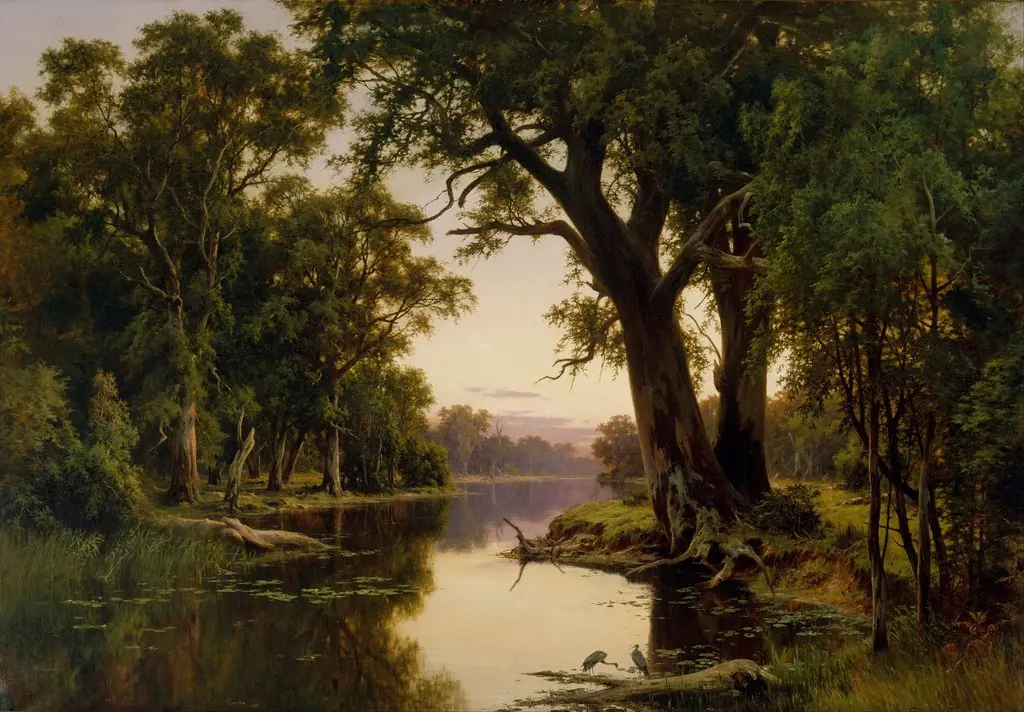 A billabong of the Goulburn, Victoria
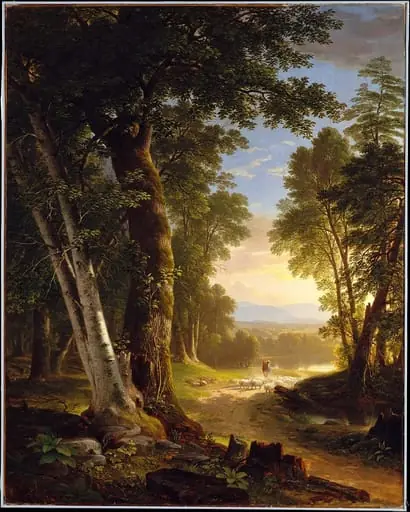 The Beeches
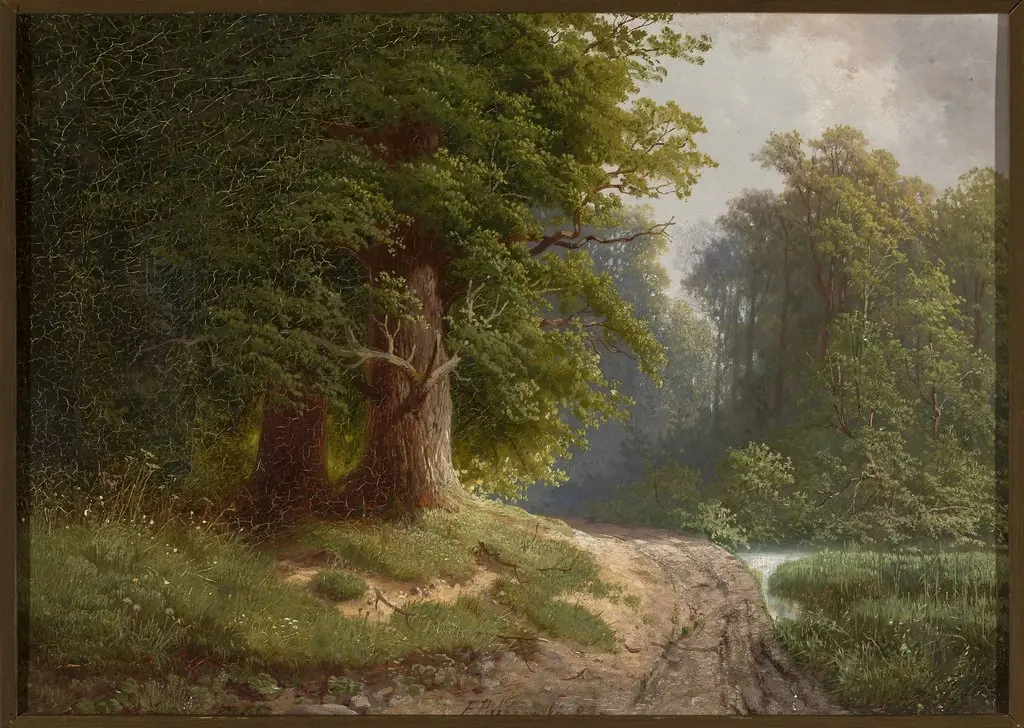 After the rain in autumn
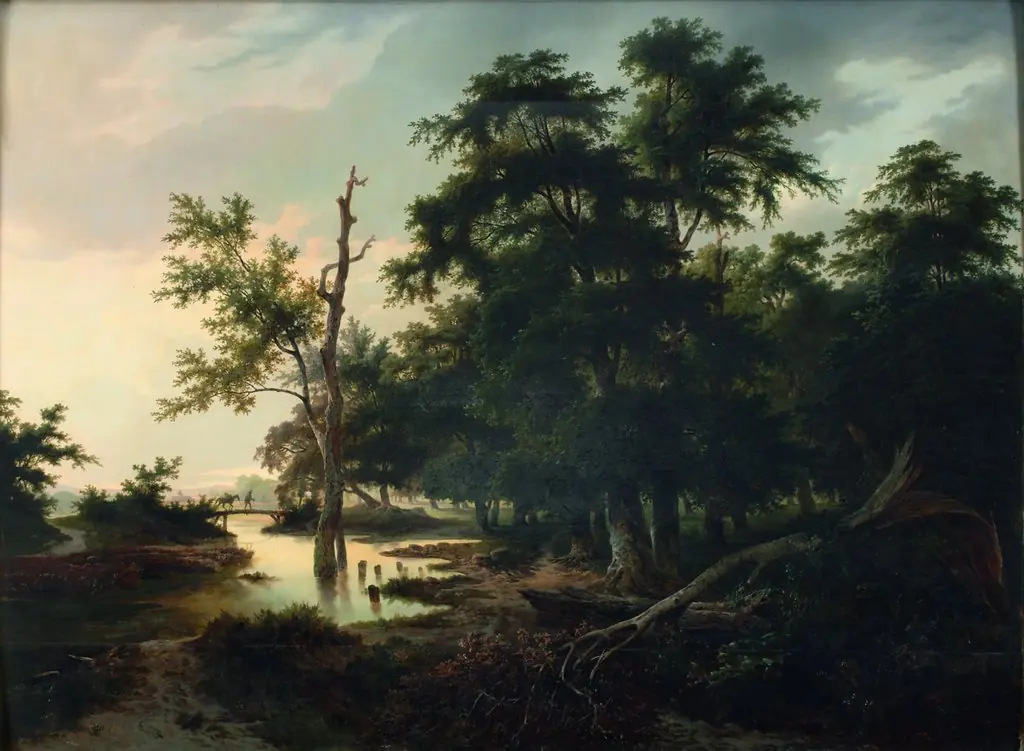 Forest landscape
 Landscape with a Stream
 Forest landscape at sunrise
 View, Dismal Swamp, North Carolina
 Pond in the Woods
 Summer Afternoon with a Passing Shower. The Deer Park in Jægersborg North of Copenhagen