Artwork
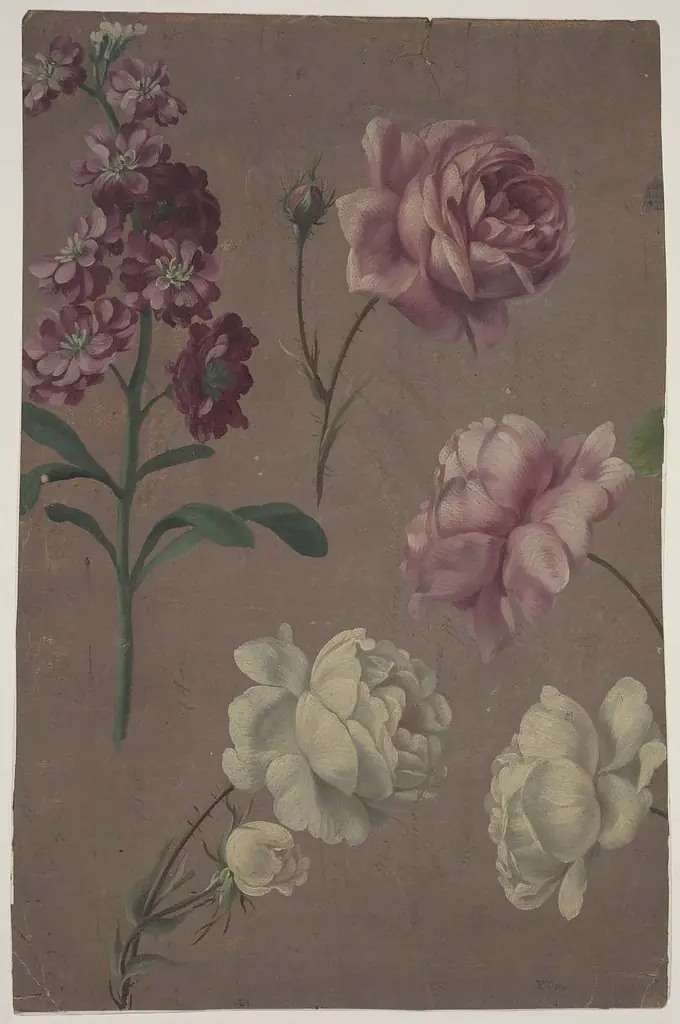
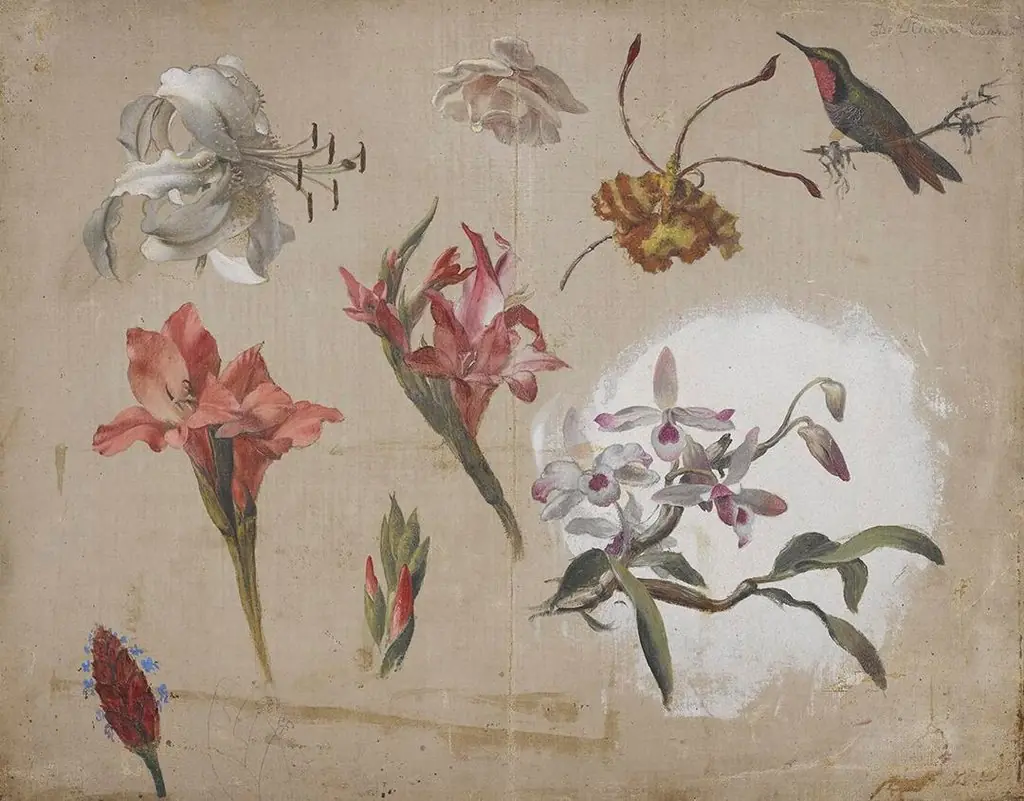
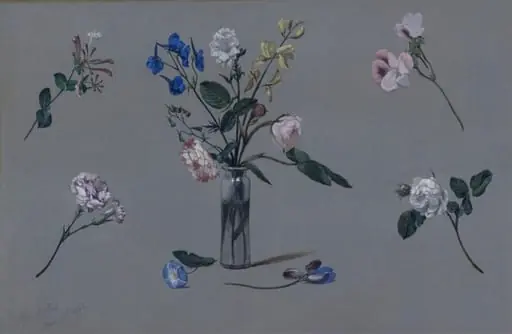
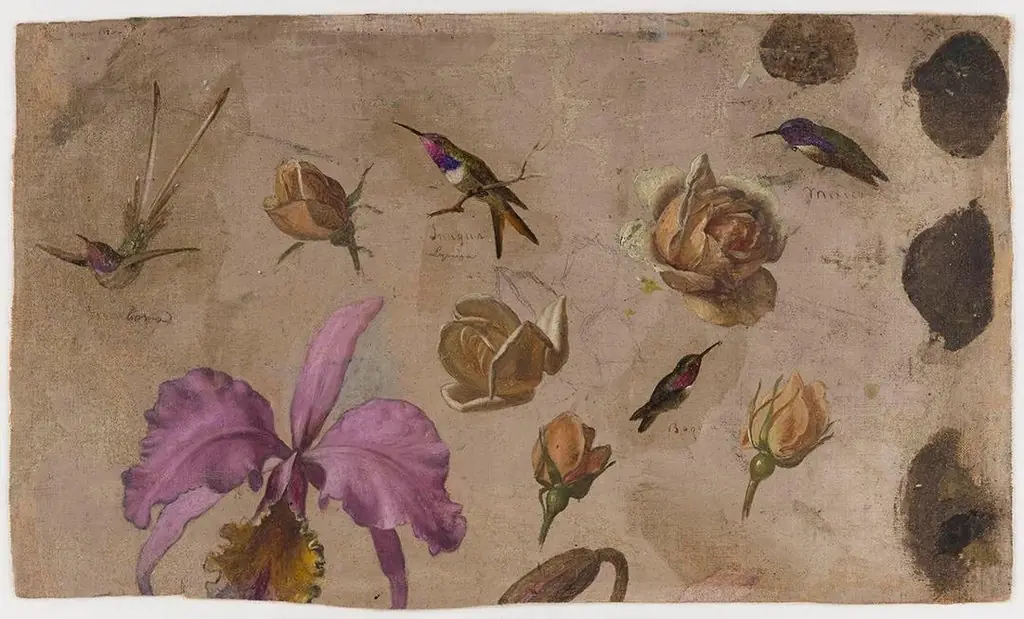
Study of Pink Roses, Leaves, Heliotrope, a Carnation and an Orchid
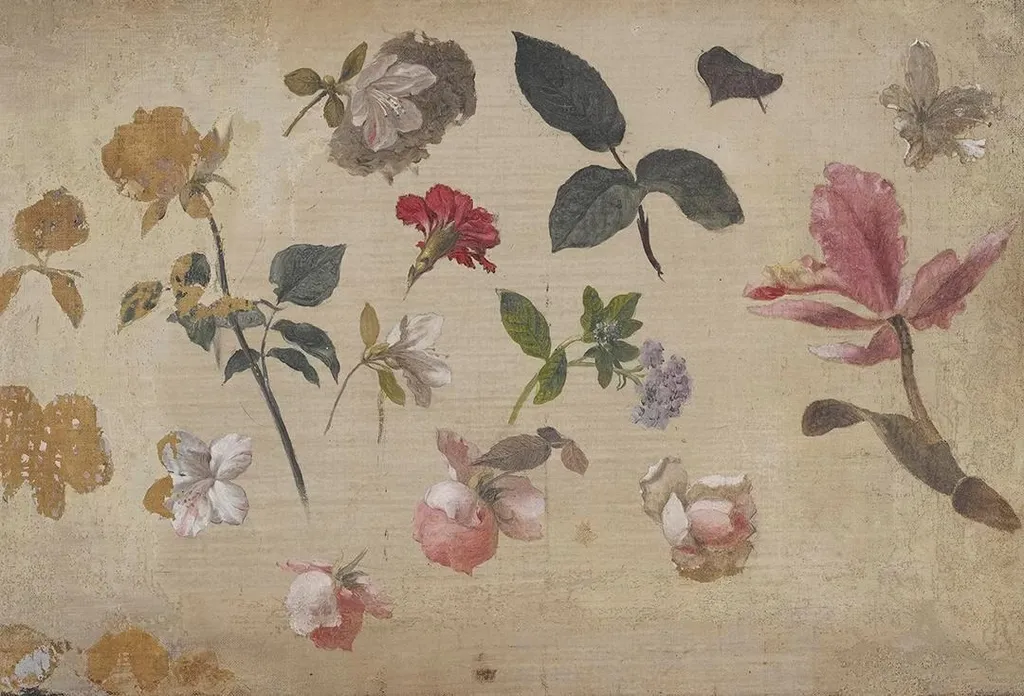
Study of Pink Roses, Leaves, Heliotrope, a Carnation and an Orchid is an unspecified painting by the American Impressionist artist Martin Johnson Heade. It dates from 1869 and is held in the collection of the Crystal Bridges Museum of American Art.
About this work
This painting is called Study of Pink Roses, Leaves, Heliotrope, a Carnation and an Orchid.
It was made by Martin Johnson Heade in 1869.
The artist likely chose these flowers for their beauty and fragrance, which were popular in floral arrangements during that time.
You can learn more about the artist's work at the Crystal Bridges Museum of American Art.
Overview
Unlike many contemporaries who emphasized dramatic lighting or symbolic narratives, Heade pursued a restrained, observational approach.
Martin Johnson Heade painted this floral study in 1869, focusing on a quiet arrangement of pink roses, heliotrope, a carnation, and an orchid among scattered leaves. Unlike many contemporaries who emphasized dramatic lighting or symbolic narratives, Heade pursued a restrained, observational approach. The work belongs to a series of botanical studies he produced during the late 1860s, reflecting his sustained interest in natural forms beyond landscape painting.
Subject & Meaning
The selected flowers—roses, carnation, heliotrope, and orchid—were cultivated for their scent and ornamental value in Victorian-era homes. Heade’s inclusion of these species suggests an appreciation for their aesthetic and sensory qualities rather than allegorical intent. The composition avoids overt symbolism, instead presenting the plants as subjects worthy of close, quiet attention, aligning with a growing 19th-century interest in natural history and domestic botany.
Technique & Style
Heade rendered each petal, leaf, and stem with meticulous precision, using fine brushwork to capture subtle variations in texture and hue. His palette remains muted yet nuanced, favoring soft pinks, greens, and whites. The arrangement is tightly framed, eliminating background distraction to emphasize the plants’ forms. This method distinguishes his work from the looser brushwork of emerging Impressionists, though his sensitivity to light and color anticipates some of their concerns.
History & Provenance
Created in 1869, the painting remained in private collections for much of the 20th century before entering the Crystal Bridges Museum of American Art’s holdings. It is one of several floral studies Heade produced after shifting focus from coastal landscapes. Its preservation and public display reflect renewed scholarly interest in his lesser-known botanical works, which were largely overlooked until the late 20th century.
Context
During the 1860s, American artists increasingly turned to nature as both subject and scientific inquiry. Heade’s floral studies coincided with the rise of horticultural enthusiasm in the U.S., fueled by botanical publications and greenhouse cultivation. While his peers often idealized nature, Heade’s approach was more clinical, aligning with the period’s empirical spirit and the growing accessibility of exotic plant species through global trade.
Legacy
Though not widely recognized in his lifetime, Heade’s floral studies have since influenced how 19th-century American still life is understood. His blend of scientific accuracy and quiet composition set him apart from both European traditions and American Romanticism. Today, these works are valued for their understated elegance and their role in expanding the boundaries of American art beyond landscape and portraiture.
Artist & collection

Museum
Crystal Bridges Museum of American Art
Continue through works from the same source collection.