Artwork
Study of Varied Flowers with a Hummingbird
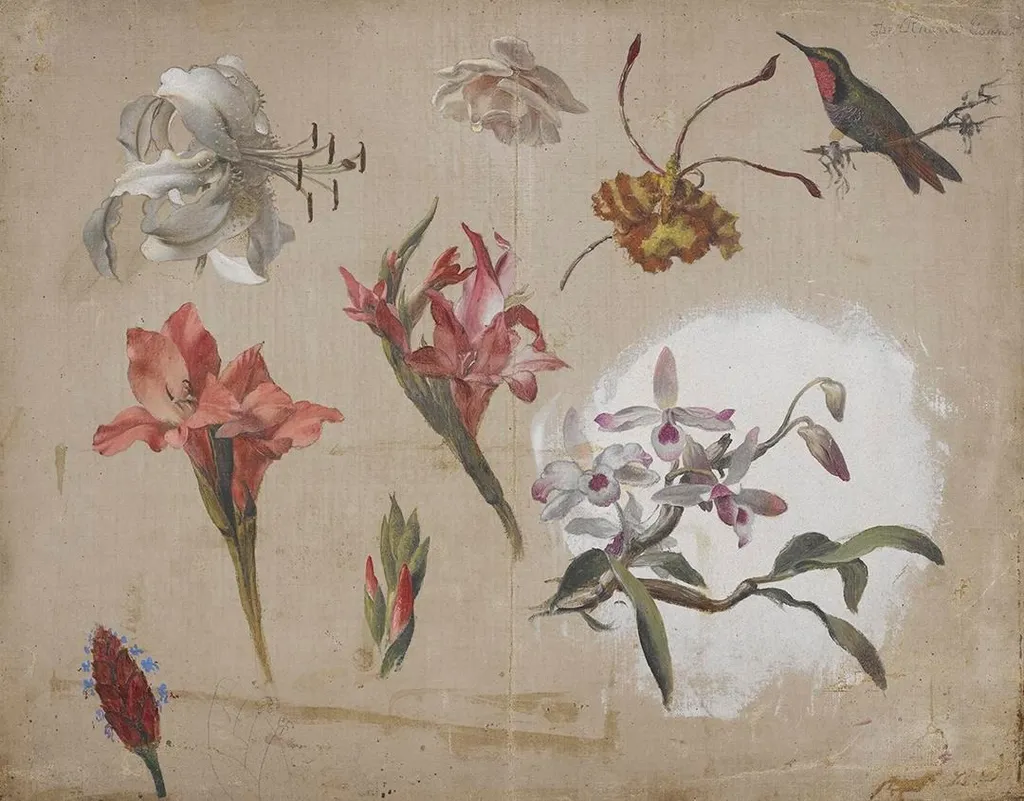
Study of Varied Flowers with a Hummingbird is an unspecified painting by the American Impressionist artist Martin Johnson Heade. It dates from 1870 and is held in the collection of the Crystal Bridges Museum of American Art.
About this work
Overview
Painted in 1870, this work by Martin Johnson Heade captures a fleeting moment in nature: a hummingbird hovering near a loose arrangement of exotic blossoms.
Painted in 1870, this work by Martin Johnson Heade captures a fleeting moment in nature: a hummingbird hovering near a loose arrangement of exotic blossoms. Though often associated with American Impressionism, Heade’s approach here leans toward precise observation rather than atmospheric effect. The composition centers on the interplay between delicate flora and a dynamic bird, rendered with quiet intensity and a restrained palette.
Subject & Meaning
The painting presents no allegory or narrative, but rather an intimate encounter between species. Orchids and other tropical blooms, favored by Heade, are shown in naturalistic disarray, suggesting wild growth rather than cultivated arrangement. The hummingbird, mid-flight with blurred wings, embodies motion and fragility, reinforcing a theme of transient beauty found in the natural world without human intervention.
Technique & Style
Heade employed fine, layered brushwork to render the petals and leaves with subtle tonal shifts, avoiding harsh outlines. The hummingbird’s plumage is painted with vivid, saturated hues—emerald green and crimson beak—contrasting sharply against the muted, earth-toned background. This selective chromatic emphasis draws the eye to the bird’s motion, while the soft focus on wings suggests speed without sacrificing anatomical accuracy.
History & Provenance
Created during Heade’s mature period, the painting aligns with his decades-long fascination with hummingbirds and tropical plants, which he observed firsthand during travels to Central and South America. Though not widely exhibited at the time, it was part of a private collection of naturalist-themed works that he produced consistently from the 1860s onward, reflecting his personal scientific curiosity as much as artistic ambition.
Context
In the late 19th century, American artists increasingly turned to native and exotic flora and fauna as subjects, influenced by Darwinian thought and the popularity of natural history collections. Heade’s focus on hummingbirds placed him among a small group of painters who treated these creatures not as curiosities but as subjects worthy of sustained, quiet attention, distinct from the grand landscapes of his contemporaries.
Legacy
This work exemplifies Heade’s unique contribution to American art: a fusion of scientific precision and poetic stillness. While overshadowed in his time by larger movements, his intimate studies of birds and flowers later gained recognition for their quiet originality. Today, they are valued for their unembellished reverence for nature’s detail, anticipating later ecological and observational art practices.
Artist & collection

Museum
Crystal Bridges Museum of American Art
Continue through works from the same source collection.
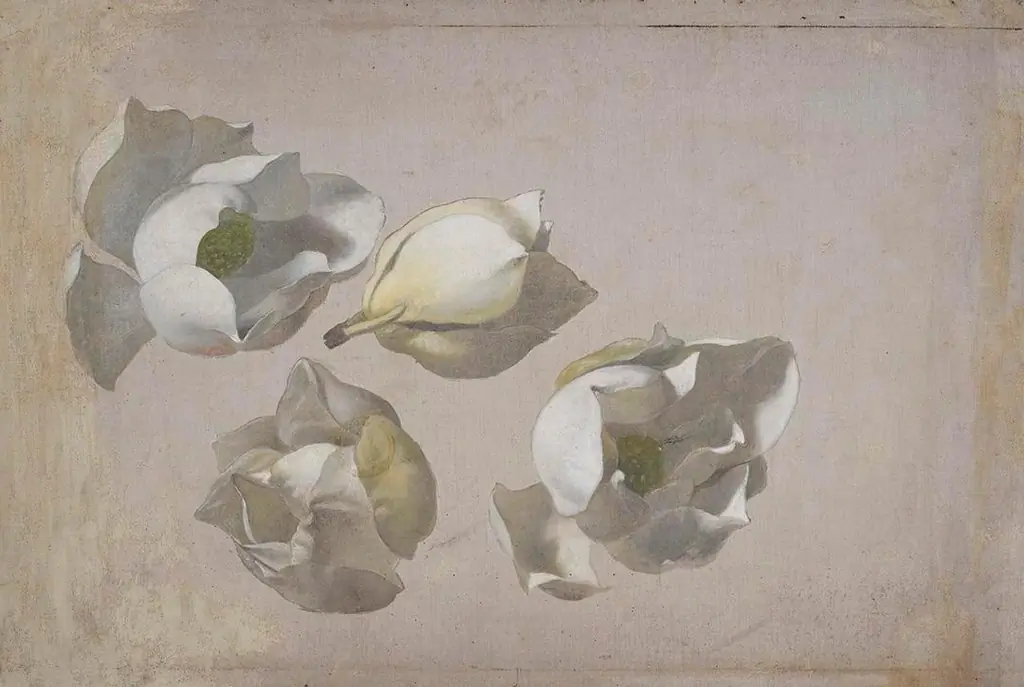 Study of Four Magnolia Blossoms
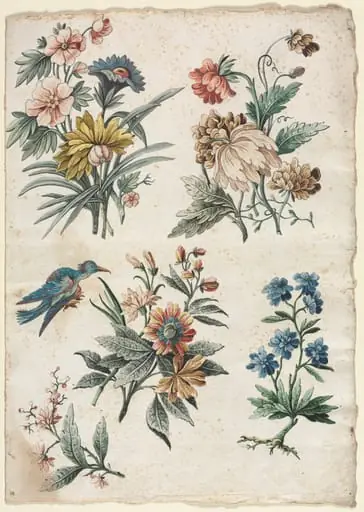 Floral Designs with a Blue Bird
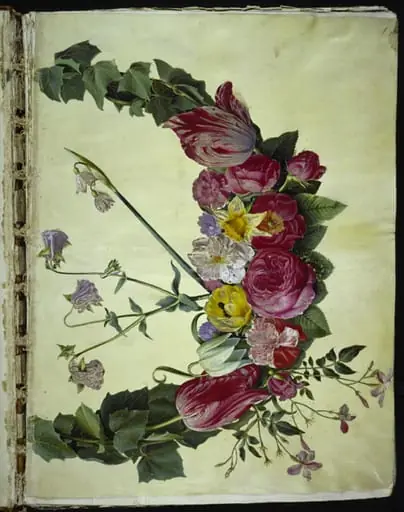 Blomsterkrans
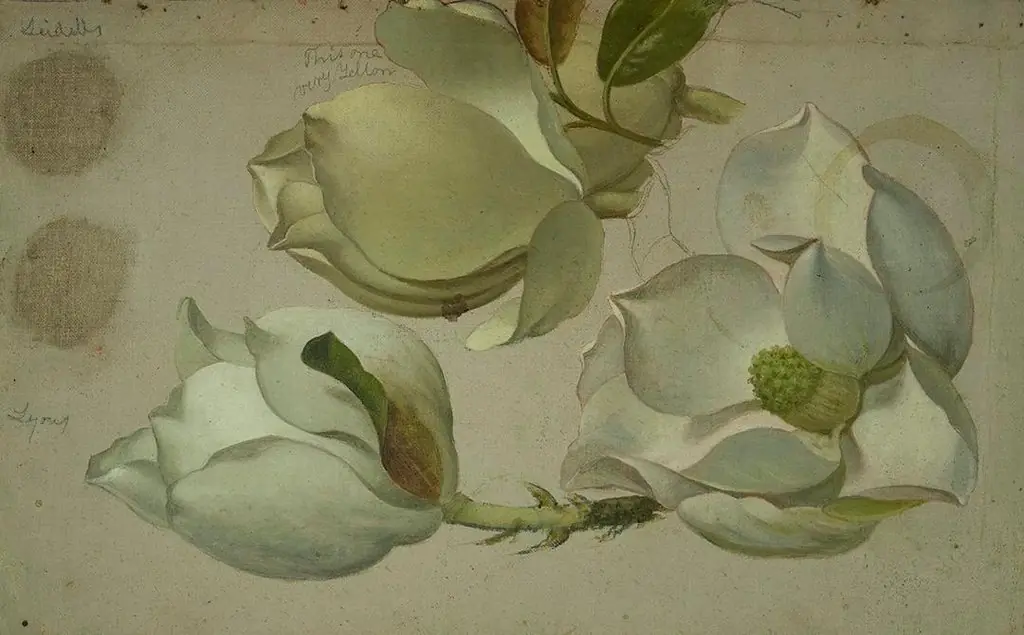 Study of Three Magnolia Blossoms
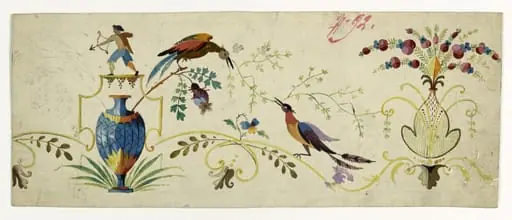 Décor faisans, projets de broderies de gilet, XVIIIème siècle
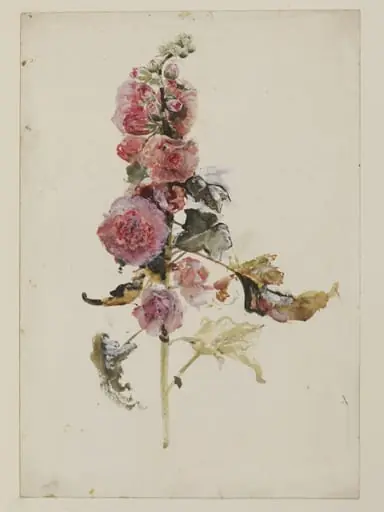 Hollyhocks
 Flowers in a basket
 Collection of Flowers and Fruits Painted after Nature: Bouquet of Foxglove, Clematis, Pansy, Peony, Poppy, and Yellow Day Lily