Artwork
Sunset on Long Beach
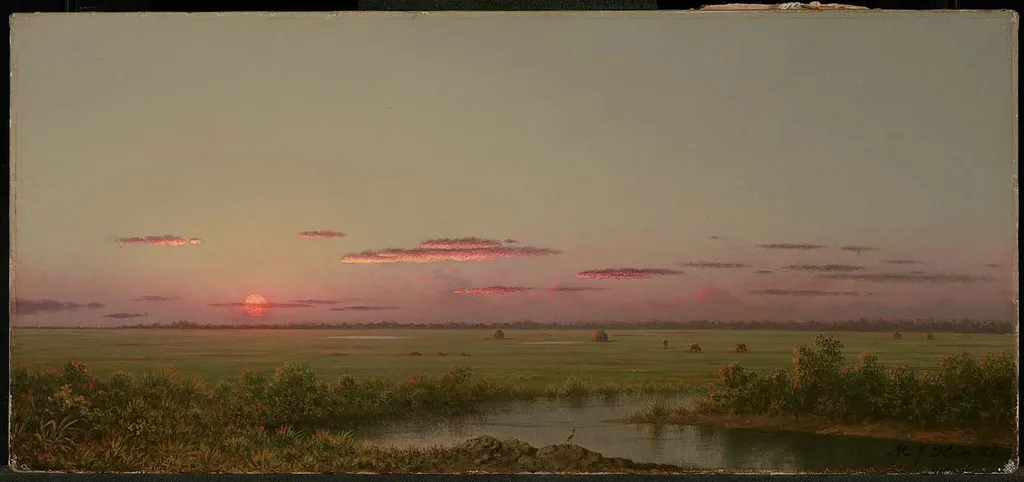
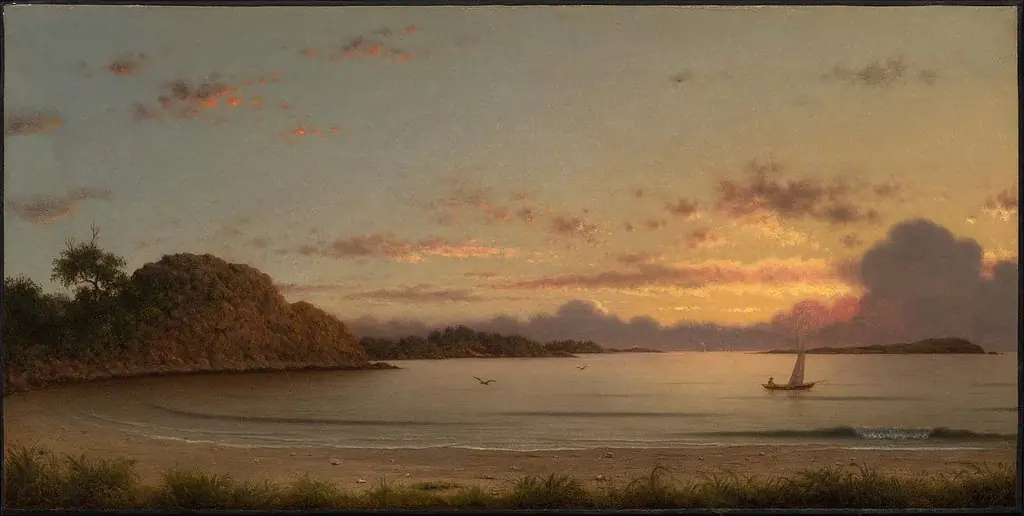
Sunset on Long Beach is an oil painting by Martin Johnson Heade. It dates from 1869 and is held in the collection of the Museum of Fine Arts Boston.
About this work
Overview
Painted around 1869, *Sunset on Long Beach* is an oil work by American artist Martin Johnson Heade, capturing a quiet coastal moment at twilight.
Painted around 1869, *Sunset on Long Beach* is an oil work by American artist Martin Johnson Heade, capturing a quiet coastal moment at twilight. Though associated with Romantic traditions, Heade’s approach emphasized subtle atmospheric effects over dramatic narrative. The scene unfolds along the shore of Long Beach, New York, where land, water, and sky meet in a restrained, meditative composition that reflects his sustained interest in light and natural harmony.
Subject & Meaning
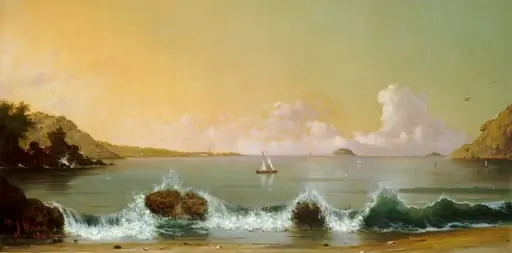
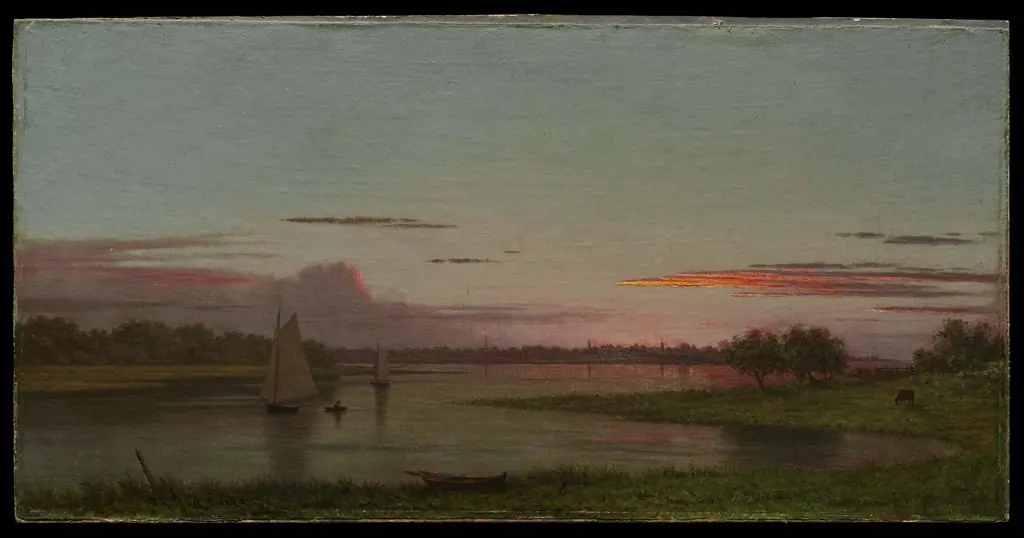
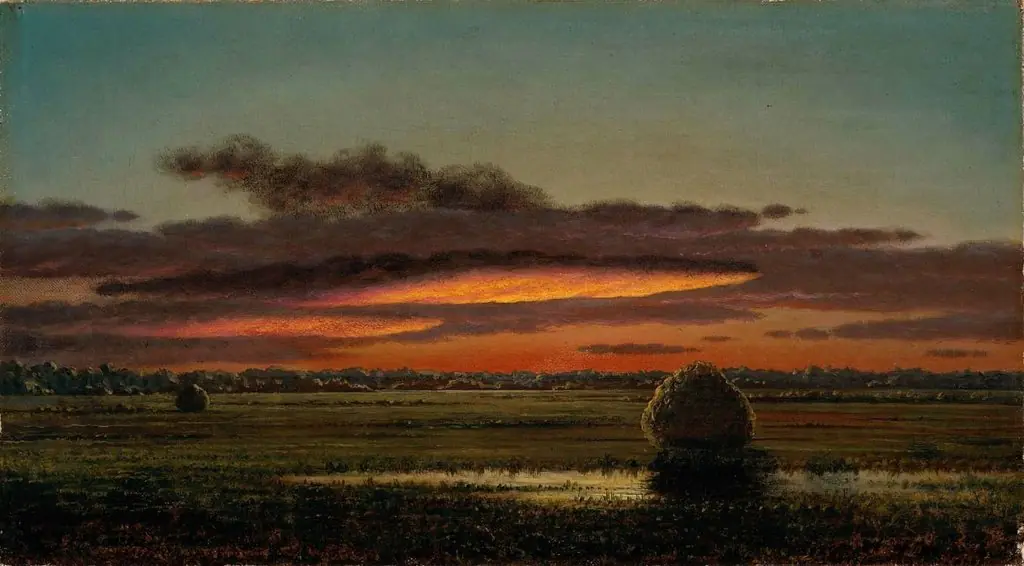
The painting presents a tranquil dusk over a tidal beach, with no human figures to disrupt the stillness. A low horizon line emphasizes the expansive sky, washed in soft oranges and pinks, while sparse vegetation frames the foreground. The absence of activity suggests contemplation rather than action, aligning the work with 19th-century ideals of nature as a refuge from industrialization. The quietude invites quiet observation, not emotional climax.
Technique & Style
Heade employed thin, layered glazes to achieve luminous color transitions, particularly in the sky and water. Brushwork is subdued and deliberate, avoiding bold strokes in favor of blended tones that mimic the diffusion of twilight. The smooth surface enhances the illusion of atmospheric depth, with subtle gradations between hues creating a sense of calm. This method reflects his interest in optical effects over expressive gesture.
History & Provenance
Created during Heade’s most productive period, the painting emerged after years of travel and study along the northeastern coast. It was likely painted in or near New York, where Heade lived intermittently from the 1850s onward. The work remained in private collections for much of the 20th century before entering a public museum, where it is now recognized as a key example of his coastal studies.
Context
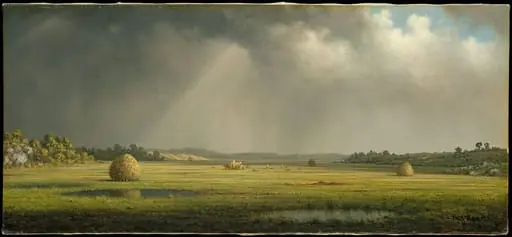
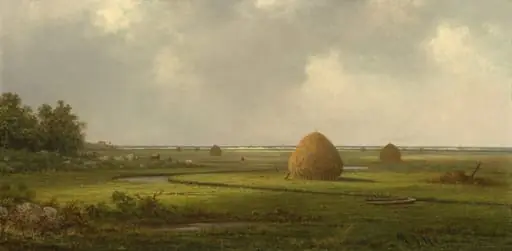
In the decades following the Civil War, American artists increasingly turned to landscape as a site of national identity. Heade’s focus on understated coastal scenes contrasted with the grandeur of the Hudson River School, offering instead intimate, quiet observations of nature’s rhythms. His work resonated with emerging scientific interests in light and weather, aligning with contemporary optical studies and the rise of plein air practice.
Legacy
Though overlooked in his time, Heade’s coastal paintings like *Sunset on Long Beach* gained renewed attention in the 20th century for their quiet precision and emotional restraint. They are now seen as precursors to American Tonalism and modernist approaches to light. His emphasis on subtle transitions and atmospheric mood influenced later generations seeking to capture nature’s stillness beyond spectacle.
Artist & collection