Artwork
Vase of Mixed Flowers
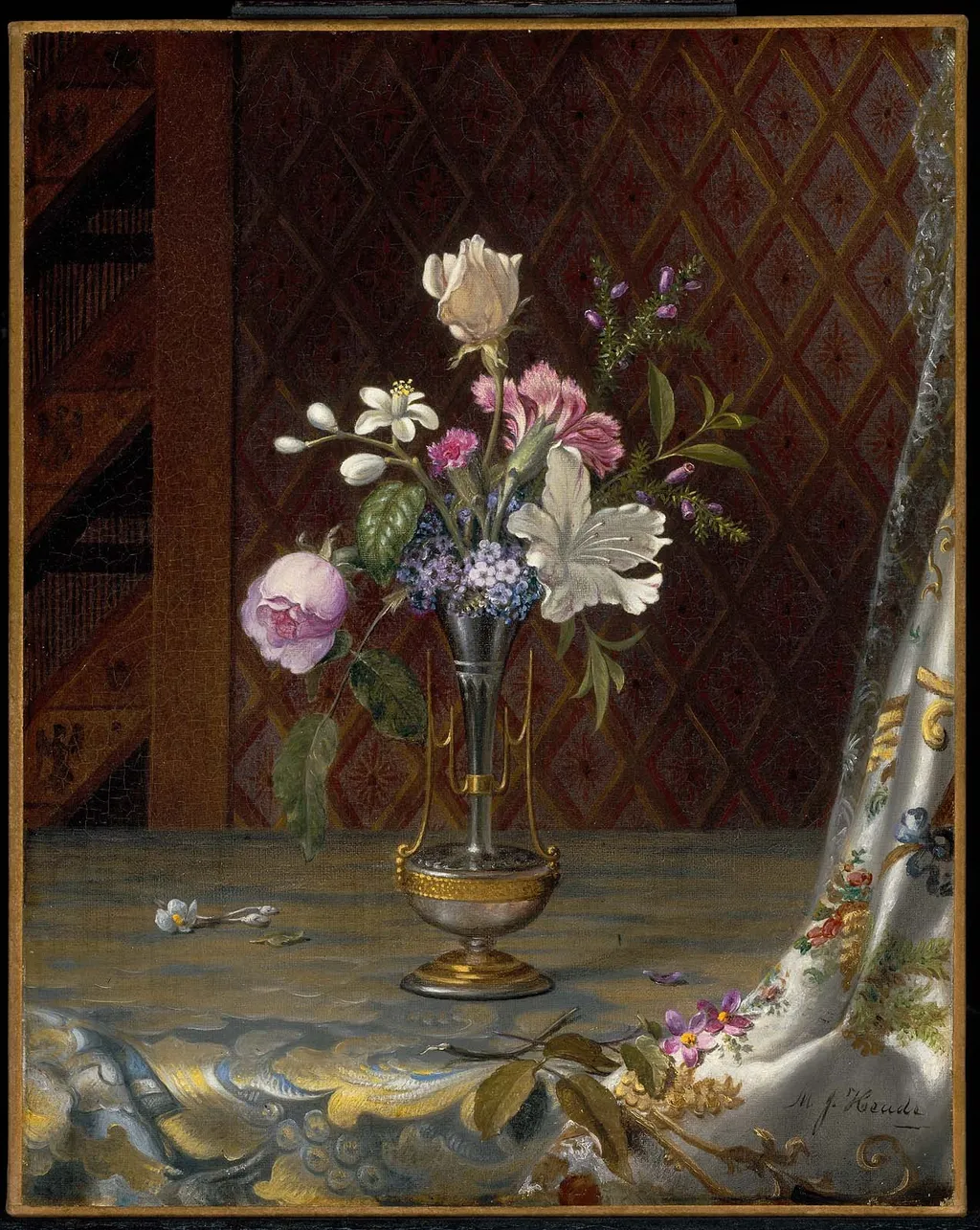
Vase of Mixed Flowers is an oil painting by the American Impressionist artist Martin Johnson Heade. It dates from 1872 and is held in the collection of the Museum of Fine Arts Boston.
About this work
Overview
Painted in 1872, *Vase of Mixed Flowers* is an oil still life by American artist Martin Johnson Heade.
Painted in 1872, *Vase of Mixed Flowers* is an oil still life by American artist Martin Johnson Heade. Though known for landscapes and avian subjects, Heade produced a series of floral compositions during this period, characterized by quiet precision and restrained color. This work exemplifies his shift toward intimate domestic scenes, executed with a sensitivity to light and texture that distinguishes it from the broader trends of American Impressionism.
Subject & Meaning
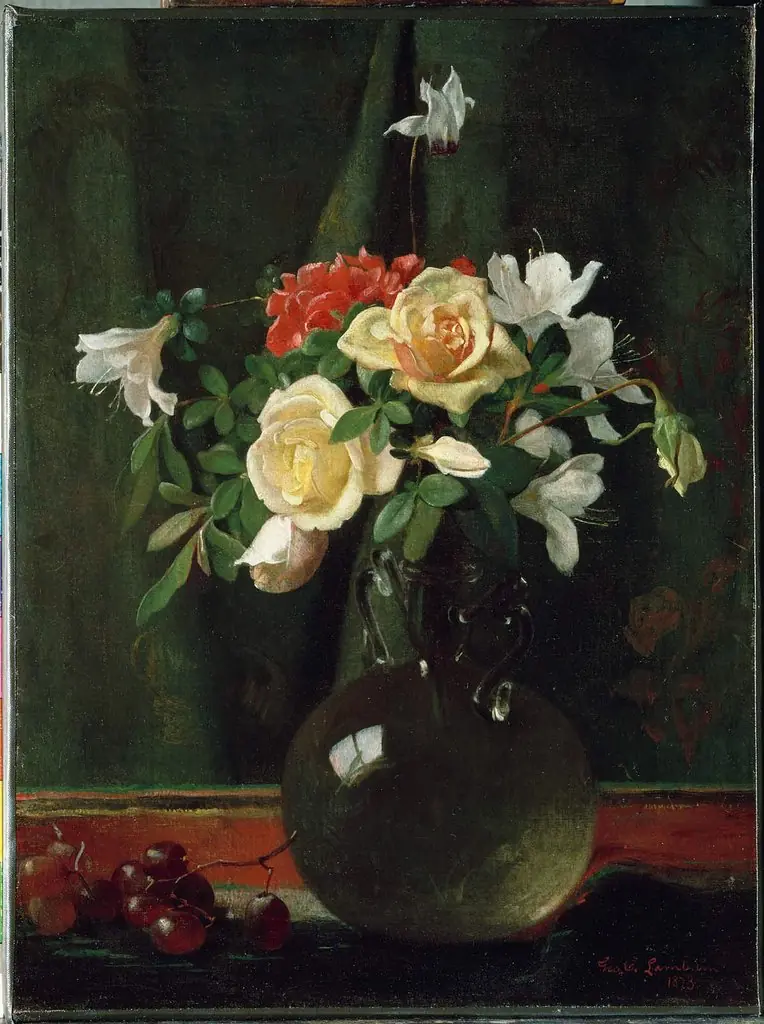
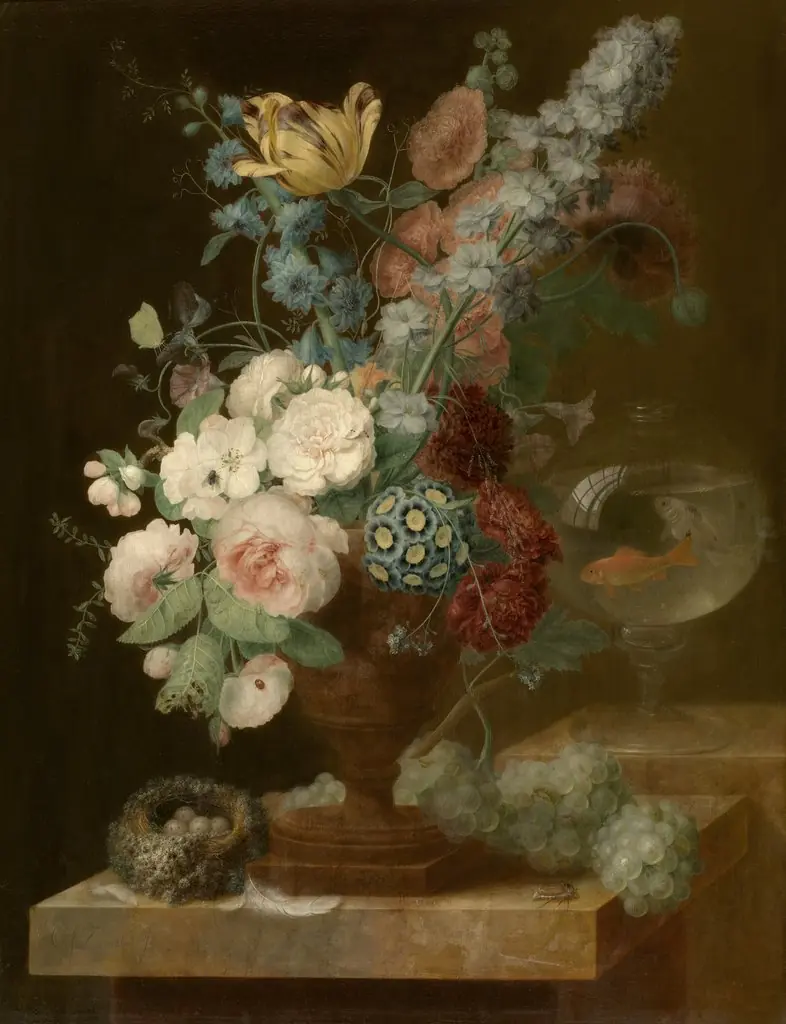
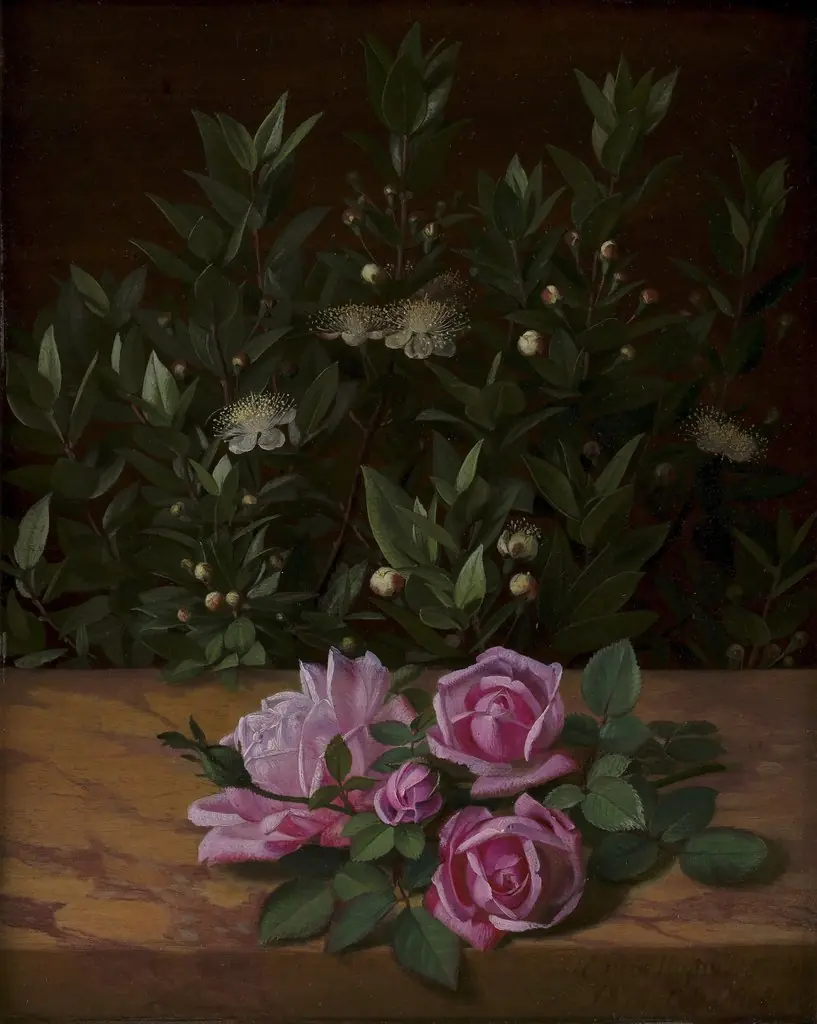
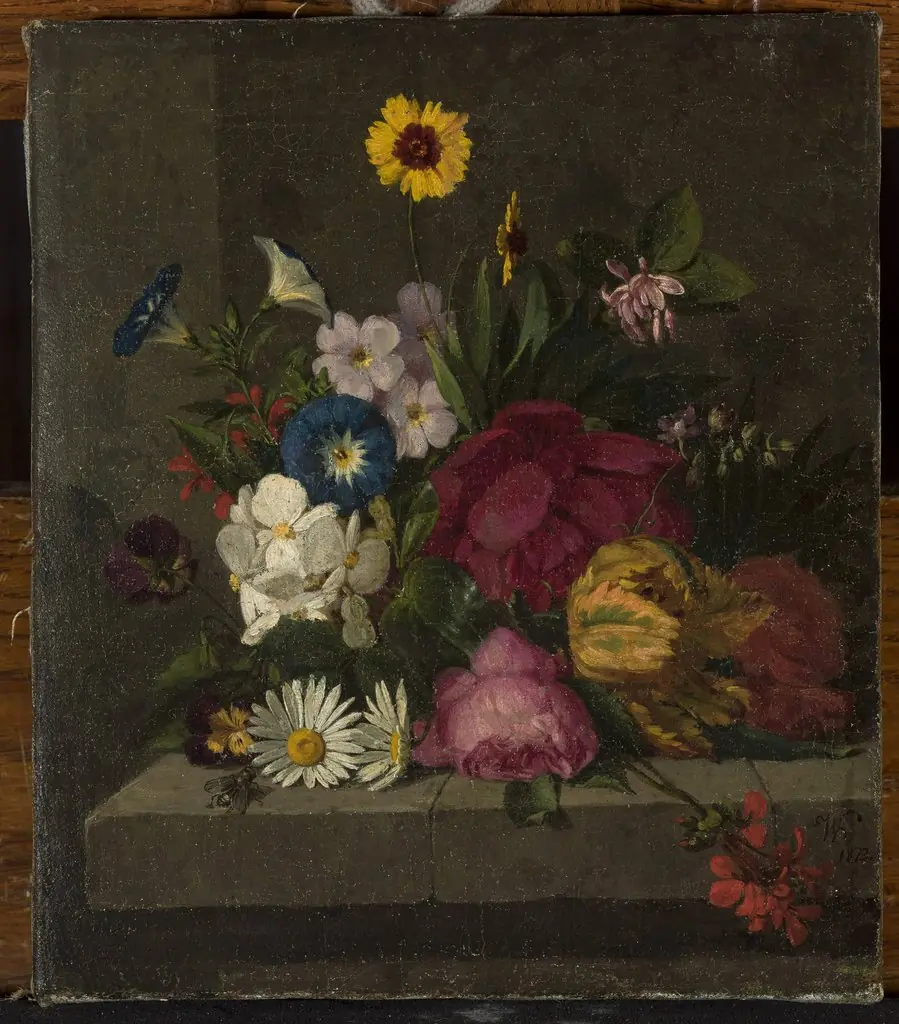
The painting presents a modest bouquet of white, pink, and purple blooms, arranged with deliberate asymmetry alongside lush green foliage. The flowers, neither exotic nor symbolic in traditional terms, suggest an everyday moment of domestic contemplation. The silver-gilt vase and ornate tablecloth imply refinement, yet the composition avoids grandeur, favoring subtlety and quiet observation over allegory or sentiment.
Technique & Style
Heade employed fine brushwork to render the translucency of petals and the reflective sheen of the metallic vase. The background’s diamond-patterned wall and patterned cloth are rendered with controlled detail, creating a sense of spatial depth without distraction. His palette is muted, emphasizing tonal harmony over vibrancy, and his handling of light suggests a soft, diffused source—likely natural, filtering through a nearby window.
History & Provenance
The painting entered the collection of the Museum of Fine Arts, Boston, where it remains today. It was likely acquired during the late 19th or early 20th century as part of a broader interest in Heade’s lesser-known still lifes. Unlike his marsh and hummingbird works, these floral pieces were not widely exhibited in his lifetime, contributing to their relative obscurity until later scholarly reassessment.
Context
In the 1870s, American art was increasingly influenced by European Impressionism, yet Heade’s floral works resisted its loose brushwork and bright hues. Instead, his approach recalled 17th-century Dutch still lifes and the quiet realism of Hudson River School aesthetics. His focus on domestic interiors and subtle naturalism positioned him apart from contemporaries who embraced bolder, more overtly modern styles.
Legacy
Though overshadowed in his time by more dramatic subjects, *Vase of Mixed Flowers* now stands as a quiet testament to Heade’s versatility and attention to detail. Modern scholarship recognizes these floral paintings as pivotal in understanding his full range, revealing a sensitivity to light and form that anticipates later American realist traditions without aligning with any single movement.
Artist & collection