Artwork
Roses and Myrtles
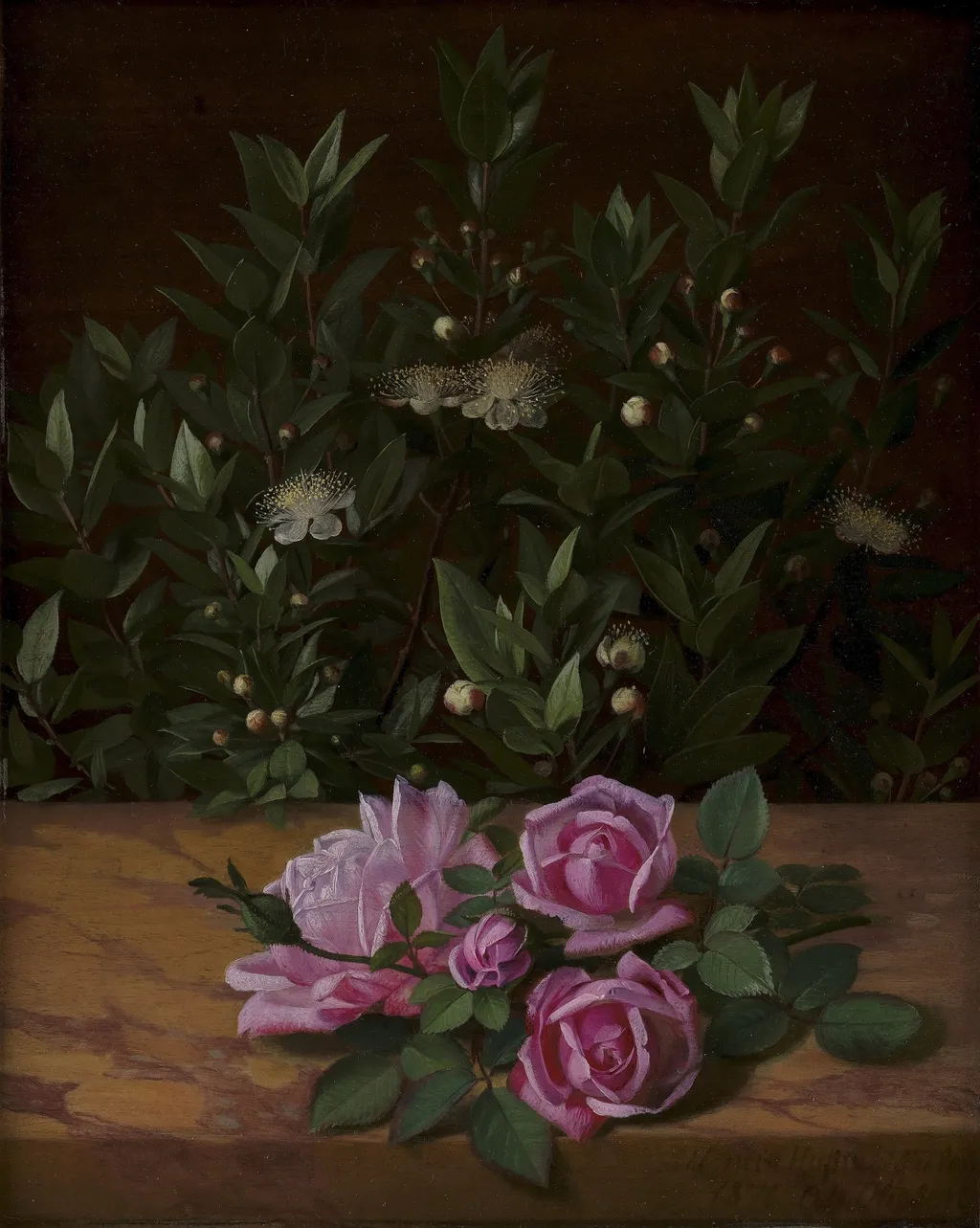
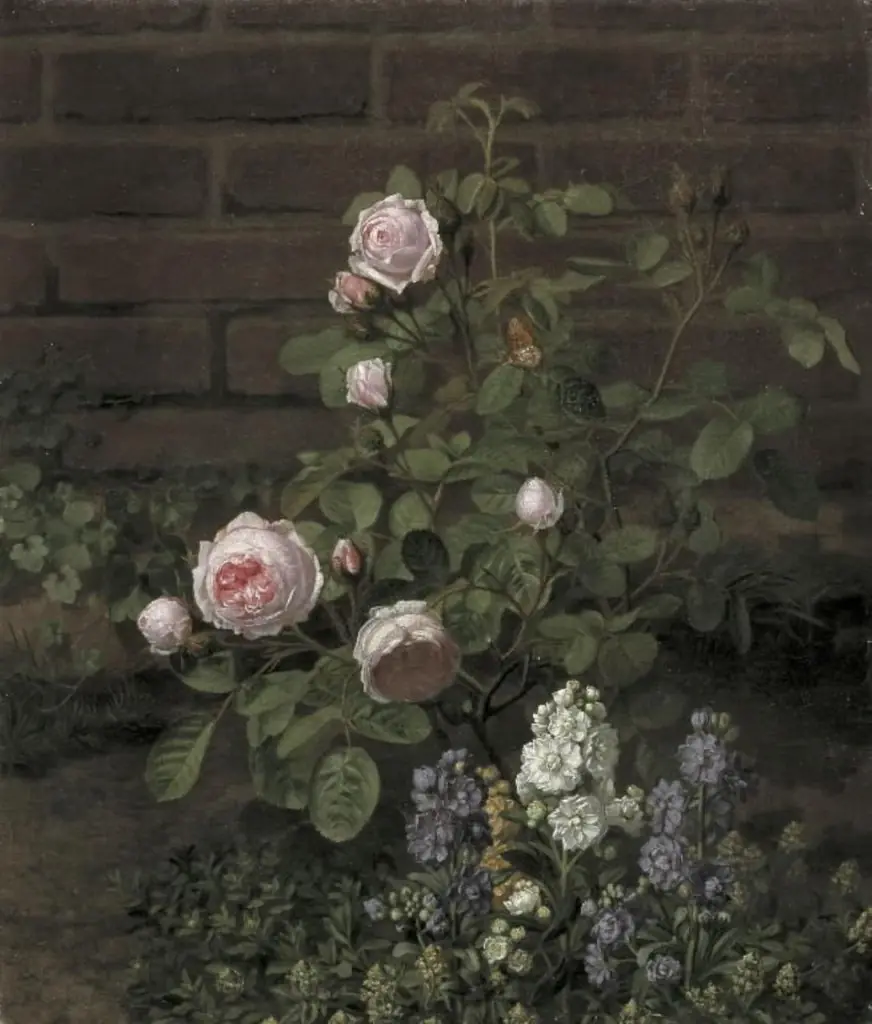
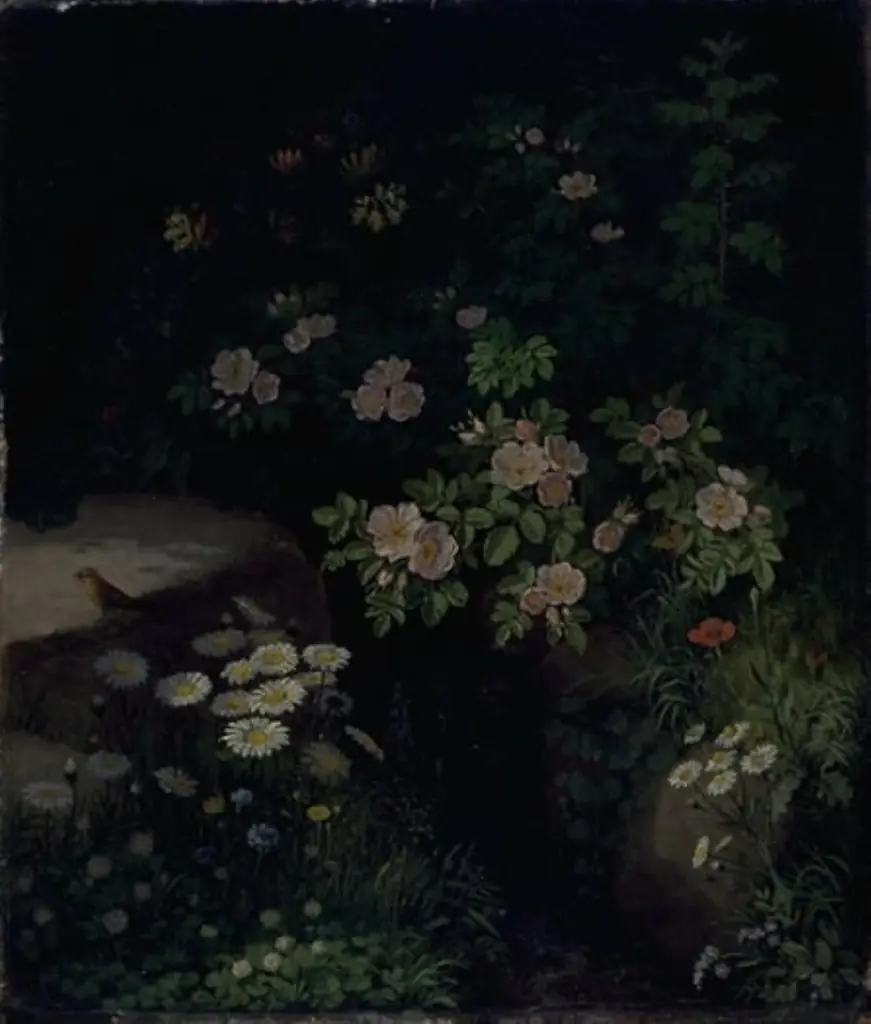
Roses and Myrtles is an oil painting by the Impressionist artist O.D. Ottesen. It dates from 1888 and is held in the collection of the Statens Museum for Kunst.
About this work
Overview
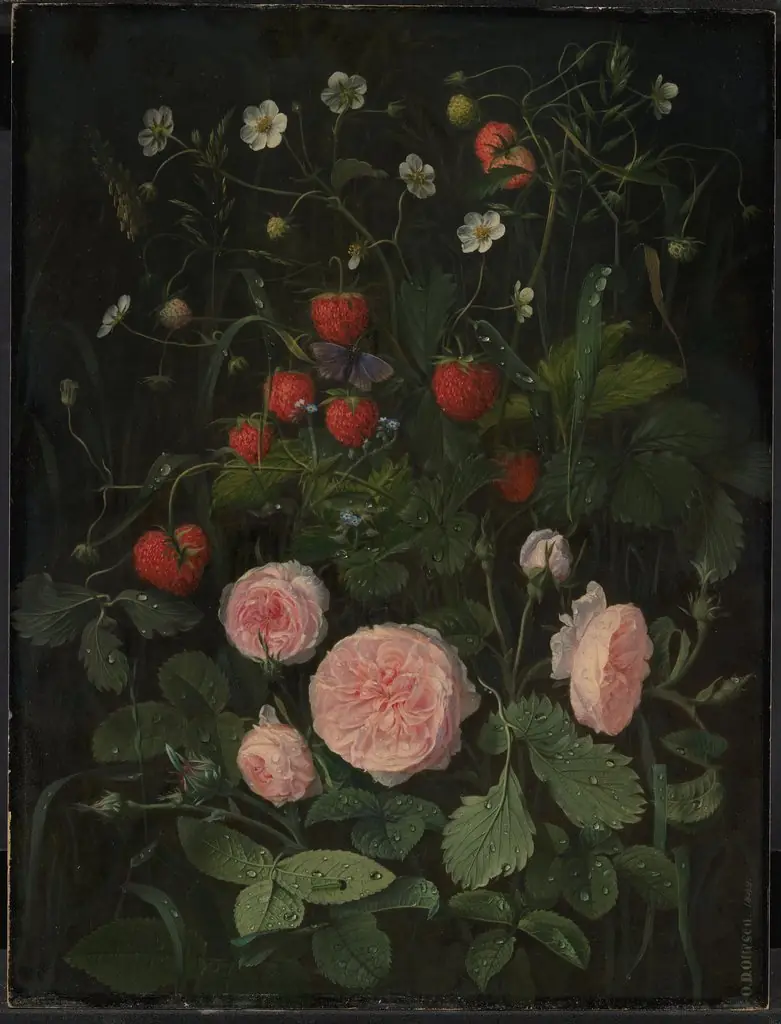
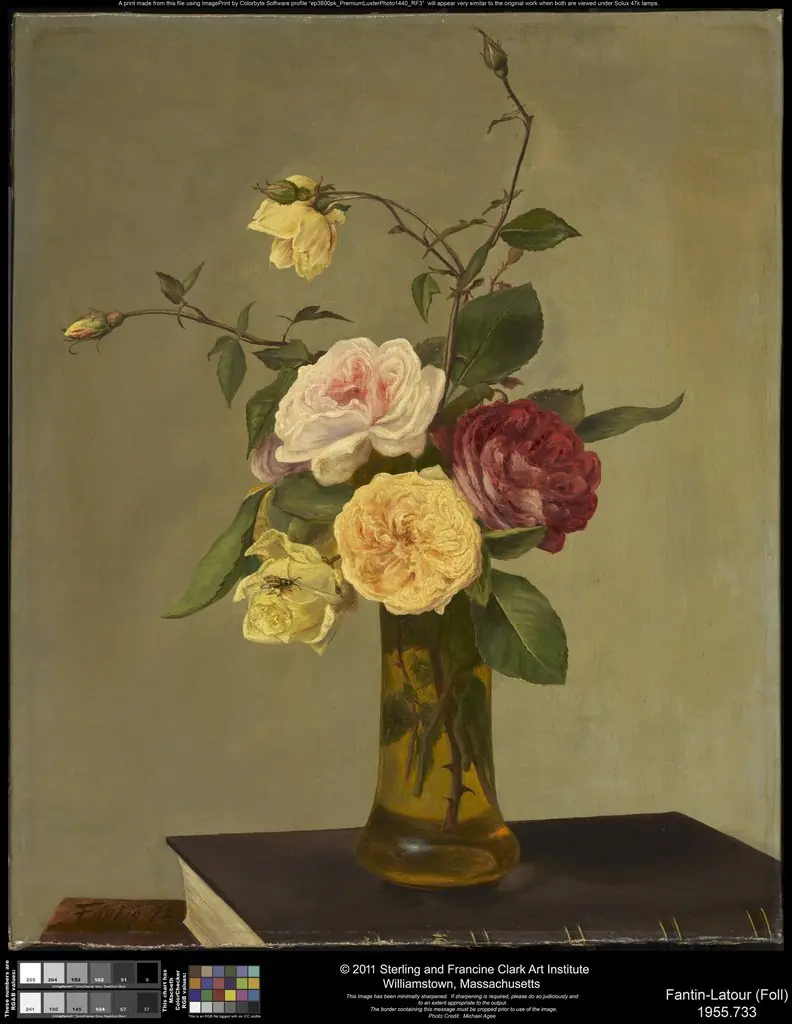
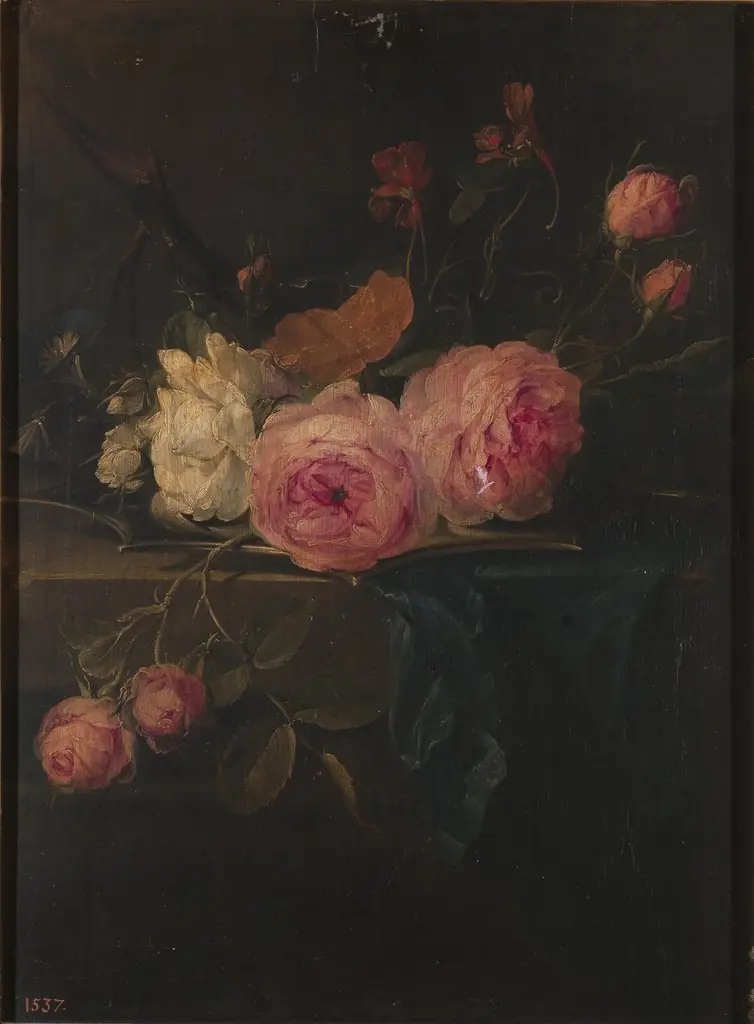
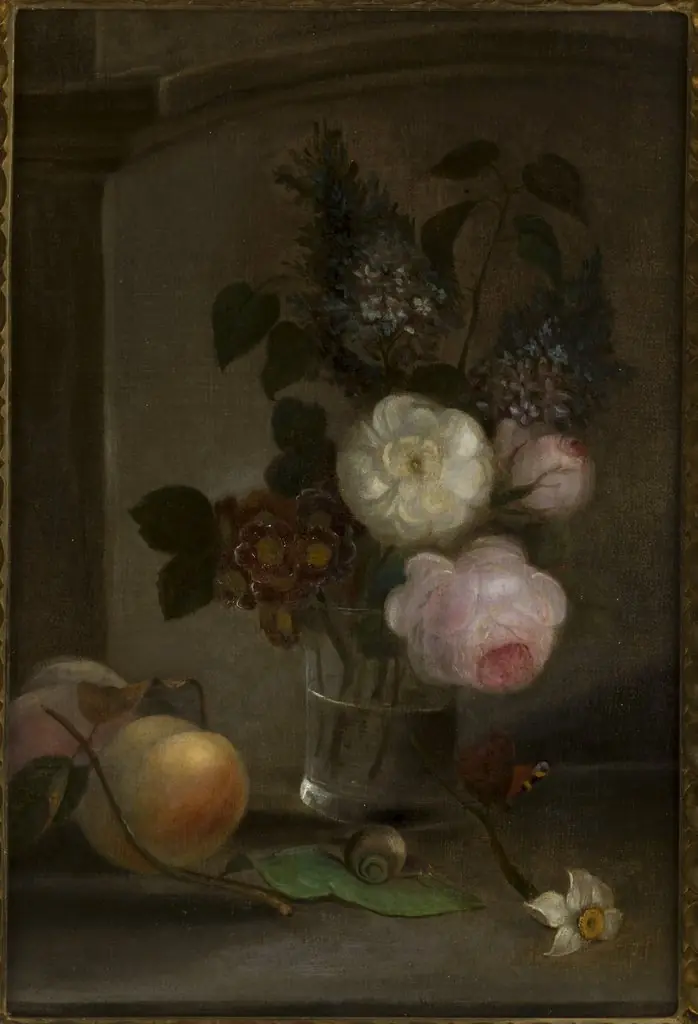
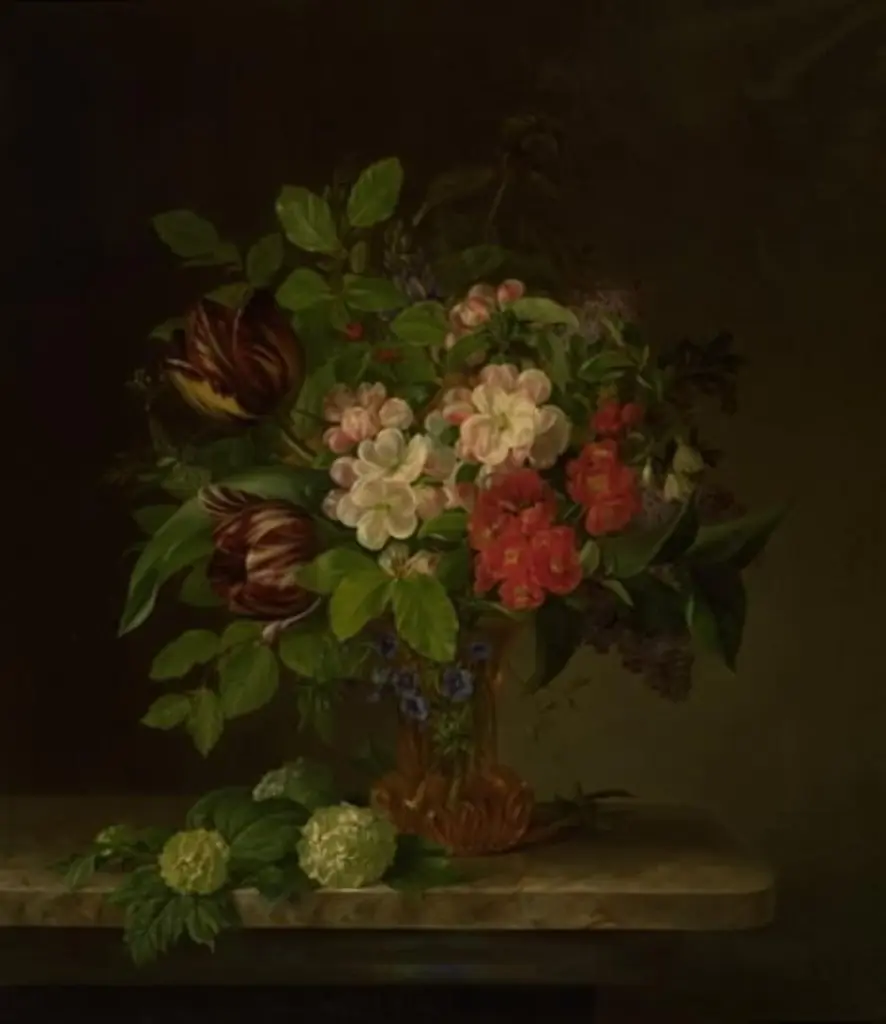
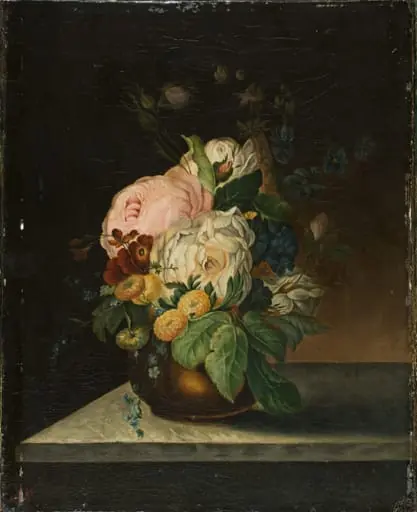
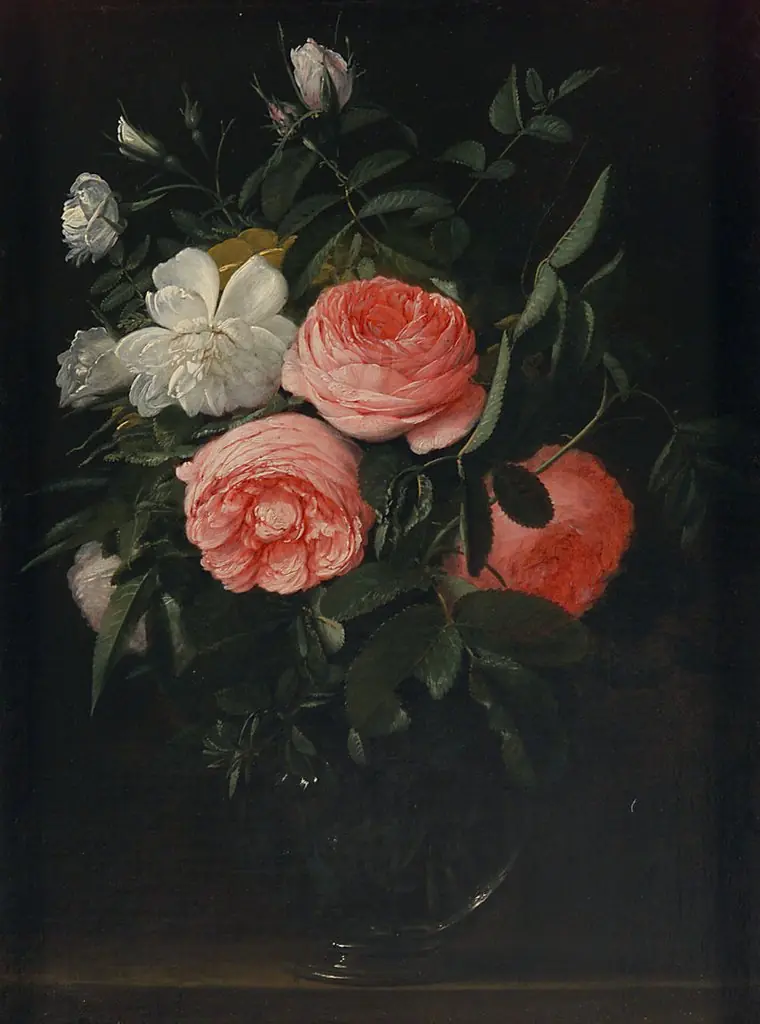
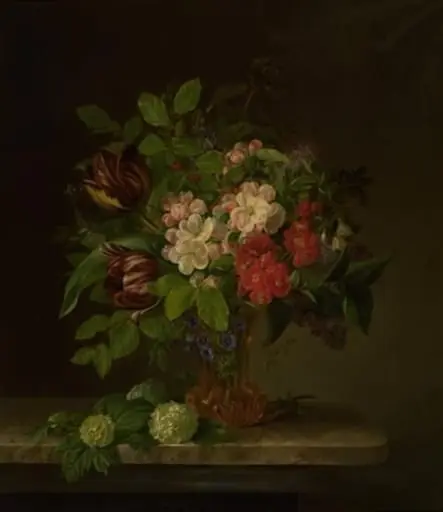
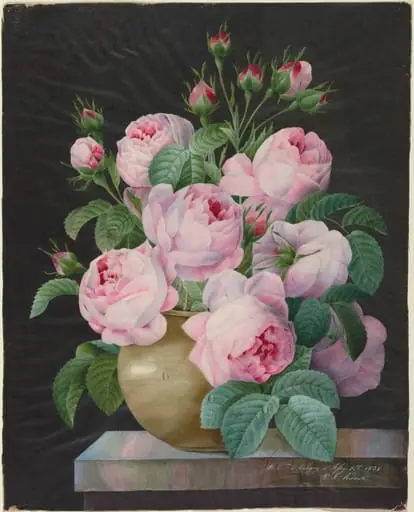
Roses and Myrtles is an oil painting executed in 1888 by Danish artist O.D. Ottesen. The work is a modest still‑life that presents a small bouquet of pink and white roses set on a plain wooden table, against a darkened backdrop that includes a low bush of white‑flowered myrtle. The painting is part of the collection of the Statens Museum for Kunst.
Subject & Meaning
The composition centers on a delicate arrangement of roses, their soft petals and verdant leaves rendered in gentle tones. Behind the bouquet, a darker space contains a modest myrtle shrub, its tiny white blossoms echoing the roses’ coloration. The juxtaposition of the luminous flowers with the sombre background emphasizes themes of transience and the quiet beauty of everyday botanical subjects.
Technique & Style
Ottesen employs a restrained palette, allowing the light to fall primarily on the roses, which become the focal point. The brushwork on the petals is smooth and precise, capturing subtle gradations of hue, while the surrounding foliage and table are treated with broader, less detailed strokes. This contrast of detail and atmosphere creates a sense of depth within the limited space.
History & Provenance
Created in the late nineteenth century, the painting entered the holdings of Denmark’s national gallery, the Statens Museum for Kunst, where it remains on display. Its acquisition reflects the museum’s interest in representing domestic genre works and the broader development of Danish still‑life painting during the period.
Context
Roses and Myrters belongs to a tradition of 19th‑century European still‑life that emphasized careful observation of natural objects and the play of light. Ottesen’s approach aligns with contemporaneous Danish artists who sought to capture the quiet dignity of ordinary subjects, situating the work within a broader movement toward realism and tonal subtlety in the era’s visual culture.
Own this work as a print
Artist & collection